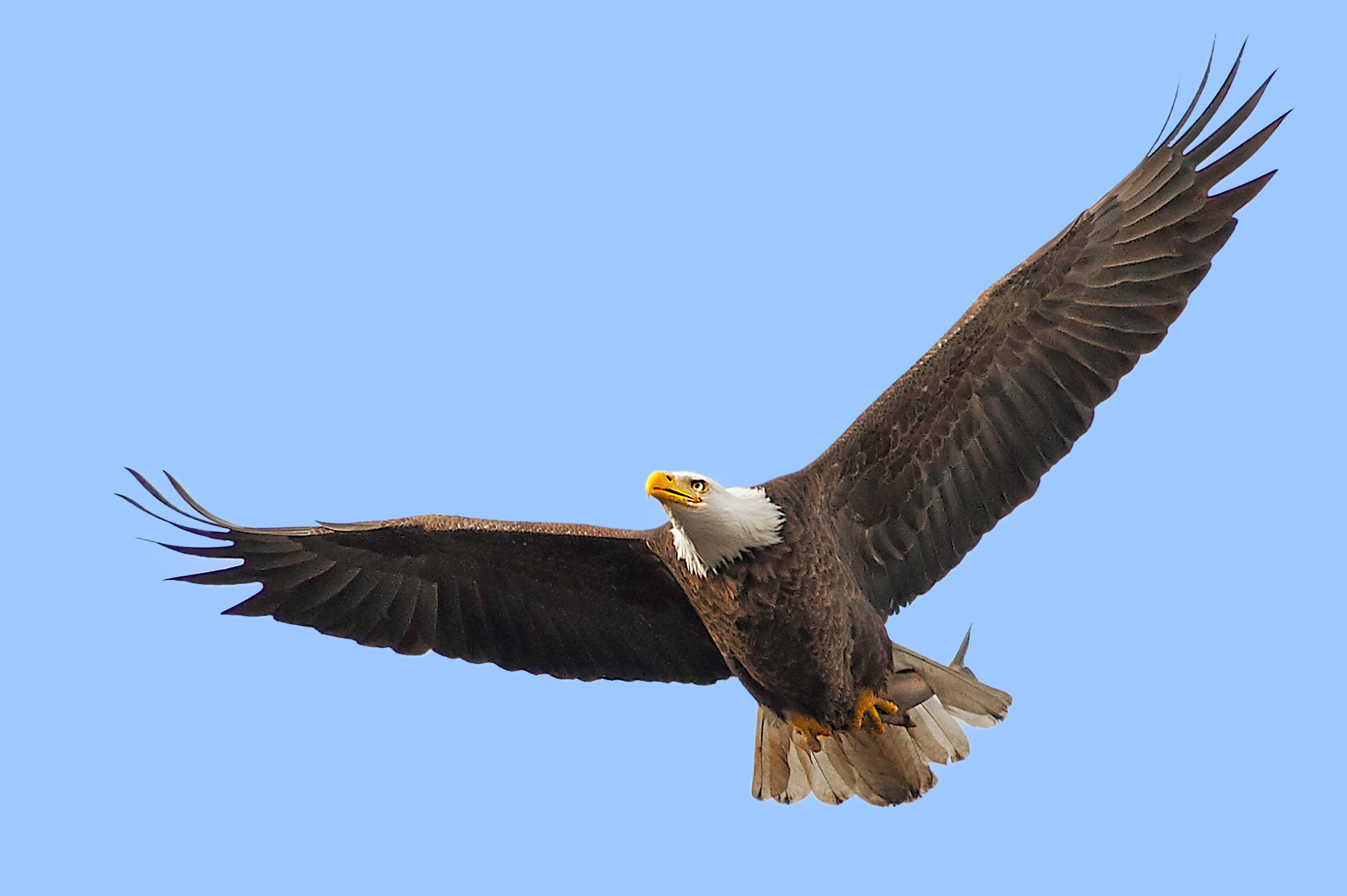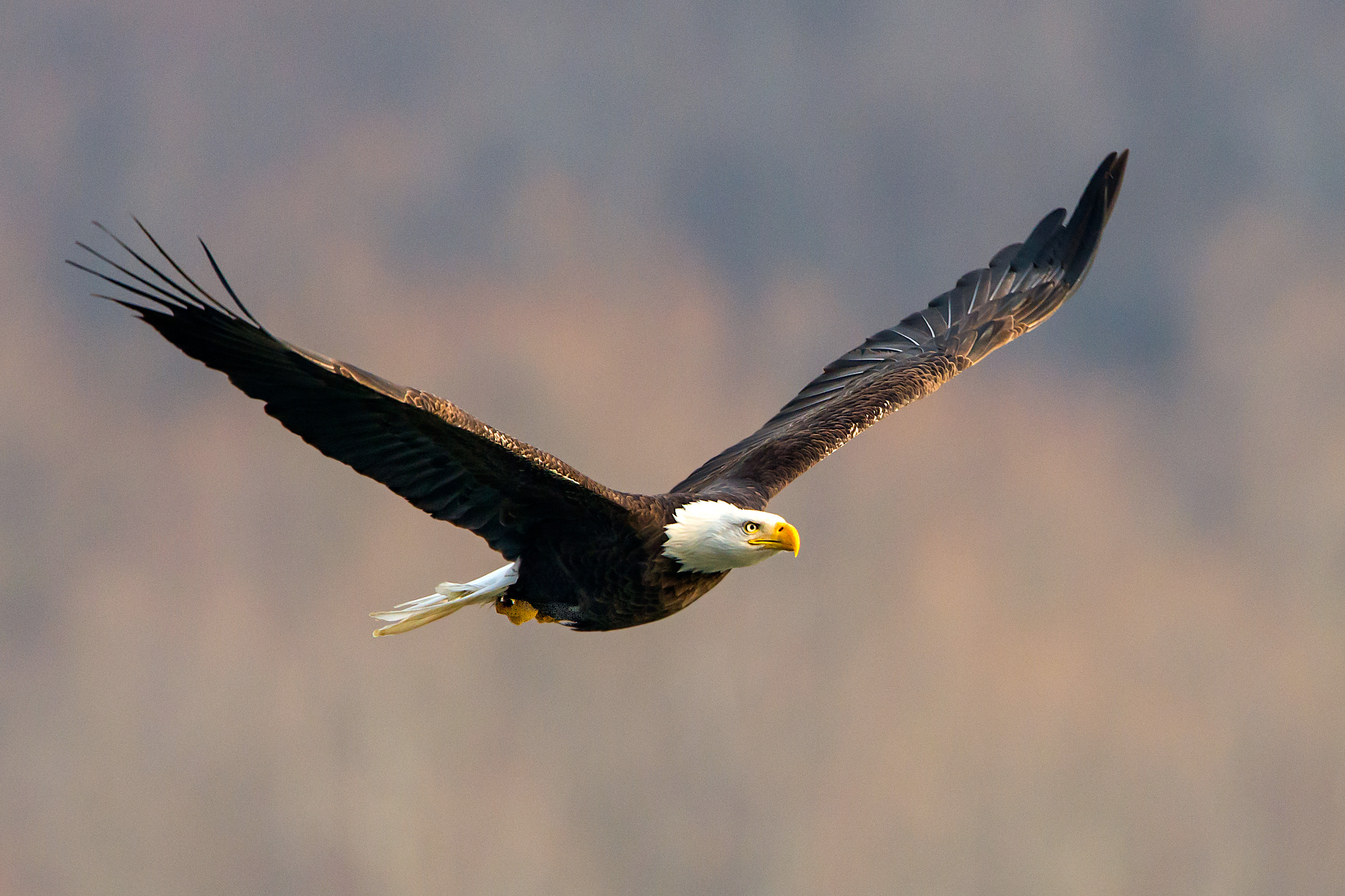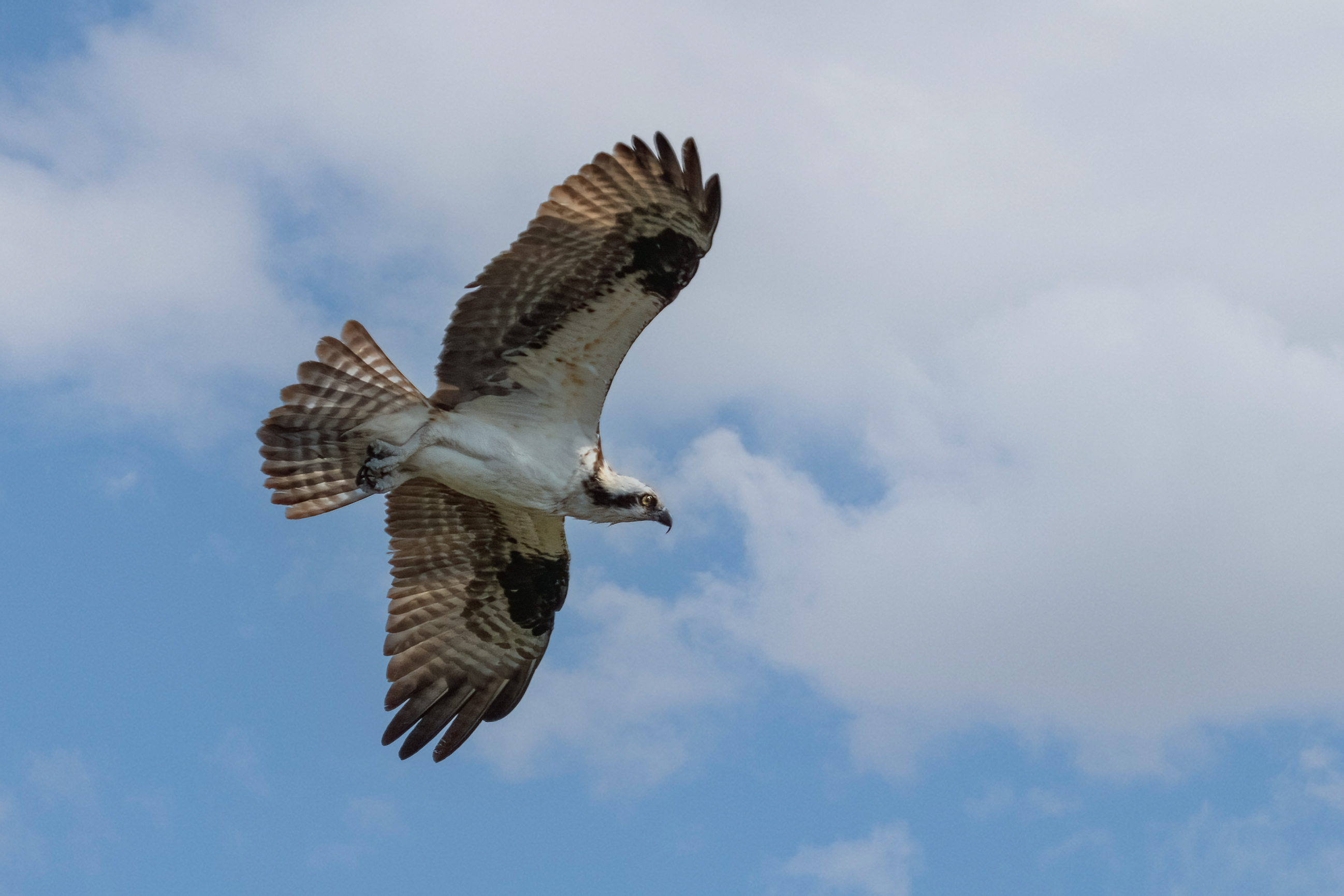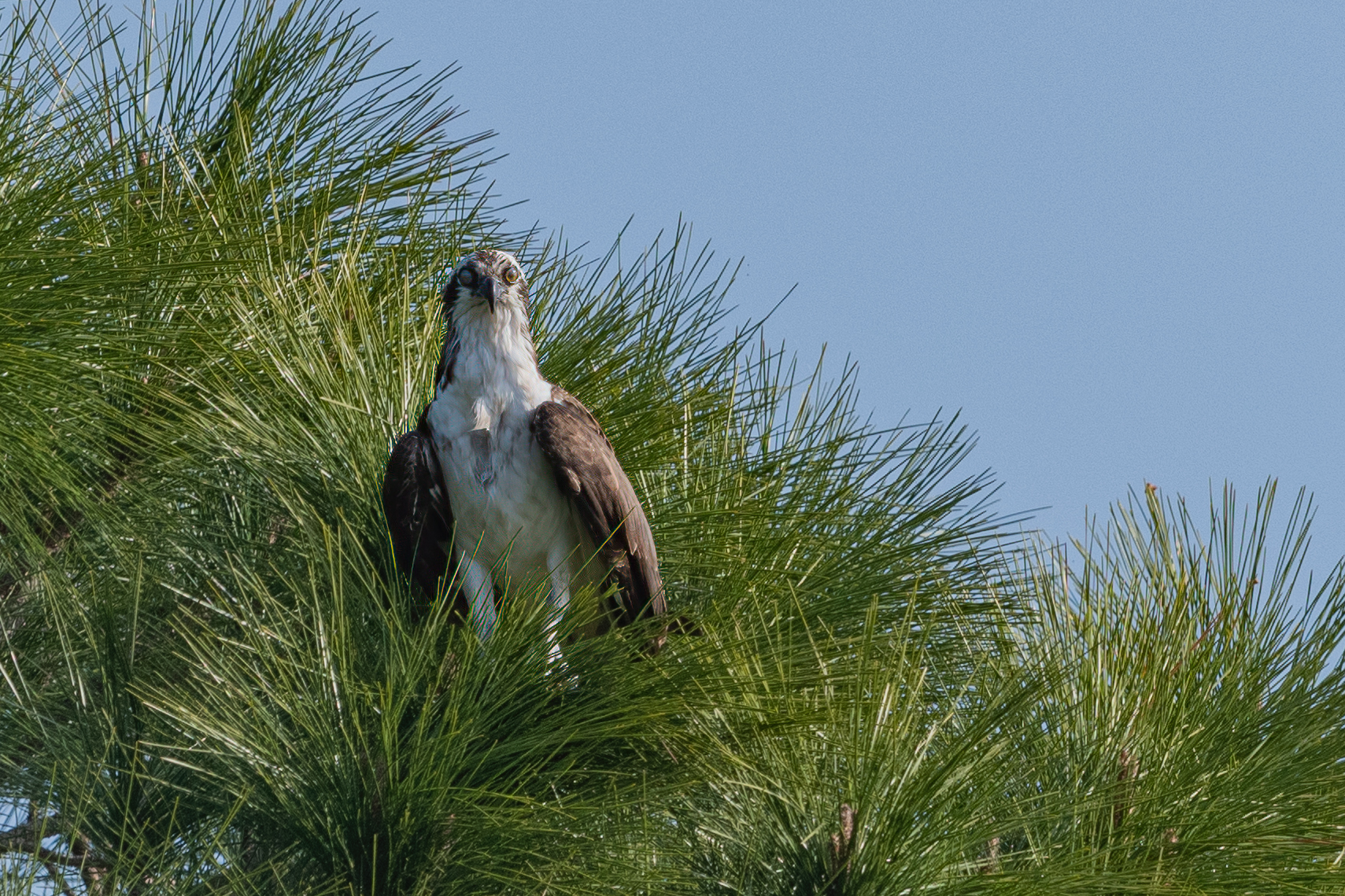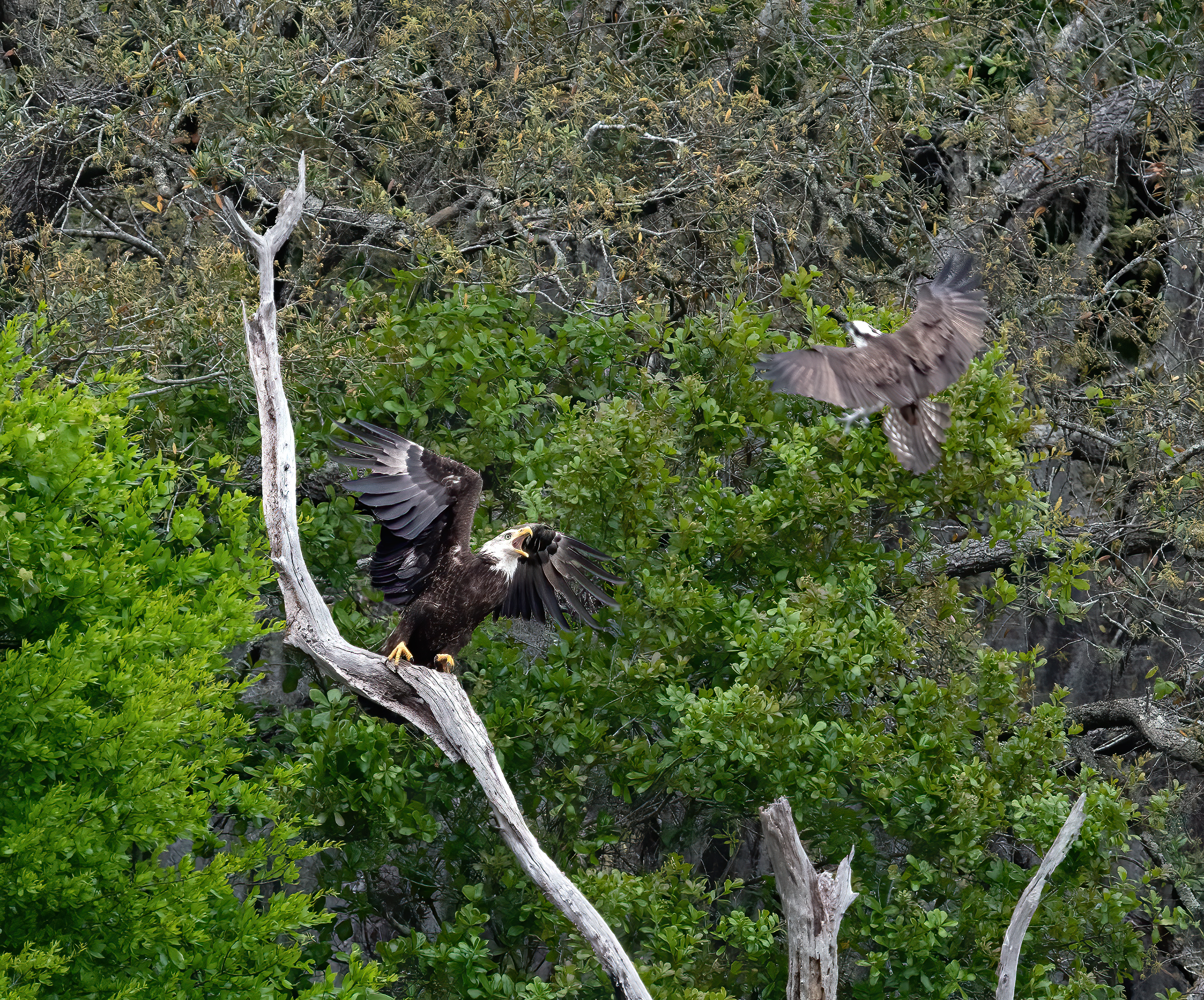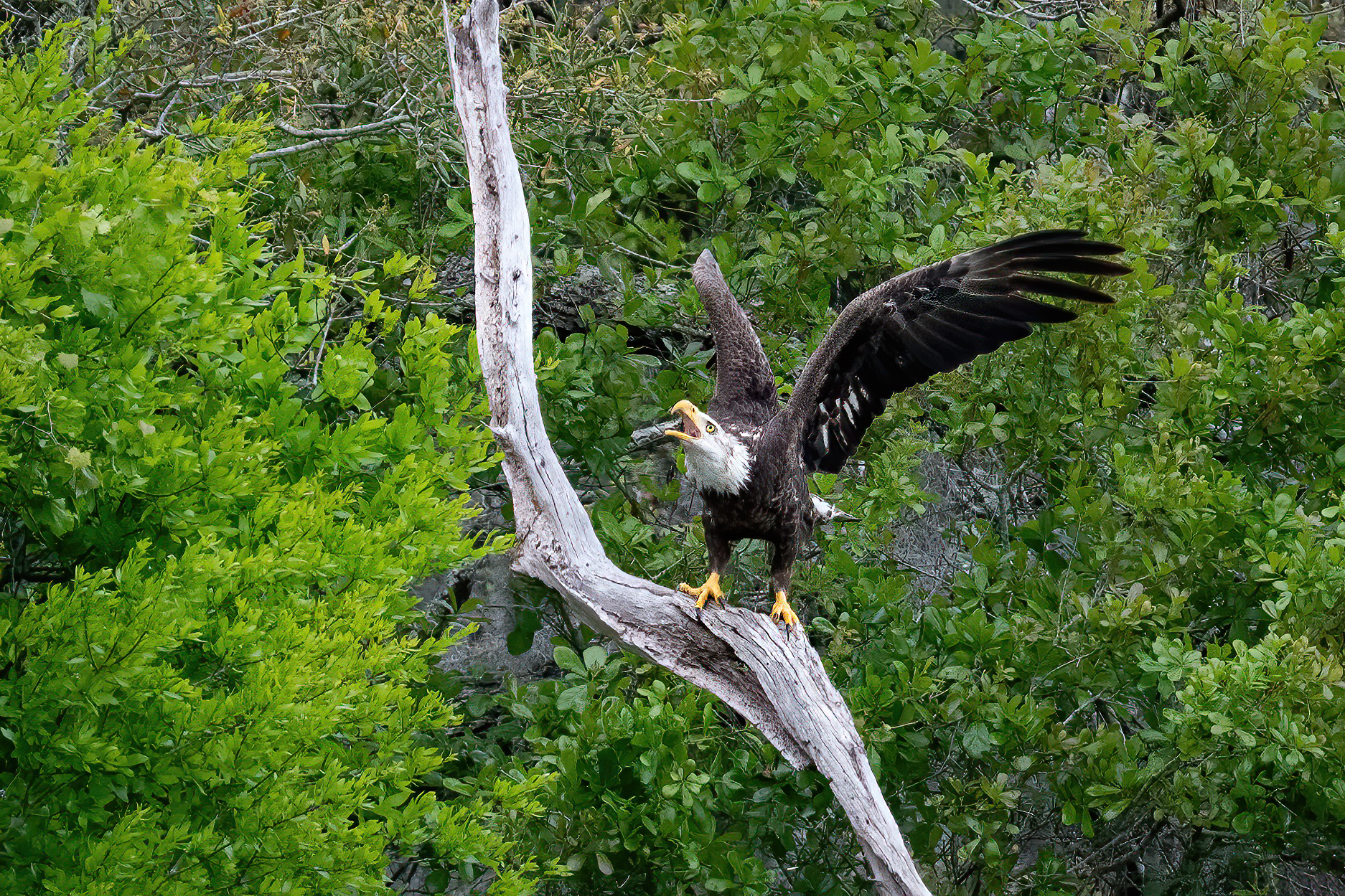
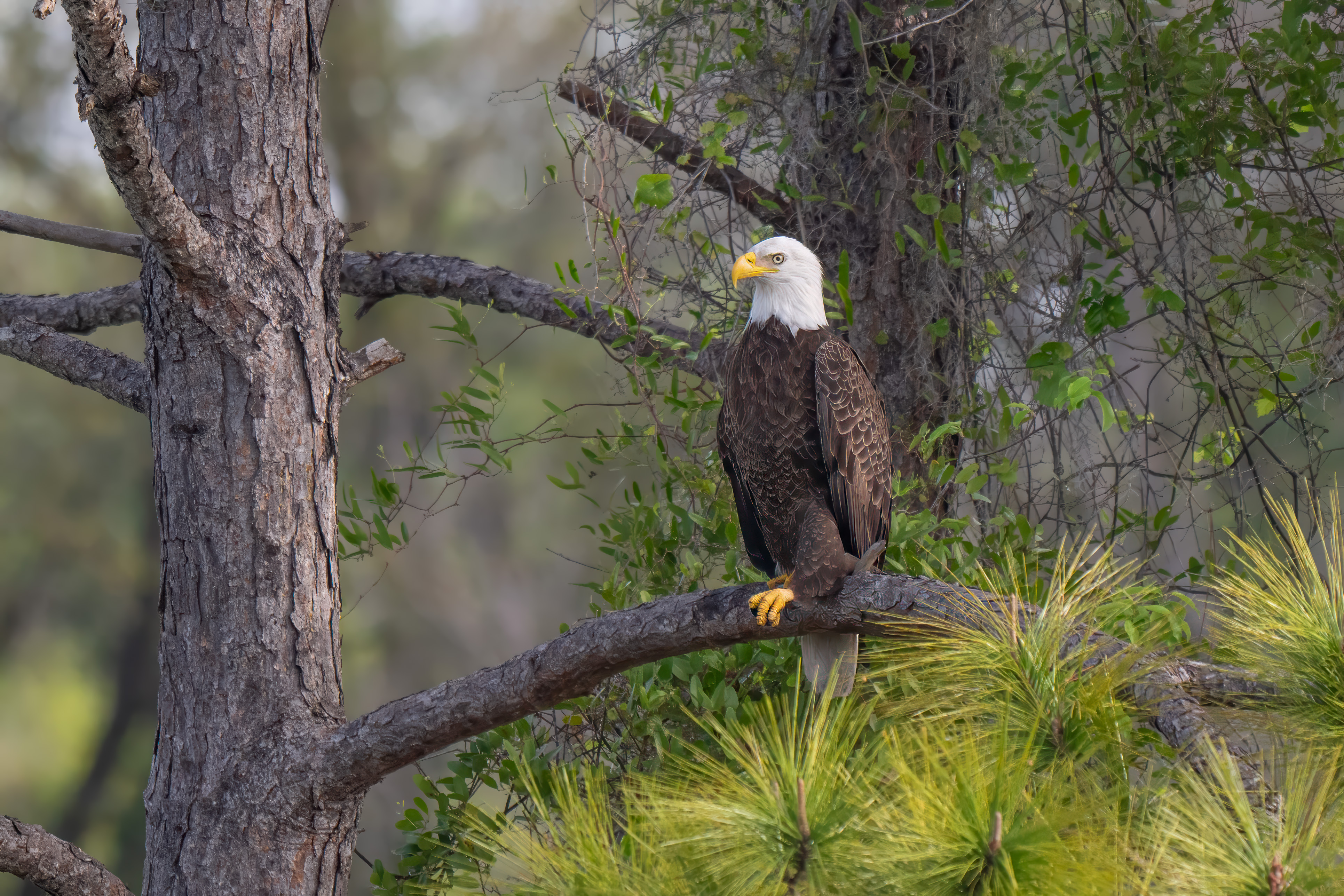
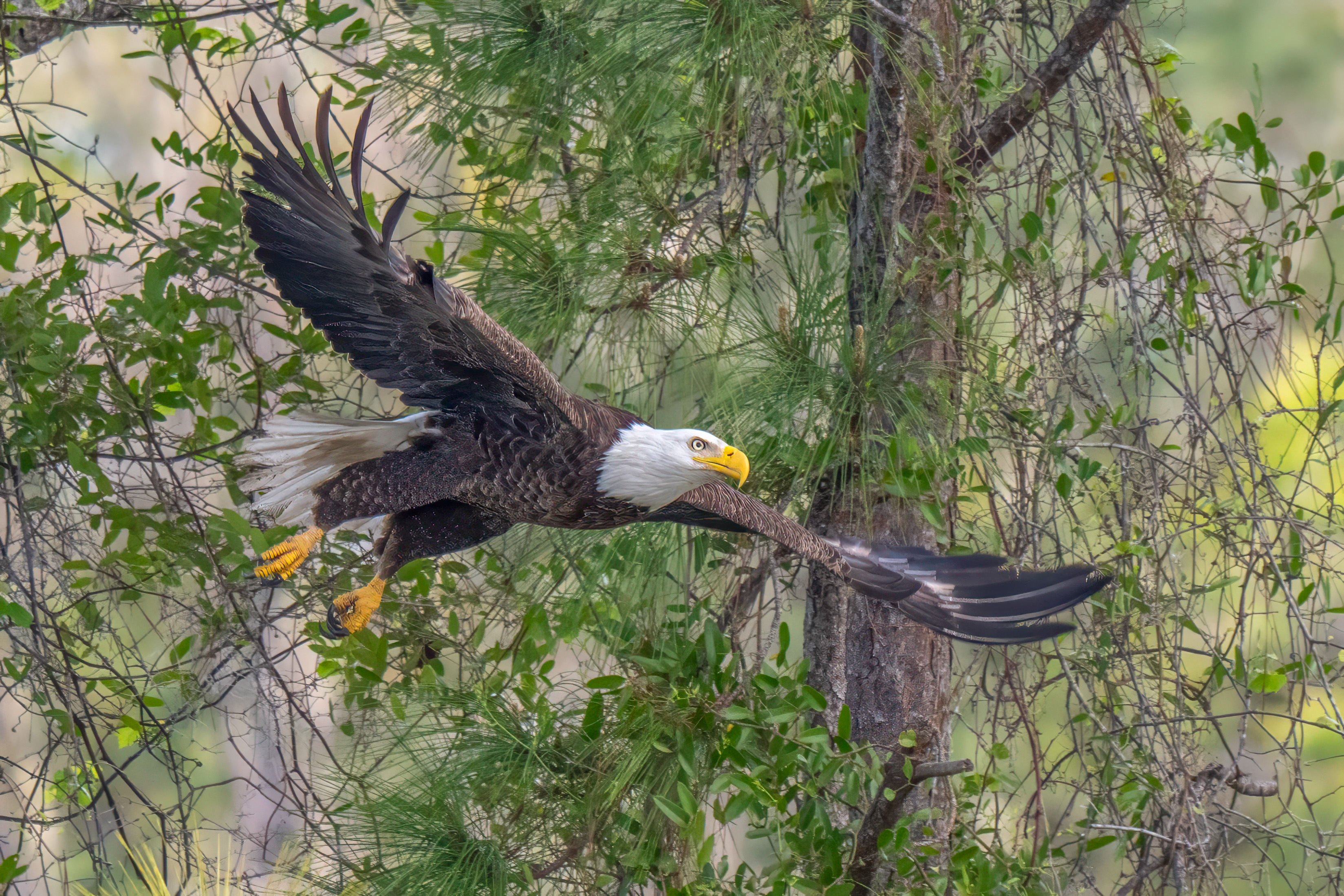
There’s something unmistakably exciting about spotting an American Bald Eagle perched high in a tree—or better yet, launching into flight. I spotted this eagle while sitting at our kitchen table having breakfast. I ran out to our back deck with my camera and was fortunate enough to capture many images.
Equal parts symbol and survivor, eagles have one of the most impressive comeback stories in wildlife history.
Not Actually Bald
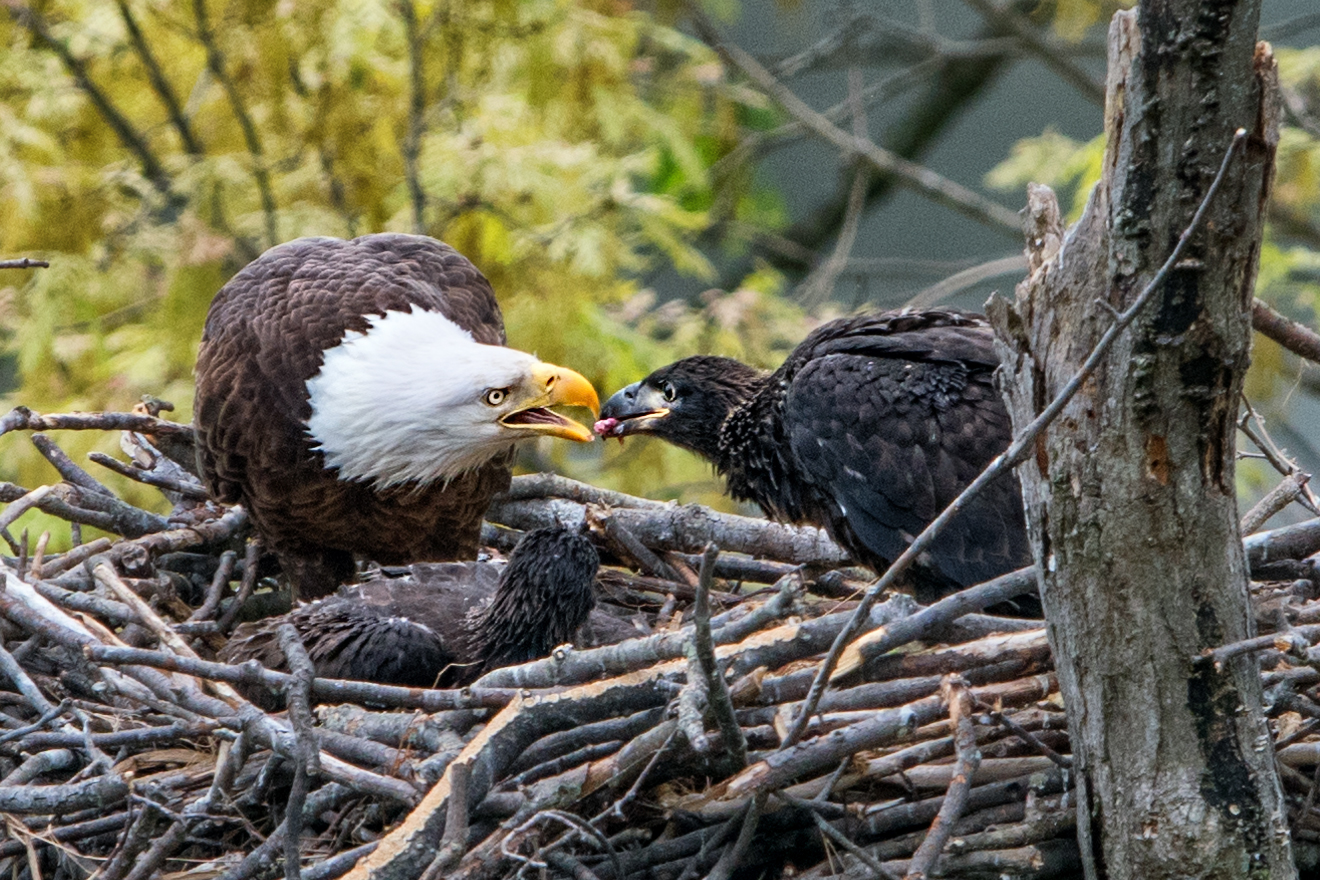
Despite the name, bald eagles aren’t bald at all. The term “bald” comes from an old English word meaning white-headed. That bright white head and tail do not show up until the bird is about 4–5 years old. Until then, juveniles look more like a mottled brown mystery bird.
Built Like a Predator
These birds are not messing around:
• Wingspan: up to 7.5 feet
• Weight: up to 14 pounds (females are larger)
• Grip strength: strong enough to crush bones
Their talons and hooked beaks make them top-tier hunters, but they are also opportunists—meaning they will happily steal a meal from another bird. (They are basically the pirates of the sky.)
Love, Loyalty… and Real Estate
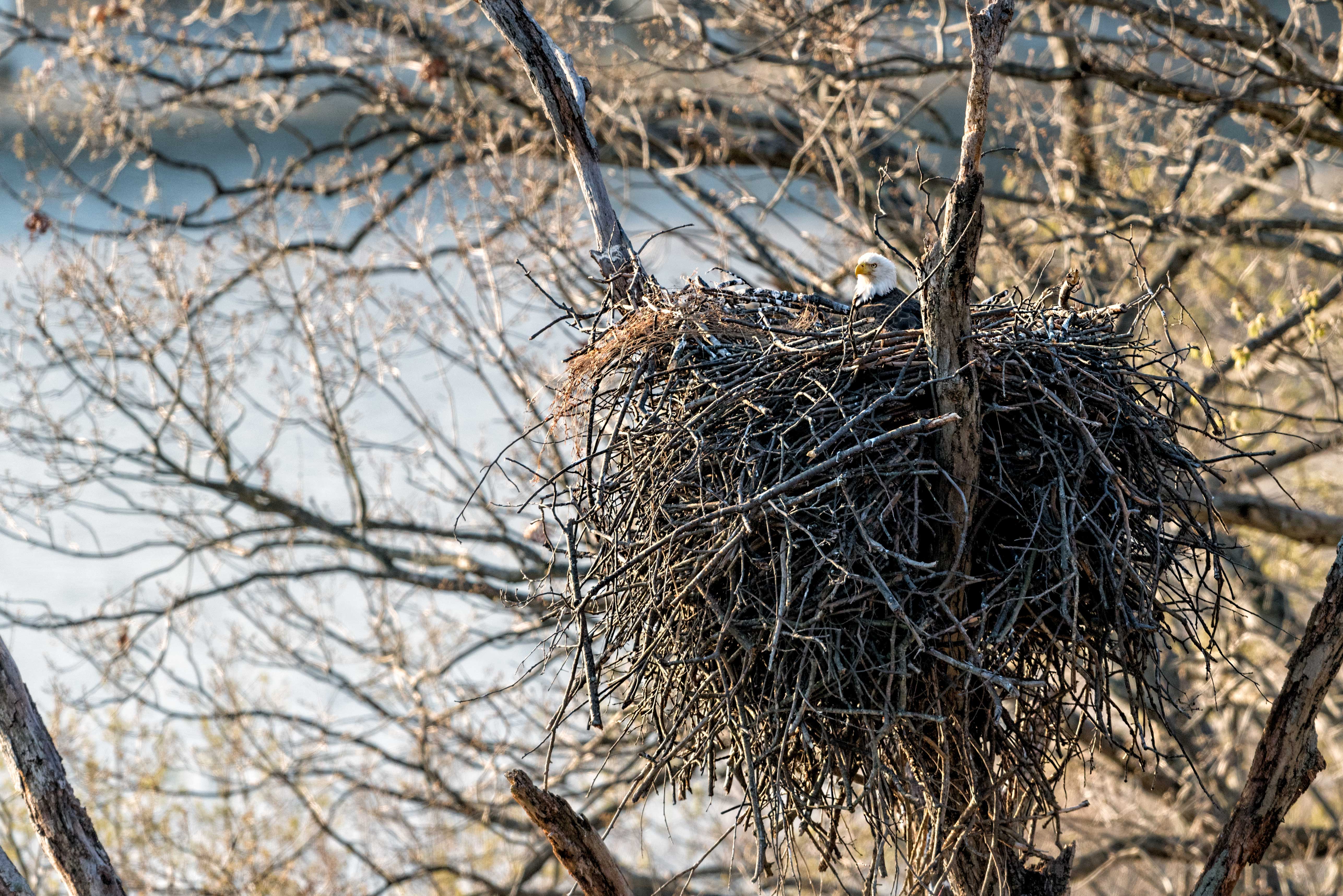
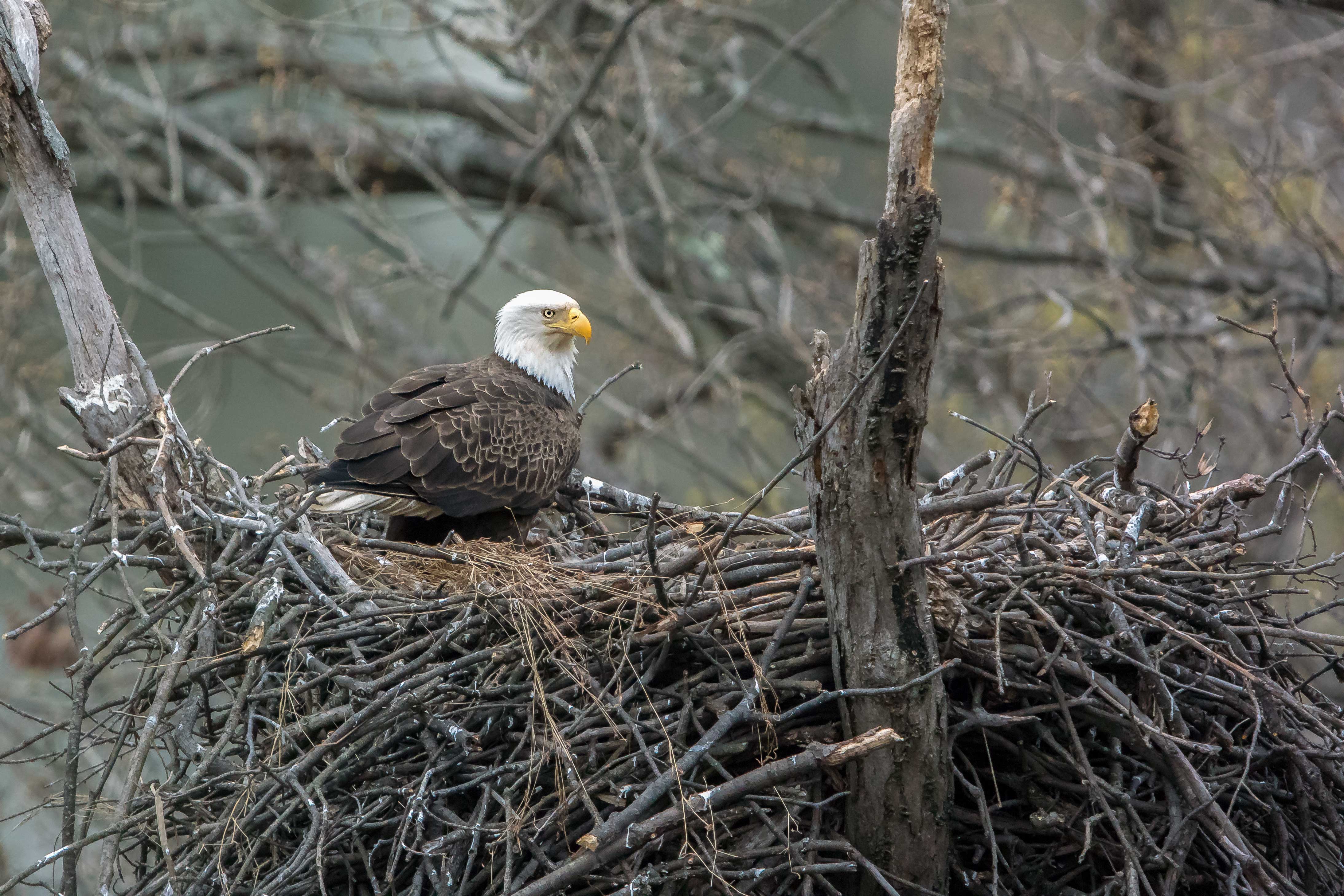
Bald eagles mate for life. Once they find “the one,” they stick together year after year, returning to the same nest. Eagles’ nests:
• Can weigh over a ton
• Can be reused and expanded for decades
• Largest recorded nest: about 9.5 feet wide
Near-Extinction… and an Incredible Recovery
By the mid-1900s, bald eagle populations were in serious trouble, largely due to the pesticide DDT, which weakened their eggshells. Their numbers dropped to just a few hundred nesting pairs in the U.S.
Thanks to conservation efforts—and protections like the Bald and Golden Eagle Protection Act and the Migratory Bird Treaty Act—the species made a dramatic comeback. Today, there are tens of thousands of eagles across North America.
Their Call Isn’t What You Think
Bald eagles actually have a surprisingly high-pitched, almost chirpy call. Not exactly intimidating—but they let their talons do the talking.
Masters of the Air
Bald eagles are incredible flyers:
• They can soar for hours without flapping
• Speeds reach 30–35 mph normally, and over 100 mph in a dive
• They use thermal air currents
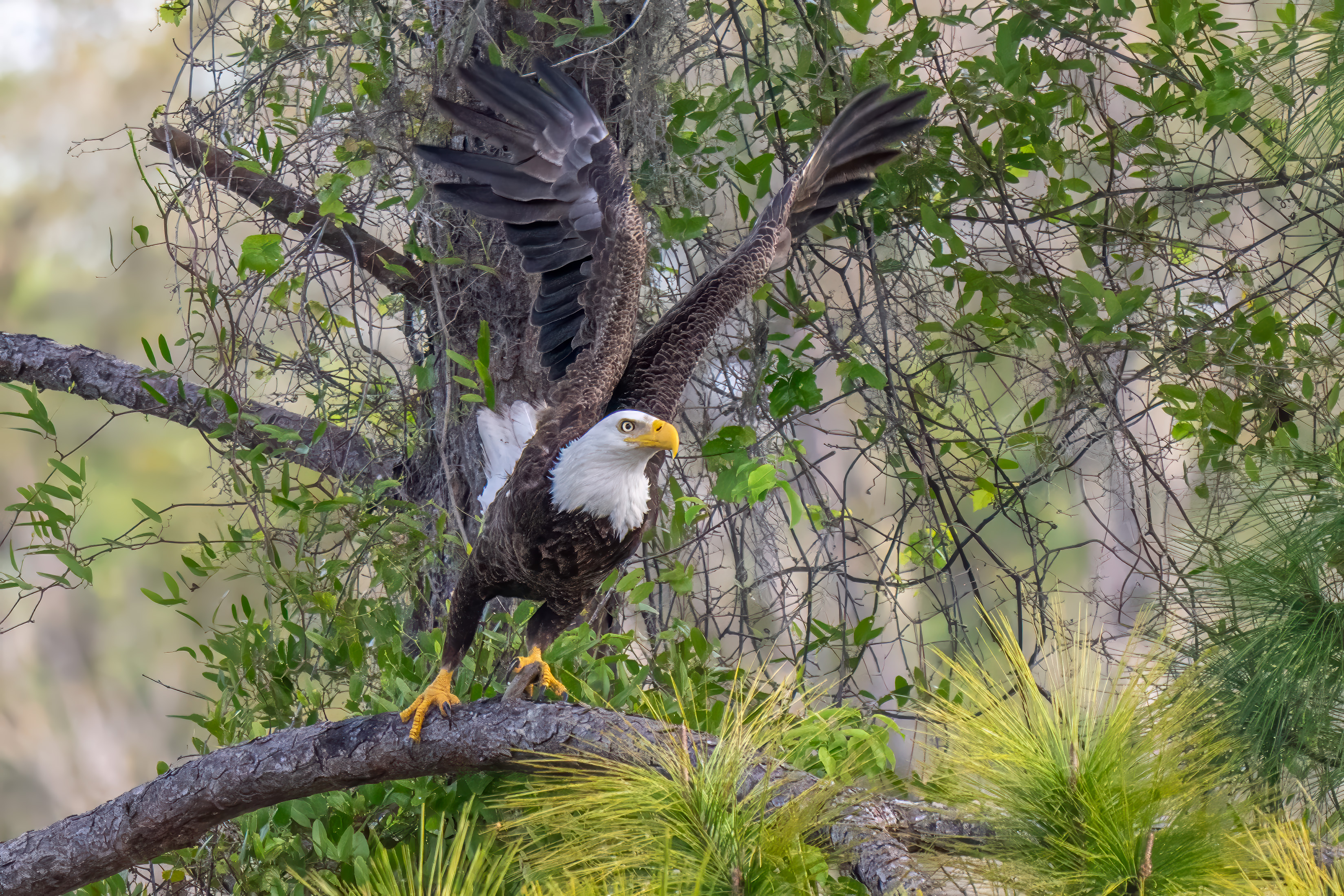
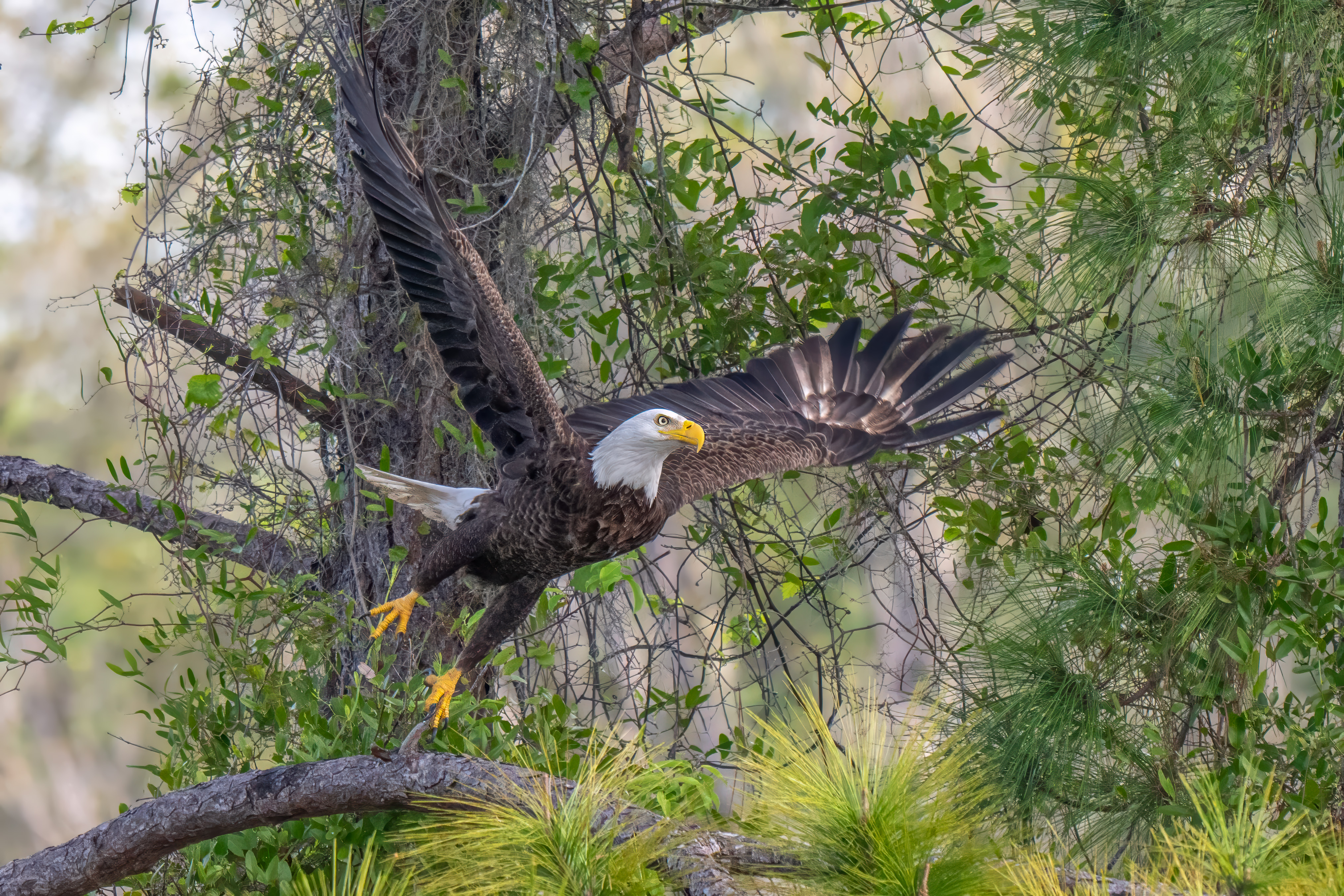
Watching one take off—like in my photos—is a perfect example of controlled power. Wings spread wide, a push off the branch, and suddenly gravity becomes optional.
⸻
Final Thought
The bald eagle isn’t just a national symbol—it’s a lesson in resilience. From the brink of extinction to thriving once again.
The following are some of my other Bald Eagle images: