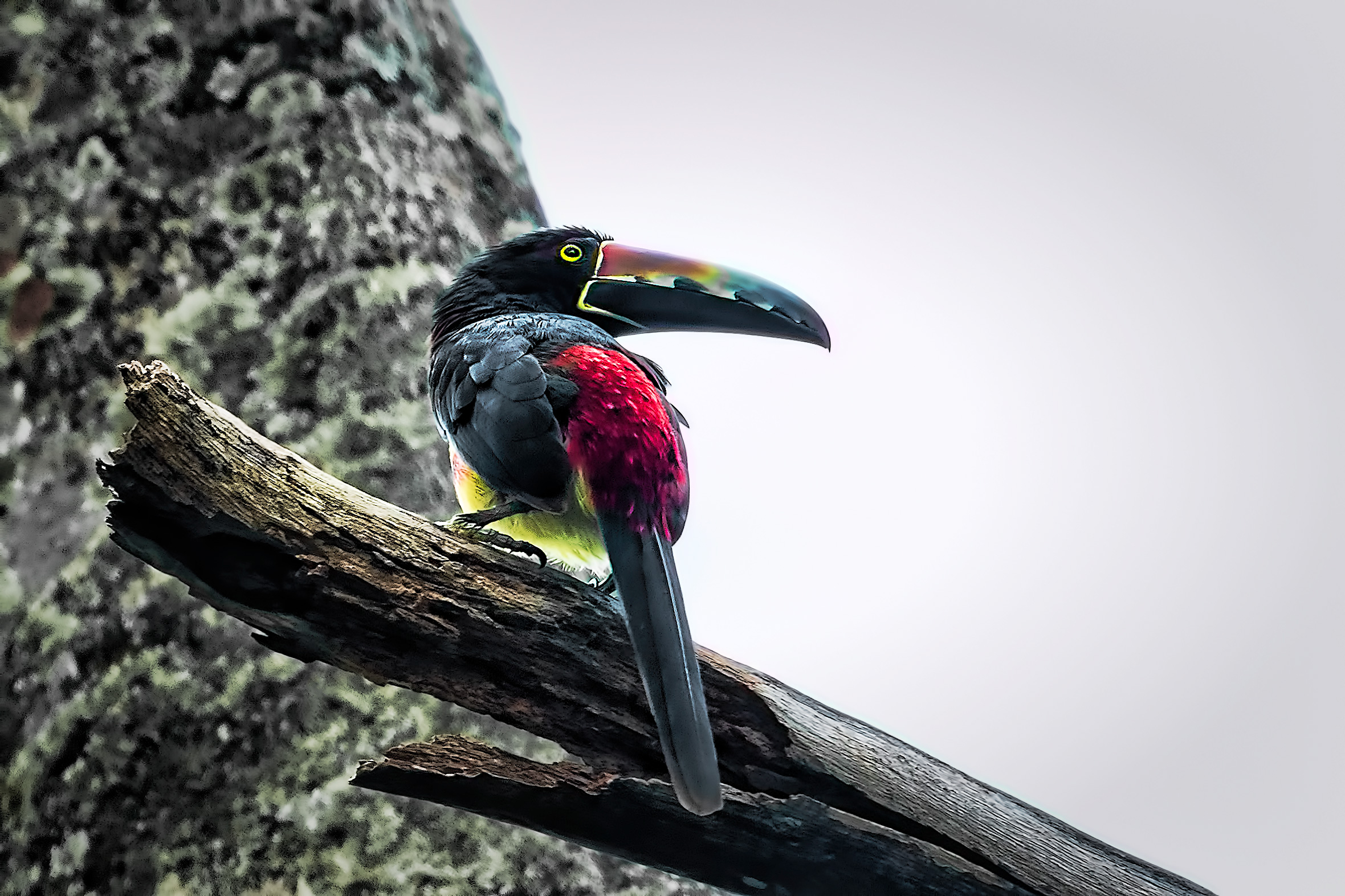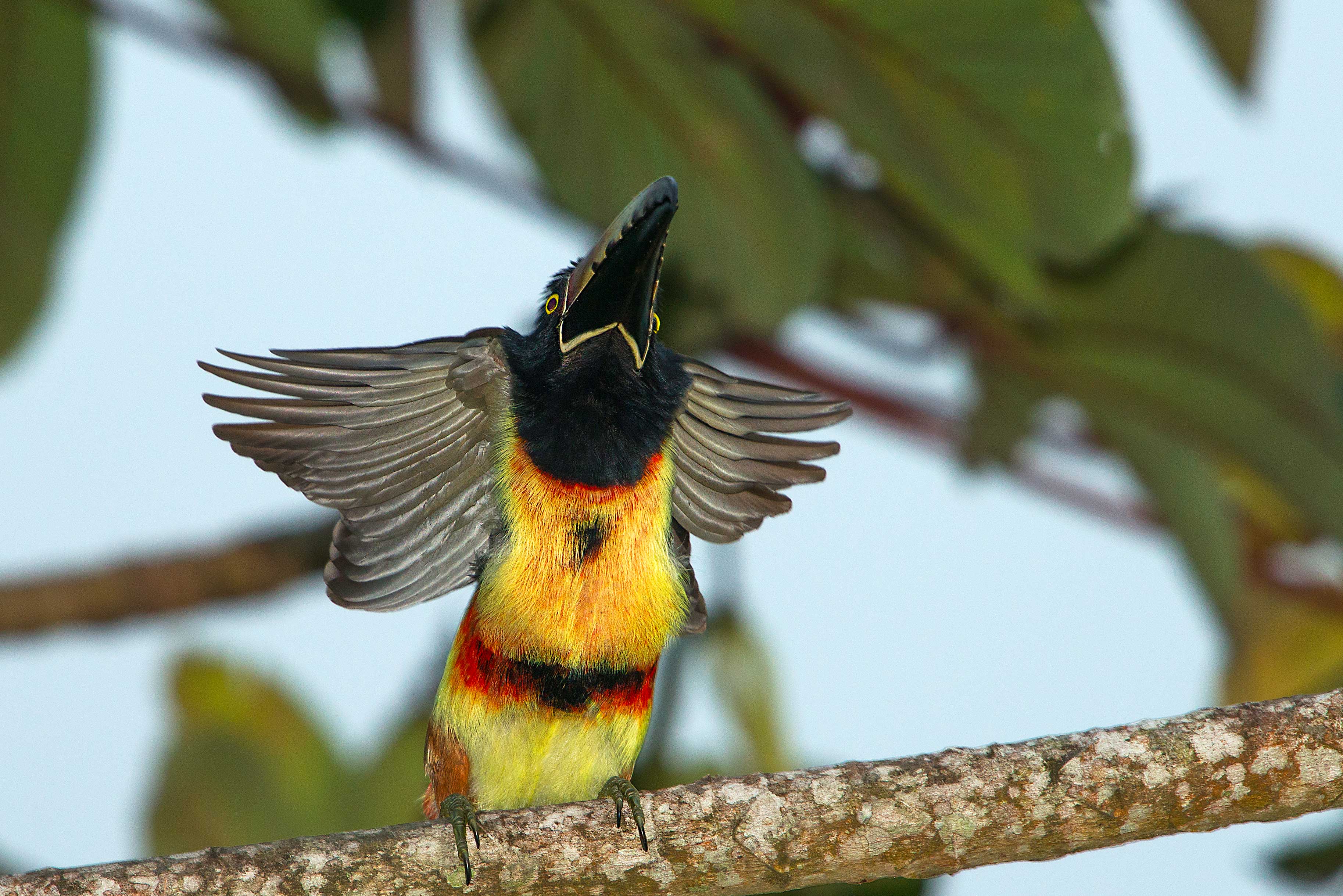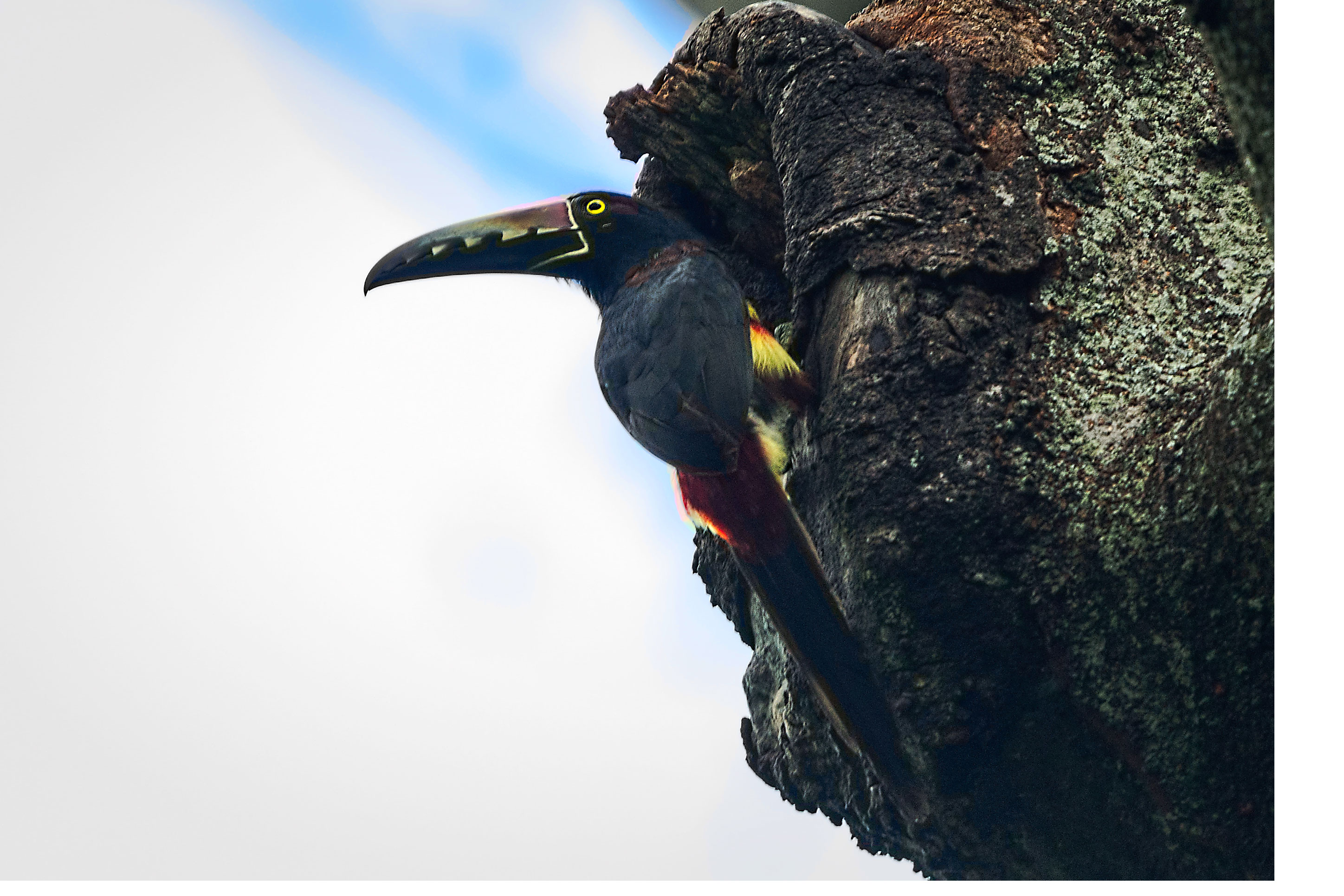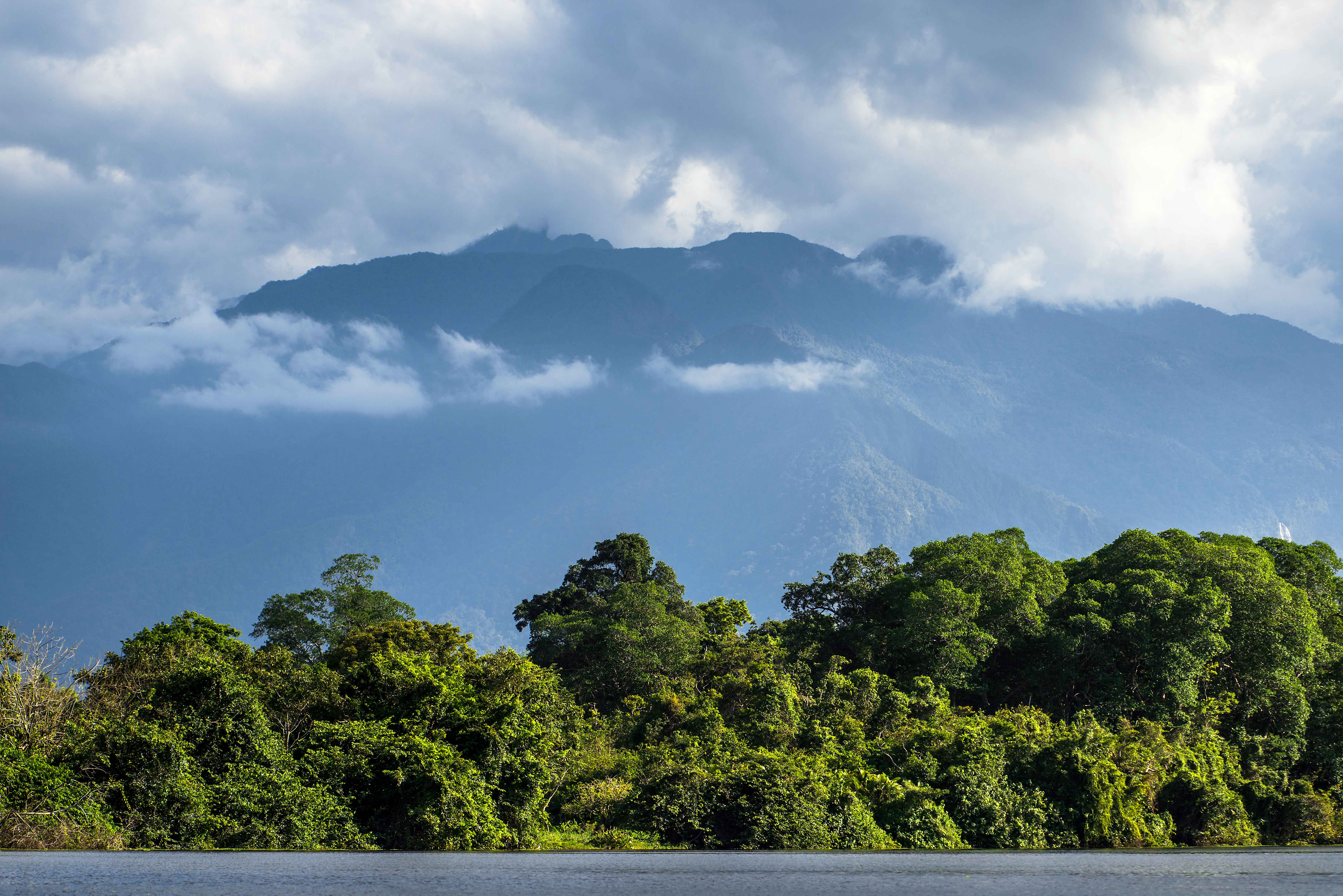
Keel-billed Toucans, Pico Bonito National Park, Honduras

Toucan-in-Tree

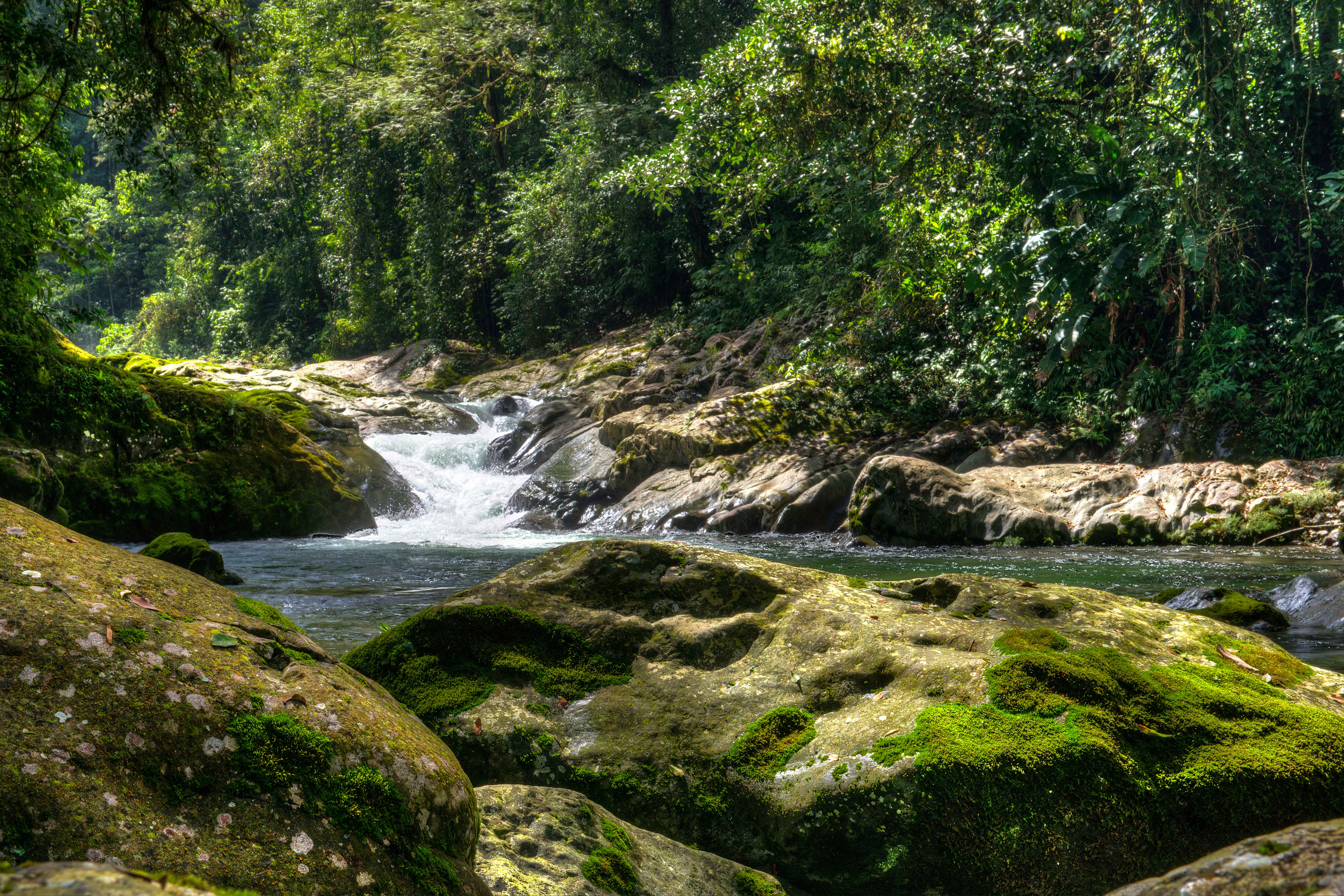
If you have been following my blog recently, you know that in late January/early February, I was at Pico Bonito National Park, in Honduras. Pico Bonito National Park is a pristine neotropical environment consisting of rainforests and cloud forests. The park encompasses the Cordillera Nombre de Dios mountain range and is the perfect, unspoiled habitat to an extraordinary variety of wildlife and about 400 species of birds.

Keeled-billed-Toucan-in-Tree

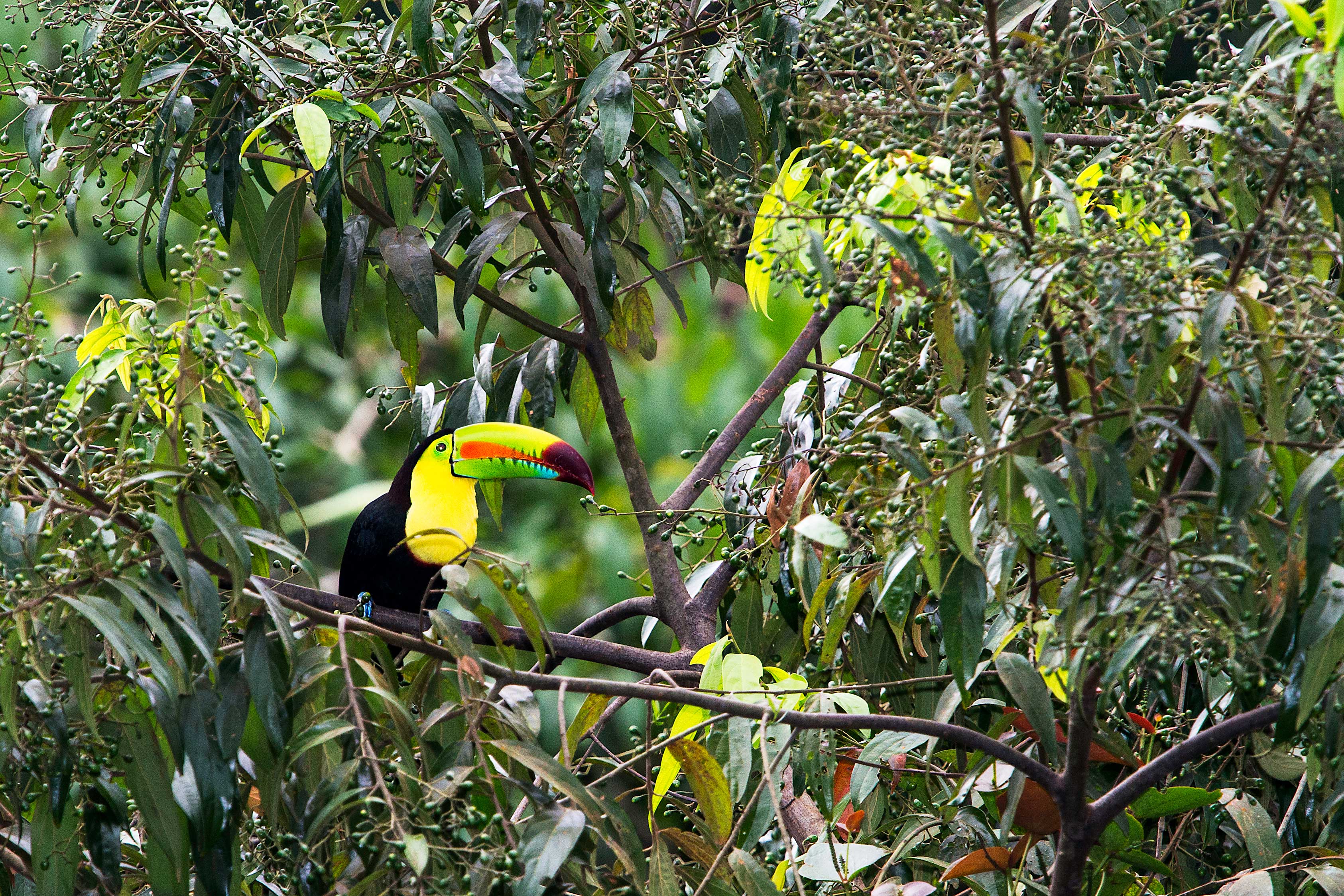
Prior to going to Honduras, and having researched Pico Bonito, I noted that it was the home to Keel-billed Toucans. I was hoping to see at least one toucan and excited that I might be able to photograph one. I had seen toucans in captivity many times, but never in their own environment. They were on the top of my list of wildlife to see and photograph.

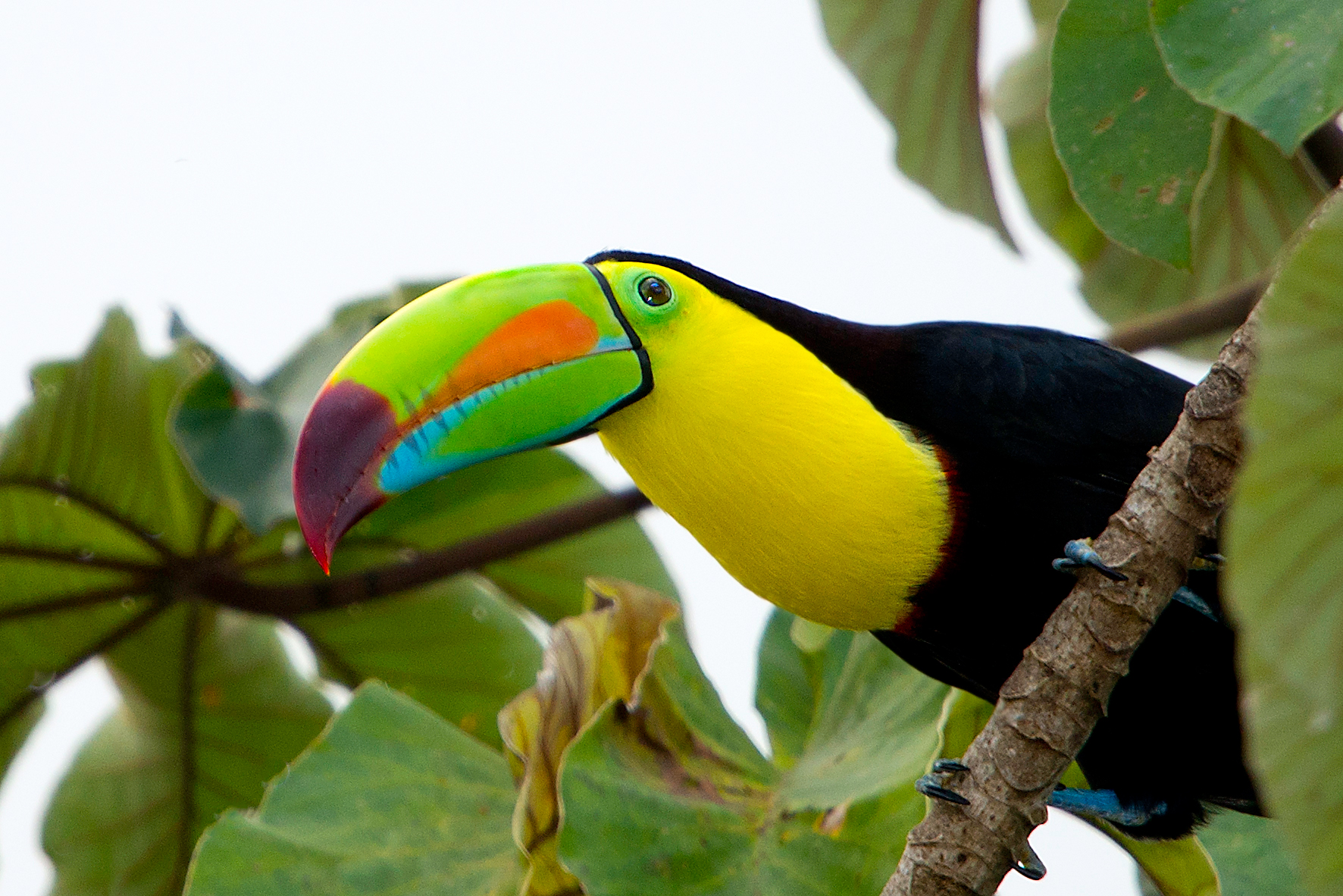
Keel-billed Toucans are also known as Rainbow-billed Toucans, for obvious reasons. They are large birds ranging between 17 to 22 inches in length, which includes their bill. Their very large bill is about one-third of their length, and although it appears very cumbersome, it is very light, mostly hollow, and covered in keratin–the same protein substance in human hair and fingernails.

Keel-billed-Toucan

Keel-billed-Toucan-2

Keel-billed Toucans have blue legs and feet, which compliment their very colorful bodies and bills. Their feet also are unusual because they have two toes facing forward and two facing back, which helps them hold on to and hop from tree branch to tree branch, which is where they spend most of their time.

Keel-billed-Toucan-Feeding

The toucans were most active early in the morning and at dusk, and were located high in the top of trees. They eat mostly fruit and berries, but also eat insects, bird eggs, reptiles, and tree frogs. It was interesting seeing them feed, because they grabbed the fruit in the end of their bill, and tossed it up and swallowed it whole.
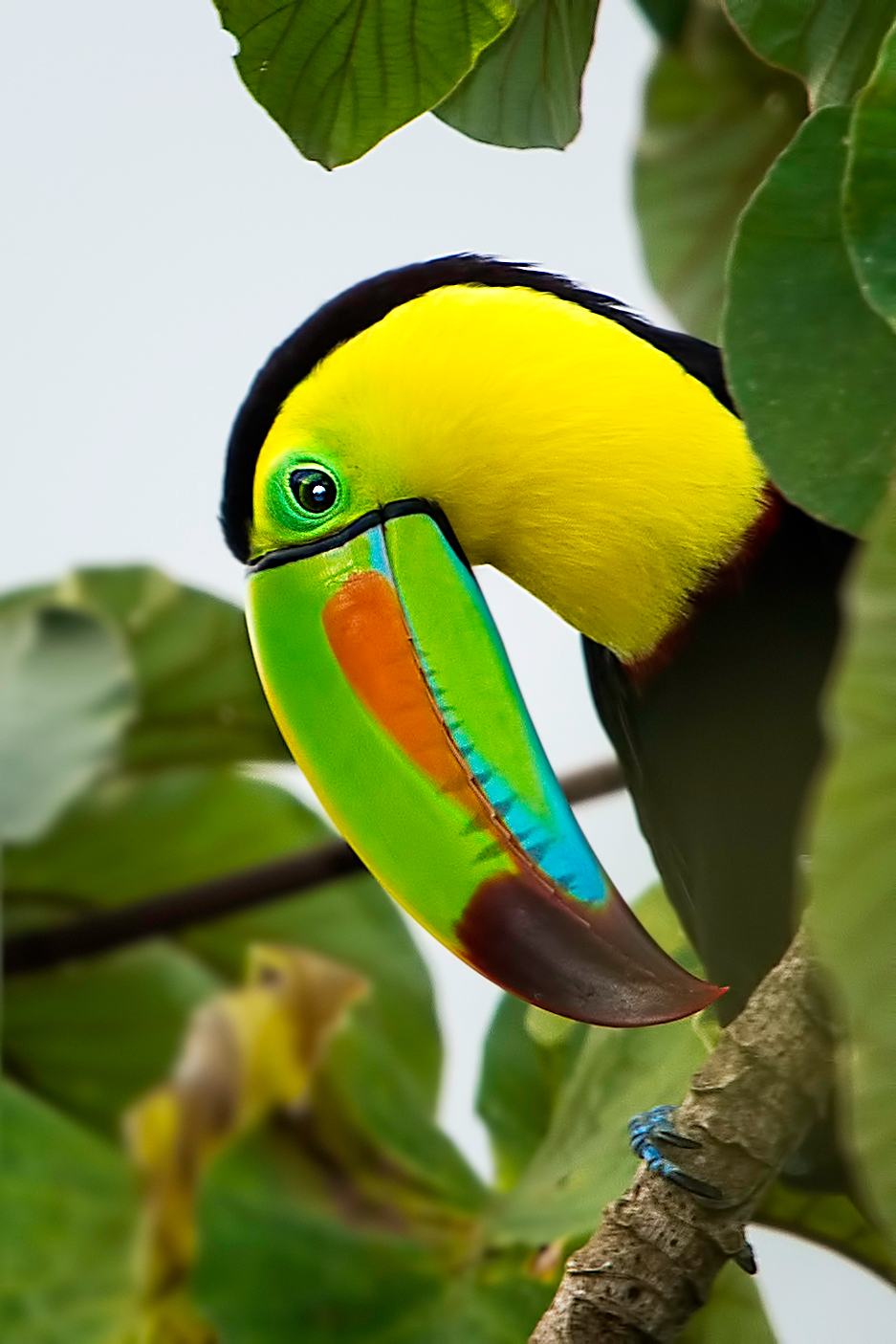
Keel-billed-Toucan-22

Keel-billed Toucans are very social birds and are rarely seen alone. Most of the toucans that I saw were in pairs, and the males and females were indistinguishable. They nest in tree cavities and raise one to five young. Both the male and female incubate the eggs and take turns feeding them. Unfortunately, when I was in Honduras, the toucans were not nesting. I was told that they lay their eggs and raise their young in late February and March.
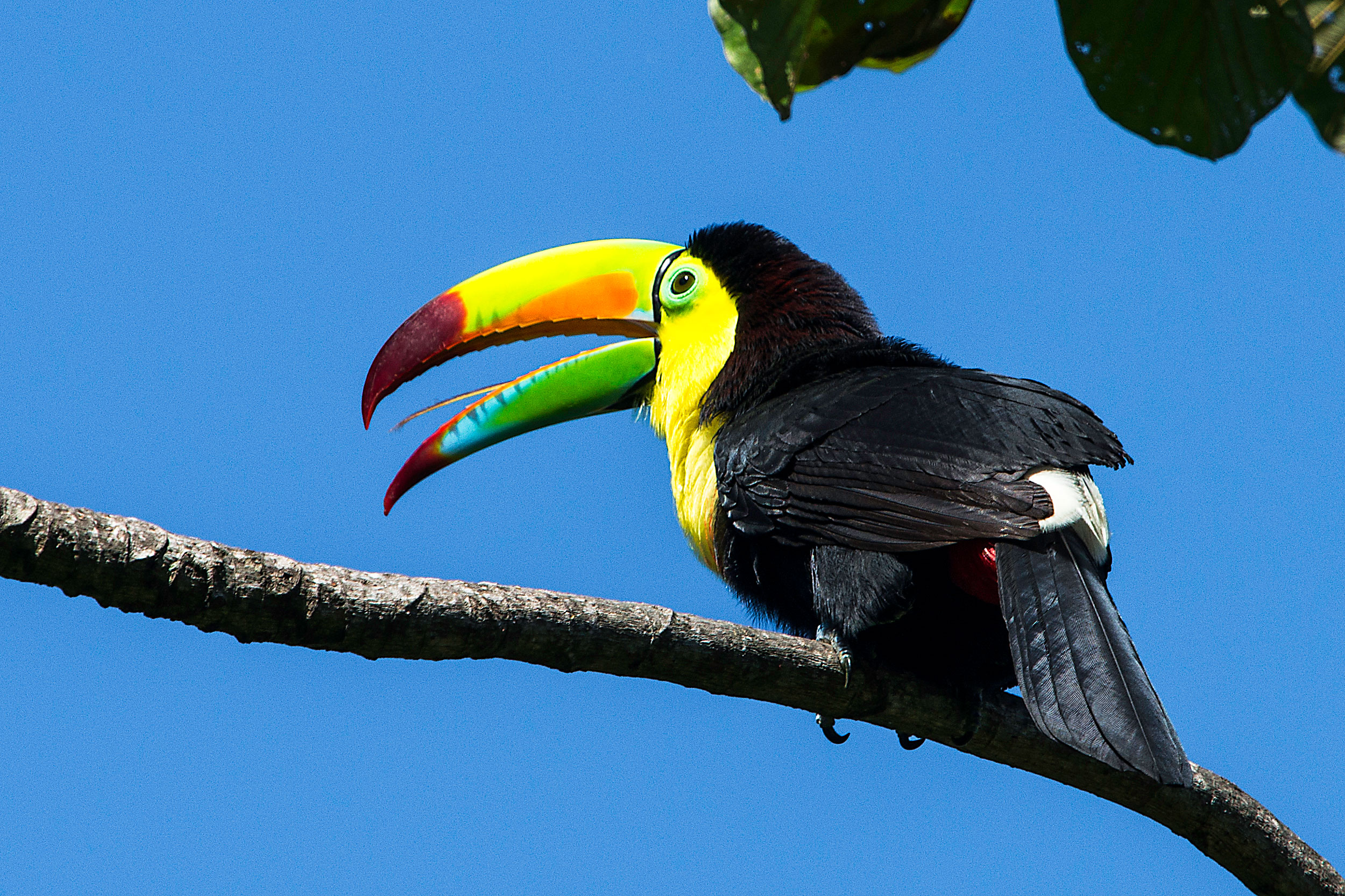
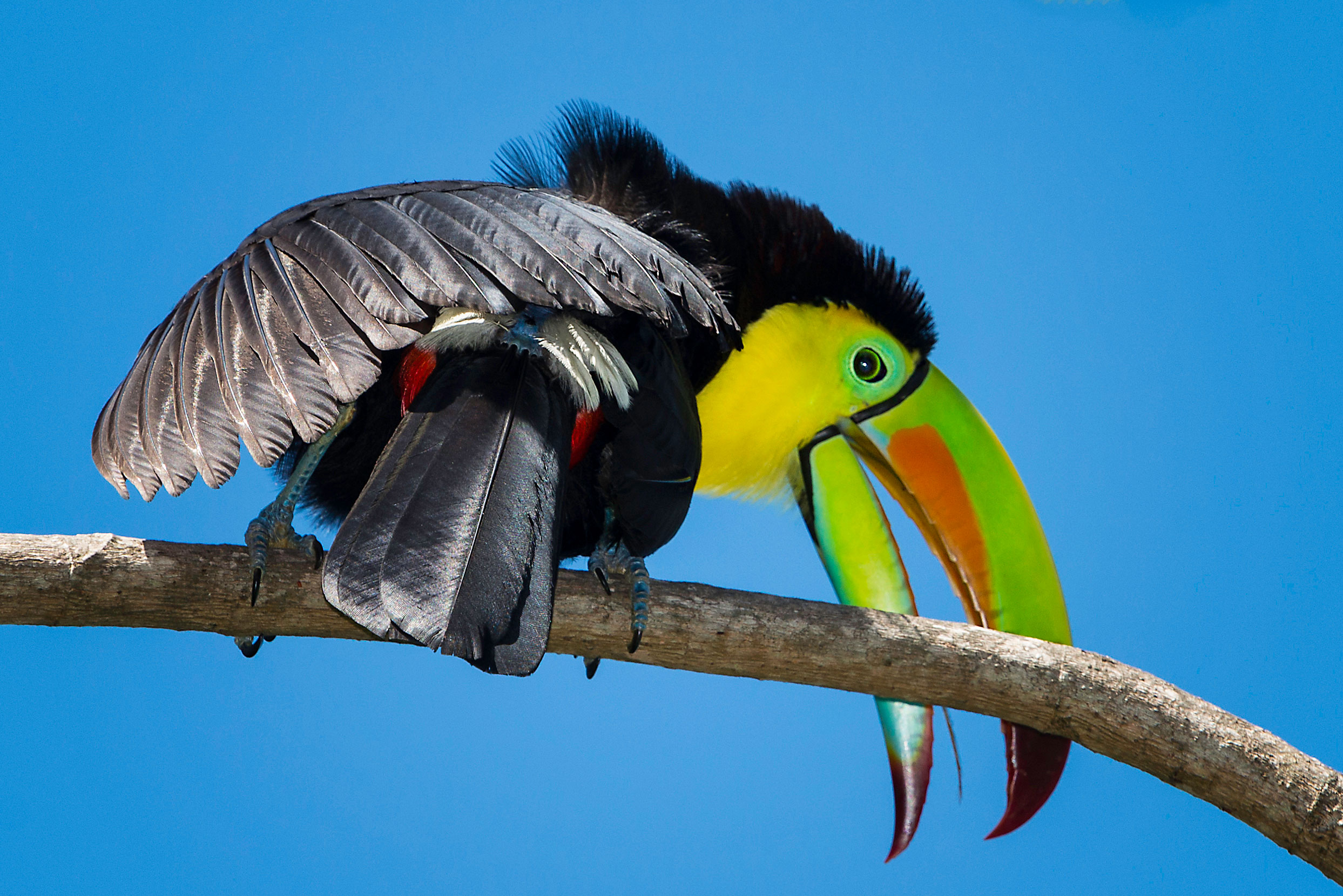
Keel-billed-Toucan-4

Keel-billed-Toucan-21

As you can see from the images in this article, I was very fortunate to not only see toucans, but also to photograph them in several locations. I did not see many, but I did see at least one or two pairs everyday, and I was thrilled to see them each time.

Keel-billed-Toucan-20

All of the images in this article were photographed with a Nikon D800, 600mm f4 VRII lens and TC14 teleconverter, and using an SB900 Speedlight with a Better Beamer. The toucans may appear close in these images, but they were far up in the tree top canopy and often backlit, shaded, or in the dim light of the early morning or very late afternoon sun.
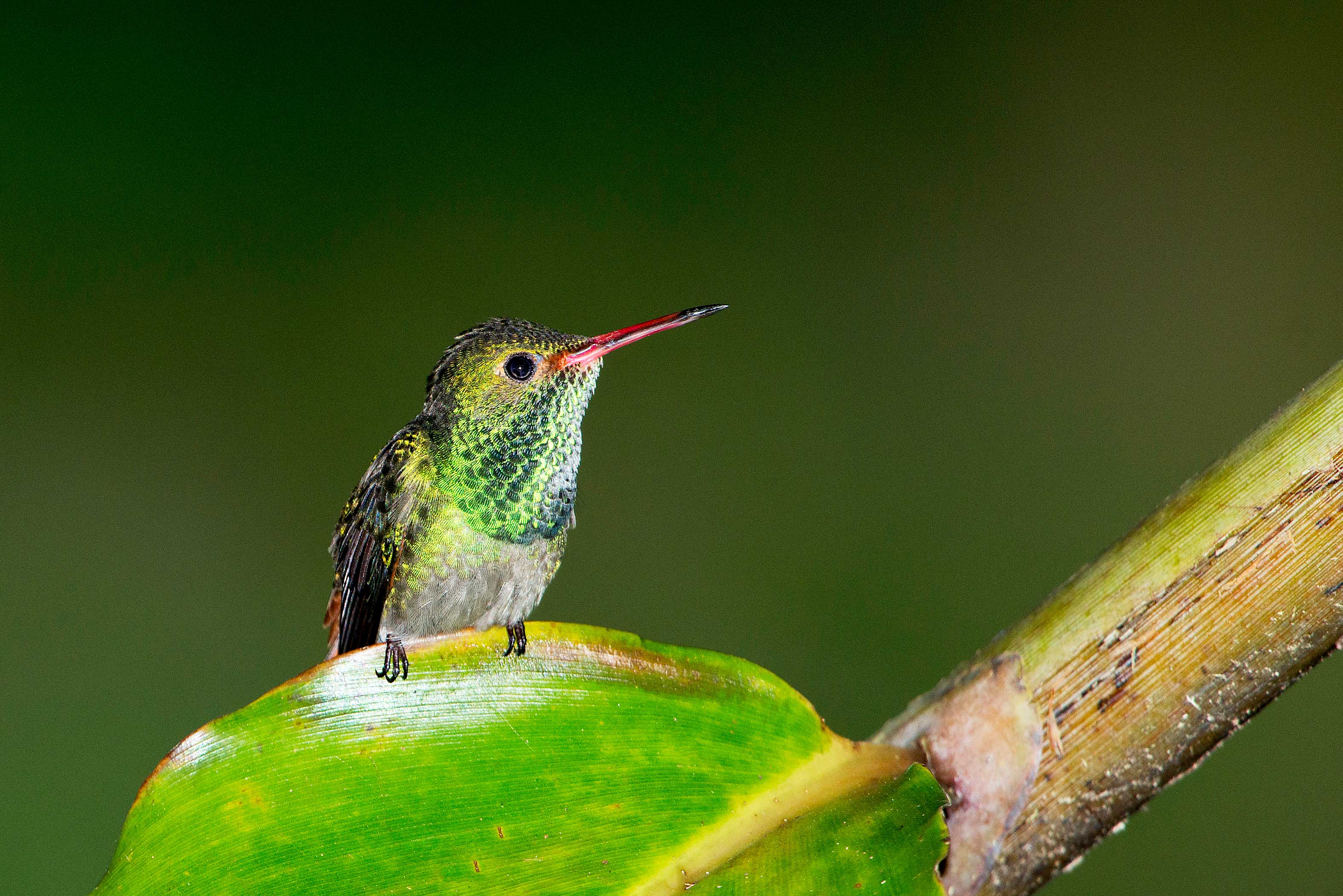
Posted in Bird Photographs, Honduras, Nature, Wildlife | Tagged , , , , | 15 Comments

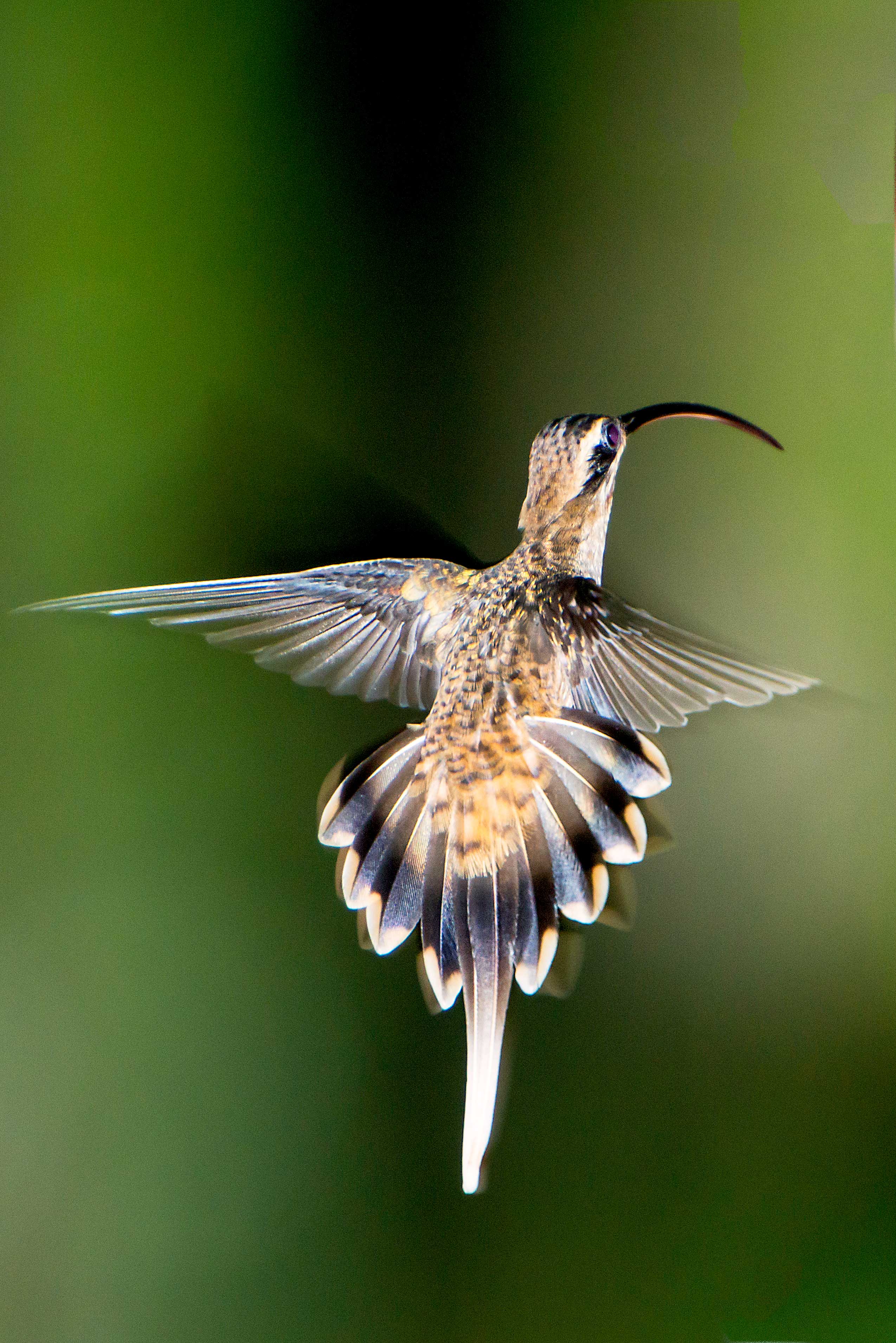
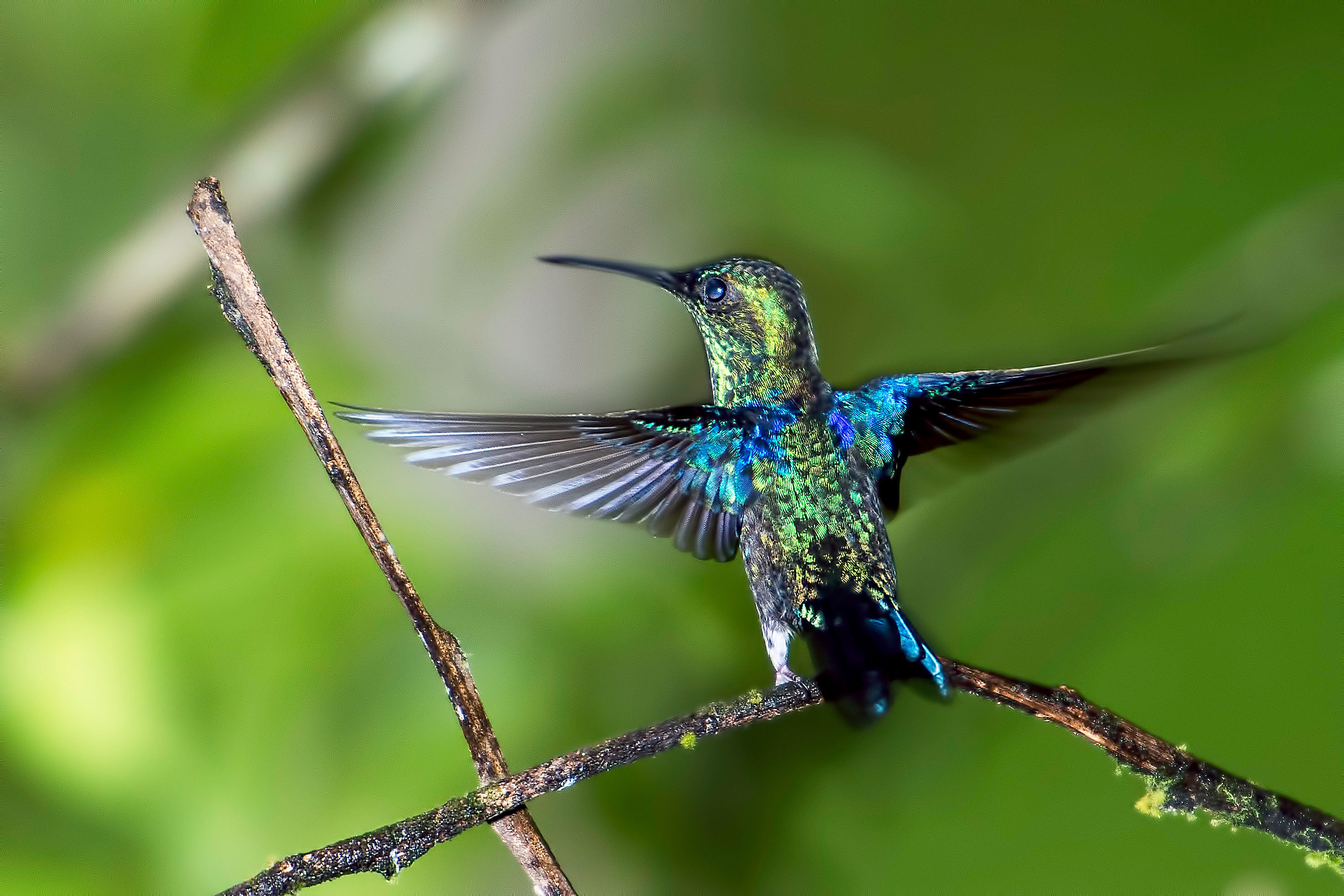
Rio Santiago Hummingbirds

Rufous-tailed-Hummingbird

While in Honduras last February and staying at the Lodge at Pico Bonito, my guide for the day, German Martinez, who was assisting me locate wildlife in Pico Bonito National Park, told me about a “hummingbird sanctuary” about 30 minutes north of the lodge. He said, the sanctuary was home to hundreds of hummingbirds and as many as 10 different species. It was known as Rio Santiago, probably because it was located near the Santiago River.

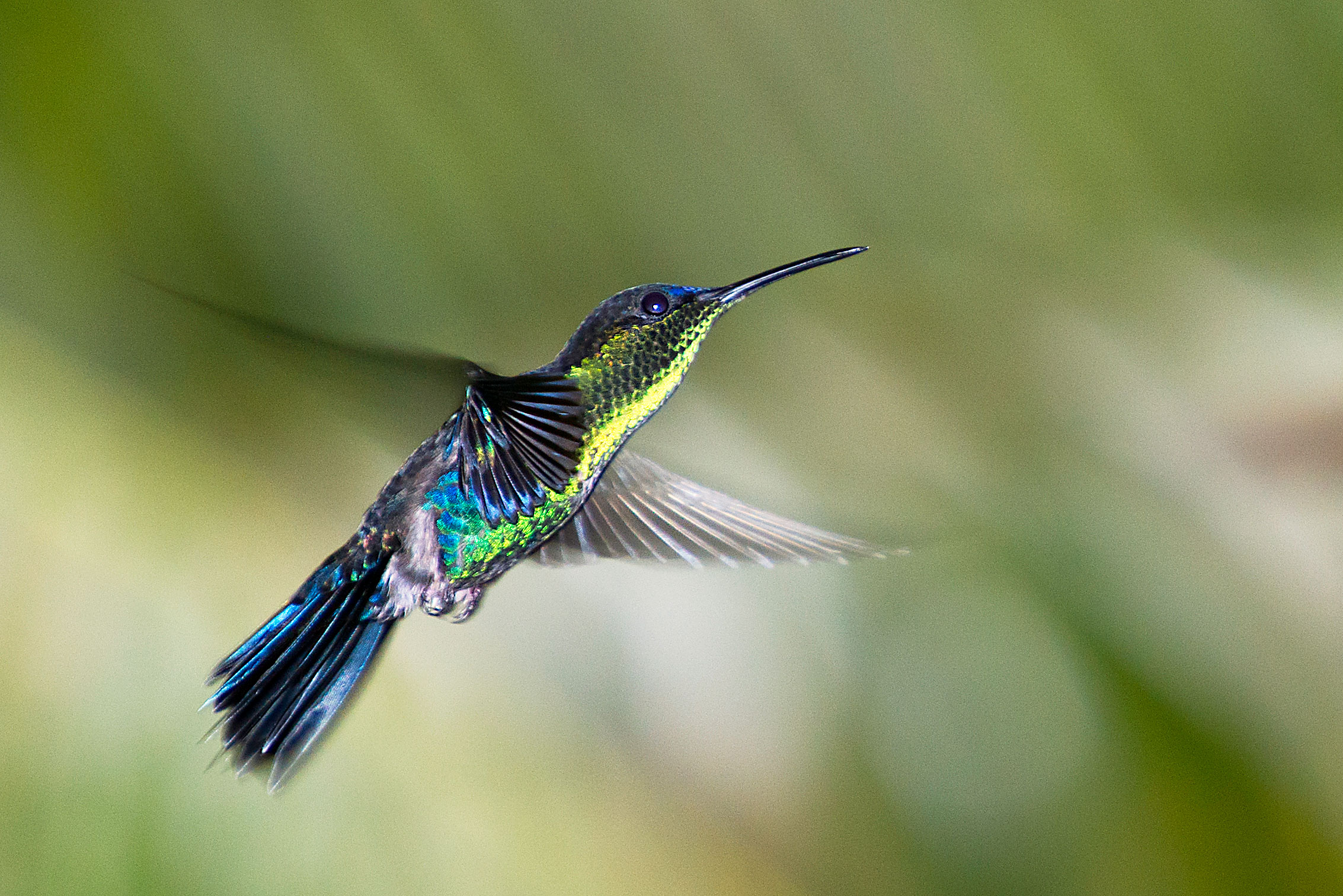
Violet Sabrewing (male)

German definitely had me very interested. I had attempted to photograph the many hummingbirds that were around the lodge, but their fast and sporadic movement made them very difficult to photograph unless they perched on a nearby tree or bush, and I was not satisfied with what I had captured so far. Therefore, it was an easy decision to travel out of Pico Bonito, although I had no idea what to really expect based solely on German’s vague description. I wondered: would there really be many hummingbirds; at what distance would they be from me and my camera; what would the light be like to photograph them; would it be heavily wooded and shady or more open with harsh afternoon sunlight; and would I lose an afternoon of exploring and photography around Pico Bonito, if the hummingbird sanctuary did not work out. There was only one way to find out, we would go the next afternoon.
Long-billed Hermit

The lodge furnished a vehicle and driver, and German and I left for Rio Santiago after lunch. We drove north from the lodge for about 30 minutes and turned west on a narrow, rugged dirt road. I asked German how far up the dirt road we were going, and he replied about 4 kilometers. It seemed more like 10 kms, because the road was winding and very rough, and it had very recently rained so it was also muddy. As we drove up the dirt road, we passed many small, ramshackle homes, typical of how many Hondurans live in the rural areas, and it was very rural. There were chickens crossing the road, loose dogs running about, and a few Hondurans walking with machetes. I asked about them.

The mountain range, called Cordillera Nombre de Dios, which is encompassed by the Pico Bonito National Park, grew closer as we drove the dirt road. It was very overcast, but it was also very beautiful and green. It was a significant contrast to home in wintery Virginia. Where were they taking me, I wondered as the van slowly made it around and through large ruts and holes in the dirt road, and what was this place going to be like?

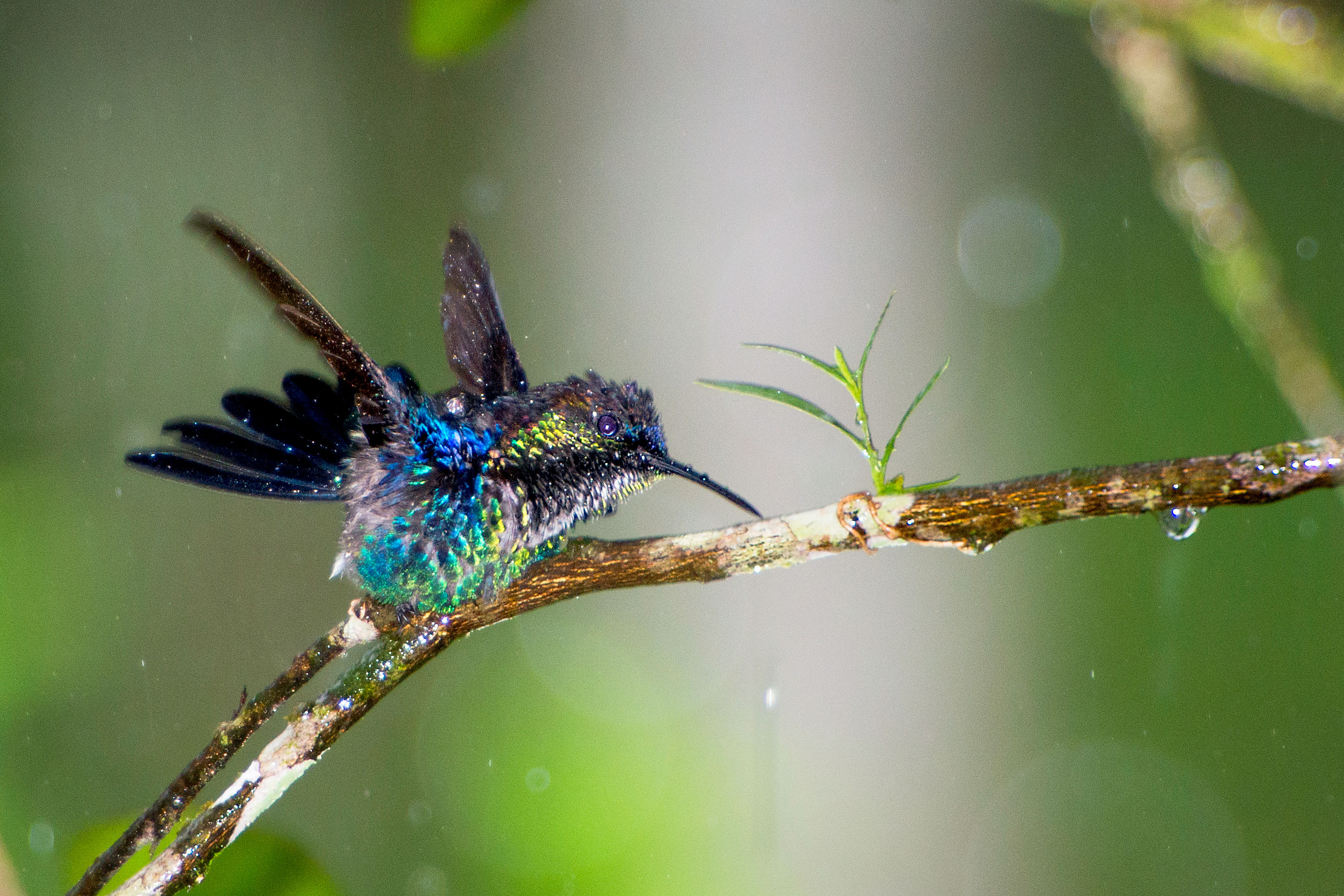
Violet-crowned Woodnymph (male)

Eventually, we arrived at the Rio Santiago “hummingbird sanctuary,” which turned out to be the private property of Terry Habdas, who is a Canadian that lives on 80 acres that abut to Pico Bonito National Park. Terry had about fifty hummingbird feeders around a facility that catered to visitors that came to see the hummingbirds. German had not exaggerated; there were easily a couple hundred hummingbirds buzzing around from feeder to feeder, bush to bush, and tree to tree. They were flying all around us and within what seemed like inches at times as they buzzed by. They were like little jet fighters often buzzing each other, because they are very territorial. After arriving, I couldn’t get my camera gear set up fast enough and start photographing.

German told me that Terry goes through over 80 pounds of sugar a week feeding the hummingbirds. Terry also had staff that were refilling the feeders for the next morning. They start to feed early.

White-necked Jacobin (male)

Terry stayed with us most of the afternoon and watched as I photographed the hummingbirds, switching between two different camera bodies and different lenses. It was very overcast, which actually worked out well, minimizing what otherwise would have been harsh afternoon light. In order to photograph the extremely fast hummingbirds in the dim light, I used a Nikon SB900 speedlight (flash) and Better Beamer, a device that attaches to the speedlight and extends the reach of the light, as well as focusing the light on the subject.

Rufus-tailed Hummingbird

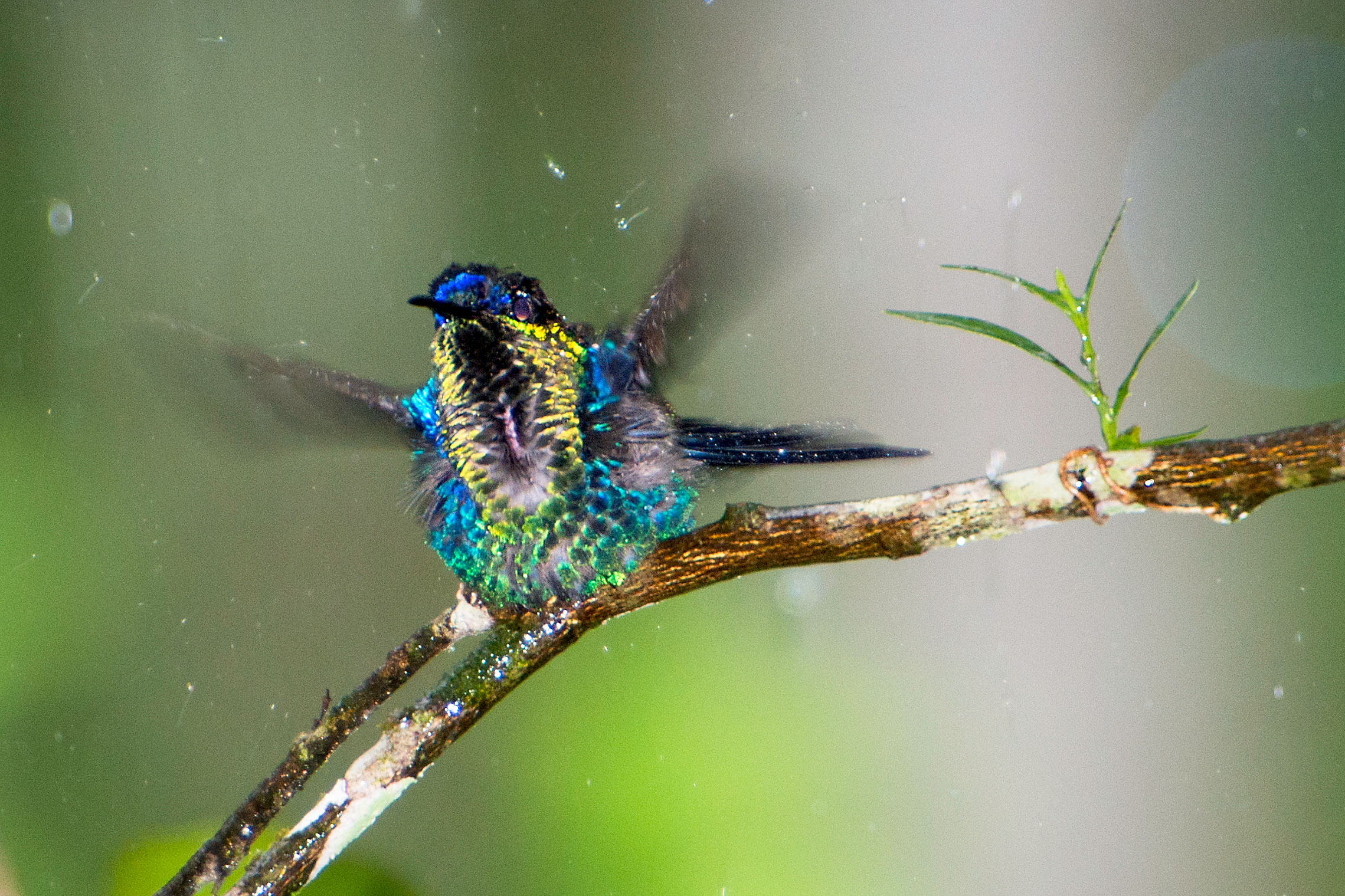
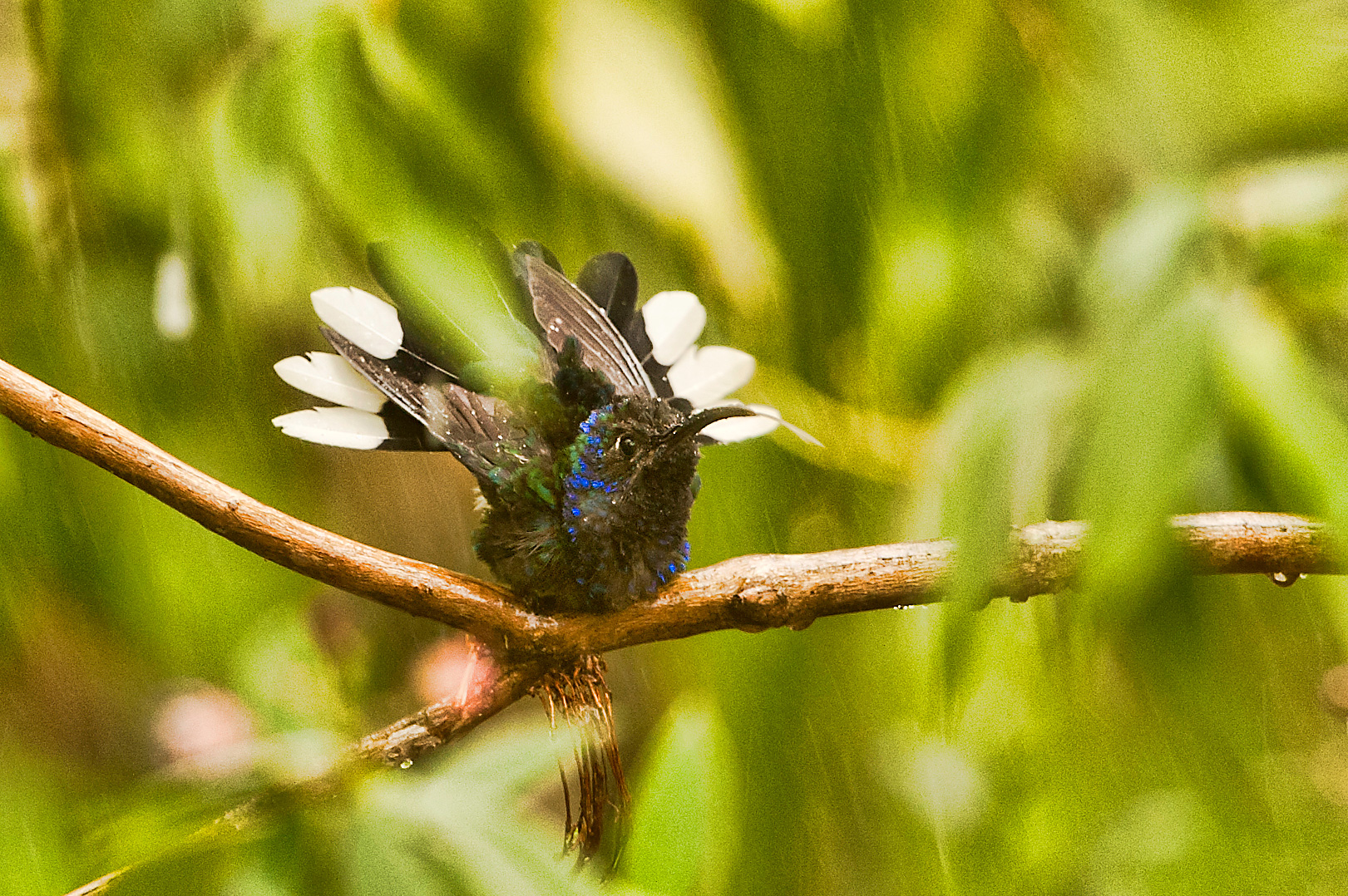
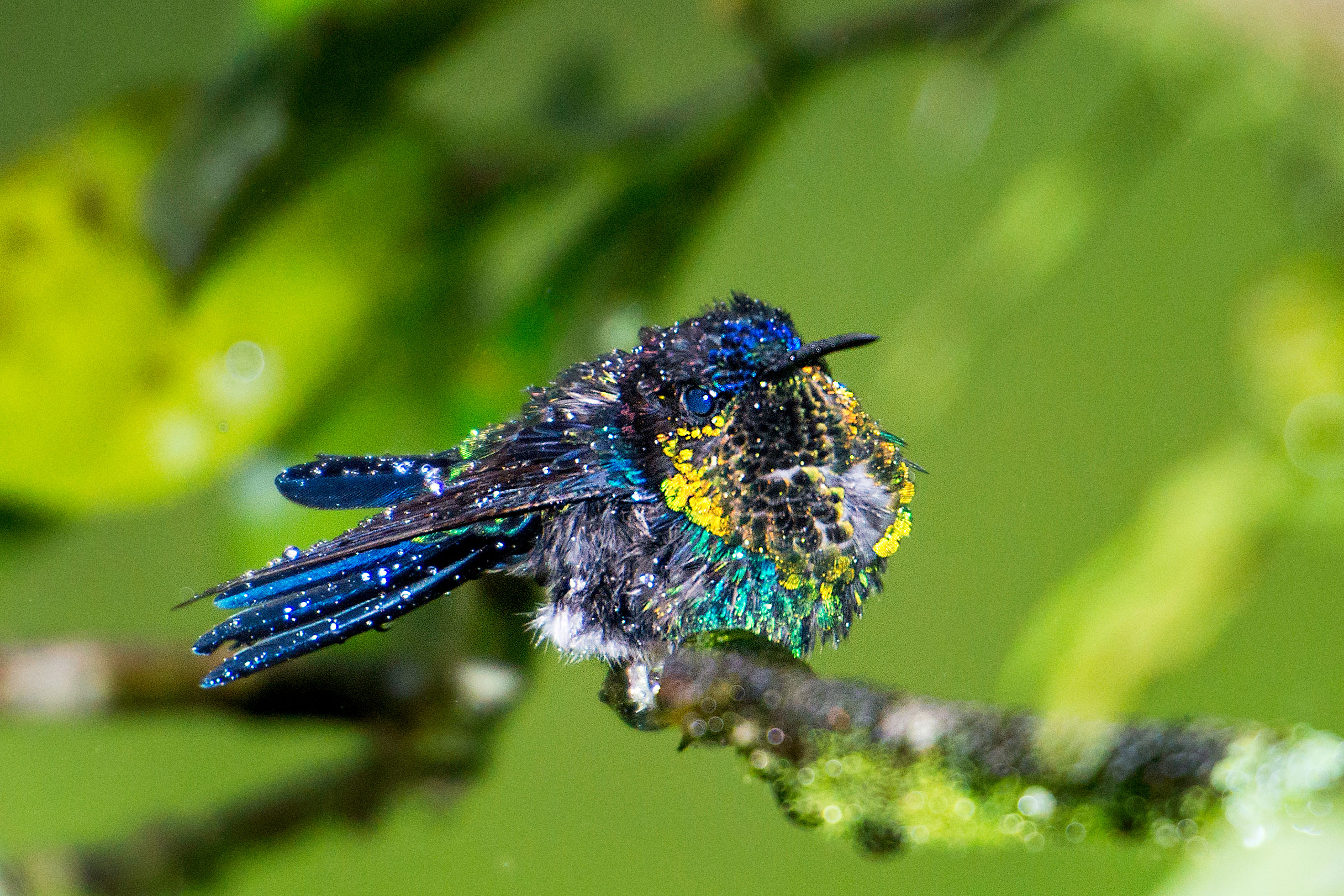
Then, the heavily clouded sky opened up, and it began to pour. It slowed the hummingbirds down a little, but they continued the fly about in the rain. Several perched in a nearby tree and took advantage of the pouring rain to take a “shower,” flapping their wings vigorously and making very interesting images (below three images).

Violet-crowned Woodnymph (male)

Violet-crowned Woodnymph (male)

Violet Sabrewing (imm. male)

We did not leave Rio Santiago until about 4:30. I thanked Terry for his warm hospitality and conversation. Terry told me never gets tired of watching the hummingbirds, and I agreed, they were fascinating to watch.

Violet Sabrewing (imm. male)

It turned out to be an incredible afternoon. I probably will never see that many hummingbirds in one location again, unless I return there. I was able to photograph six of the ten hummingbird species that inhabit Rio Santiago.

Violet-crowned Woodnymph (imm. male)

You can see many more of my hummingbird images on my website at: http://stabone.com/p90686516 Each of them is identified for those that want to know  the type of hummingbird.

Violet-crowned Woodnymph (male)

Posted in Bird Photographs, Nature, Wildlife | Tagged , , , , | 14 Comments

Collared Aracaris at Pico Bonito, Honduras

Aracari While at Pico Bonito National Park, Honduras, in late January and early February, I fulfilled my expectations of photographing many amazing birds and wildlife. It was my first time there, and I did not know what to expect–that is, how difficult it would be to find and photograph Honduras’ wildlife. I also did not know how often it would rain in Honduras’ rainforests, where rain certainly was expected, and where rain could make it difficult to impossible to be outdoors with photography equipment that could easily be seriously damaged. As it turned out, it only rained one afternoon and a couple of evenings. Therefore, rain was not a factor. Nevertheless, I was prepared with all kinds of rain protective coverings for my gear, but it was never used or needed.

Aracari-in-Tree-1-02-22

Other than the weather, the other two key considerations potentially impacting fulfilling my expectations were (1) would the wildlife be where I was at the time I was there, and (2) how difficult would it be to get a good photograph considering the availability of light and whether the wildlife would be visible enough to get clear shots in a jungle/rainforest environment. Again, like the cooperation of the weather, it turned out there was an abundance and tremendous diversity of wildlife, in particular birds of various species.

Regardless, it was a challenge and work (term “work” used loosely, because I loved very minute of it) to get good images of the wildlife and birds that were often hidden in the thick, lush and shaded rainforest vegetation and that were most often moving about and trying their best not to be seen and blend into the environment. It was also “work,” because I was lugging around all day over 25 pounds of camera gear on rainforest trails trying to avoid falling or dropping my camera, which consisted of a Nikon D800 with a battery grip, 600mm lens with a TC14 teleconverter mounted on a Wimberley head on a Gitzo tripod and a speedlight with a Better Beamer. On a couple of days, I also carried a second camera, Nikon D700 with either a 24-70mm or 70-200mm lens. Miraculously, I did not slip and fall or drop my cameras, but I was constantly soaked from the rainforest’s heat and humidity. Sounds bad, but it was a fabulous experience.Aracari-in-Tree-02-22

While there, I started out each day around 0630 meeting my guide after an early breakfast, and we would stay out wandering around the trails leading from the Lodge at Pico Bonito, where I was staying. A couple of mornings, I skipped breakfast or lunch in order to stay out on the trails. I also chose to stay at Pico Bonito, when the group I was traveling with went to the coast for the day.  Later in the week, I decided to stay at Pico Bonito for two more days after the group departed for Copan near the west coast to see Mayan ruins. It was very tempting to go with the group to the coast and to Copan, but I was intent on seeing and photographing the wildlife in Pico Bonito. As it turned out, the days I remained at Pico Bonito alone with my guides were very productive and I was able to see and photograph many more birds and other wildlife.

Aracari-Wings-Stretching

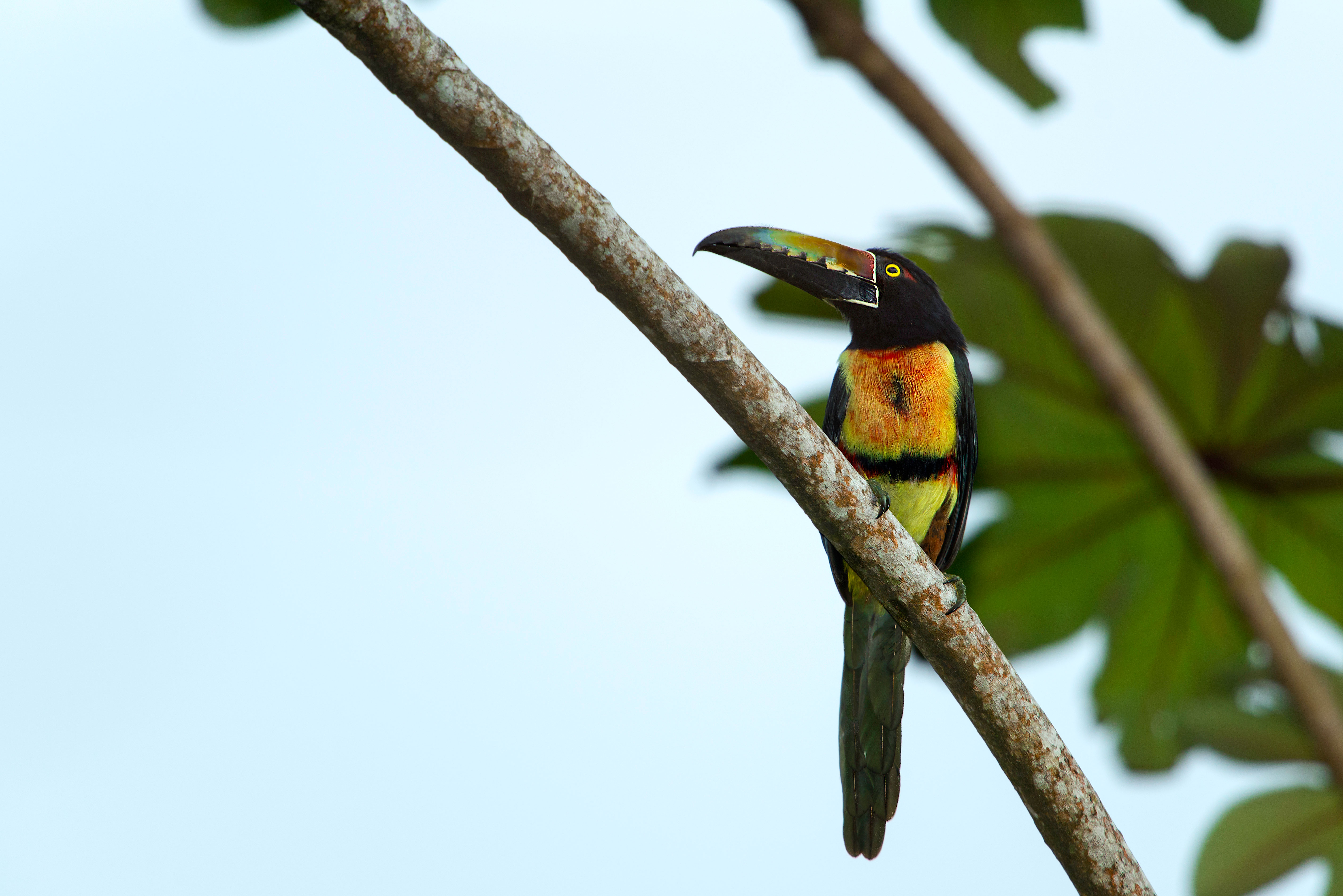
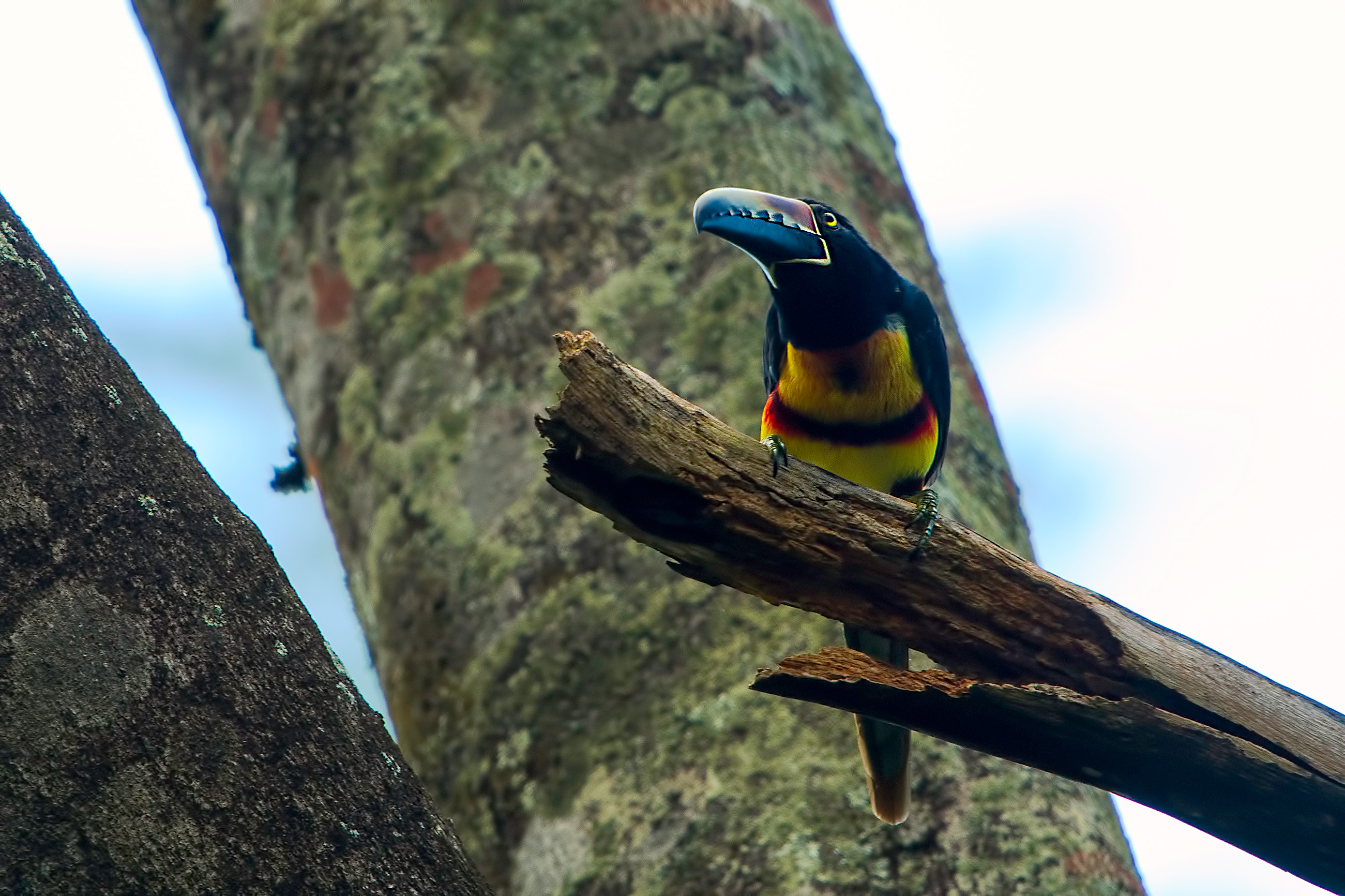
One of the birds that I was able to see and photograph on several days were Collared Aracaris, which are fairly common in lowland areas. Of all of the birds and wildlife I saw, the Aracaris were my favorite, although the Keel-billed Toucans and Motmots come in as a close second. The images in this article are of Collared Aracaris.

Avacari-Upside-Down-Feeding

Collared Aracaris are related to Toucans and have similar large, oversized bills–about 4 inches in length. Their antics were very interesting to watch as they fed in the trees overhead. They are highly social birds and are generally seen in pairs or small groups. Males are indistinguishable from females.

Aracari-at-Nest-Hole-1-02-22-copy

Aracari-Entering-Nest-in-Tree

As you can see in the images in this article, they are very colorful with bright yellow chests and a large patch of red feathers on their lower bodies above their tails. They eat the fruit from Cecropia and palm trees, as well as insects, small reptiles, eggs, and sometimes even other fledgling birds.

Aracari-Entering-Nest-in-Tree-2

Collared Aracaris live and breed from Mexico through Central America. They nest in tree cavities, as seen in the above and below images. I was fortunate to see and photograph this Aracari thanks to Elmer Escoto, the guide that spent the day with me on my last day at the Lodge at Pico Bonito. I told Elmer when we met early in the morning the birds I hoped to photograph on that last day, and high on my list were Toucans and Aracaris. Elmer’s timing in taking me to a nest was perfect, since a pair of Aracaris were working on the nest to prepare it for a new brood. According to Elmer, it was too early for them to have laid eggs, and as he pointed out, their bills were scratched from working in the nest. In fact, in some of my images, I could see the Aracari removing debris from the nest hole in the tree.

Collared-Aracari-Looking-Out-of-Nest

As you can see from the images in this article and others on my website, my expectations were highly exceeded.

Posted in Bird Photographs, Nature, Wildlife | Tagged , , , , , , | 9 Comments

Pico Bonito National Park, Honduras

Pico-Bonito-from-Mangrove-Estuaries It has been several weeks since I wrote an article for my blog and that is because, as you may know, I was in Honduras. I was there for a week in late January/early February. I traveled there as part of a small group of wonderful people on a trip planned, organized and led by Expedition Travel, an ecotourism firm based in Gainesville, Florida. I traveled to the Galapagos Islands with them a couple of years ago, and both expeditions were led by highly experienced and knowledgeable experts, conducted flawlessly in every aspect. If you have ever considered traveling to unique worldwide locations to experience wildlife and local cultures, I highly recommend Expedition Travel.

(The above image was taken from Cuero y Salado mangrove estuaries of a view of the mountains in Pico Bonito National Park, and below is Mermaid Falls within the park.)

Mermaid-FallsWe stayed at the Lodge at Pico Bonito in Honduras, which is located at the foot of Pico Bonito National Park. The lodge provides luxury accommodations with a restaurant that serves outstanding food and is maintained and operated by a warm, friendly staff. Highly experienced local guides are provided by the lodge when hiking on the lodge’s property or within the park. I owe much of my success in seeing and photographing Honduras’ tropical rainforest wildlife to two outstanding guides: Elmer Escoto and German Martinez. I would not have seen one-tenth of what I saw and photographed without their help.

Down-River-from-Mermaid-Falls

Pico Bonito National Park is located near the north coast of Honduras and consists of pristine rainforests and cloud forests, mountains and rivers covering an area of over 600 square miles with mountain peaks that exceed 8,000 feet. It is the second largest and least explored park in Honduras. The park and its forests are home to a tremendous variety of birds and other wildlife that includes jaguars, armadillos, wild pigs, tepezcuintles, squirrels, monkeys, toucans, white tailed deer, mountain lions, river otters, motmots and many more species. While there, members of our group saw or heard over 150 species of birds, many very unique to Honduras and Central American rainforests. (Below is a view of Pico Bonito with a White Hawk in a tree.)

White-Hawk-with-Pico-Bonito-Background

Not knowing exactly what to expect at Pico Bonito, I traveled with a lot of camera gear (almost 50 pounds), that included two camera bodies, five lenses, to include a macro lens (105mm) and a super telephoto lens (600mm), two teleconverters, a speedlight (flash), and of course a tripod with two different heads. As it turned out, I used everything, but mostly the 600mm lens with the speedlight and a Better Beamer to photograph the park’s incredible birds. I considered not bringing the speedlight, but ended up using it much of the time, since most of the birds were either hidden in the shade of the thick trees or backlit, requiring fill light. I was concerned about traveling to Miami and then to Honduras with so much gear, but as it turned out, I did not have any problems and was able to carry it all onboard the aircraft with two camera bags designed for such travel (ThinkTank’s Airport Security travel roller case and Glass Limo backpack). (Below is a Keel-billed Toucan.)

Toucan-in-Tree

I have been struggling with how to write this blog article and subsequent articles to describe what I saw and photographed in Honduras, and decided to organize the articles based on types or groups of birds and other wildlife, with the exception of this article, which has a variety to provide examples of what I photographed. As you can see from the images in this article, Honduras is a nature photographer’s paradise teaming with a tremendous variety of birds and wildlife.

Aracari-on-Tree-Limb

Above is an Aracari, which is related to the Keel-billed Toucan, and below is a male Lovely Cotinga.

Lovely-Cotinga-2As you can easily tell, the birds were incredibly colored and beautiful.

Passion-Flower-and-BeeAbove a bee can be seen approaching a Passion flower, which was growing wild not far from the lodge. As you can see from the example images in this article, I was able to capture (digitally) some of Pico Bonito’s incredible beauty. I am concluding this article with an image of a Rufus-tailed Hummingbird. I was able to photograph six different species of hummingbirds.

I also want to mention that I reached a blog milestone with over 50,000 views as of today. Thank you for taking the time to follow and read my blog.

Rufous-tailed-Hummingbird-a

Posted in Bird Photographs, Nature, Wildlife | Tagged , , , , , | 12 Comments

Sandhill Cranes of Paynes Prairie Preserve State Park

Four-Sandhill-Cranes

While in Florida in December and early January, I visited Paynes Prairie Preserve State Park, a 22,000 acre preserve located on the edge of Gainesville, Florida. Paynes Prairie is very unique with over 20 distinct biological communities that host a significant variety of wildlife, including bison, horses, alligators, and more than 270 species of birds. The Prairie also has a rich history dating back over 12,000 years when its fertile resources were used by Paleo people, Native American Indians, Spanish adventurers and settlers, and eventually farmers and cattle ranchers. When on the Prairie, I can imagine what much of  Florida looked like many years ago.

Sandhill-Crane

Although the canal in the below photo is manmade (circa 1930s), the flora and fauna are representative of what is readily seen when on the La Chua Trail on the northeast side of the Prairie.

Typical-Sleepy-Afternoon-on-the-Prairie

Sandhill Crane Range Map

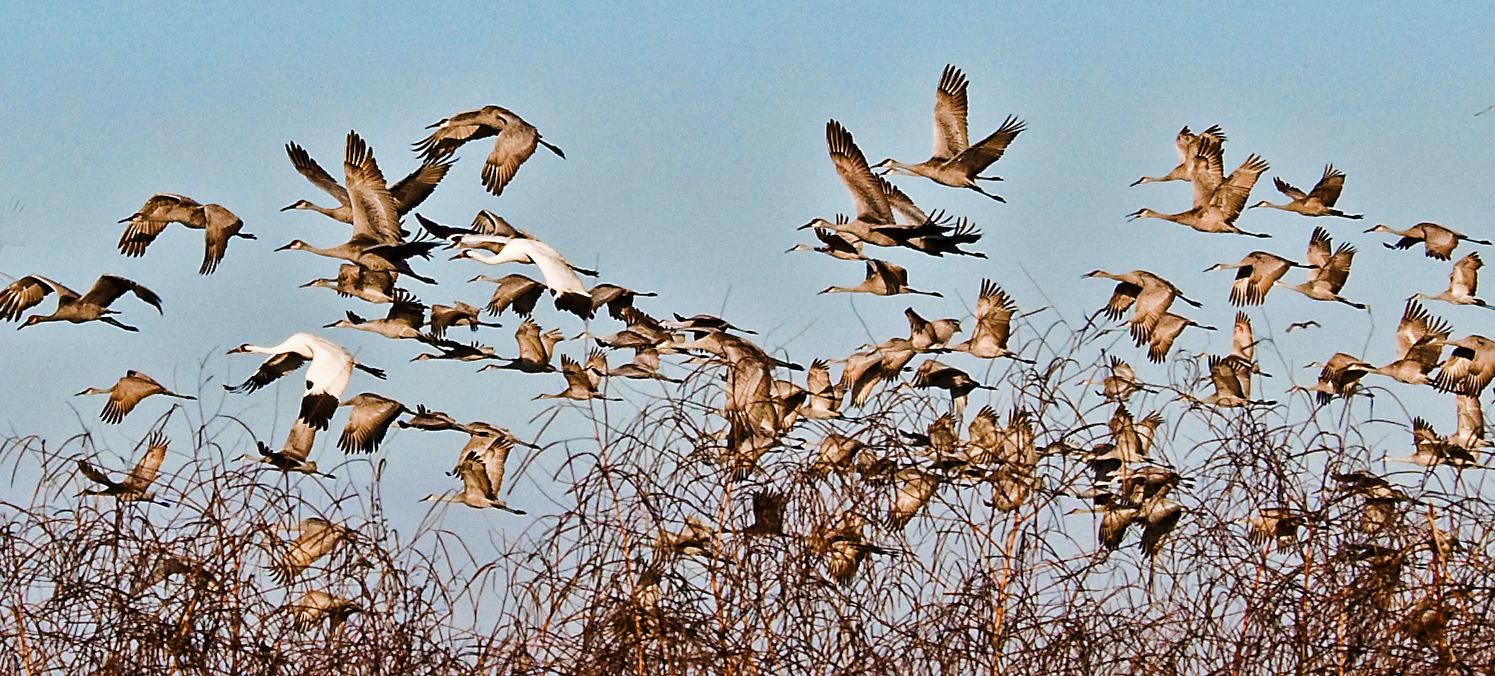
This time of year, one of the attractions for me and other visitors are the Sandhill Cranes that winter at Paynes Prairie, having migrated from the north where they nest and breed, although some have become permanent residents in Florida. In 2008, there were over 5,000 Sandhill Cranes and a few Whooping Cranes at the Prairie (see below), but in most years there are one to two thousand. However, due to the drought in Florida over the last couple of years, the number of cranes has been significantly lower. This year, when I was at the Prairie, there were only several hundred (count provided by park volunteer). Some local residents said that the cranes were going to nearby Orange Lake, since it had more water and wetlands. The cranes like to roost overnight in wetland areas to avoid mammal predators, like coyotes and foxes.  Nevertheless, seeing and photographing the Sandhill Cranes, no matter how many are there, is always enjoyable and rewarding.

I took the below image in 2008, when a large group of cranes was taking off early in the morning. Among the Sandhills were two Whooping Cranes.

Sandhill and Whooping Cranes

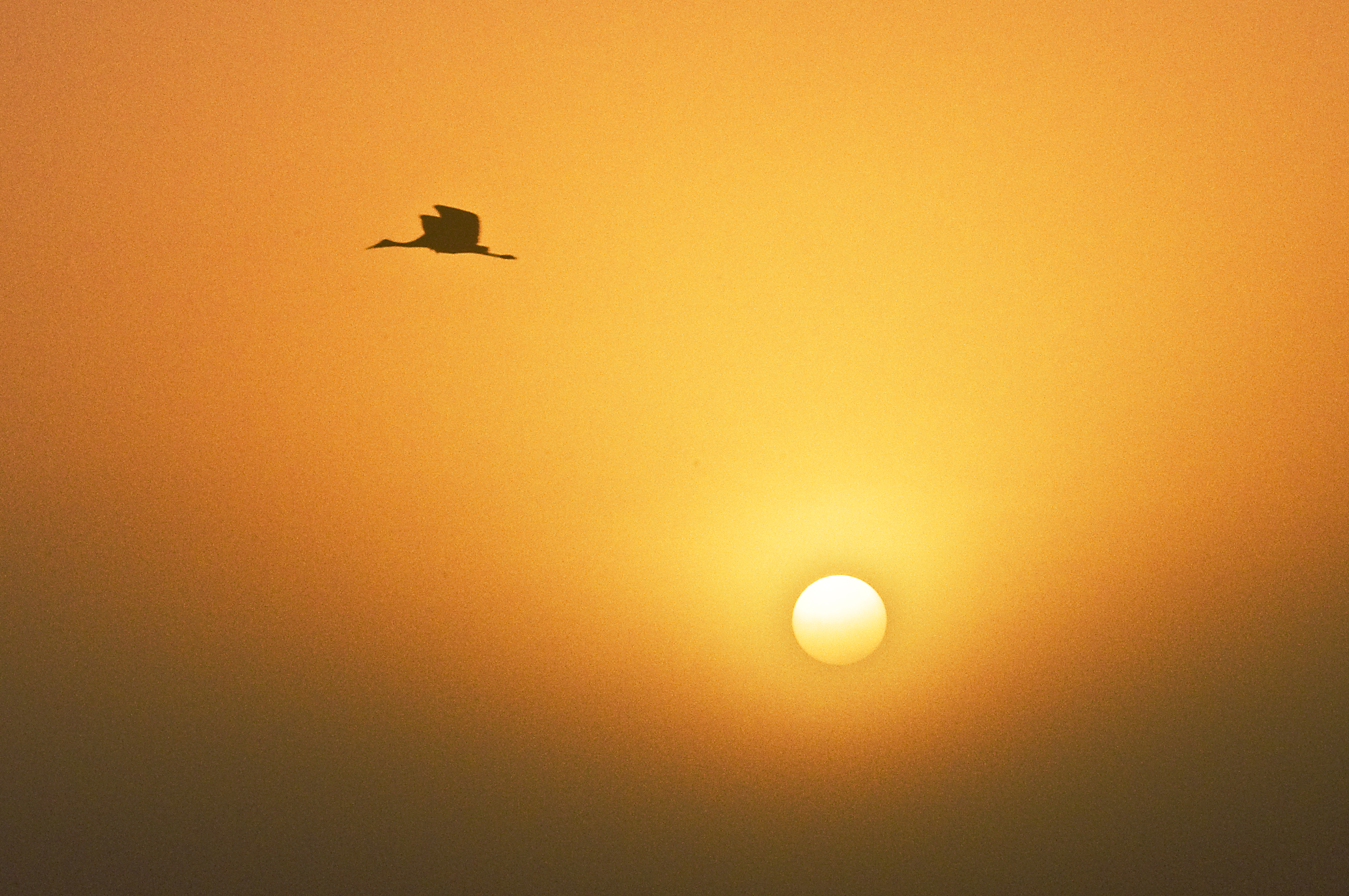
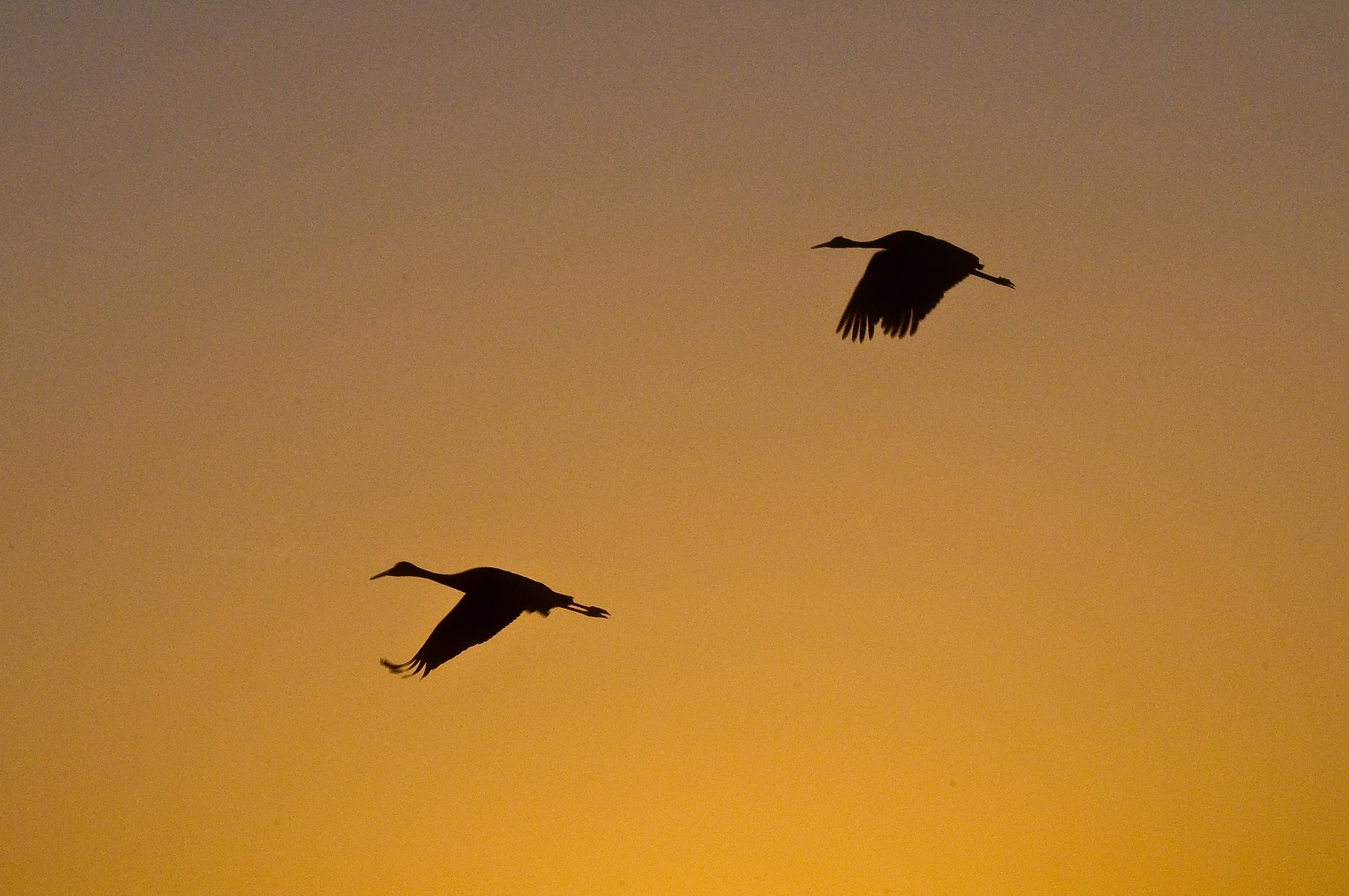
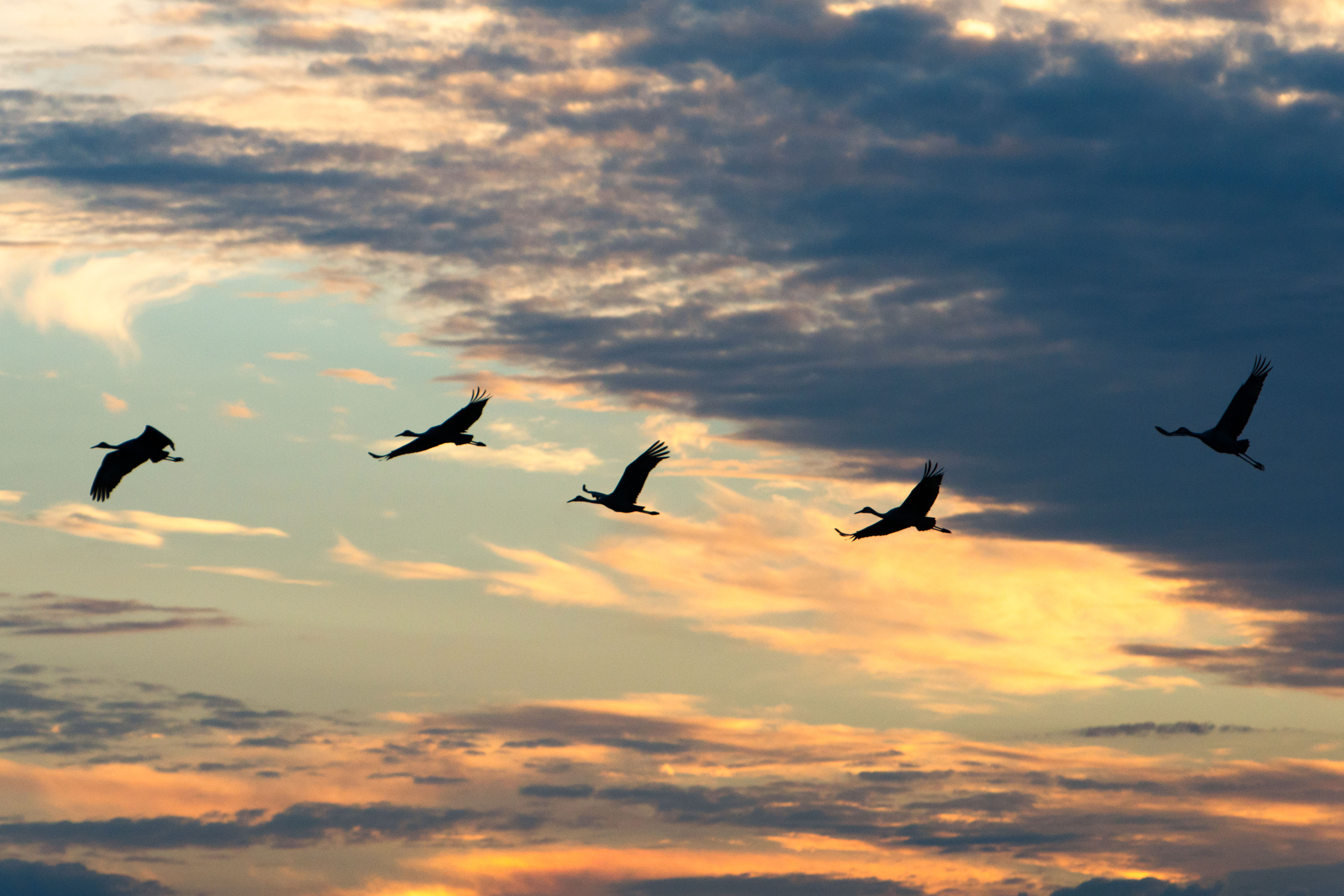
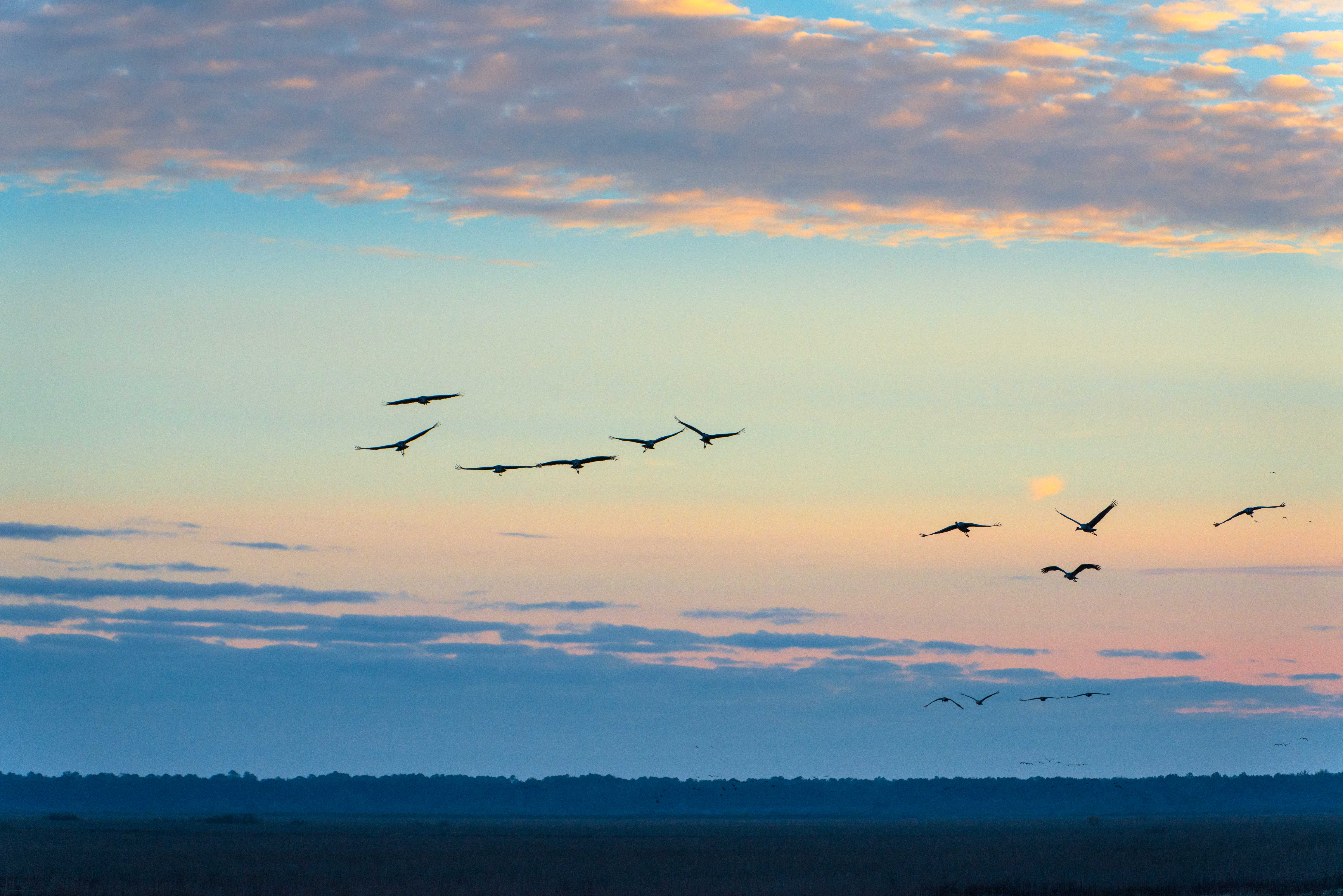
Below are several images of the Sandhill Cranes flying back to the Prairie after feeding at local fields, farms and ranches, and other wetlands. Flying Sandhill Crane silhouettes are striking against a sunrise or sunsetting sky. The first two are sunrise shots.

Sandhill Cranes at Sunrise 2

Sandhill Cranes at Sunrise

Sandhill-Cranes-Coming-to-the-Prairie-at-Sunset

Sandhill-Cranes-Coming-to-the-Prairie-at-Sunset-2

Sandhill-Cranes-Coming-to-the-Prairie-at-Sunset-3

When I was at the Prairie, the cranes were roosting far into the Prairie and mostly out of sight, but within hearing distance. In fact, their loud trumpeting calls can be heard all over the Prairie. I can usually hear them before I see them in the sky, which is a benefit when trying to locate them to photograph.

Since it was not possible to closely photograph the cranes on the Prairie, I went to a local field where they were feeding, which is where I captured the following images.

Four-Sandhill-Cranes-Feeding-and-One-on-Guard-Duty

Above three Sandhill Cranes feed, while one keeps guard.

Sandhill-Crane-Eating

Sandhill Cranes may not be the most attractive birds, but their size (3 to 4 feet), long legs and necks, and bright red heads and behavior make them interesting to observe and photograph. They can live 20 years and do not begin breeding until after two years. They mate for life, and when they migrate, the family migrates together. Sandhill Cranes feed mostly on grains and seeds, some insects, other invertebrates, and small vertebrates.

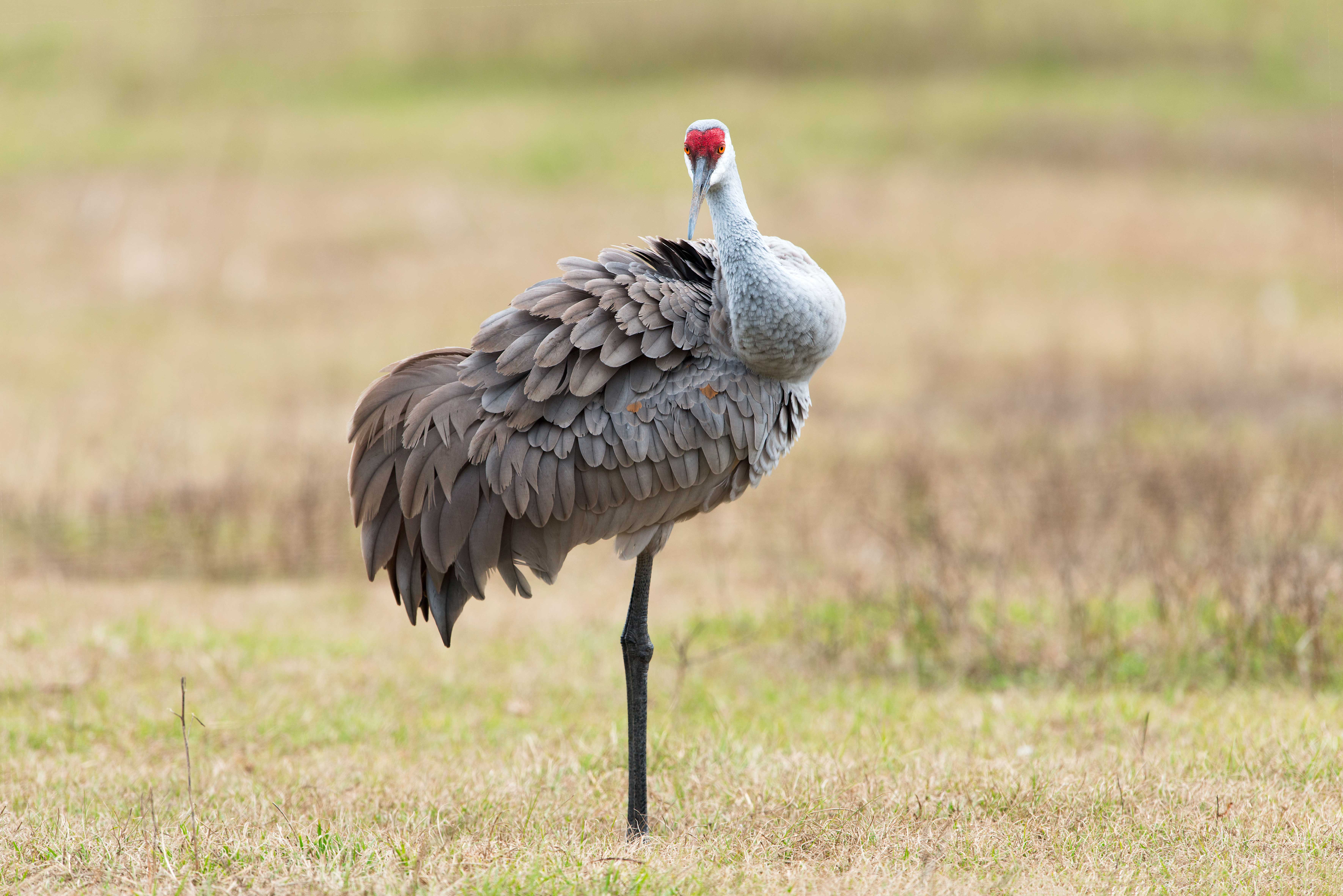
Below are two different Sandhill Cranes preening their feathers. When their feathers are fluffed out, more color and detail is plainly visible.

Sandhill-Crane-Preening-2

Sandhill-Crane-Preening

The below crane did not want to pose for me any longer and took off, trumpeting loudly as it flew by.

Flying-Sandhill-Crane

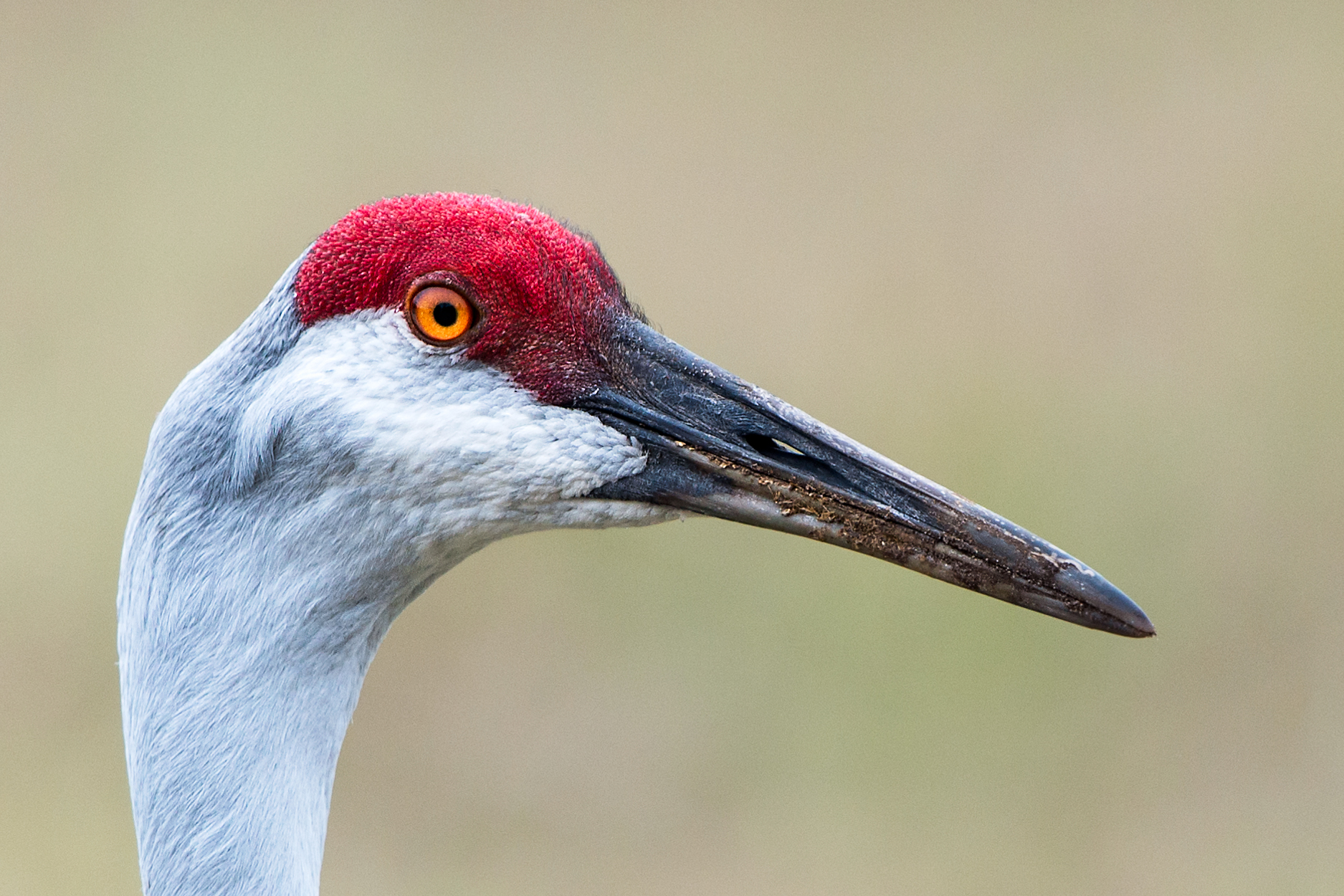
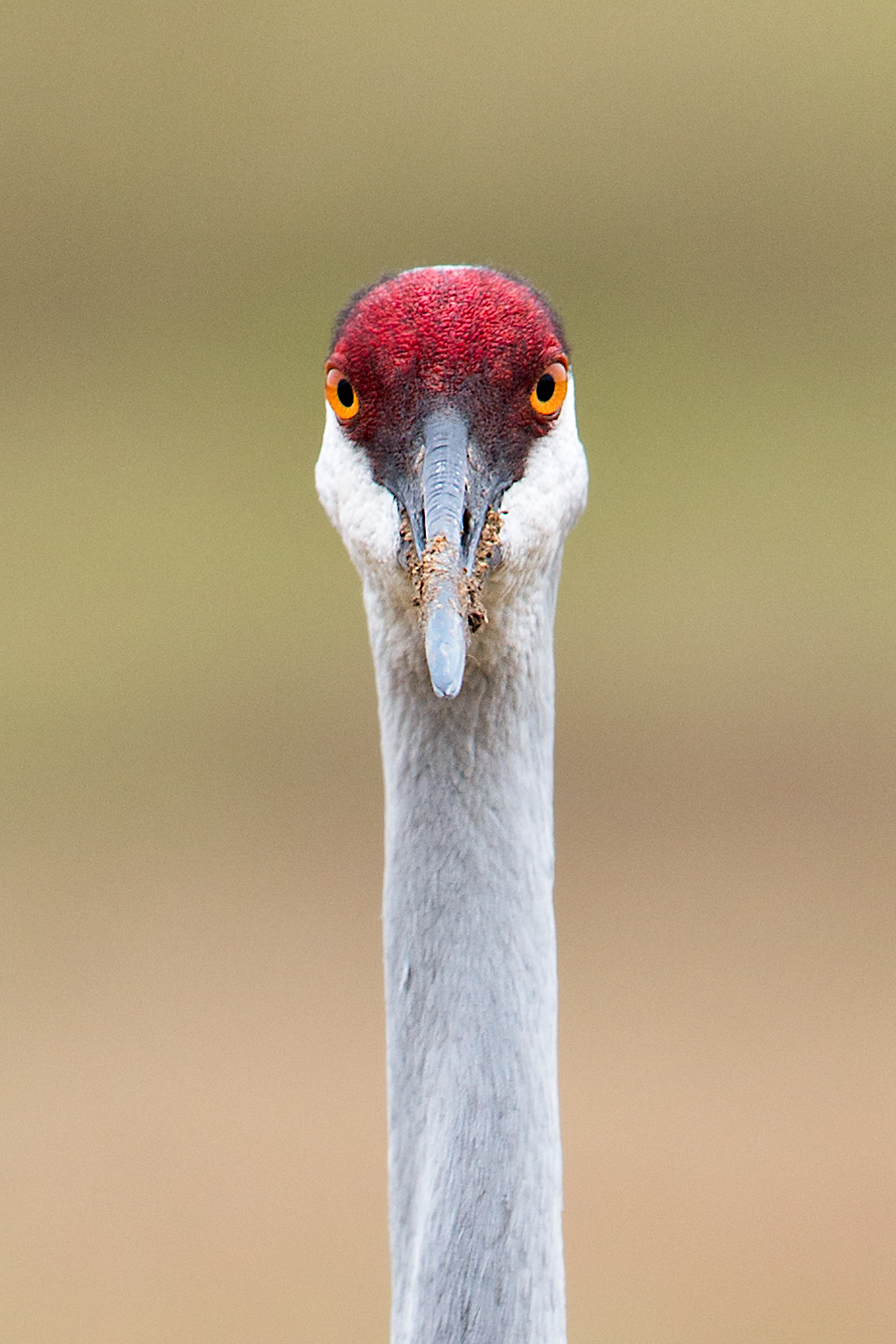
I could not resist capturing some profile images, highlighting their bright red heads and orange eyes.

Sandhill-Crane-Headshot-2

Sandhill-Crane-ProfileSandhill-Crane-HeadshotThe above images are of three different cranes. In the first two images, the cranes’ long beaks are covered in dirt and other debris. They had not cleaned their beaks after feeding (and before posing for me). The third crane is more neat and proper (clean beak); therefore, I would guess it would be a female. Their sex is not distinguishable, other than by size, with the males being a little larger. In Florida, Sandhill Cranes are protected and, if killed, carry a very high fine. However, that is not the case in other states, which allow them to be hunted. Hard to imagine.

I have many more images to be reviewed and processed from my recent trip to Florida. I plan to include them in another blog article before leaving for Honduras. I am going to the rain forests of Honduras soon to photograph some of its very unique and interesting wildlife. Yes, I am excited, been doing a lot of preparation, and very much looking forward to it.

Posted in Bird Photographs, Nature, Paynes Prairie Preserve State Park, Wildlife | Tagged , , | 27 Comments