It’s Like Living in an Aviary

Most days, I feel as though I live in an aviary because, everyday and all year round, the trees behind my home are filled with a wide variety of birds. Clearly, it is not an aviary since it is not enclosed, but it feels like one since the trees are always filled with birds that provide endless photography opportunities, and of course, immeasurable enjoyment from just watching them.

This weekend, winter weather finally arrived in northern Virginia, and it was not good for outdoor nature photography. Therefore, I stayed indoors working on previously photographed images, while watching the birds and photographing them from my office. I was able to capture some excellent images and some of them are included in this blog post. Hope you enjoy seeing them as much as I did.

The first few images are of Cardinals. There are at least three pairs that are regularly here.
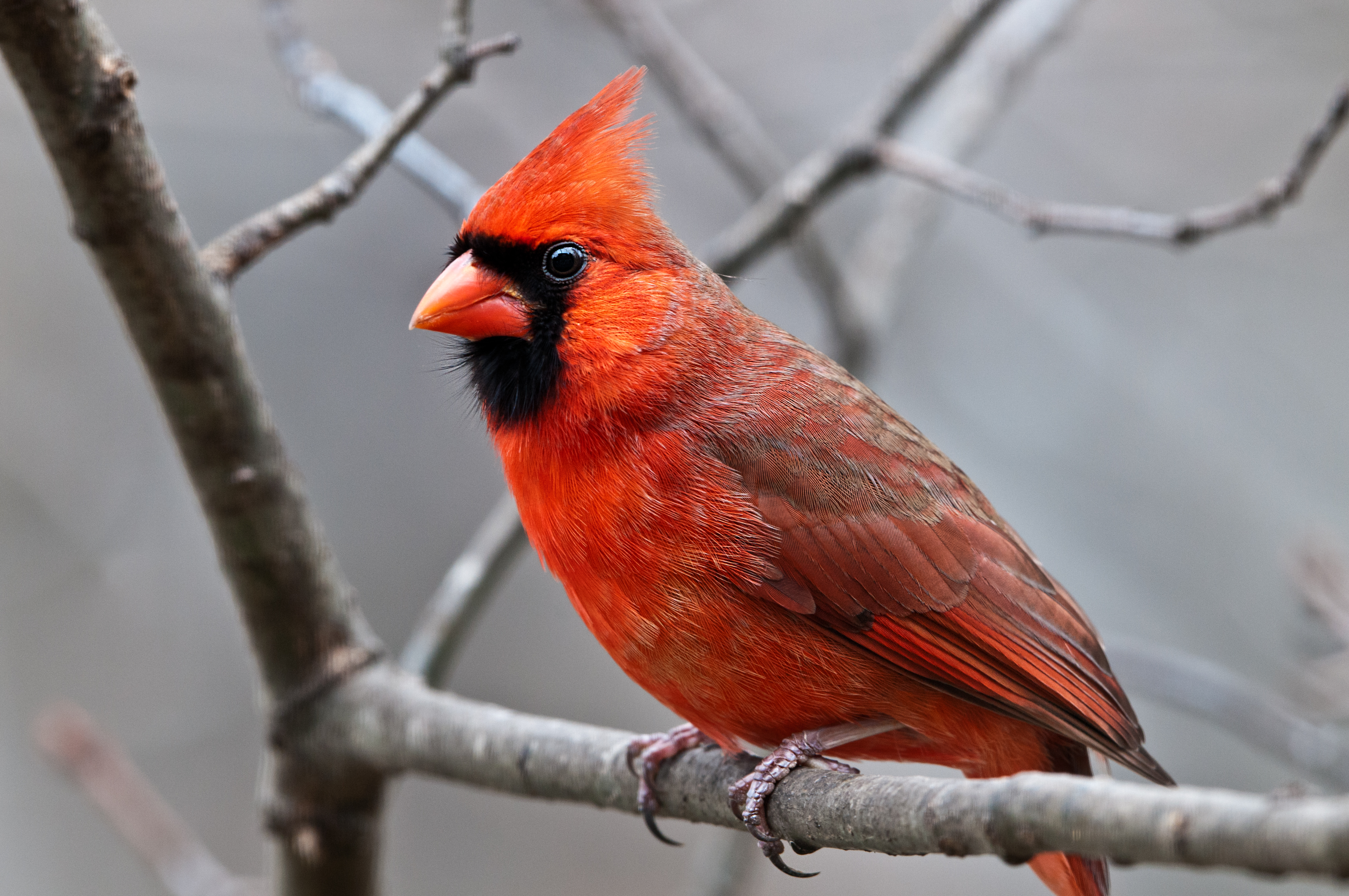
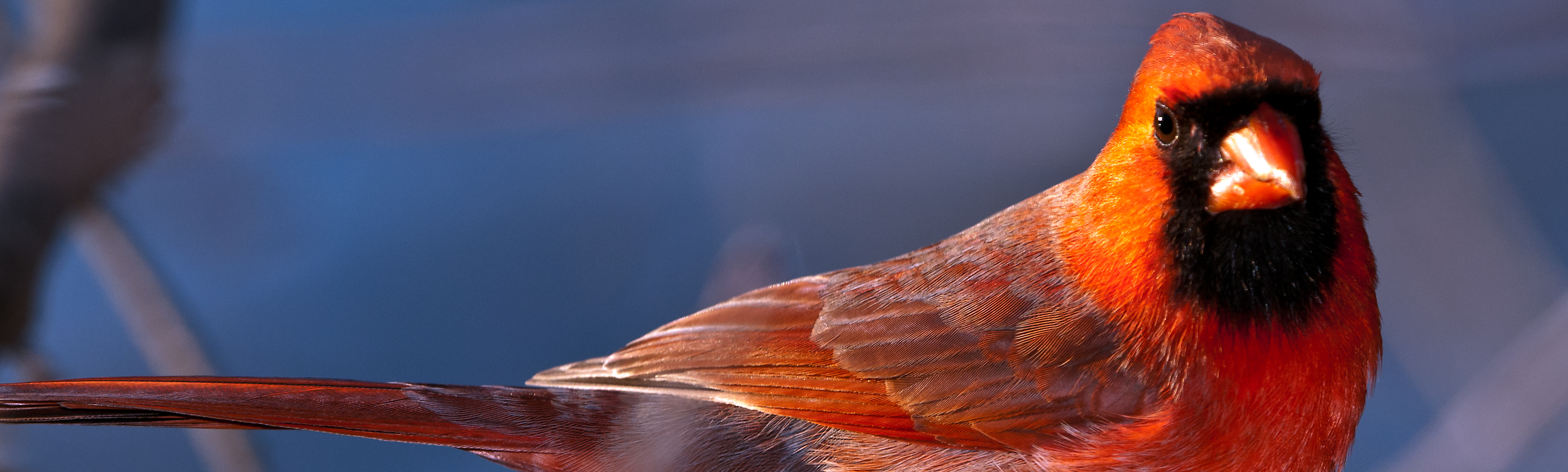
In the above image, the sun was low in the sky and its warm glow beautifully lit this male Cardinal as it sat on a branch. Below are two female Cardinals.

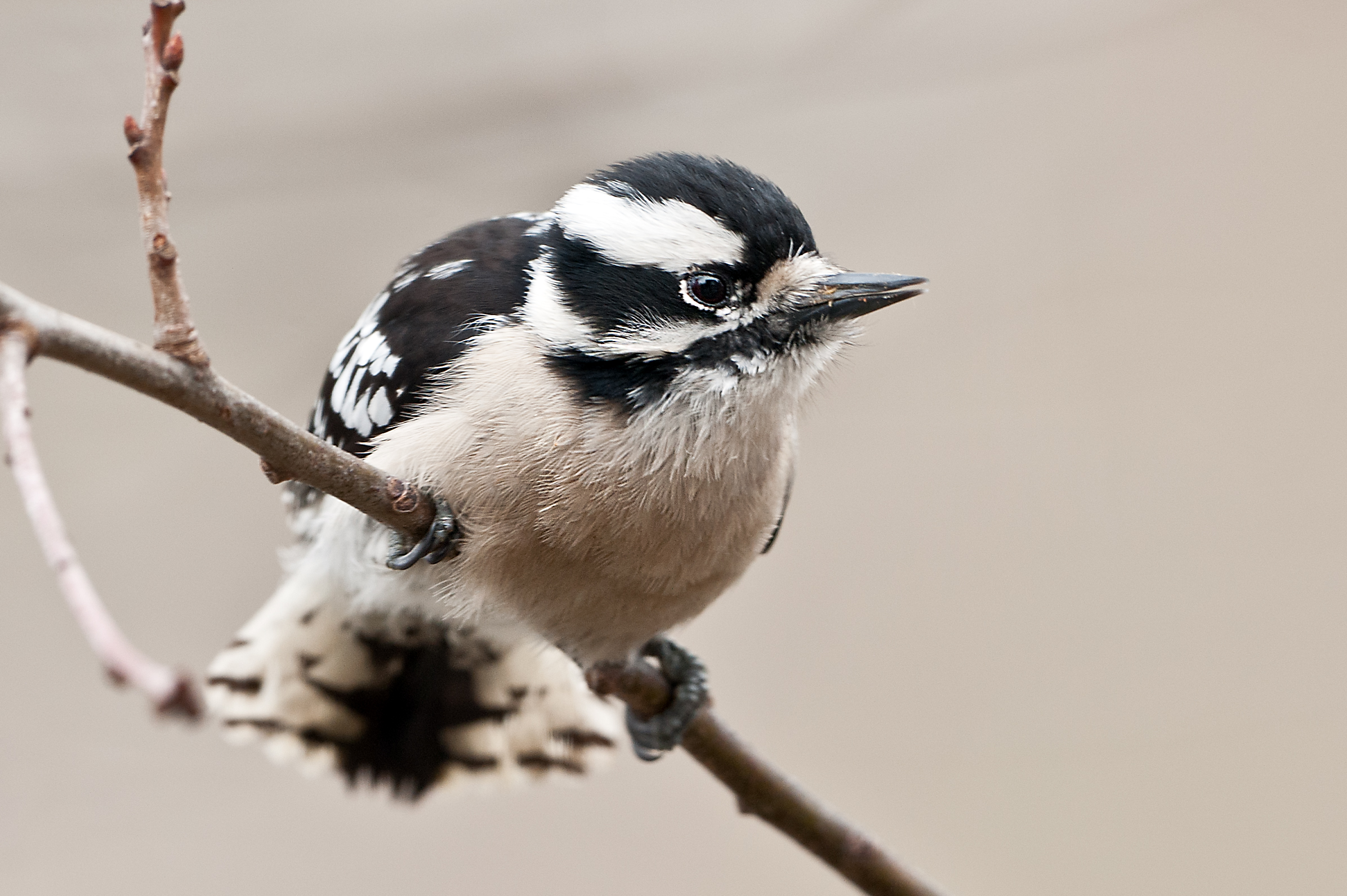
The following two images are of a Downy Woodpecker. The first is a female and the second a male. They are distinguishable by the red feathers on the back of the male’s head.
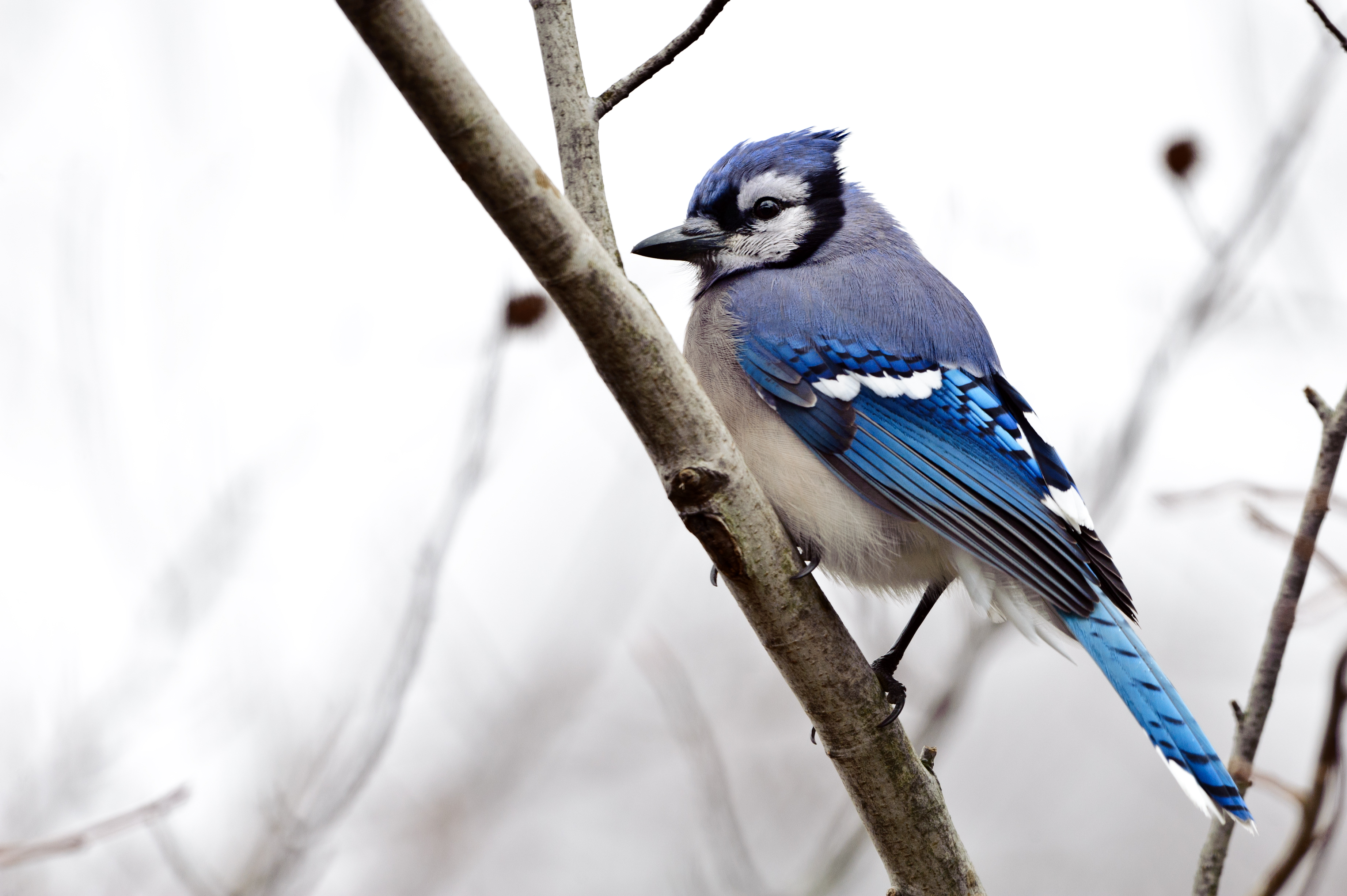
The next image is of a Bluejay. The colors of these birds brightened up what was otherwise a colorless winter view.
The next image is of a male House Finch.

The following two images are of a male and female Bluebird.

Finally, below is an image of a Red Bellied Woodpecker that I managed to capture in between some branches that added to the interest of the image.

There were other birds in the trees this weekend, including Chickadees, Titmice, American Goldfinches, and Mourning Doves. I also saw a Red-Shouldered Hawk fly over the trees and an American Bald Eagle across the lake. There also were several Canada Geese on the lake, and I heard ducks, but did not see them. It was a pretty active weekend in my personal aviary.

I highly recommend you watch the video at the following link. It is of an owl flying straight at a camera recording at 1,000 frames per second. It provides an awesome view of the owl as it is approaching the camera and landing. I enjoyed it so much that I watched it several times.  http://www.dogwork.com/owfo8/
Posted in Bird Photographs, Nature | Tagged , , , , , , , | 14 Comments

Ducks on the Choptank River, Maryland

This week, I posted two articles with images of the ducks I photographed on the Choptank River in Cambridge, Maryland. Today, I made an video slideshow of some of the duck photographs. If you enjoyed the images from those previous posts, I believe you will enjoy the below video slideshow.

Turn on your sound, and click on the below image. I recommend expanding the video to fill your screen.

General information about the ducks in the video and the location where they were photographed can be found in my two previous blog articles.

Posted in Bird Photographs, Nature, Wildlife | Tagged , , , | 6 Comments

More Ducks from Cambridge, Maryland

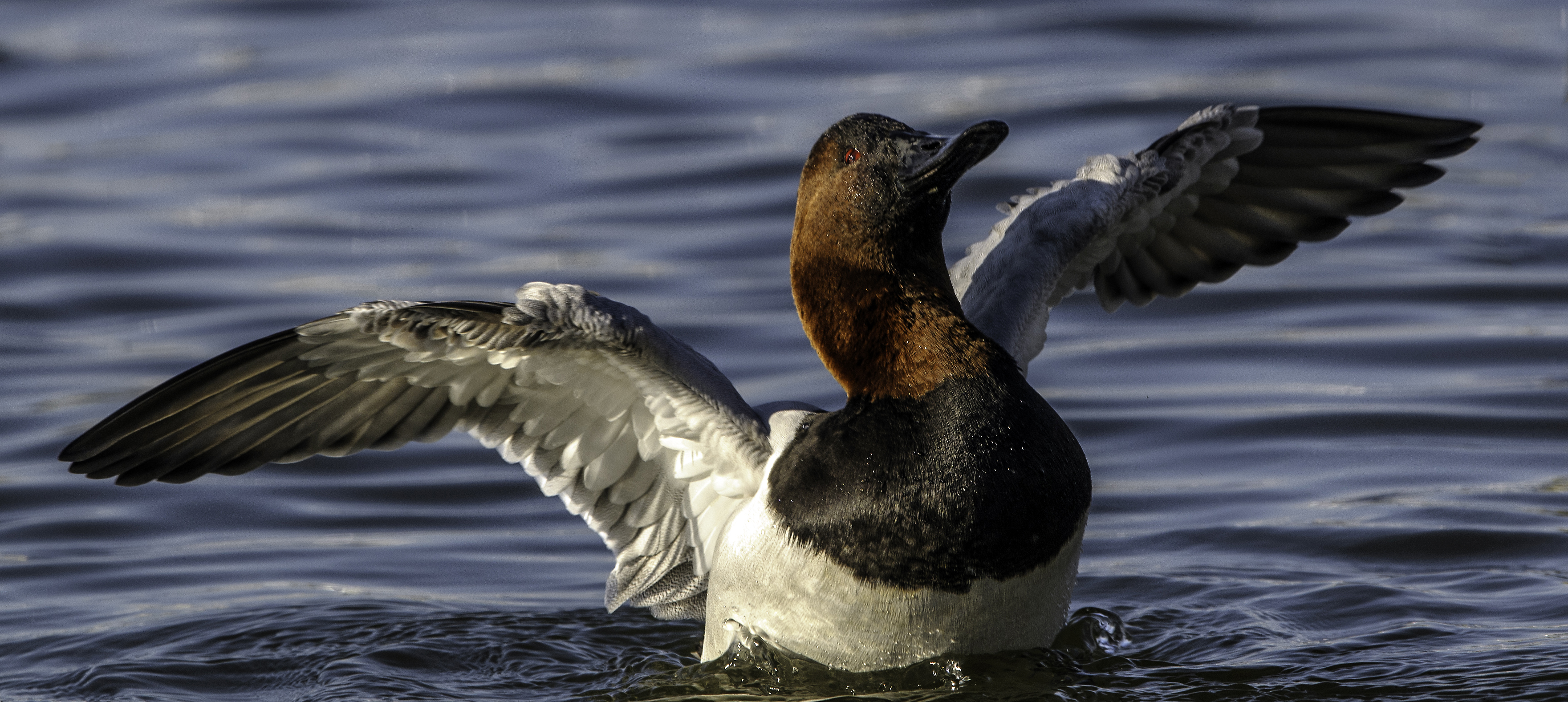
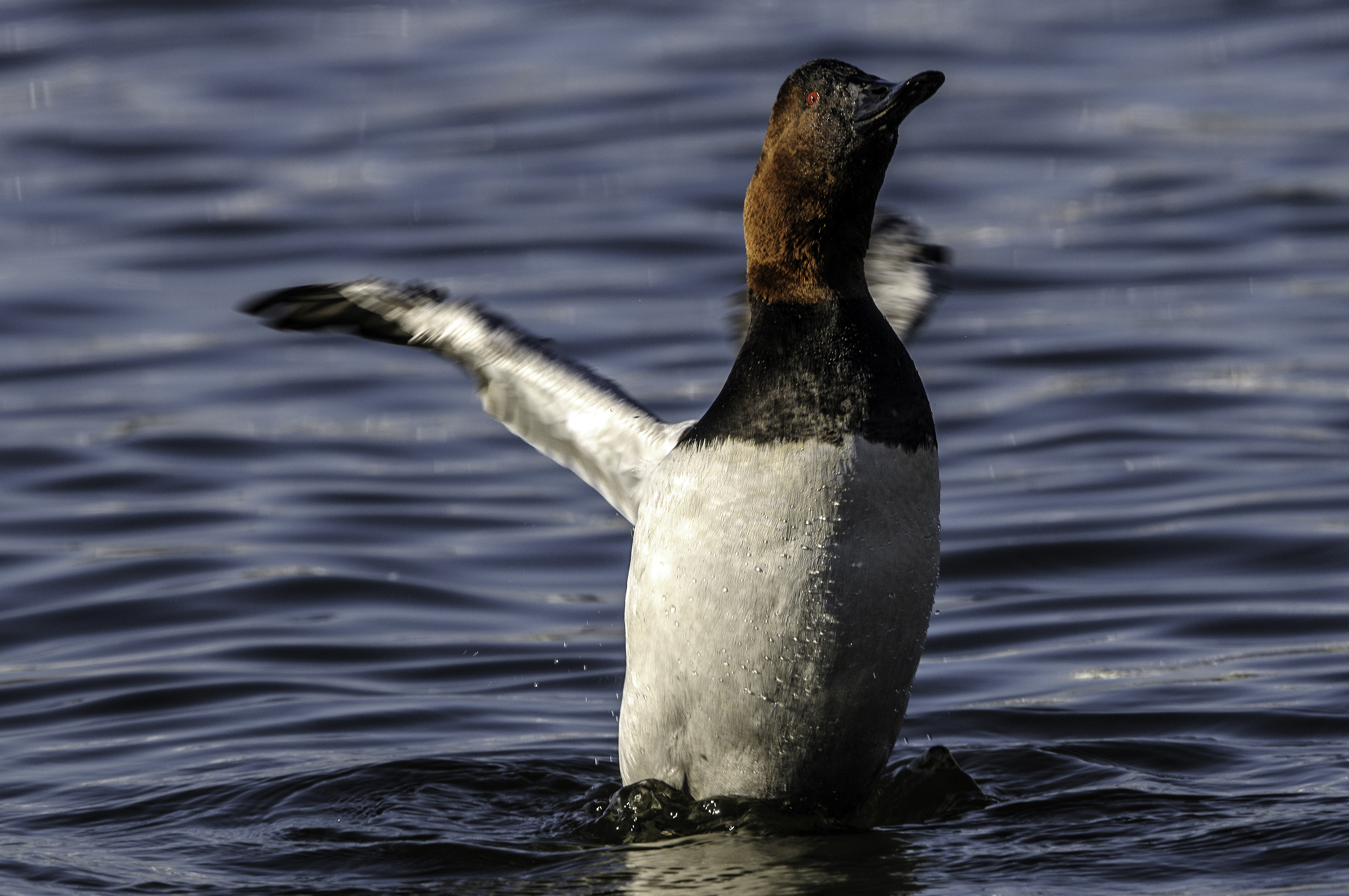
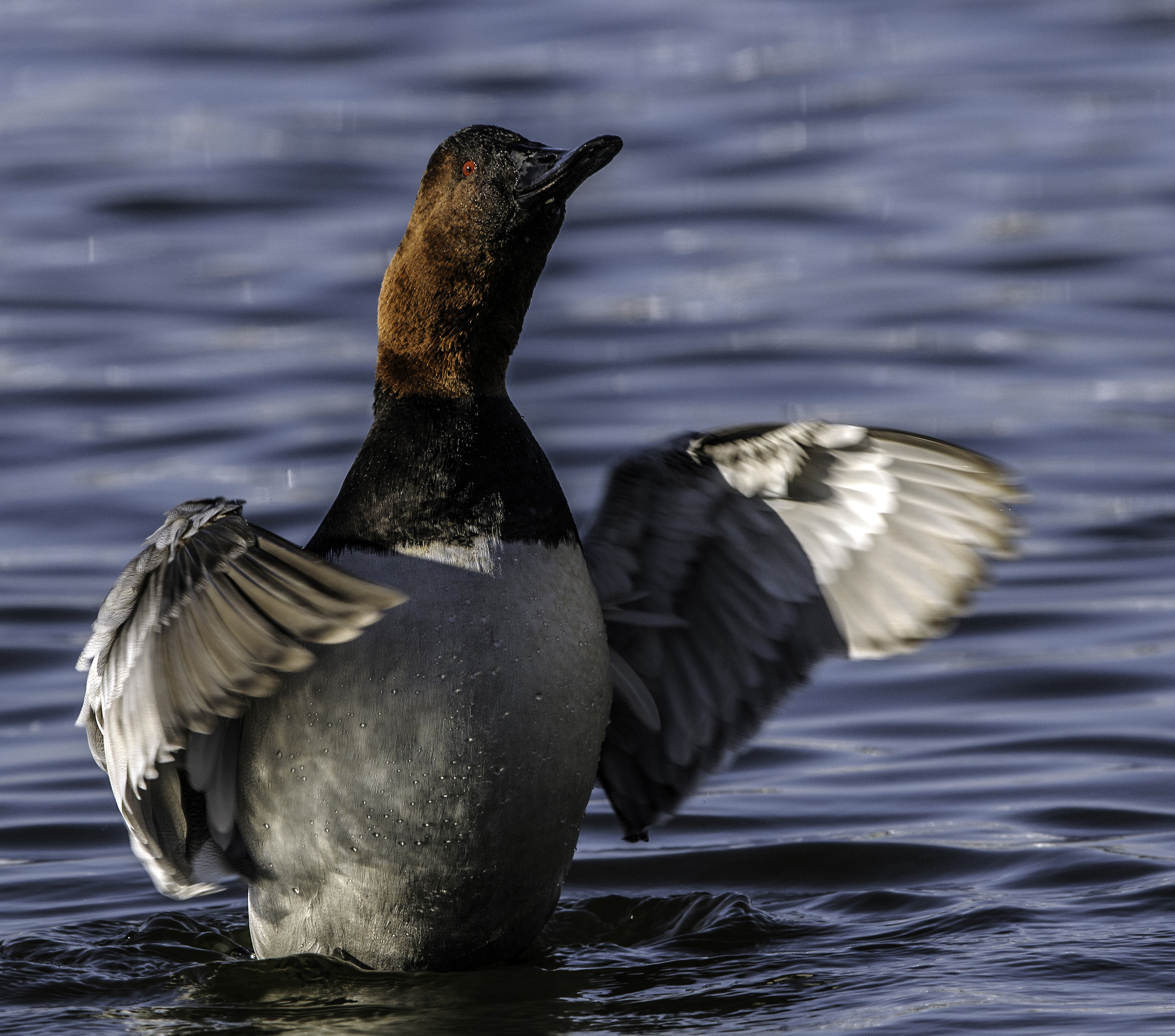
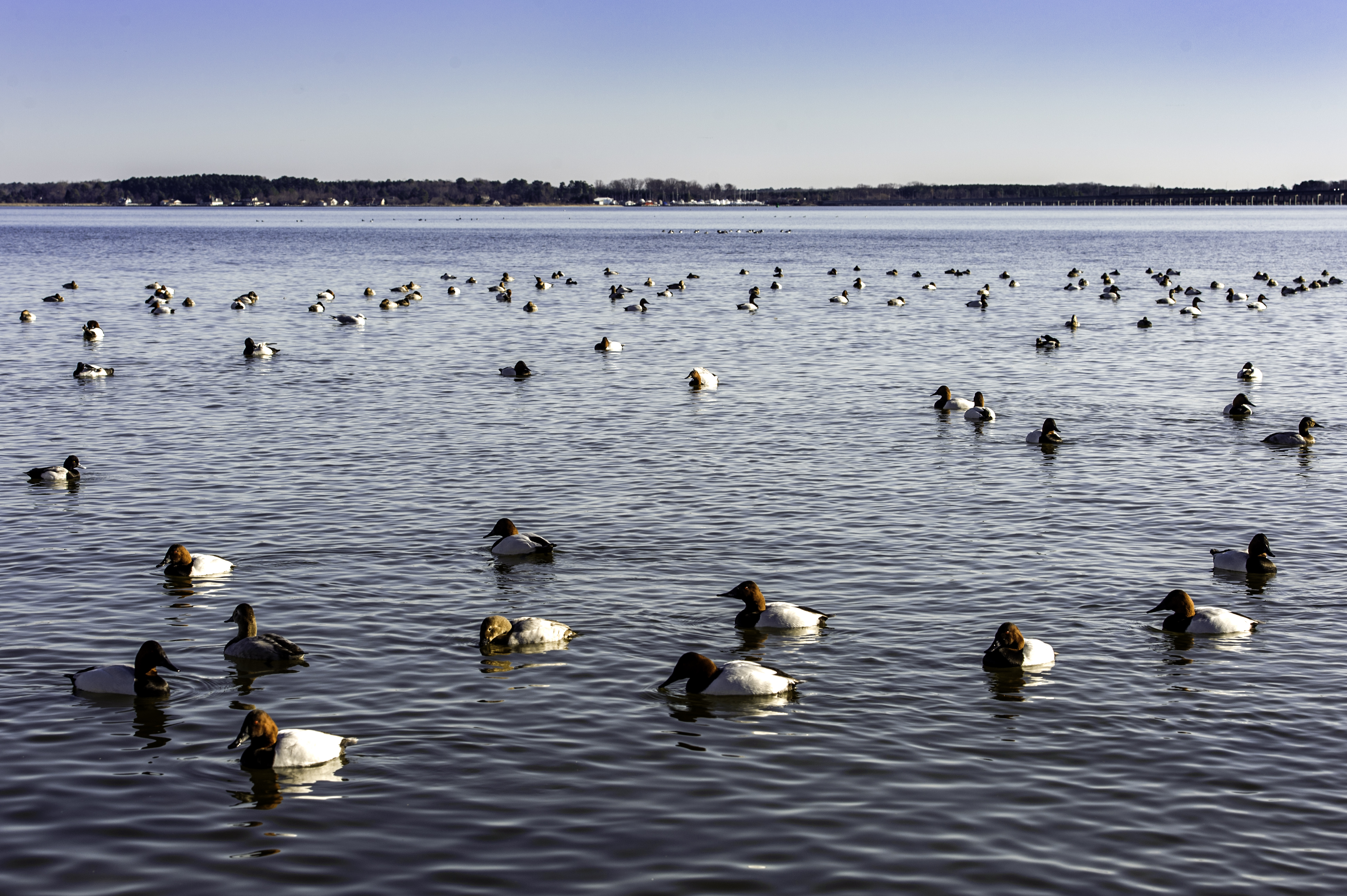
If you read my blog article from a couple days ago, you know that on January 29 I had a very successful trip to Cambridge, Maryland, to photograph ducks. In that article, I posted images of 2 of the 6 species of ducks that I photographed on the Choptank River. In this article, I am including the other 4 species:  Canvasbacks (above image), Lesser Scaups, Ring-necks, and a Redhead.

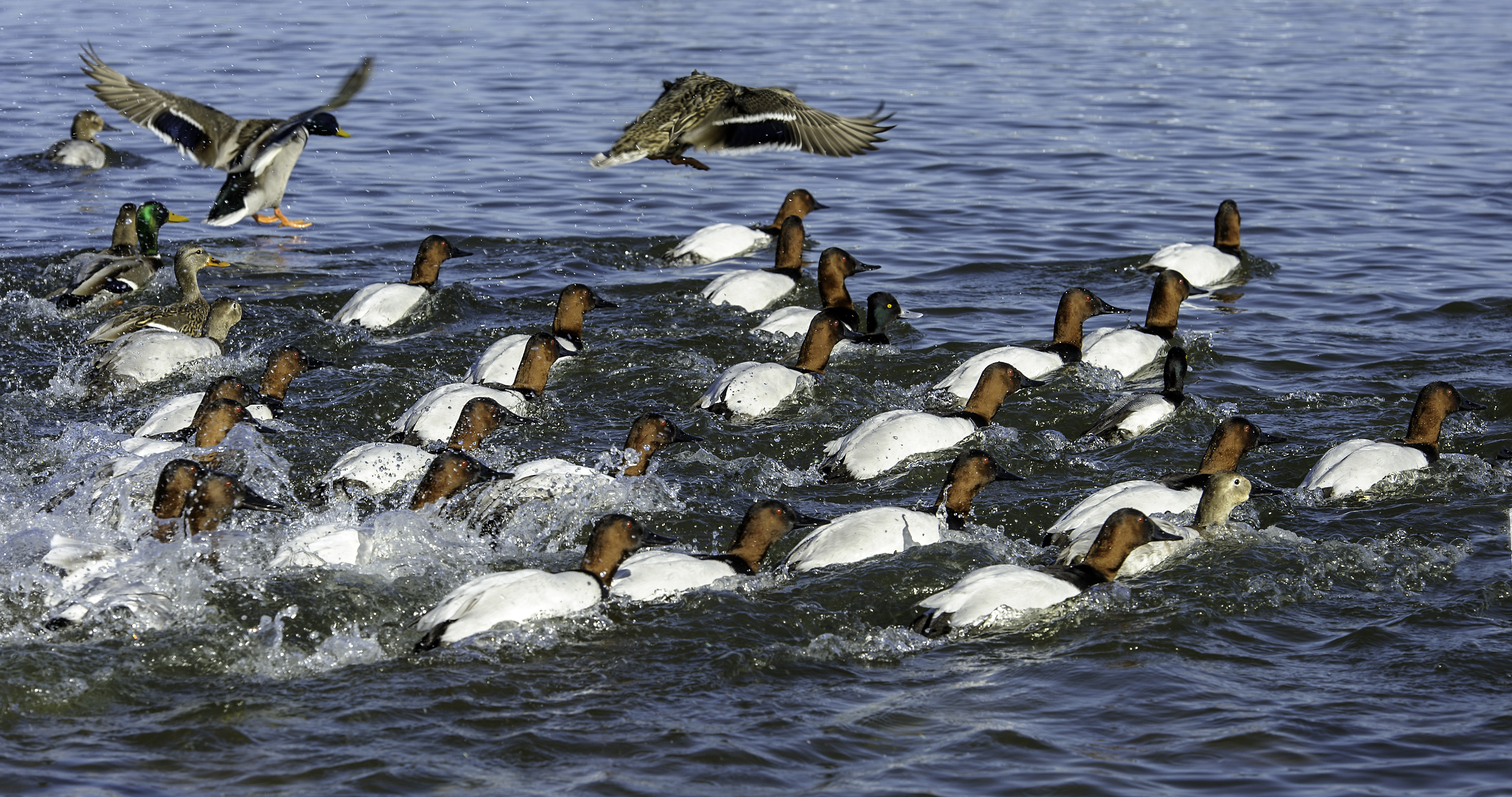
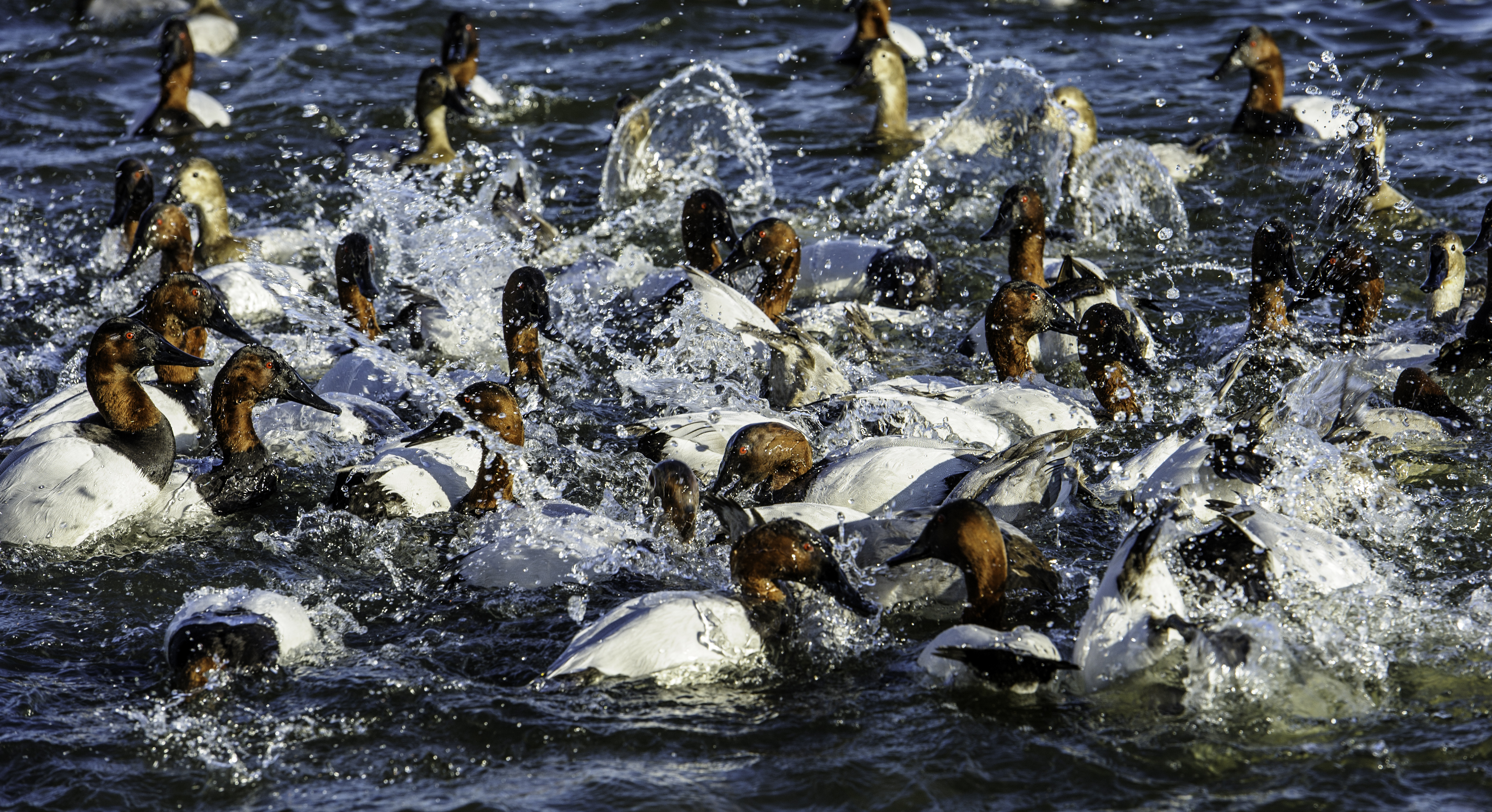
Canvasbacks significantly out numbered the other ducks that day, as can be seen in the below photo. In this image, the ducks were startled after approaching the river bank and were photographed as they swam away as fast as their webbed feet could paddle. Two Mallards took to the air. In case you are curious, in the below photo there are 25 male and 4 female Canvasbacks, 2 male Lesser Scaups, and 2 pairs of Mallards. That ratio of Canvasbacks to the other ducks is representative of the several hundred ducks that were in that location on the Choptank River.

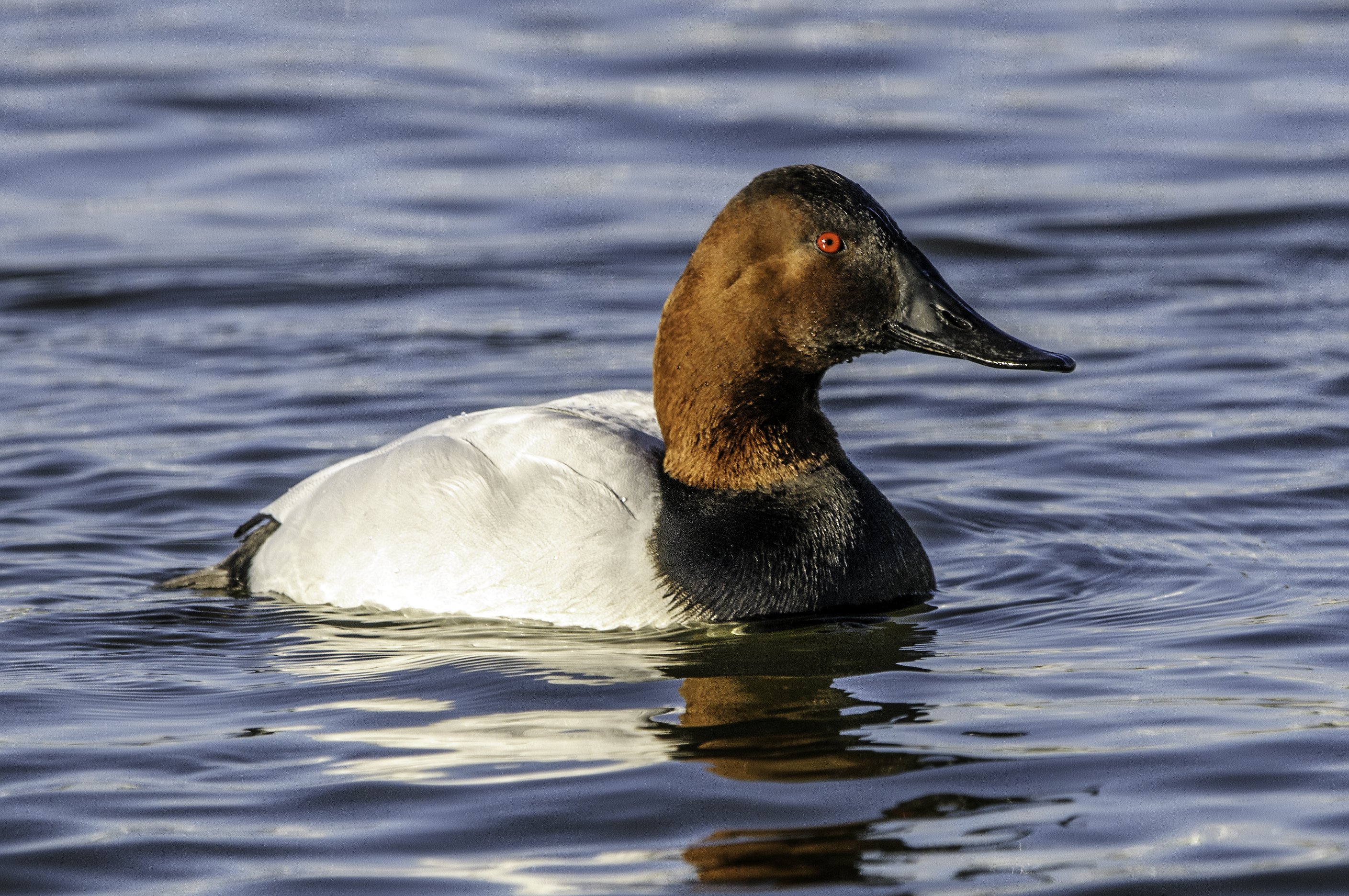
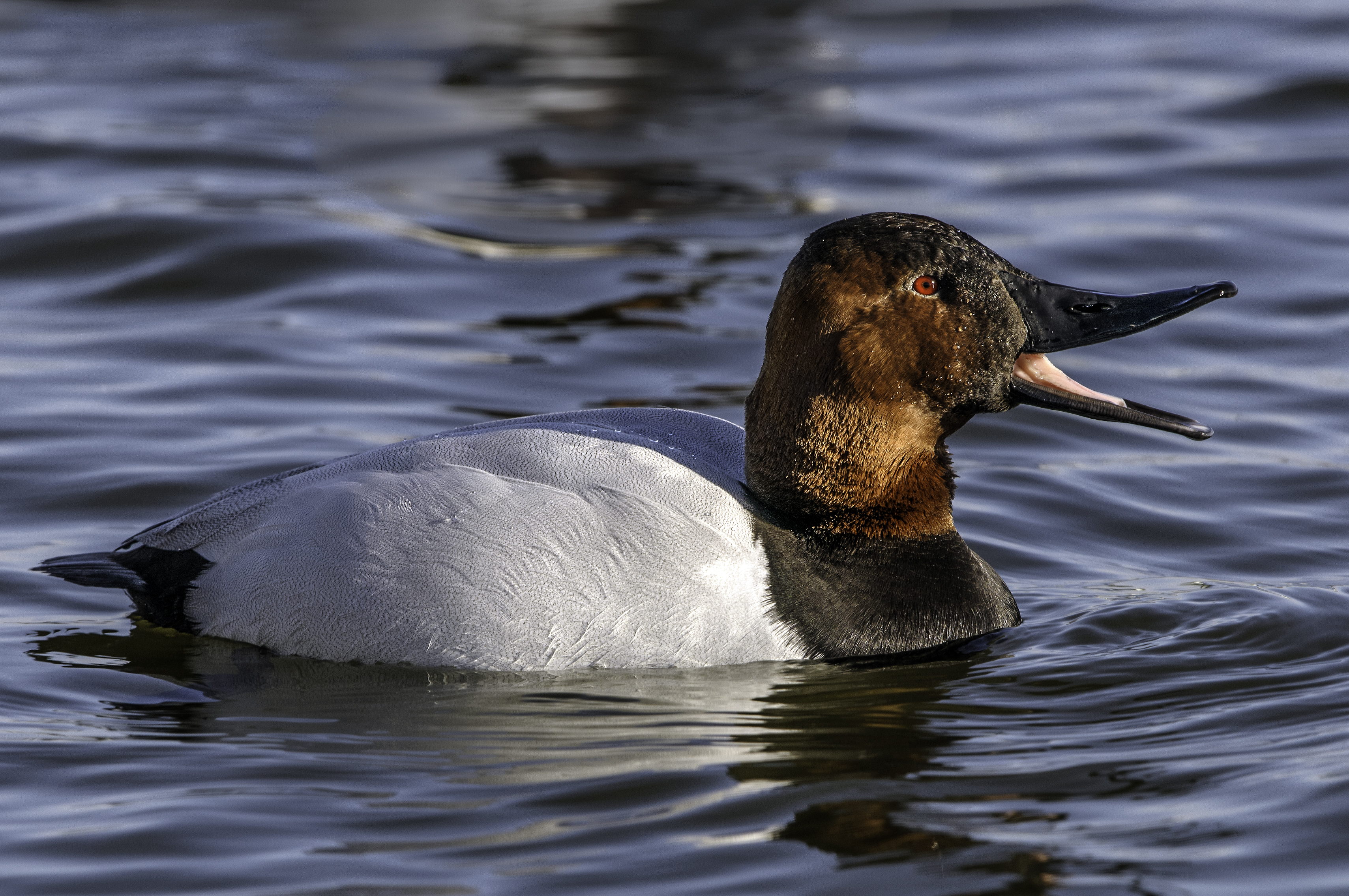
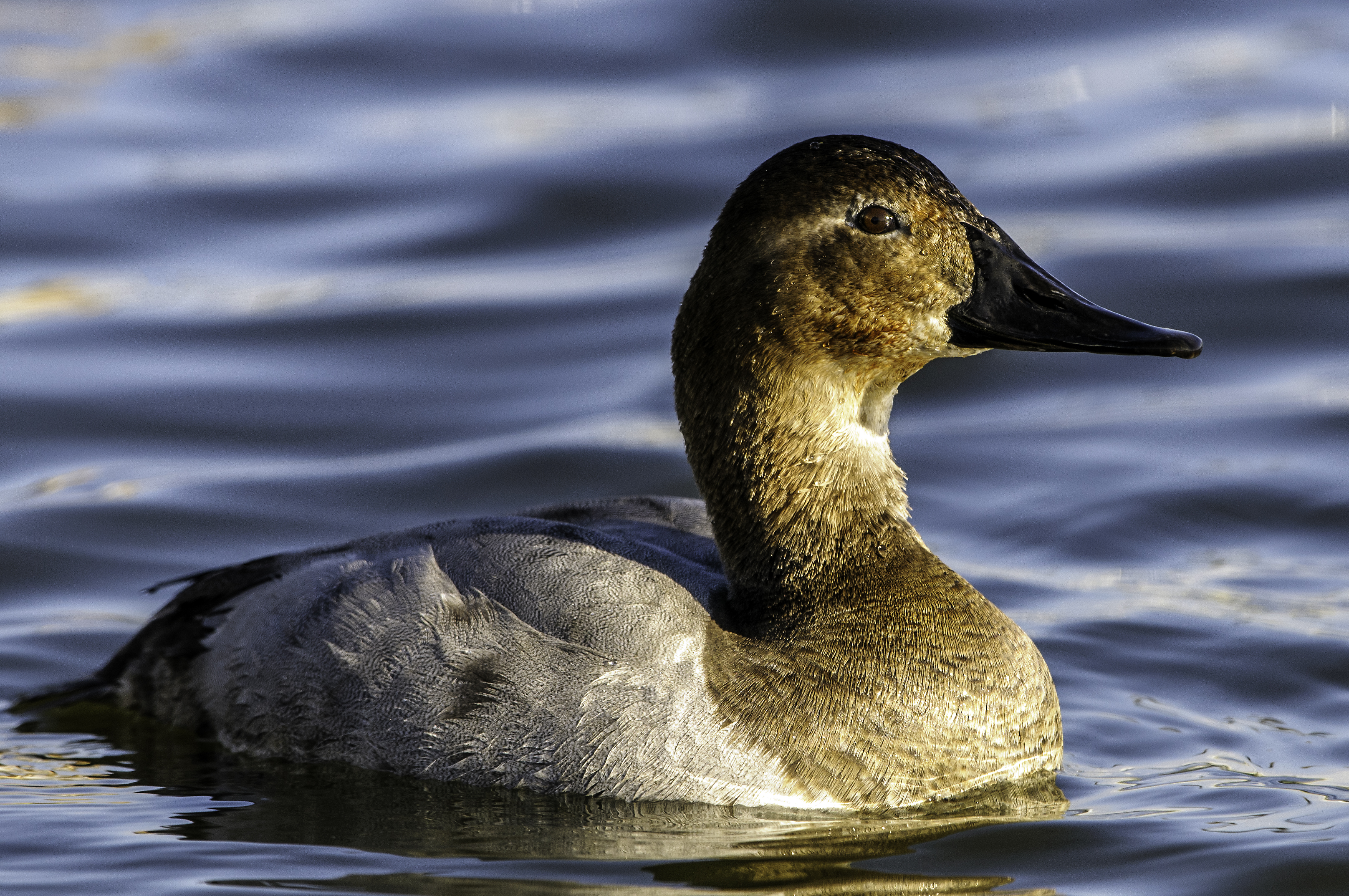
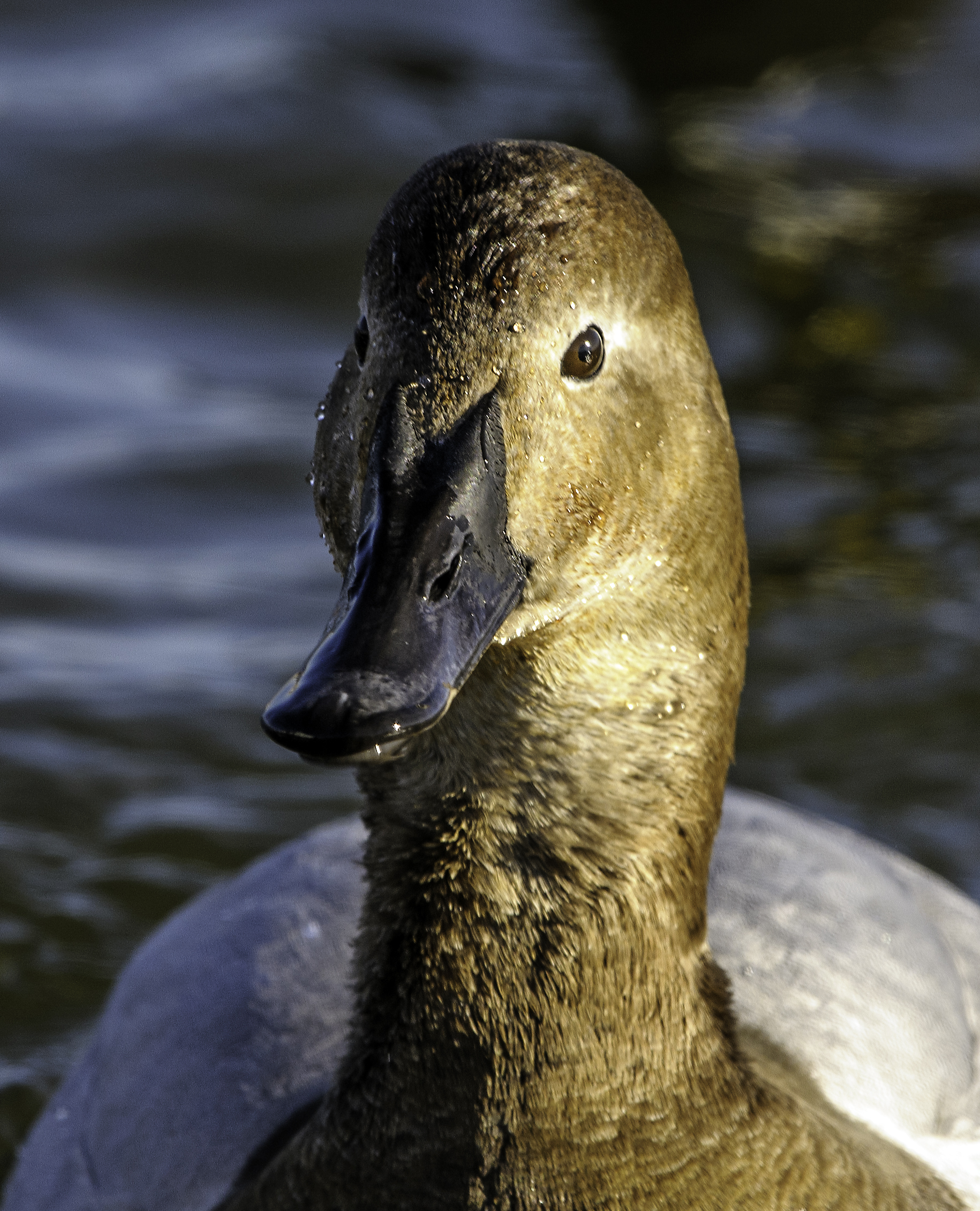
Canvasbacks are large diving ducks that got their name from early European settlers that thought their backs were canvas-like in color. In the early 1950s, it was estimated that there were 225,000 Canvasbacks wintering on the Chesapeake Bay; this represented one-half of the entire North American population. By 1985, there were only 50,000 Canvasbacks wintering there. Canvasbacks were extensively hunted around the turn of the century, but federal hunting regulations now restrict their harvest. Today, the population has stabilized and is increasing slightly, although it is nowhere near previous levels. Below are 4 photos of the male and 2 of the female Canvasbacks. There were many more males than females.

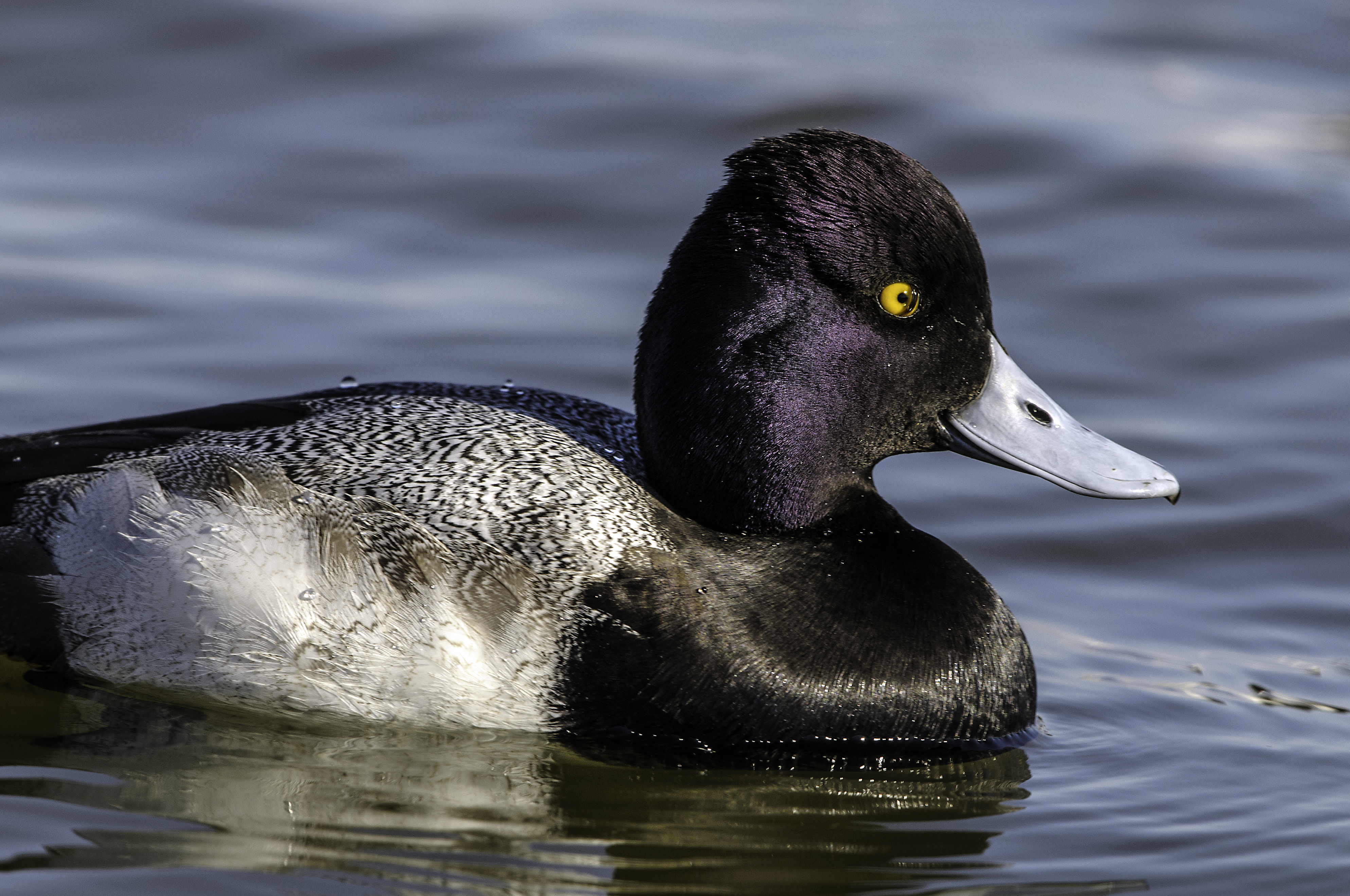
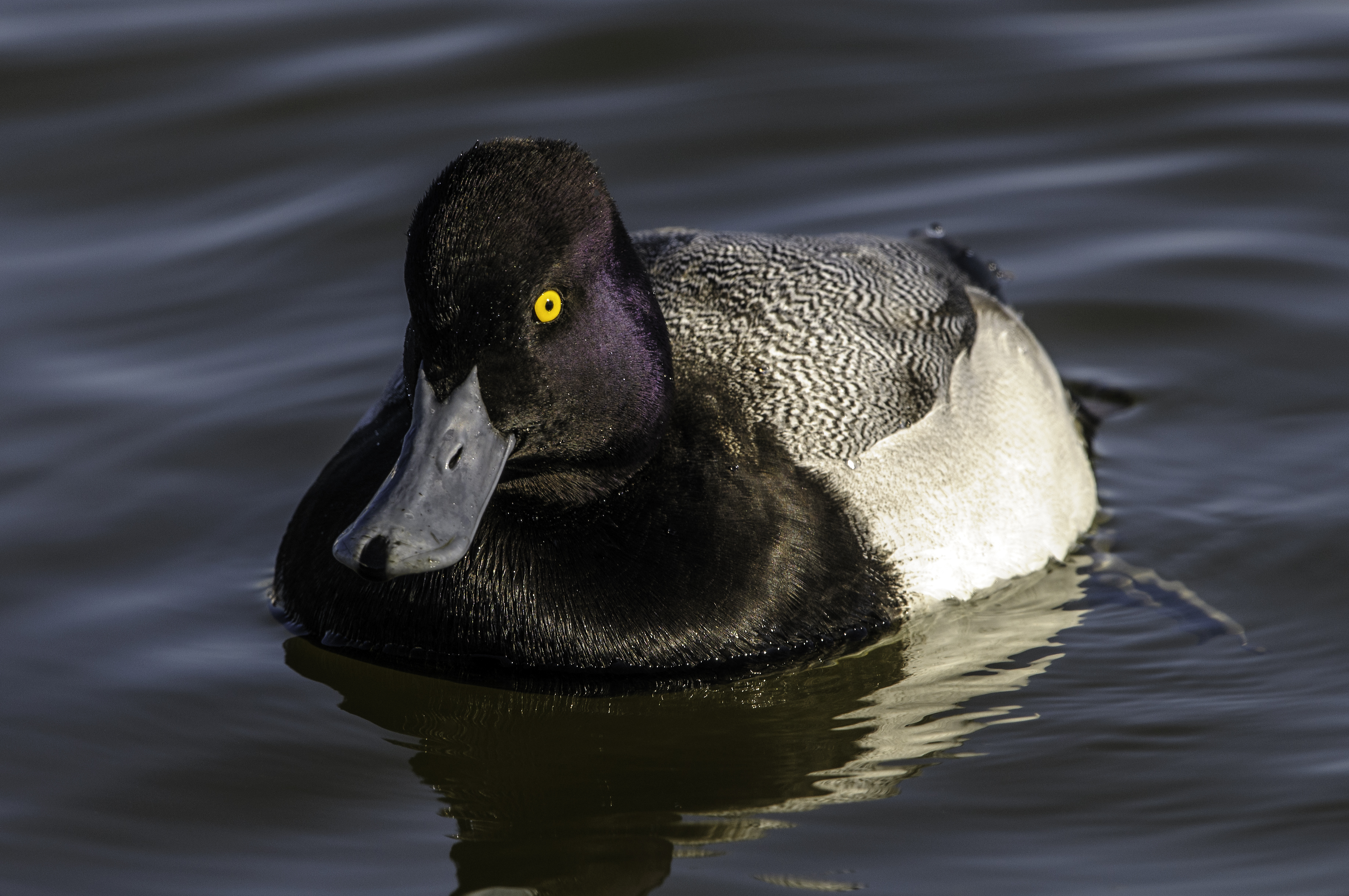
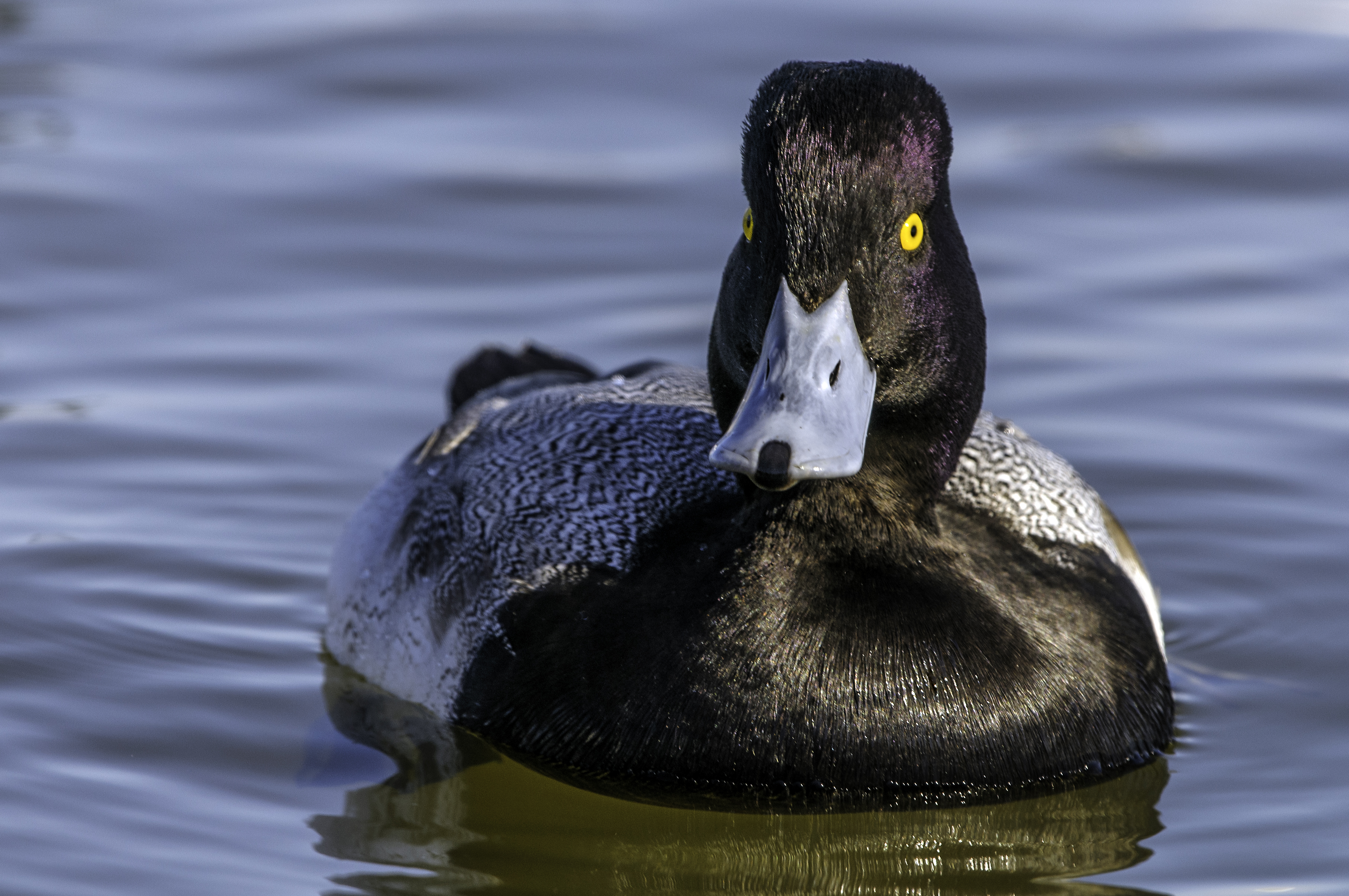
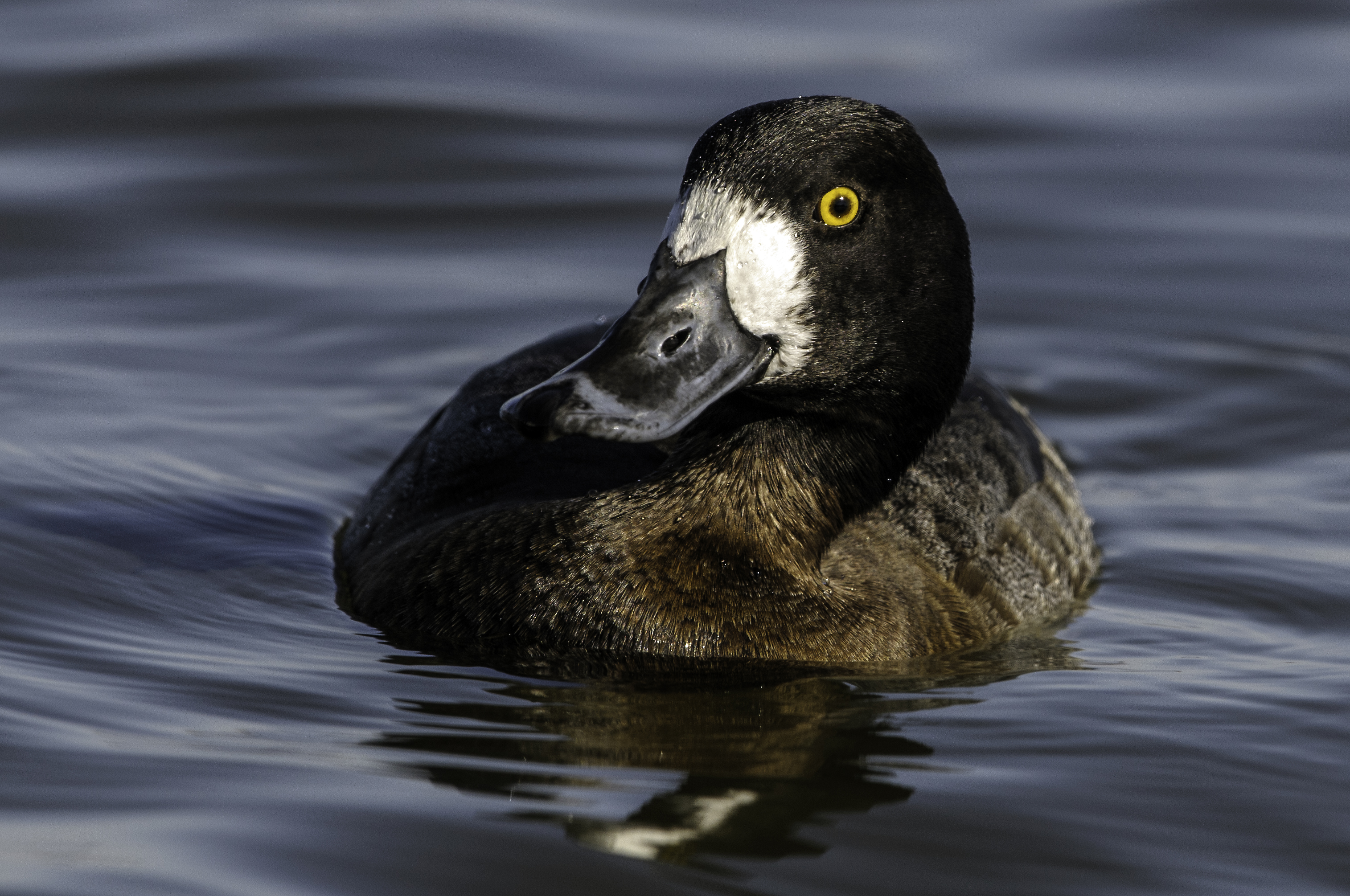
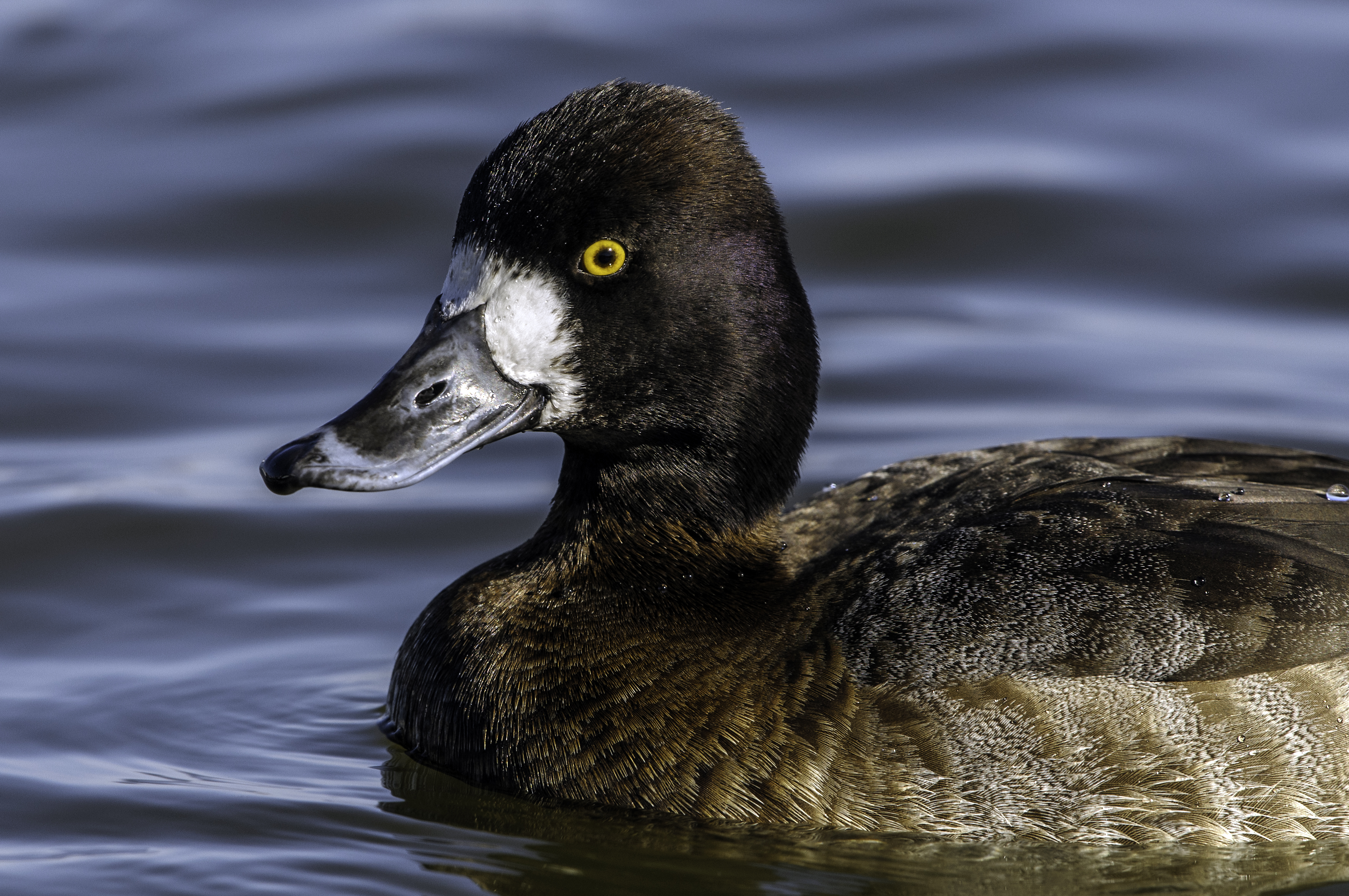
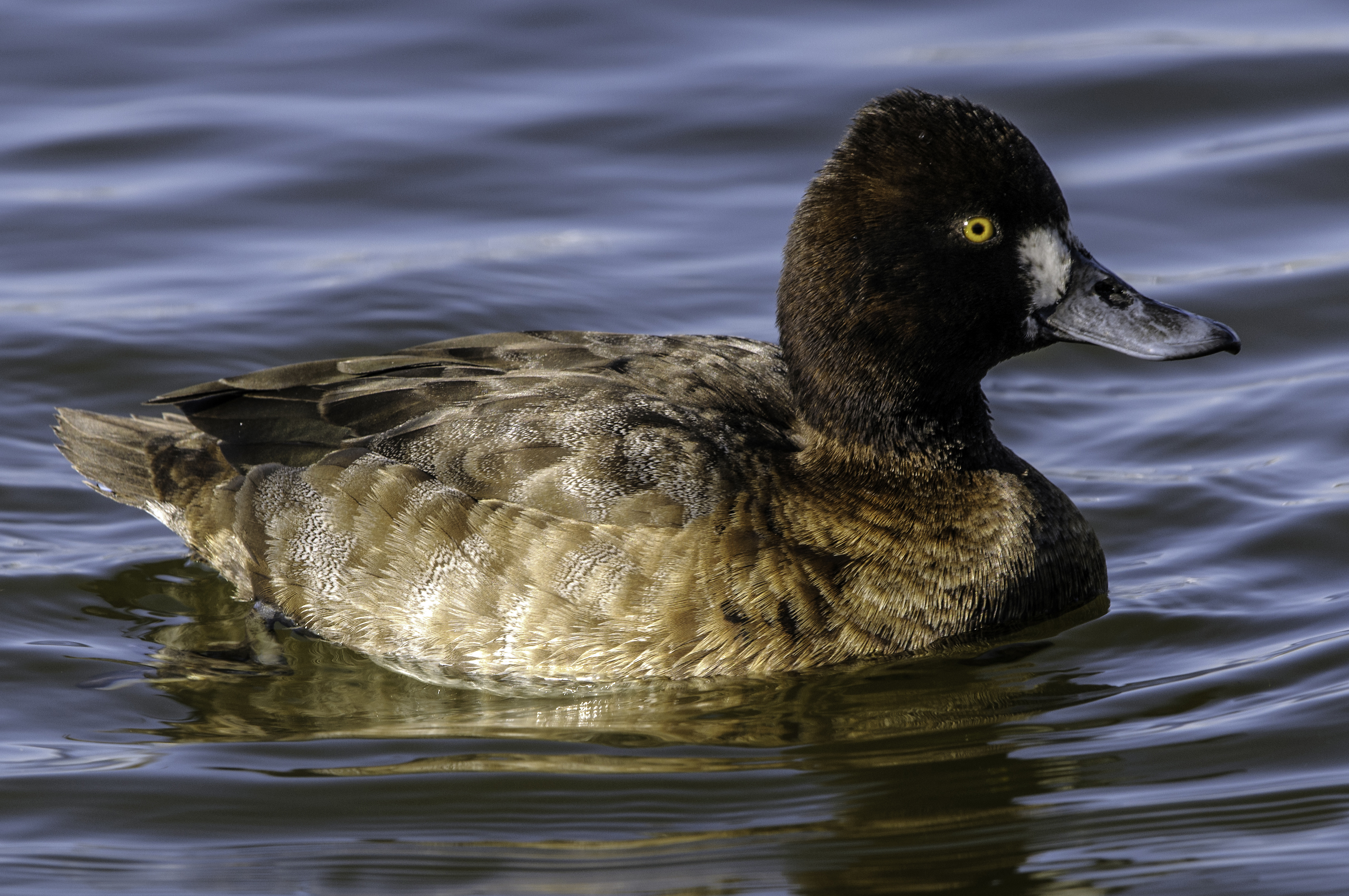
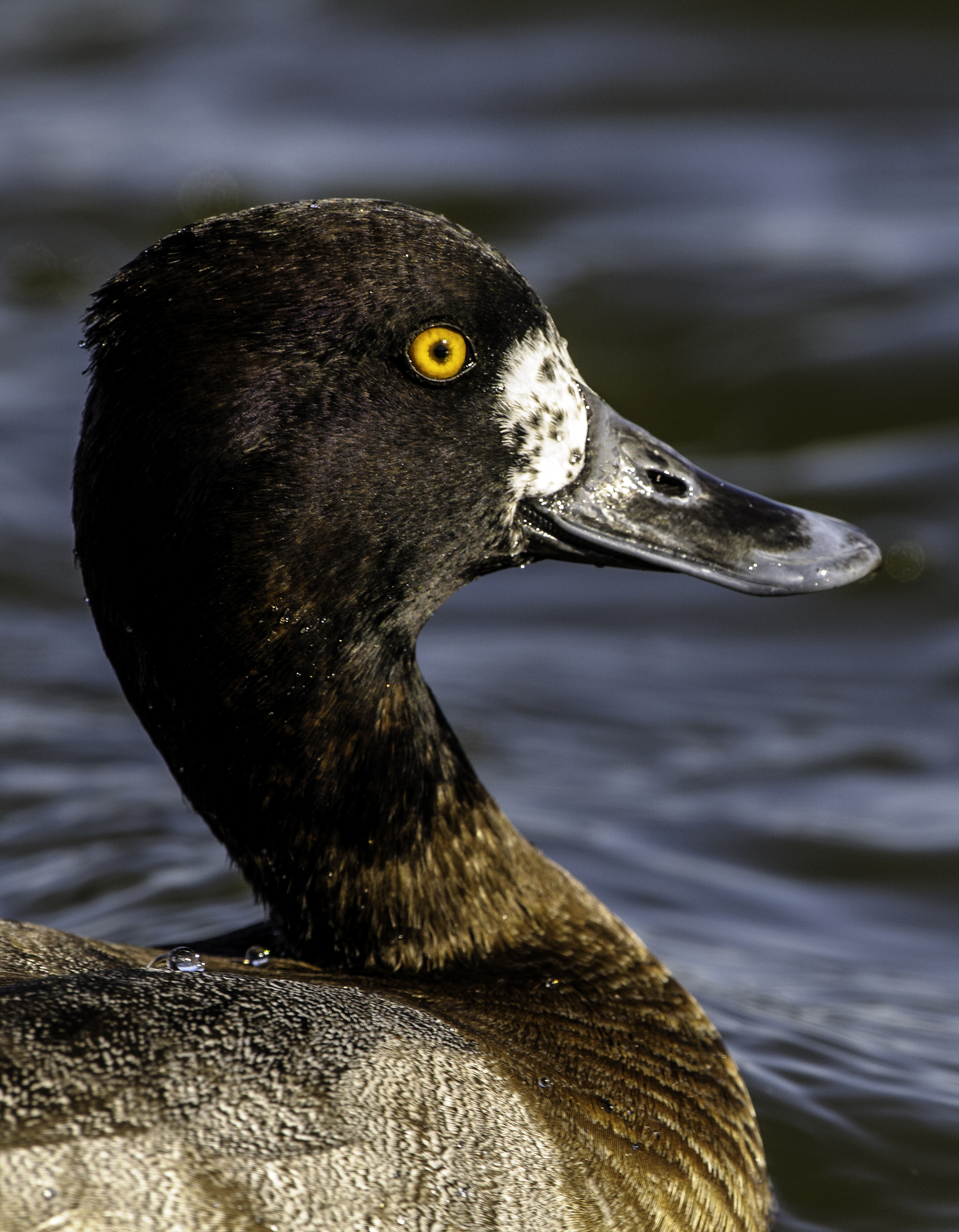
There were many less Ring-necked Ducks and Lesser Scaups, which are both smaller ducks than the Canvasbacks and Mallards that were on the river. Both of these ducks feed mainly by diving, eating aquatic plants as well as mollusks, aquatic insects and small fish. Both of these ducks were my favorite of the 6 species on the river, because of their size, color and markings, and just look so cute and lovable. Below are 3 images of the Lesser Scaups, whose heads were jet black with an iridescent purple color that glistened in the sunlight.

The ducks in the following 4 images are Ring-necked Ducks.

Finally, below is a photo of the single Redhead Duck that I saw among the hundreds of other ducks. It seemed to be the most wary and stayed further out than the other ducks. Although smaller, it was somewhat difficult to distinguish from the Canvasbacks, because its head was similarly colored, but it had yellow eyes, instead of red, and its back was grey, instead of white.

Redhead Ducks are also diving ducks that feed mainly on aquatic plants. Their populations have remained relatively steady, and in a 2009 survey, there were more than 1 million Redheads. Even though there are many Redheads in North America, there was only one at that location on the Choptank River.

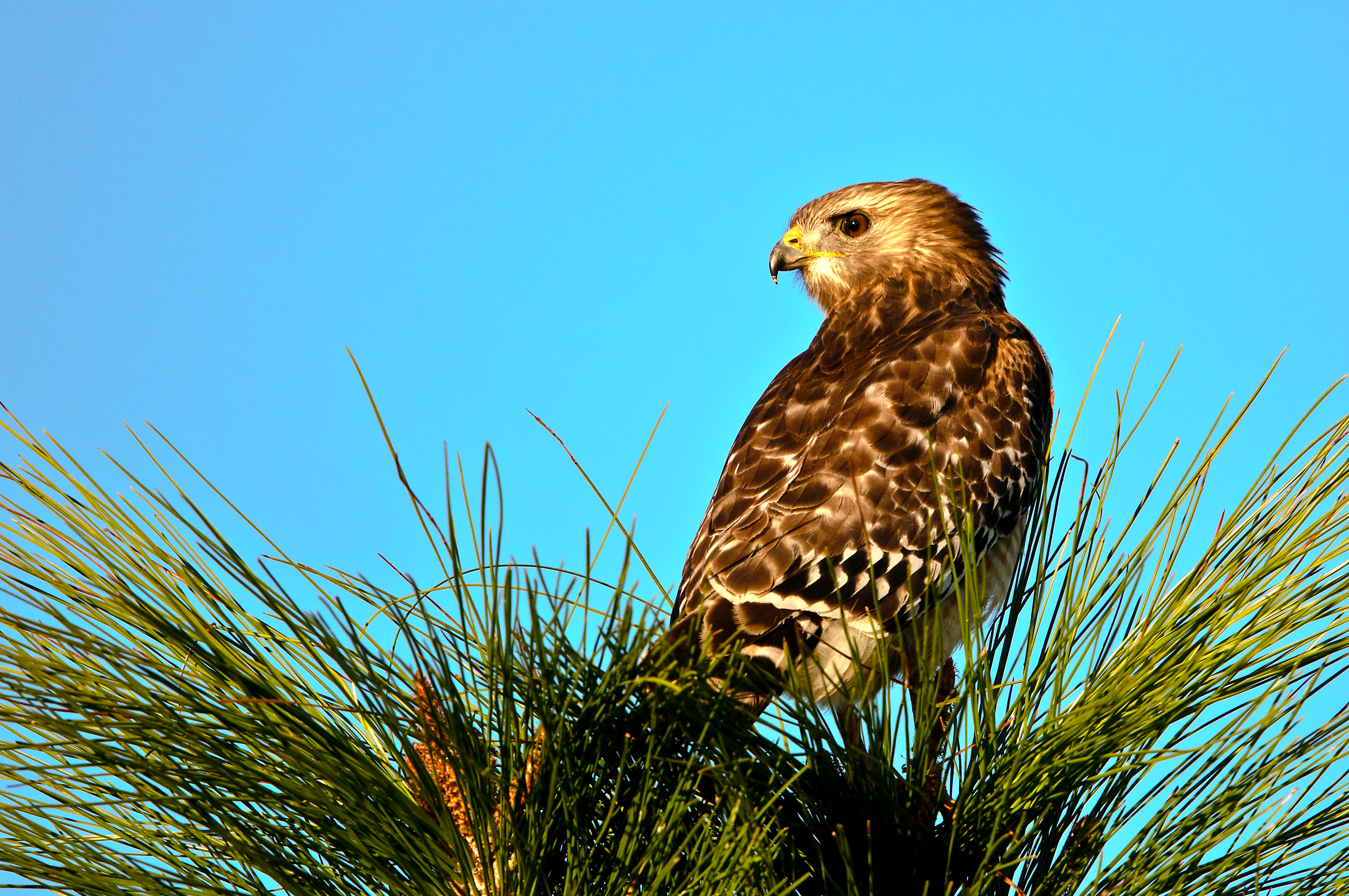
That concludes my blog articles on the ducks in Cambridge, Maryland (for now). The photographer and friend, Ceasar Shaper, that accompanied me on this trip suggested going back later this month. Maybe, there will be more Redheads. In the meantime, I am returning to processing images from Florida that I shot in December. I saw and was able to photograph many Red-shouldered Hawks in the Everglades and processing them is my next project. One of the Red-shoulder Hawks that I photographed follows.

For any curious photographers, I photographed the ducks in this and previous article using a Nikon D700 with a 70-200mm lens and a Nikon D300 with a 600mm lens. Email me for the EXIF data on any of the images.

Posted in Bird Photographs, Nature, Wildlife | Tagged , , , , , , , | 7 Comments

Ducks at Cambridge, Maryland

Very early in the morning (before sunrise) last weekend, I went to Cambridge, Maryland, to photograph ducks with another serious and talented photographer, Ceasar Sharper. Ceasar and I had been to Cambridge before, but this was the first time to photograph ducks. We did not know what to expect or whether we would find any ducks at all.

We arrived in Cambridge shortly after sunrise, and at the first place we stopped along the Choptank River, all we found were Canada Geese. However, we also found a group of serious birders, who told us about a nearby location that typically has wintering, migratory ducks. When we arrived at that location, there were two other photographers and a couple of hundred ducks. We got EXCITED! This was going to be better than we had imagined.

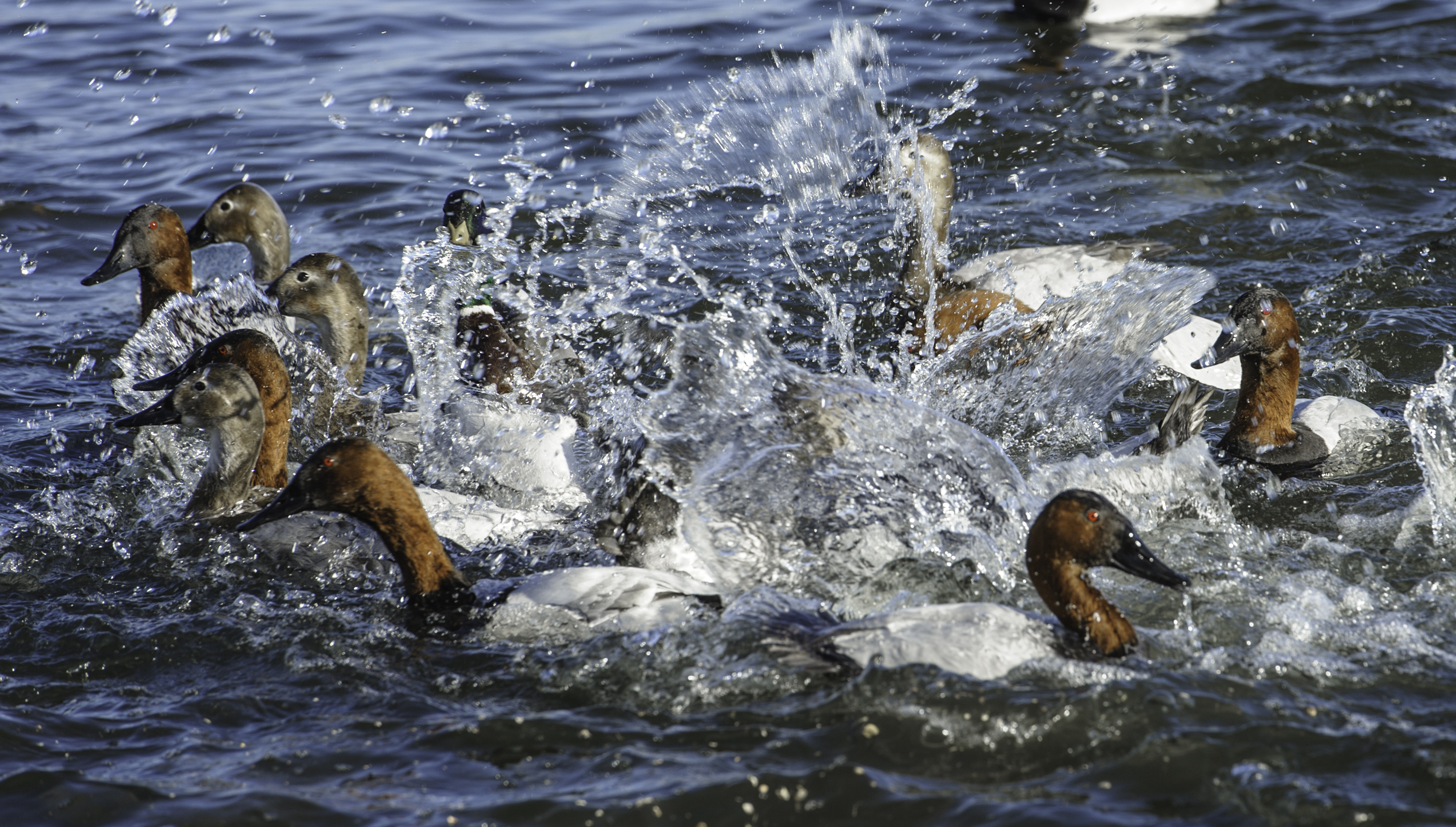
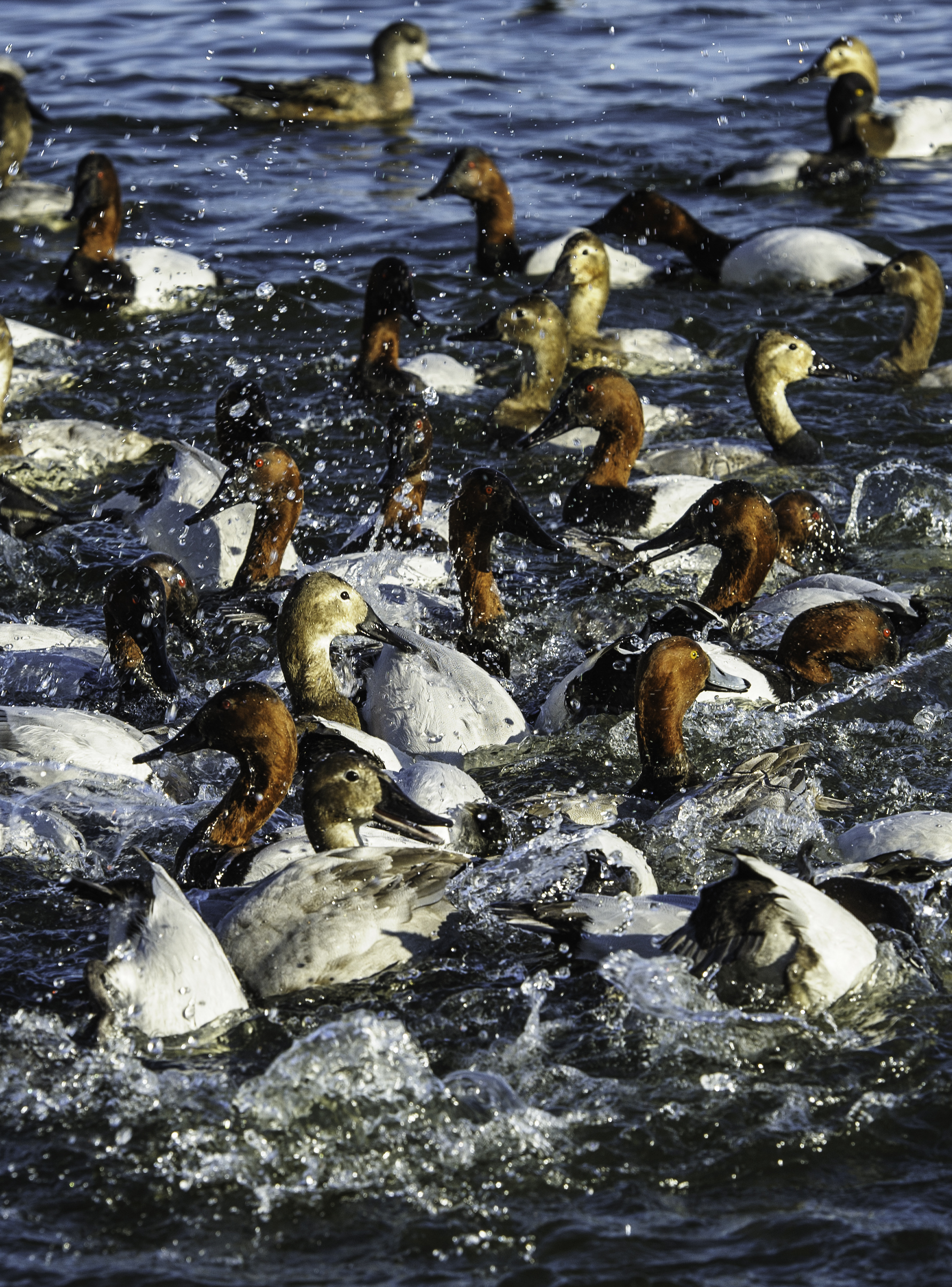
The other photographers were from Pennsylvania, and this was their second day at this location. They came prepared with a large tub of cracked corn, and periodically threw a handful into the river, which attracted the ducks closer toward us and set them off into a feeding frenzy. Below are several images of the ducks in a feeding frenzy going after the cracked corn.

Ceasar, like me, is predominately a still photographer, but he did make a short video with his Nikon D300s. The video shows the above feeding frenzy in action along with sound. Click on the below video image to start the video. Be sure to have your speakers turned on.

We saw and were able to photograph 6 species of ducks: American Wigeons, Canvasbacks, Lesser Scaups, Mallards, Ring-necked Ducks, and one Redhead Duck. In this article, I am only going to include images of the American Wigeons and Mallards. My next blog article will include images of the other ducks.

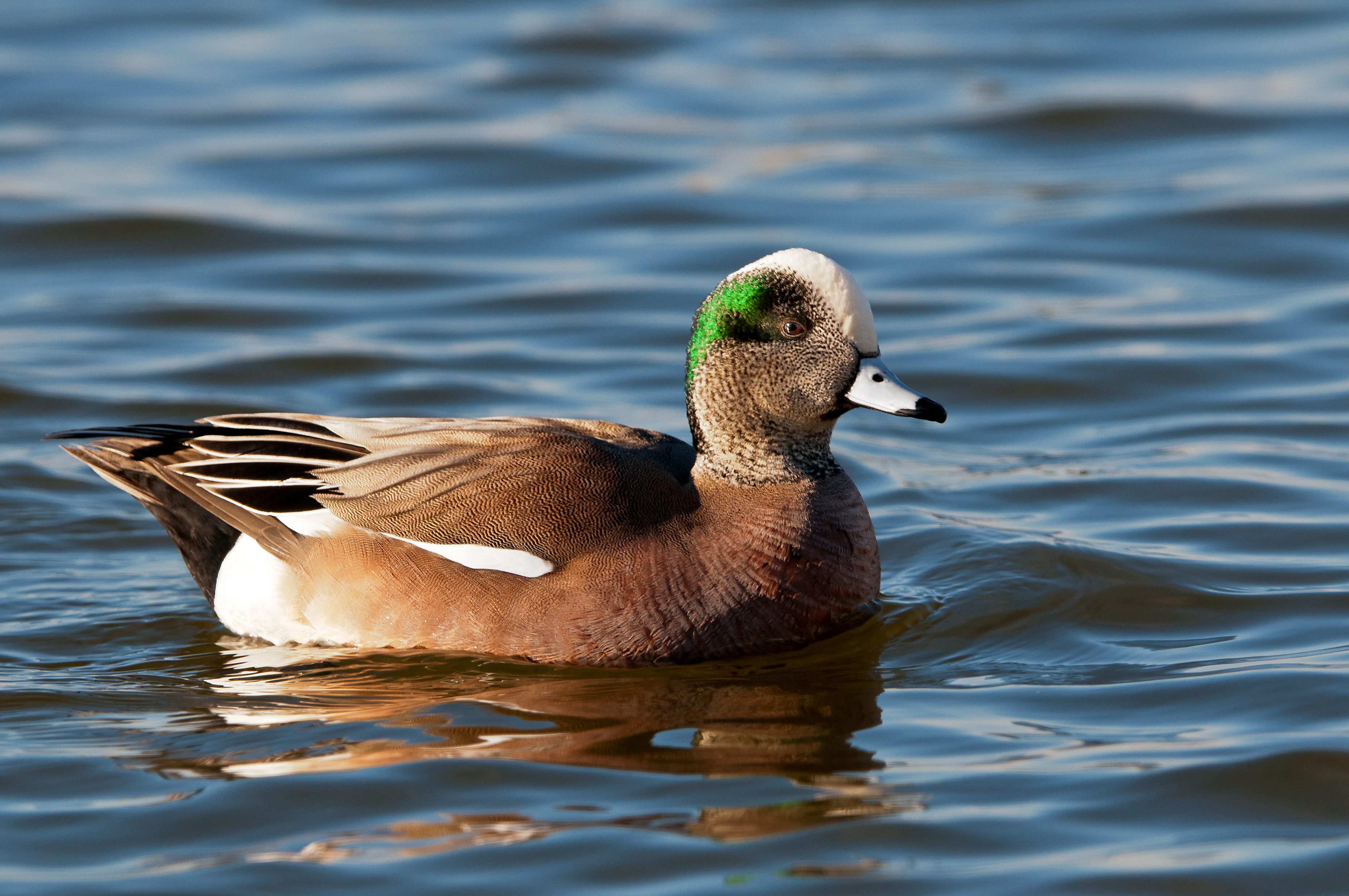
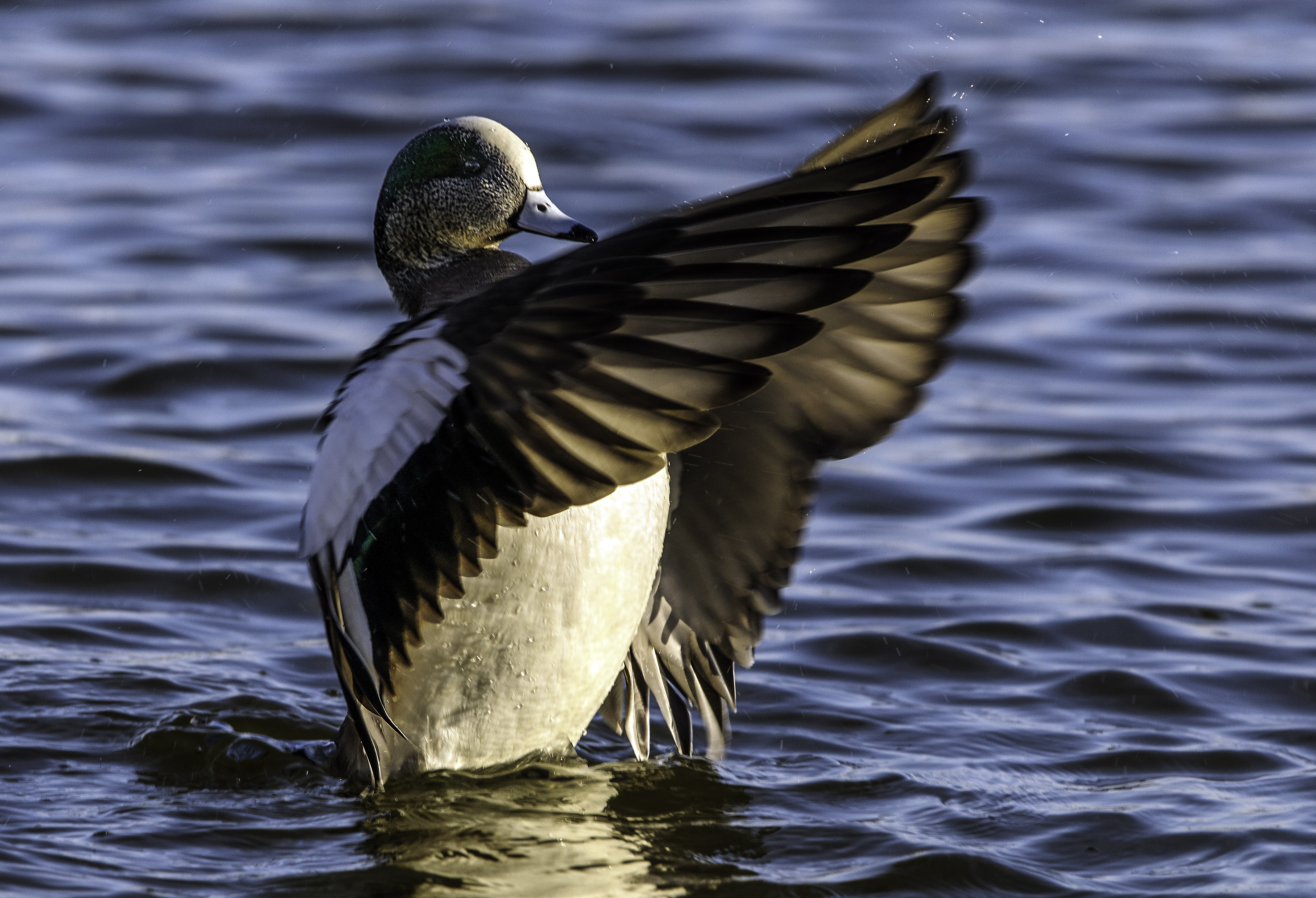
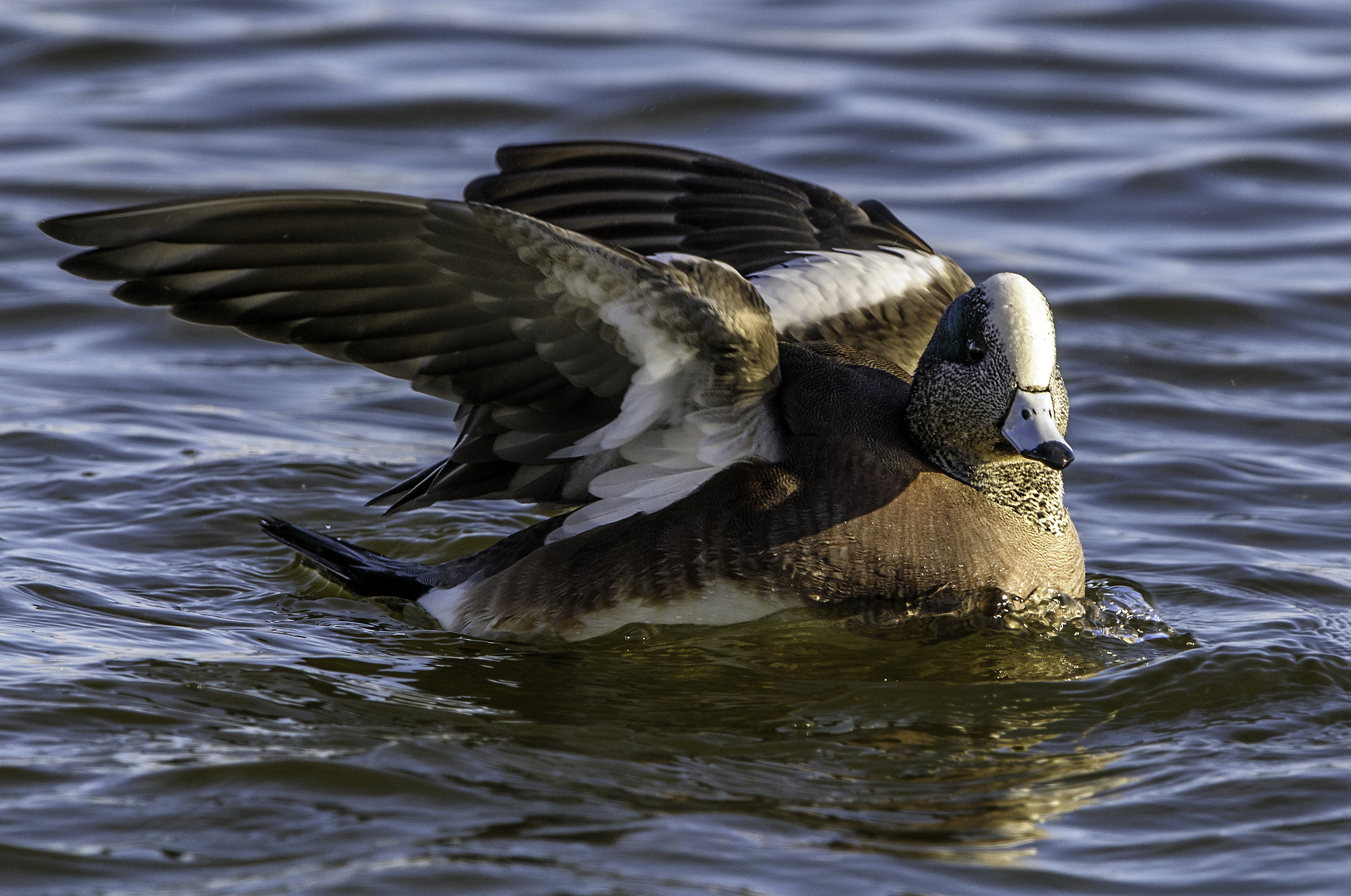
Images of the American Wigeon are below. Click on the images to see them in more detail. American Wigeons are common small ducks that summer in inland marshes, and winter in a variety of freshwater and saltwater wetlands and open water. Wigeons are plant eaters and will often pick their food from the surface of shallow wetlands. They are one of the most northernly ducks, breeding as far north as the Canadian tundra.

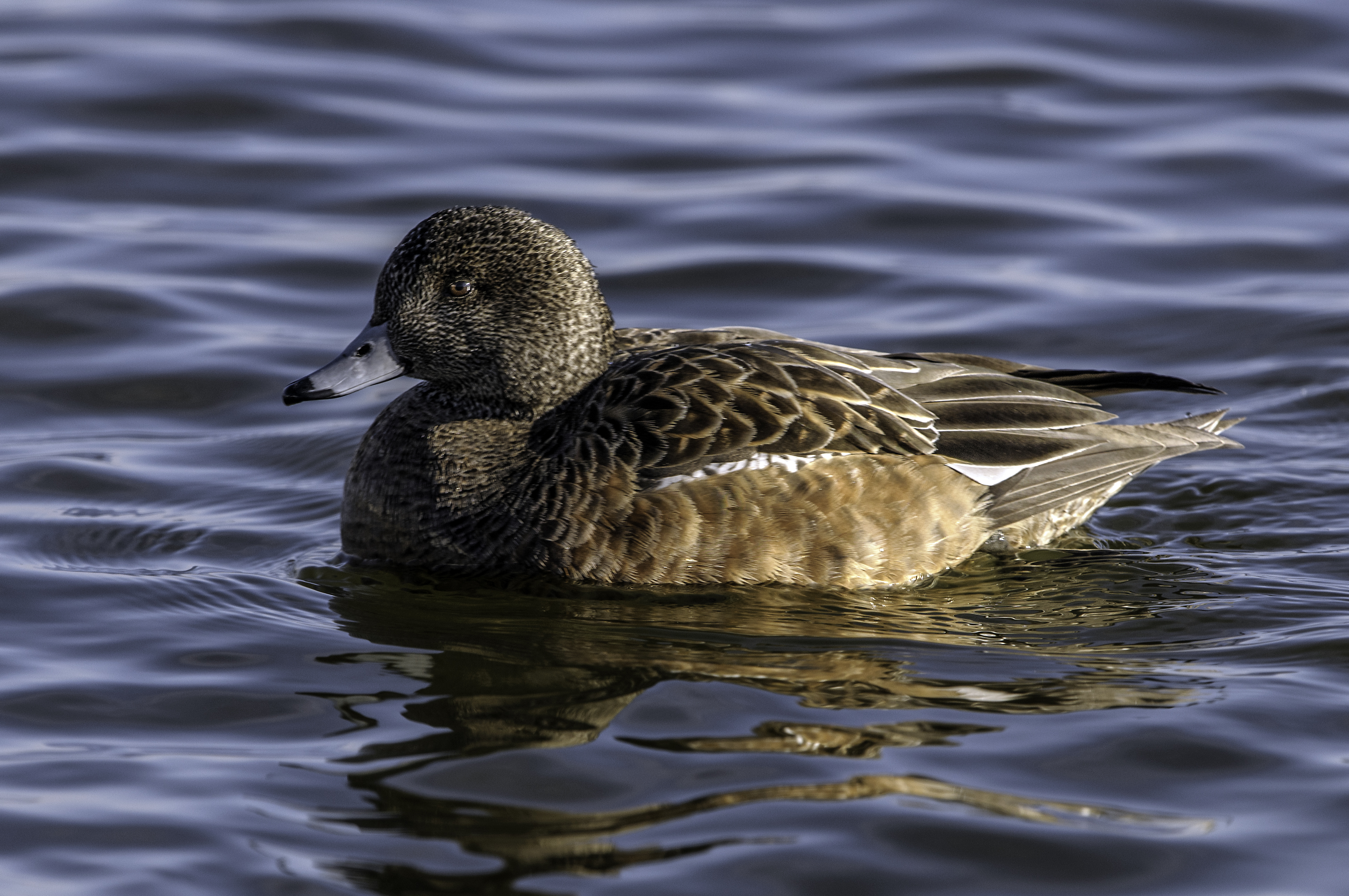
Below is a female American Wigeon.

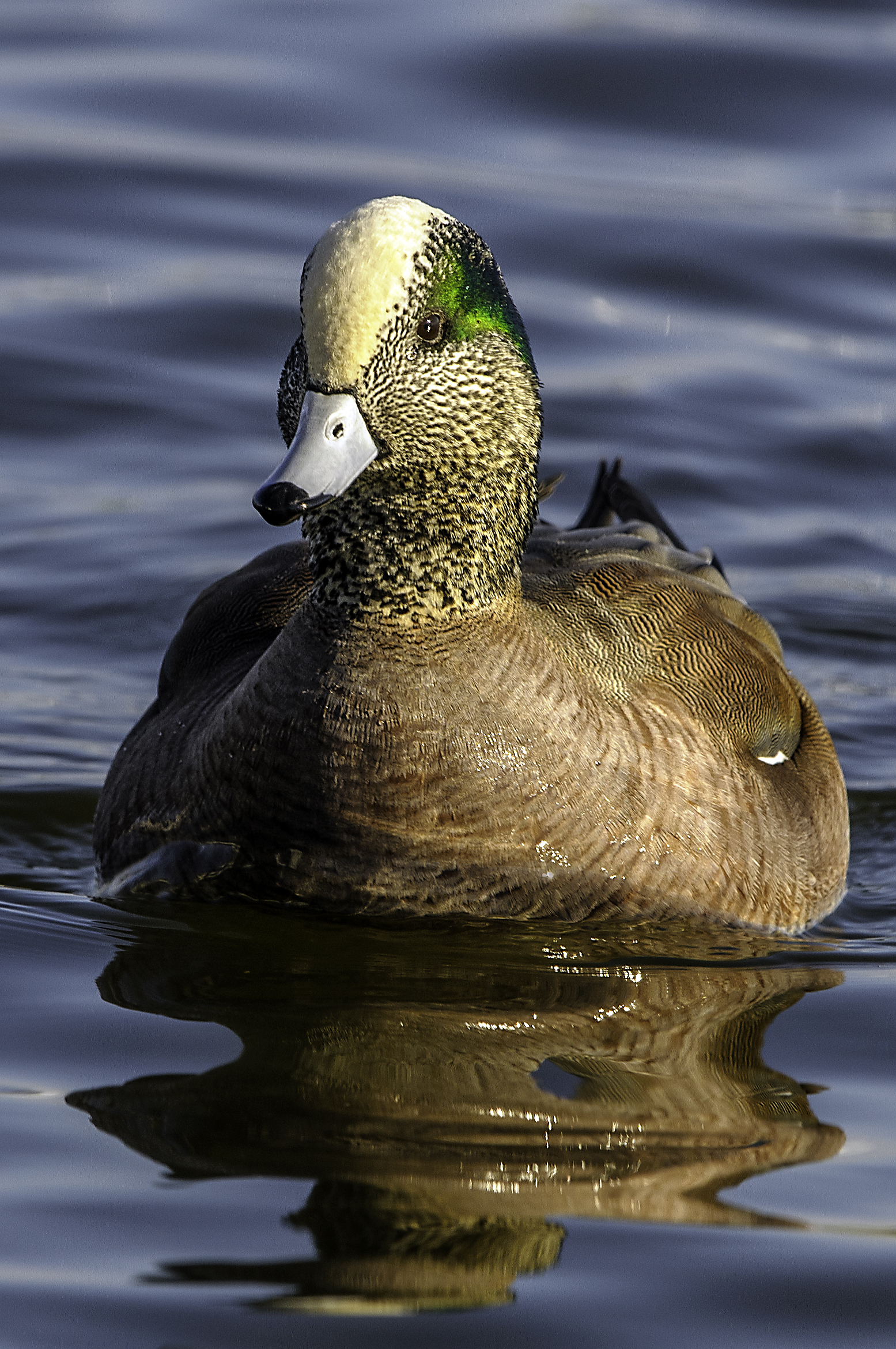
One more image of a male American Wigeon.

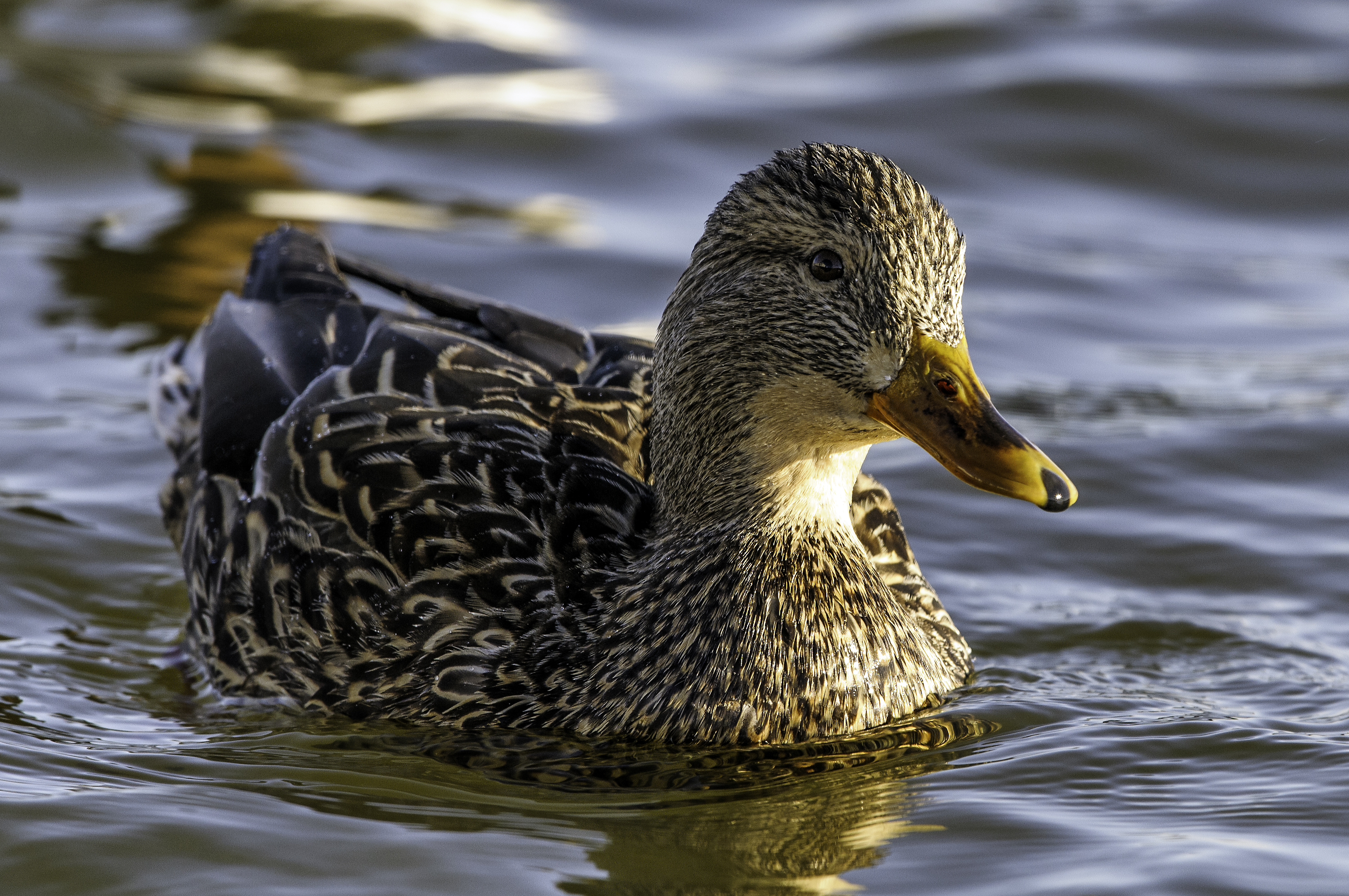
The below image is of a male Mallard followed by a female Mallard. Mallards are one of the most familiar ducks and are found throughout North America. They are found in all kinds of wetlands, as well as urban areas. For many years, a female Mallard nested and hatched ducklings in the center courtyard of the Pentagon–having worked in the Pentagon for many years, this is firsthand knowledge. Mallard pairs form long before the spring breeding season. Pairing takes place in the fall, but courtship can be seen all winter. Only the female incubates the eggs and takes care of the ducklings.

It was a very rewarding day to have seen and been able to photograph such a large variety of ducks in a single location. In addition, it was another gorgeous day in the mid-Atlantic region with temperature in the 50s. As we were leaving, we met a local resident that said this time of year, the Choptank River is usually frozen. The ducks and I are loving the mild winter!

In my next blog article, I will include images of the other 4 species of ducks that we photographed (Canvasbacks, Lesser Scaups, Ring-necked Ducks, and the one Redhead).

Posted in Bird Photographs, Nature | Tagged , , , , , | 6 Comments

Red-headed Woodpeckers

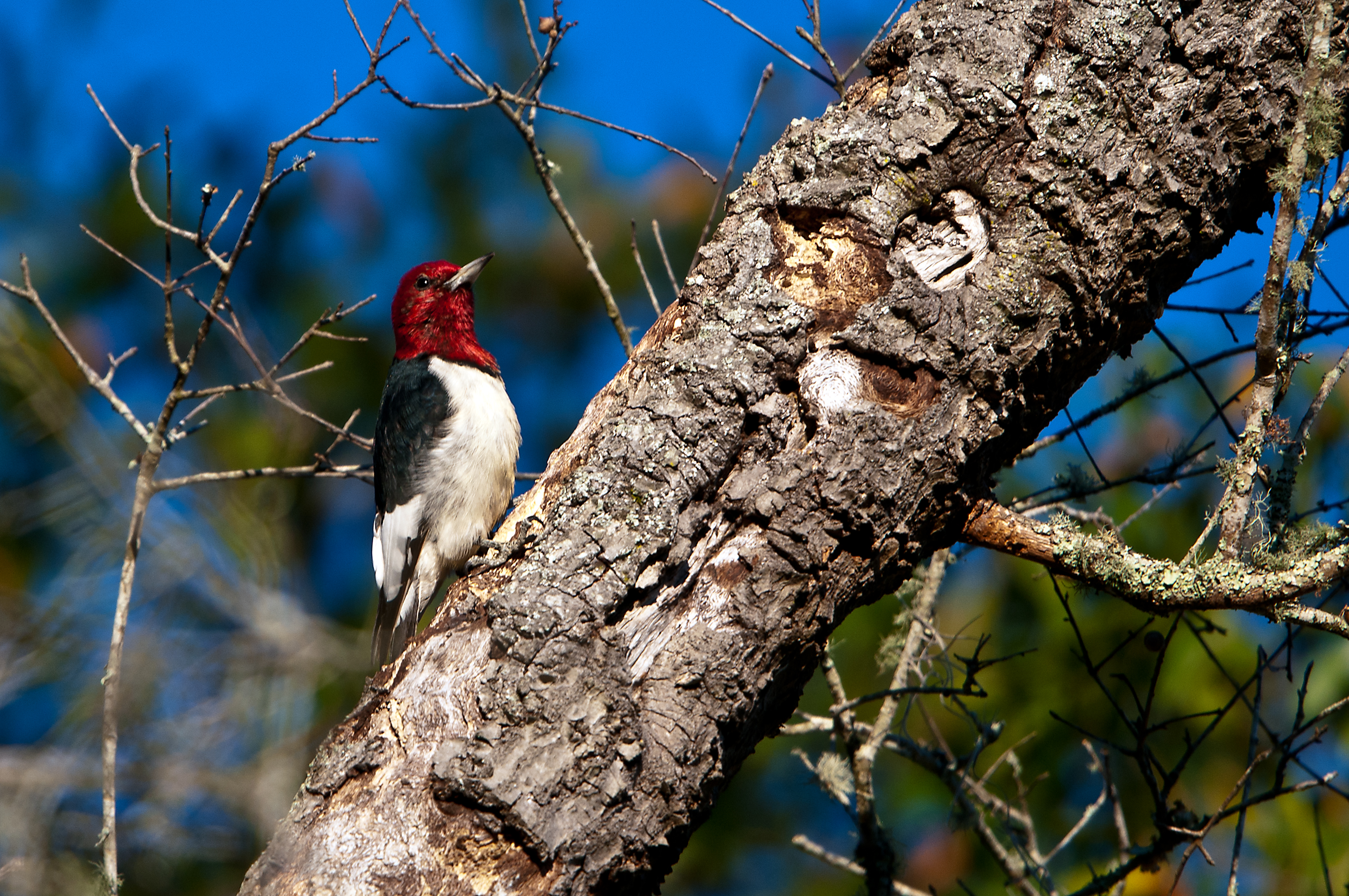
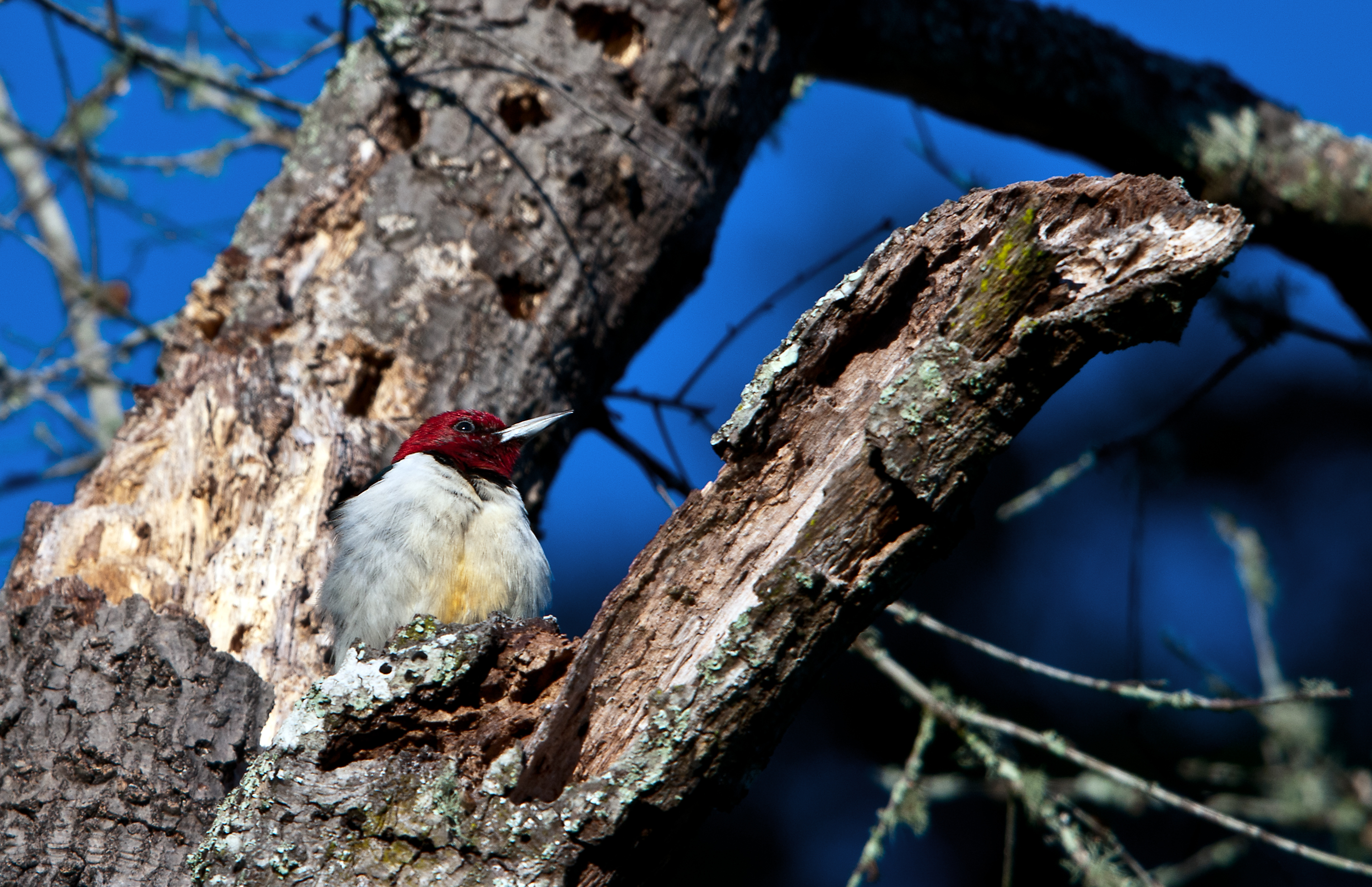
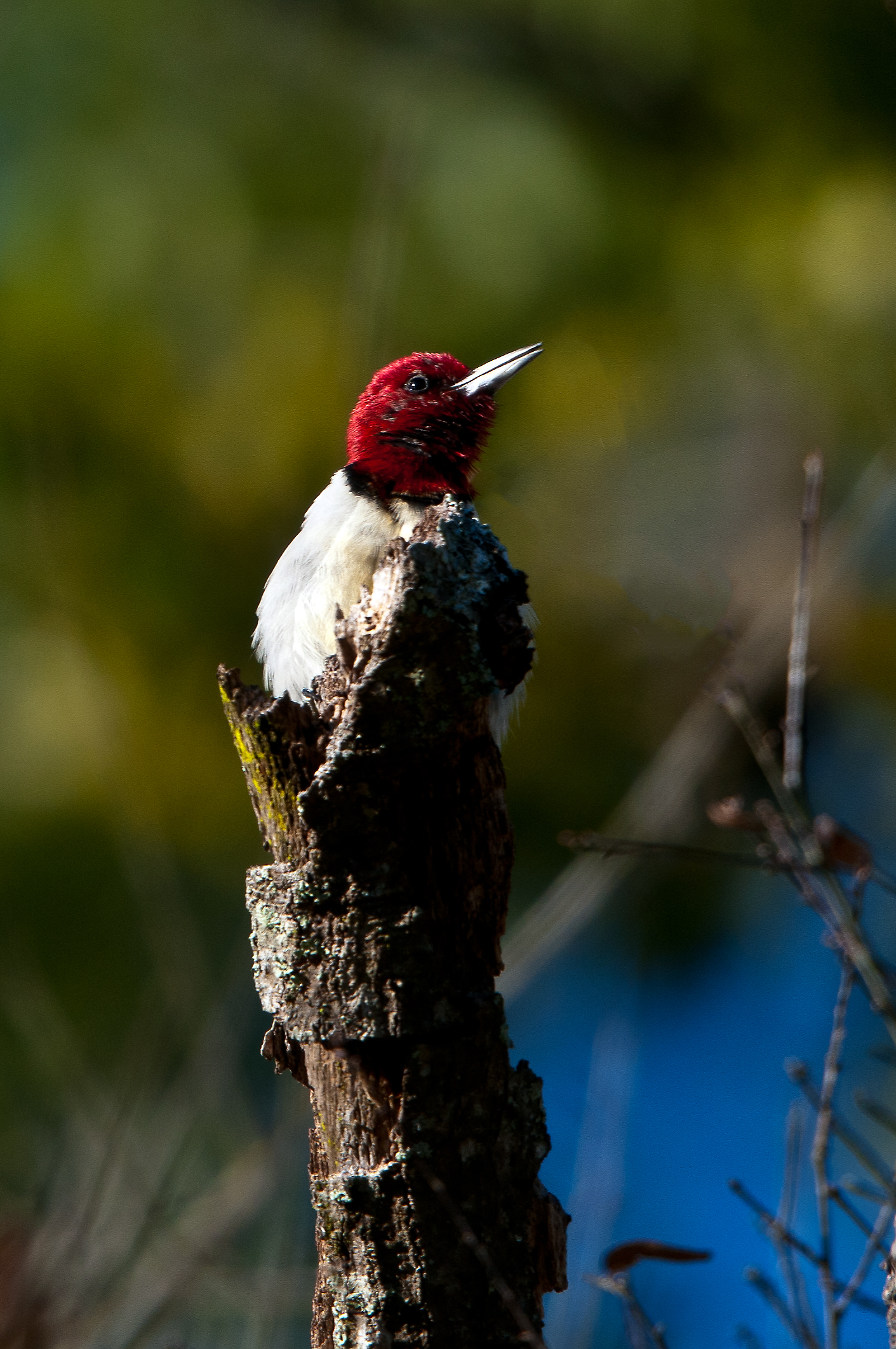
While in Gainesville, Florida, in December, I photographed Red-headed Woodpeckers at Prairie Creek Preserve. Prairie Creek Preserve is one of the properties owned by  Alachua Conservation Trust (ACT).  ACT is a nonprofit organization that works to preserve land in Alachua County, and since it started in 1988, it has facilitated the protection of over 14,000 acres of land and conservation easements. We are fortunate that there are organizations like ACT that work to protect and preserve our natural resources and the wildlife that inhabit it.

Six months ago, when I was at the preserve, I saw a couple of Red-headed Woodpeckers, but was not prepared to properly photograph them, but this time was different. I spent much of a late afternoon at one location watching several Red-headed Woodpeckers, and the conditions for photographing them were perfect. They were putting on quite a show for me and did not seem to be bothered that I was nearby photographing them.

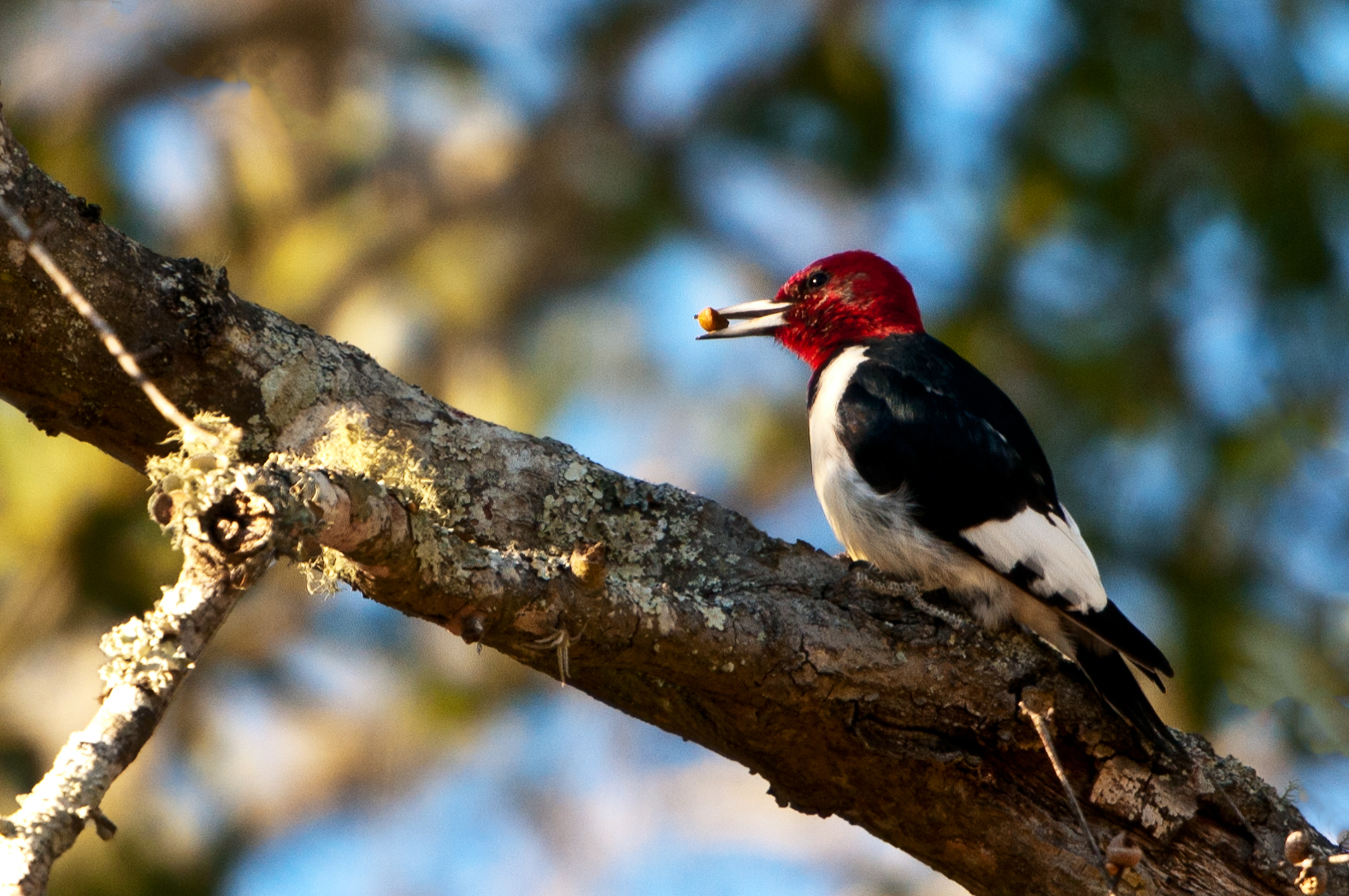
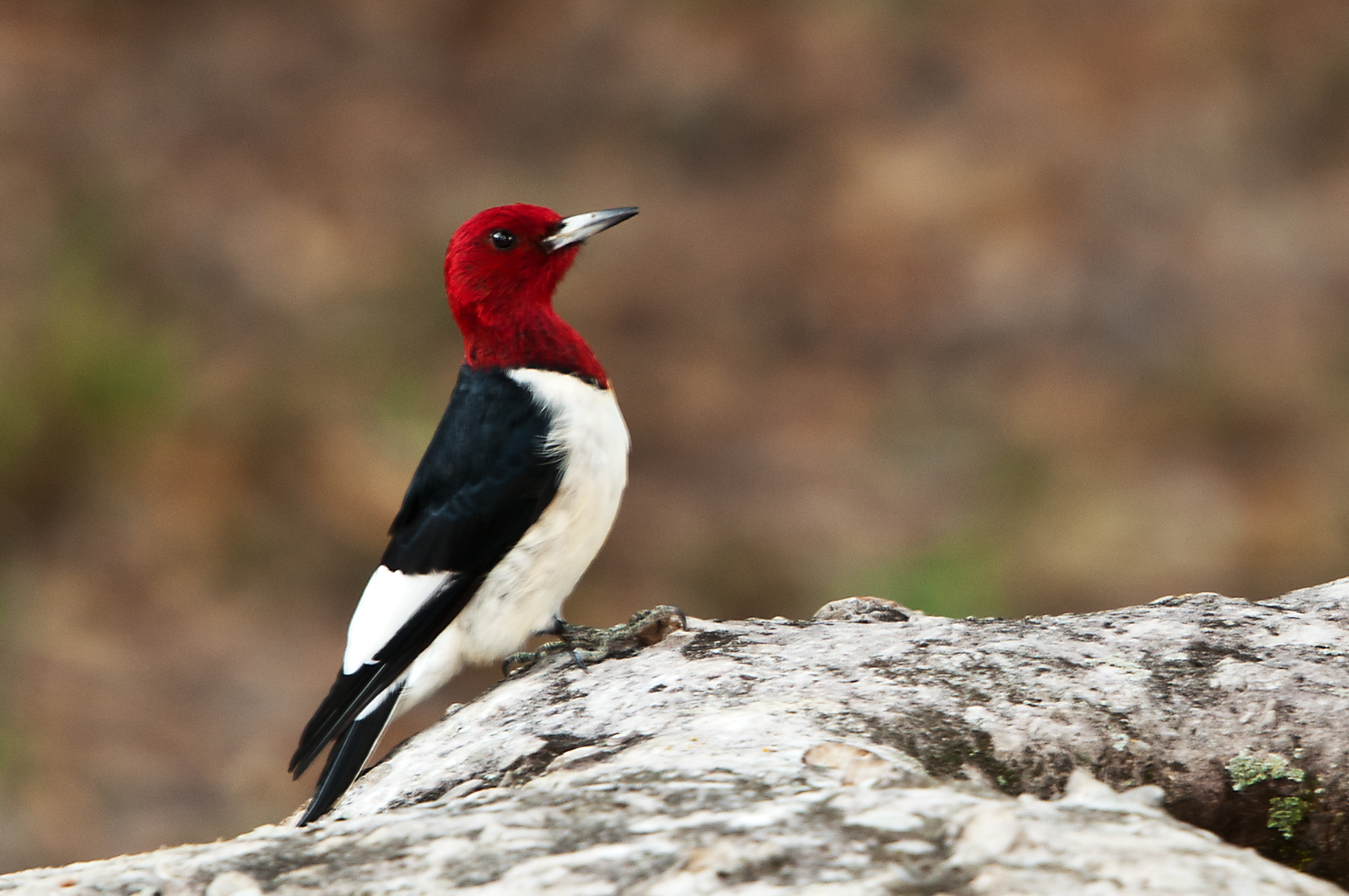
Adult Red-headed Woodpeckers are strikingly tri-colored, with a black back and tail and a red head and neck, and their underparts are mainly white. Adult males and females are undistinguishable. They fly to catch insects in the air or on the ground, forage on trees, and store nuts and acorns.

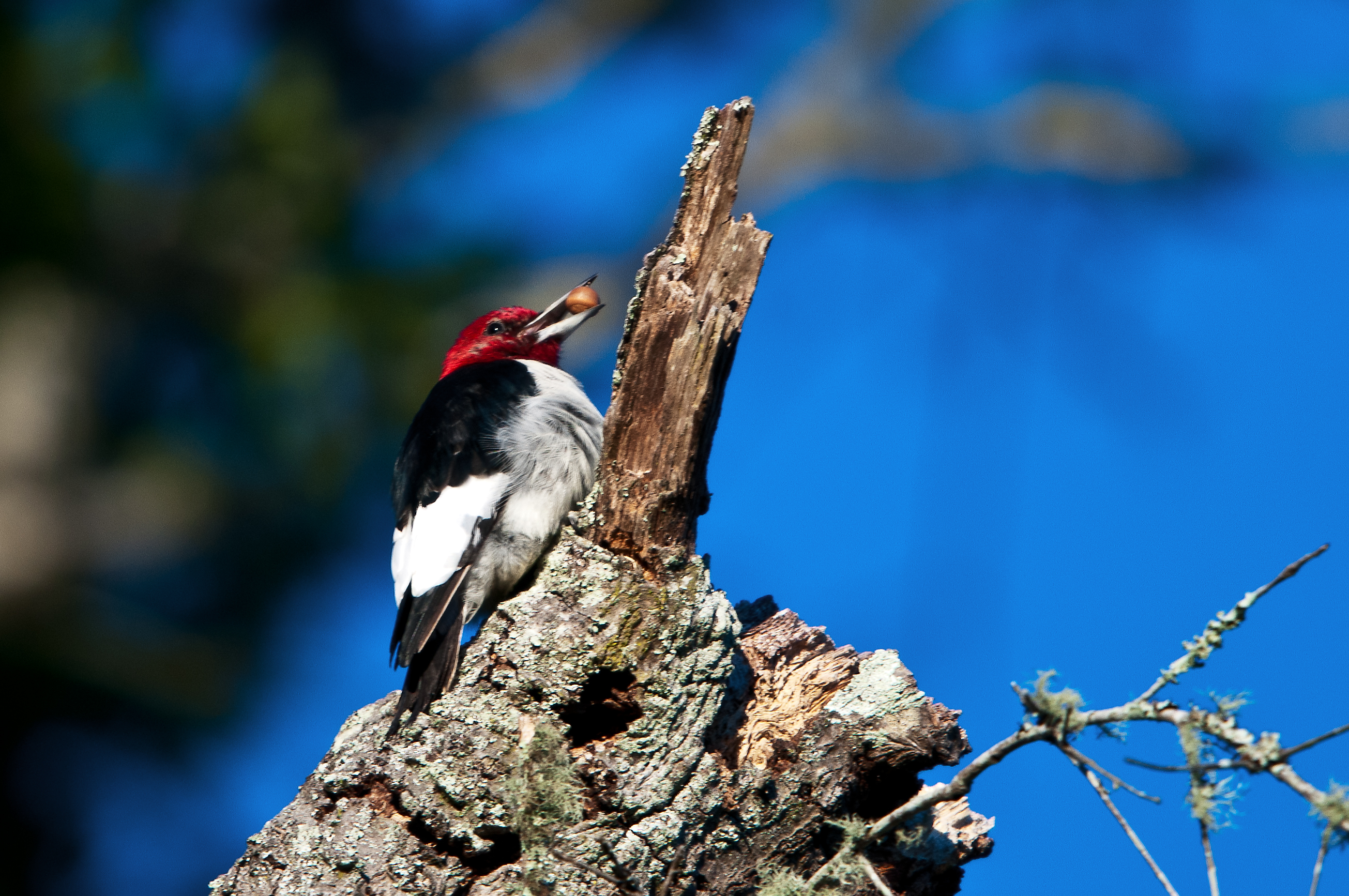
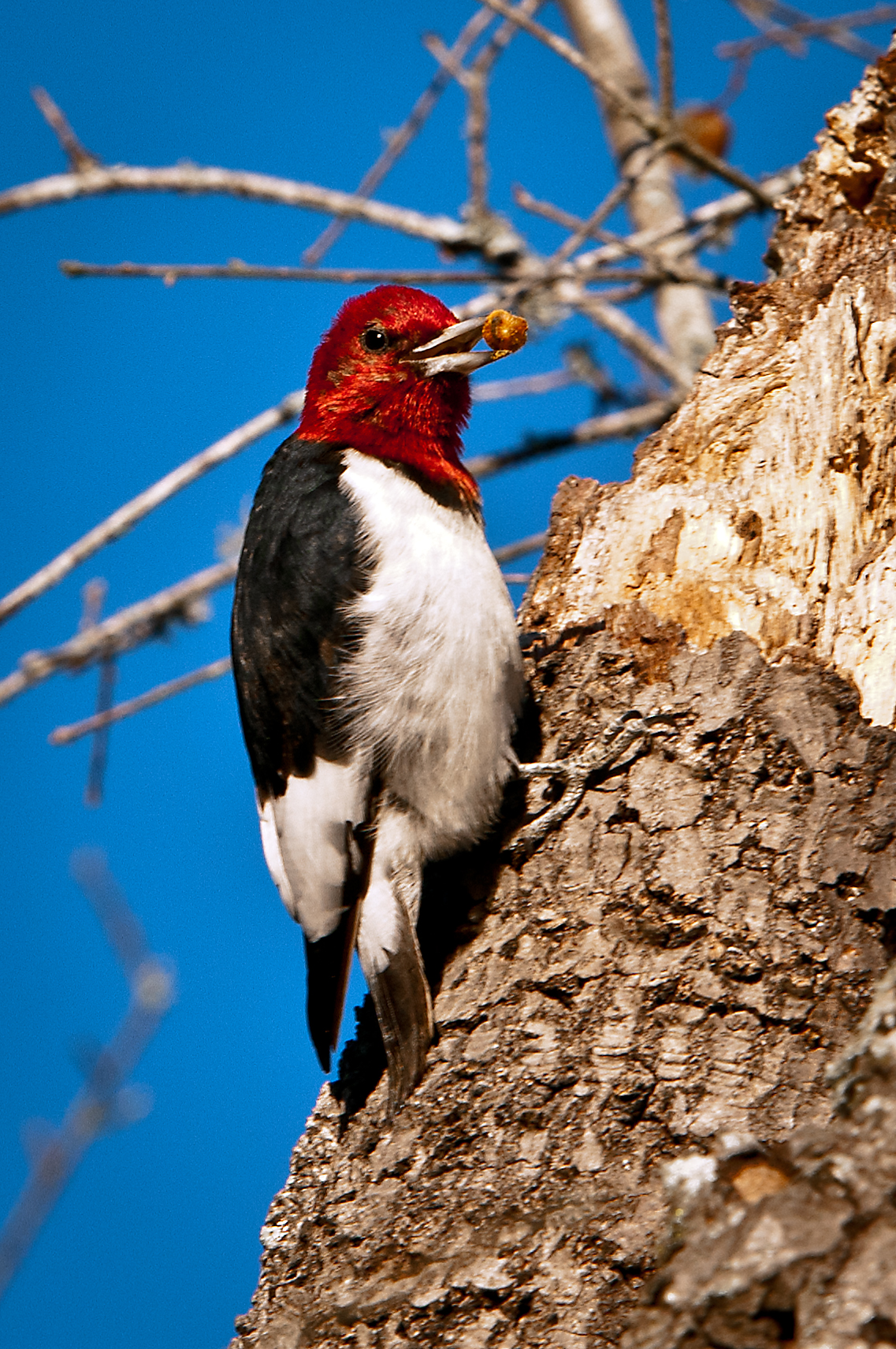
While I was photographing the woodpeckers, the ACT Land Manager explained how they gather acorns in the fall and store them in trees by making holes in the trees or use existing crevices. After placing the acorns into the holes, they cover them up to prevent other birds from finding them. During the winter, the woodpeckers uncover the acorns to feed on them, and that behavior was exactly what I was witnessing and photographing.

Above is a woodpecker with an acorn it had just removed from the tree, and below are more photographs of other woodpeckers with acorns.

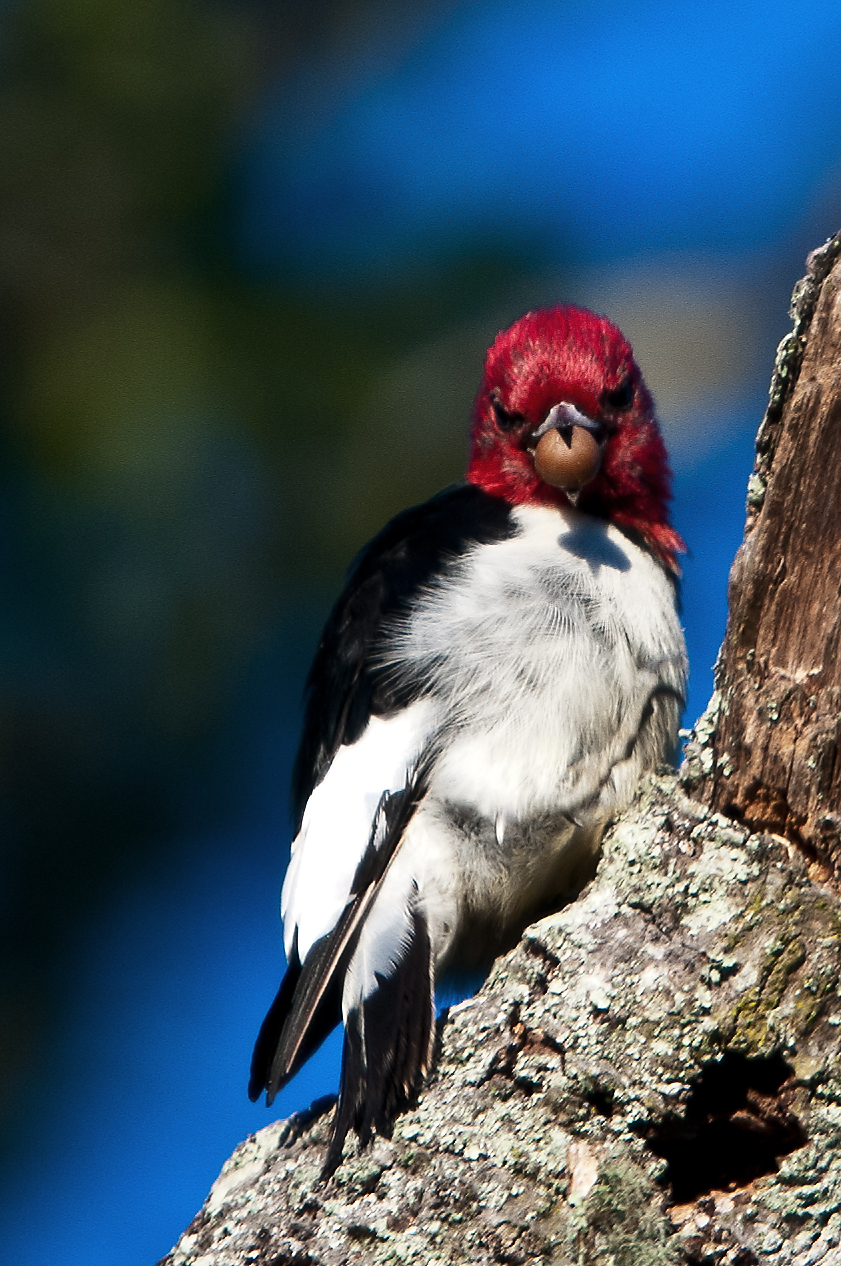
The below image is special because the woodpecker was looking straight at me and into the lens with an acorn in its bill. Opportunities to capture such an image are once in a lifetime–at least mine.

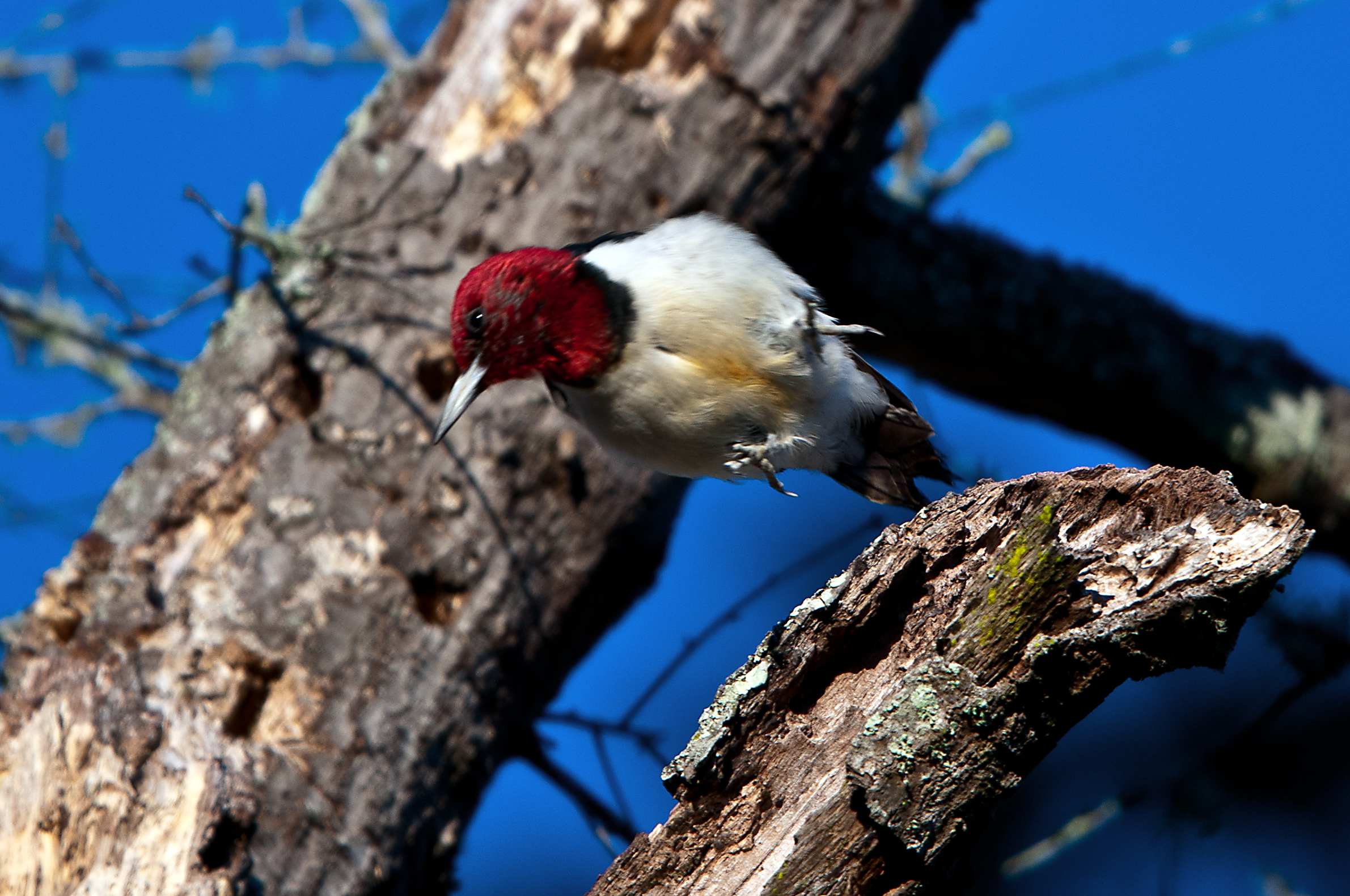
I was able to capture another unique image when one of the woodpeckers leaped from the tree and flew away. The image  (below) is after the woodpecker left the tree, but before the it opened its winds to fly.
In my opinion, any day that I see one woodpecker is a good day, but that day was a very special day. Not only did I see many Red-headed Woodpeckers, but I was able to photograph them, too.
Double click  on the images to see them in more detail.
Posted in Bird Photographs, Nature, Wildlife | Tagged , , | 8 Comments