Peregrine Falcon

Peregrine-Falcon

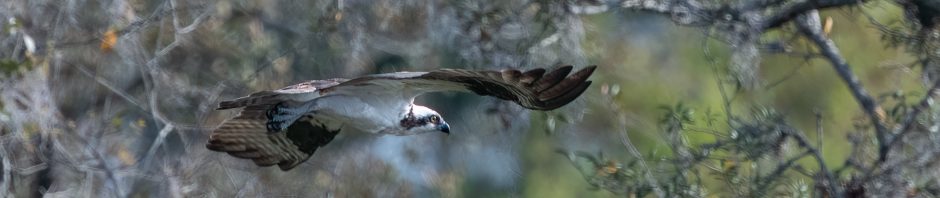
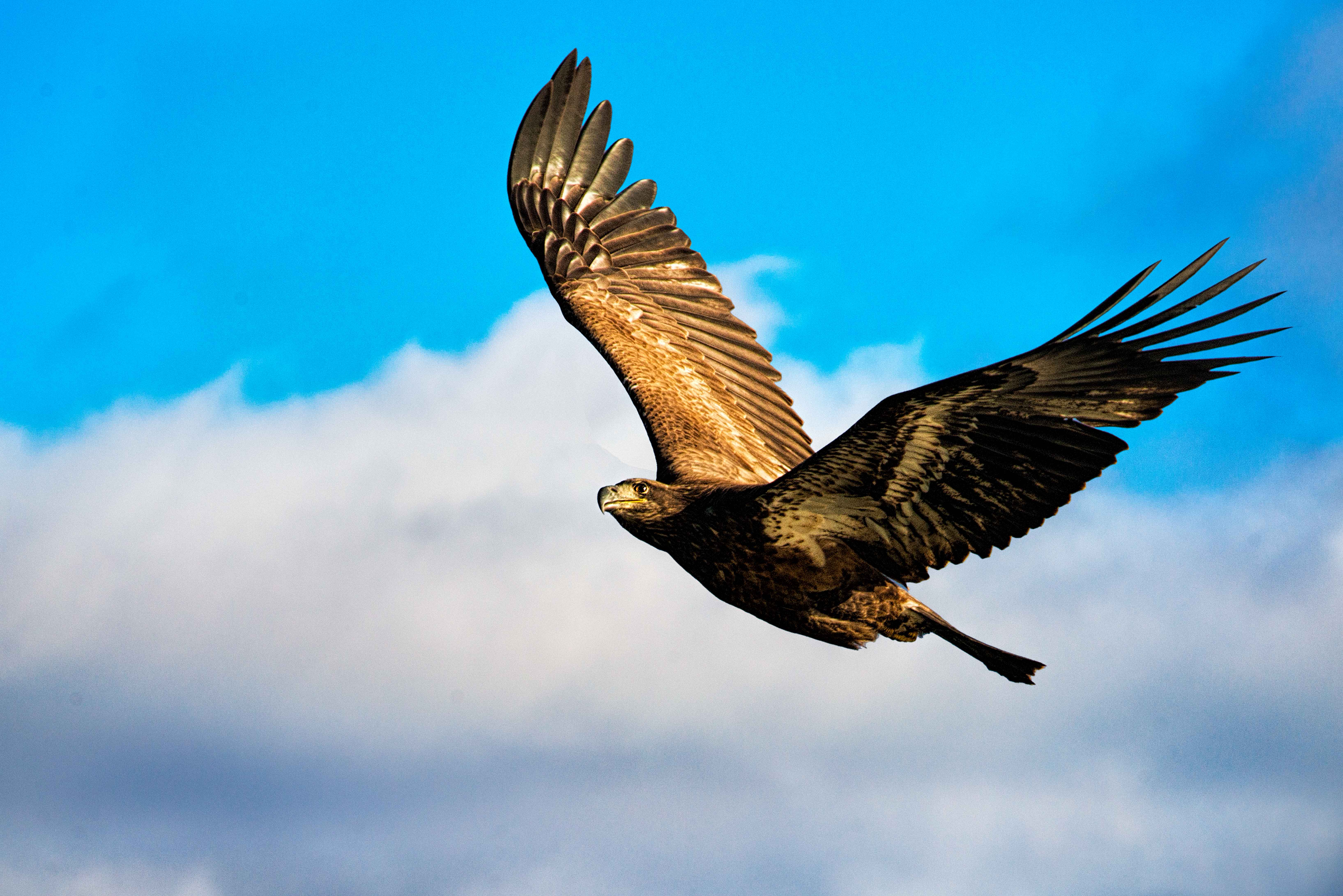
Two weeks ago at Conowingo Dam in northern Maryland, while photographing eagles, a Peregrine Falcon flew very quickly in front of me and my camera, and I was able to capture the above image. I have seen Peregrine Falcons before and tried photographing them, but they were too far away or flying too fast to get a decent image. This one is not bad, not perfect, but worth sharing.

I photographed the falcon with a Nikon D800 and Nikon 600mm lens with a TC 14 teleconverter at 1/1000 sec, f/8 and ISO 200.

Peregrin Falcons are the fastest flying birds and fastest member of the animal kingdom, diving to catch their prey at speeds over 200 mph. They feed almost exclusively on birds. The Peregrine Falcon became an endangered species in many areas because of the widespread use of pesticides, especially DDT. The Peregrine Falcon has made an excellent recovery since the ban on DDT and protection of their nesting places.

If you look closely (click on the image), you can see that this falcon is banded with a green identification band. Green bands have been used on Peregrin Falcons in Virginia since 2000. If you would like to read more about the banding of Peregrine Falcons, go to this website http://www.ccbbirds.org/what-we-do/research/species-of-concern/peregrine-falcon/report-sightings/

Posted in Bird Photographs, Nature | Tagged | 5 Comments

Barred Owl and Yellow-Rumped Warbler

Barred-Owl-with-Fall-Colors

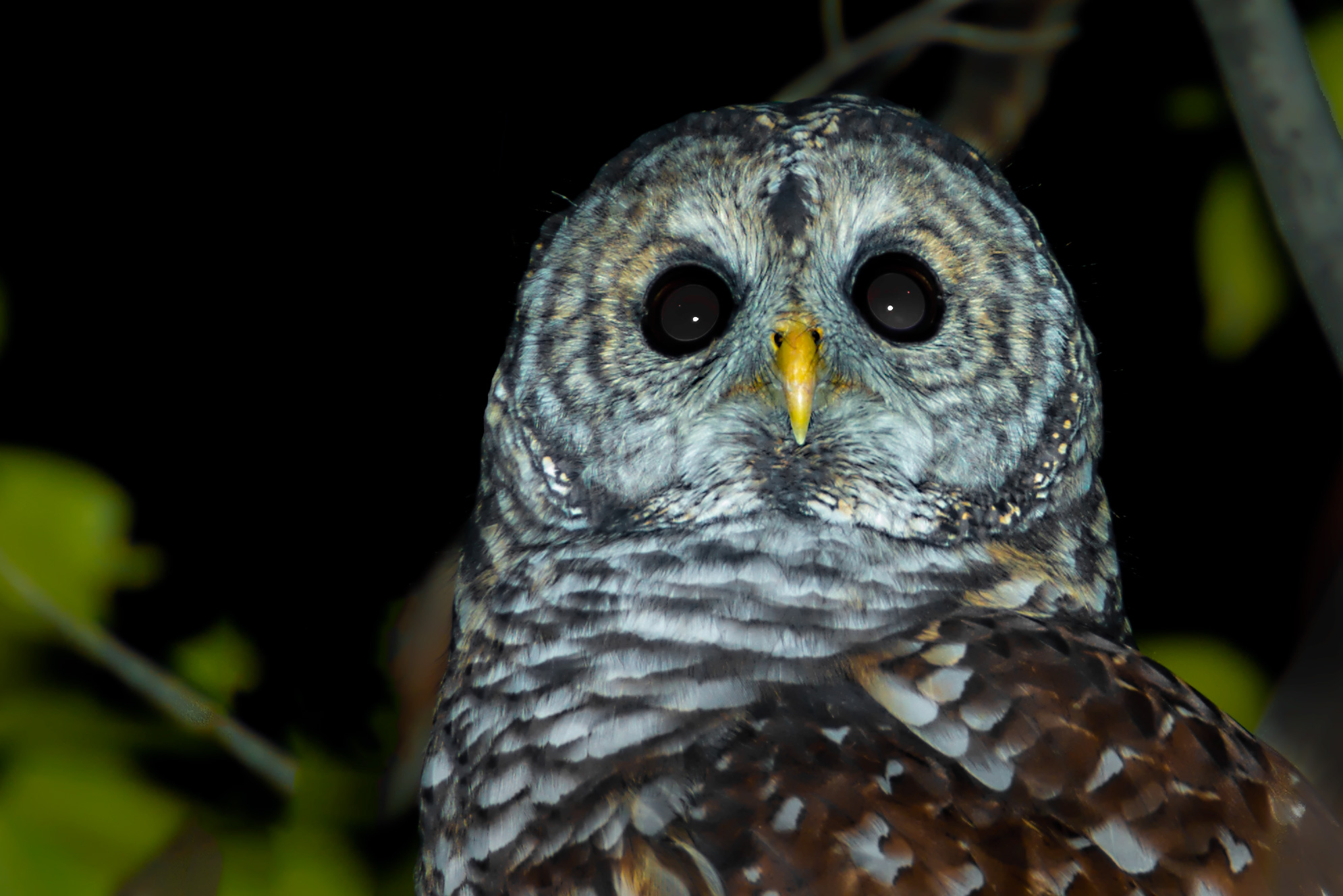
Last week, I heard a pair of Barred Owls hooting and carrying on across the lake. Occasionally, they fly over my house or perch in a nearby tree. After hearing them, I was hoping to see one so I prepared a camera just in case, and I was glad I did, because shortly after getting my camera set up, one of the owls perched in a nearby tree. Using a flash (Nikon SB900 with a Better Beamer), I was able to get the above shot. I have photographed the Barred Owls before, but this was the first time at night with the autumn colored leaves partially lit behind the owl.

Yellow-rumped-Warbler-3

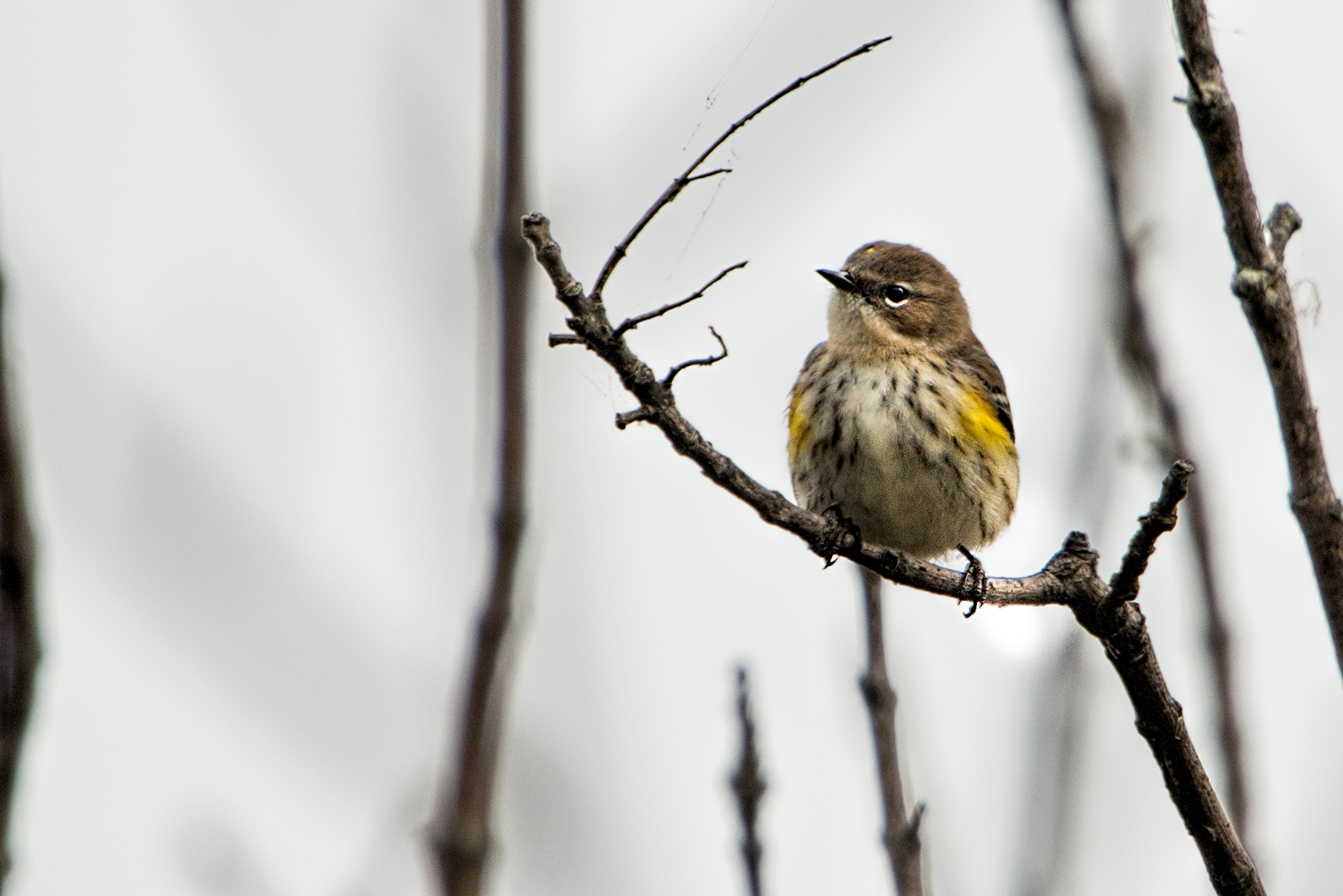
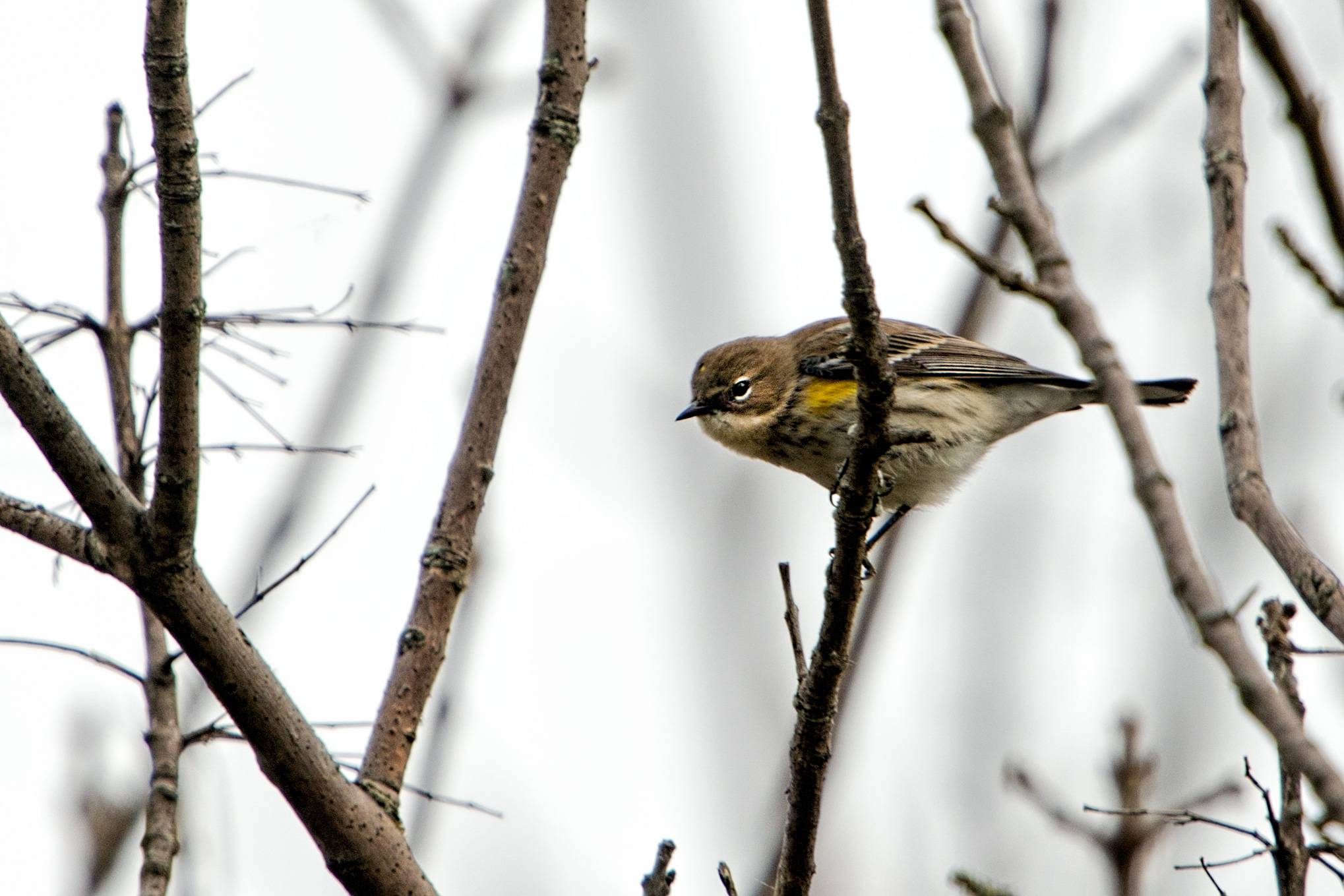
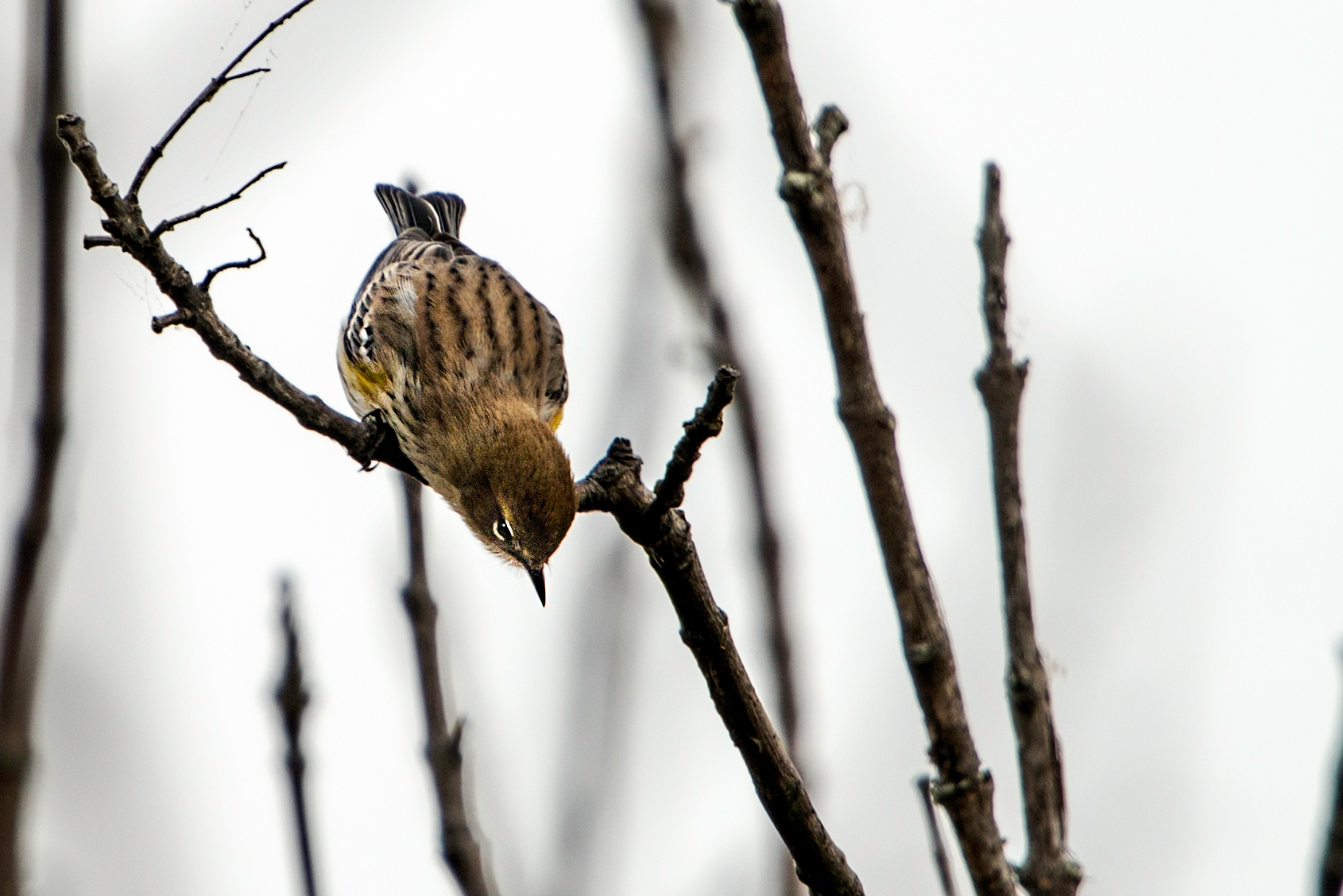
Above and below are a few images of a Yellow-rumped Warbler that I photographed at Occoquan National Wildlife Refuge. Warblers do not stay in one place but for a second or two. As they search for insects, they are constantly on the move. Therefore, they can be challenging to photograph. I was in the right place at the right time and prepared, as this warbler searched a tree for food.

Yellow-rumped-Warbler-4 Yellow-rumped-Warbler-2

In the above image, the warbler spotted an insect and was just about to leap from the branch and out of sight.

I am planning a trip to Chincoteague National Wildlife Refuge and hope to see and photograph some migrating ducks and snow geese, and will be posting a new article  soon.

Posted in Bird Photographs, Nature, Wildlife | Tagged , | 13 Comments

Roseate Spoonbills – Unusual and Oddly Beautiful Wading Birds

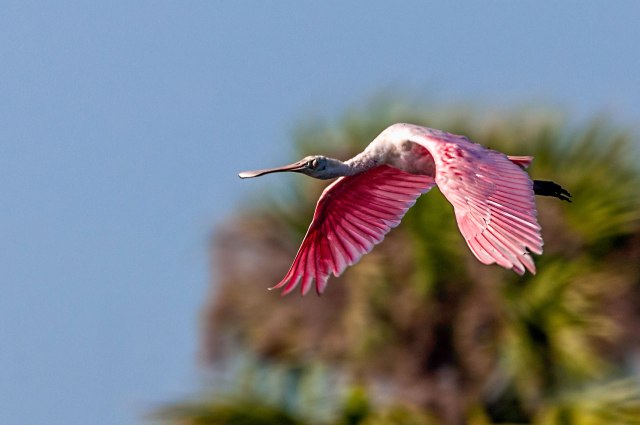
Spoonbill-in-Flight

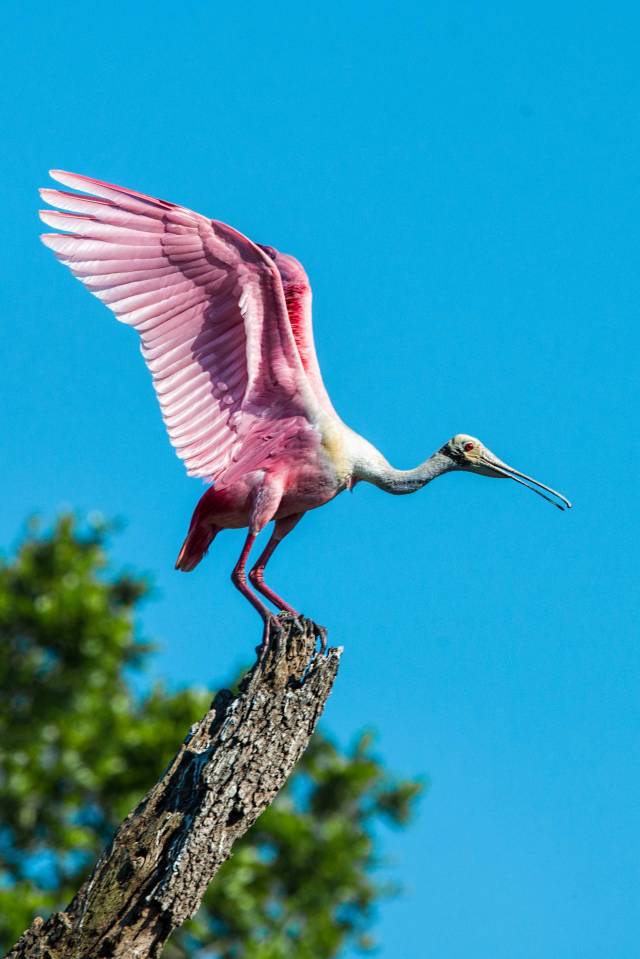
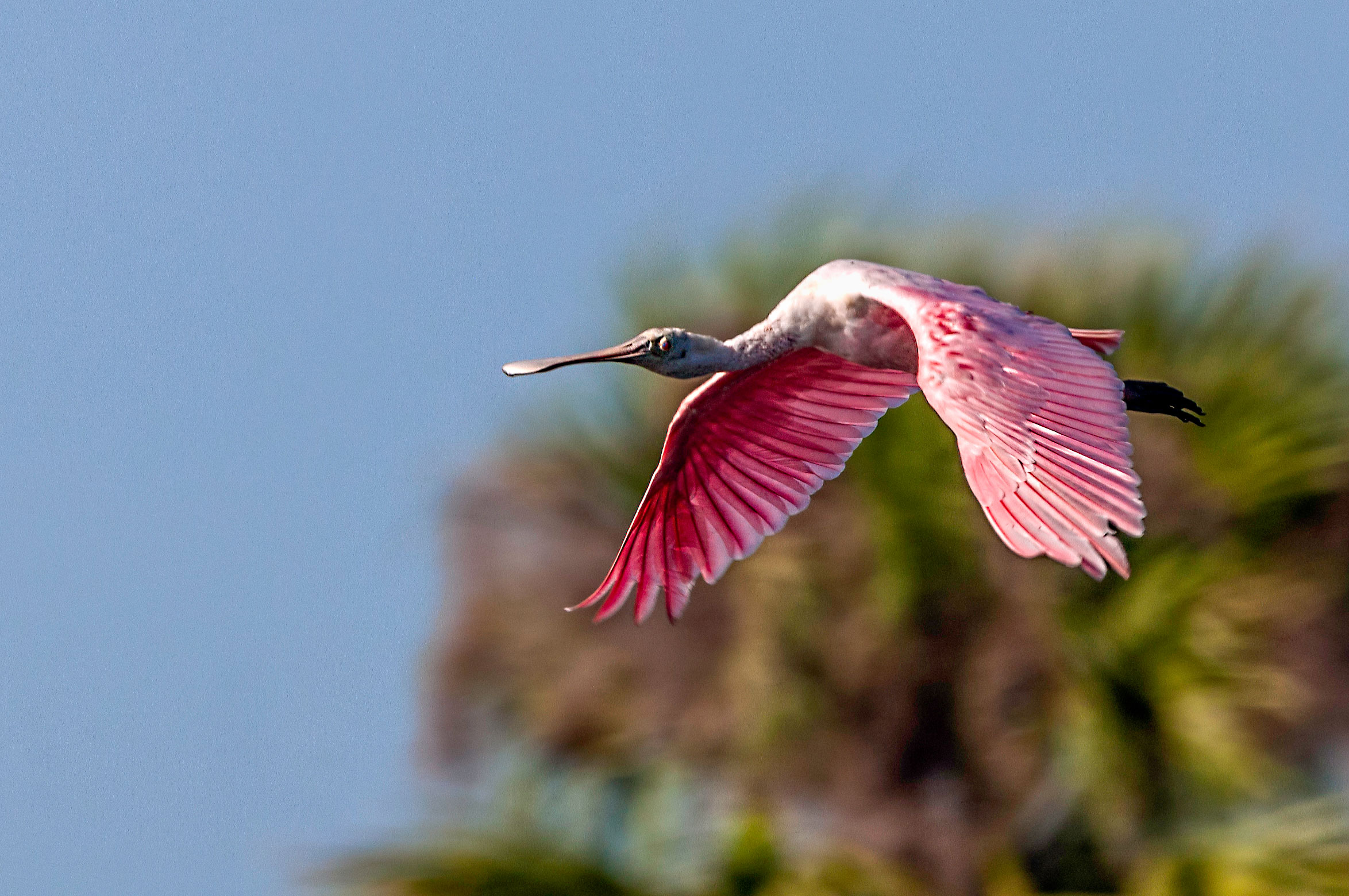
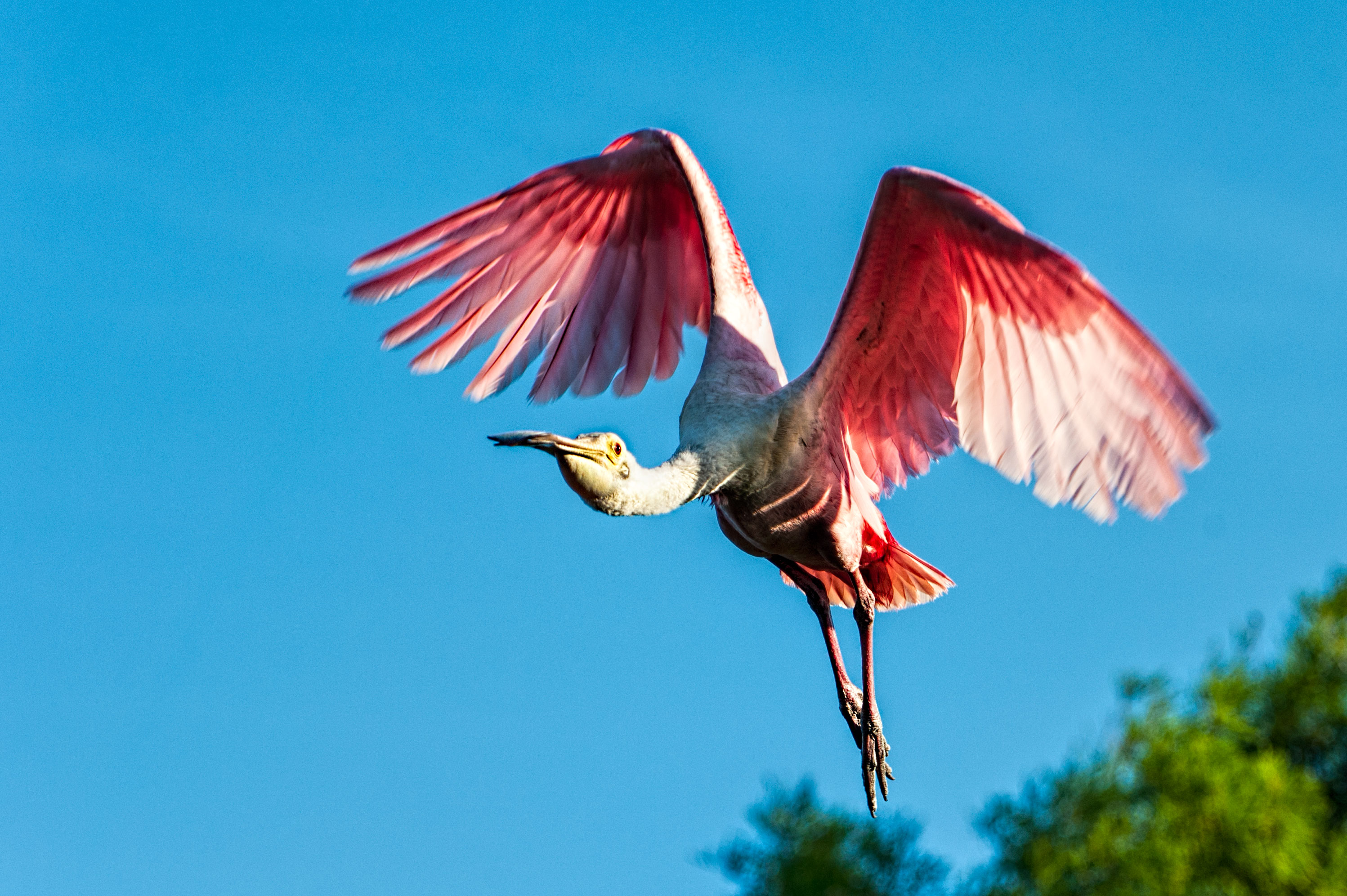
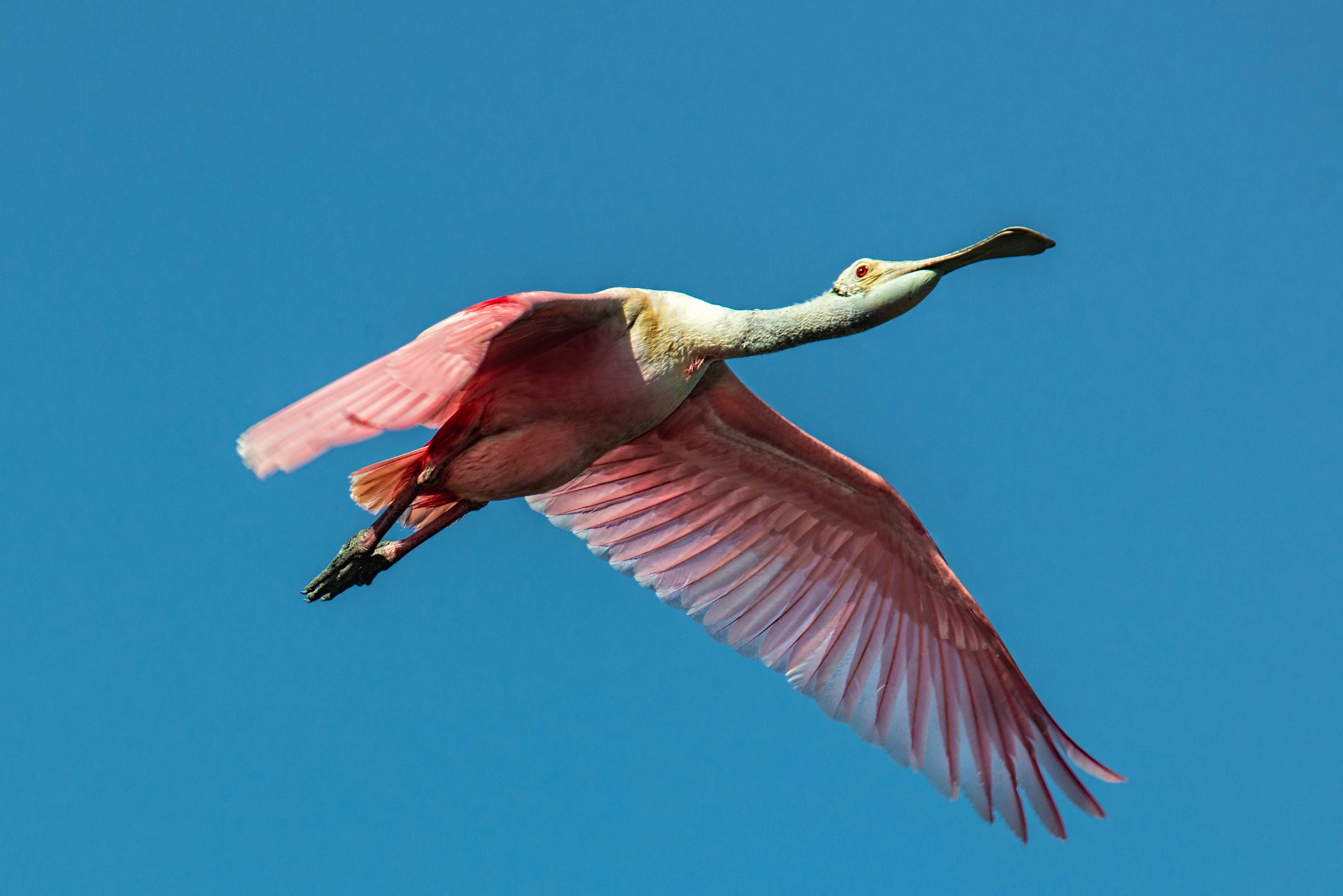
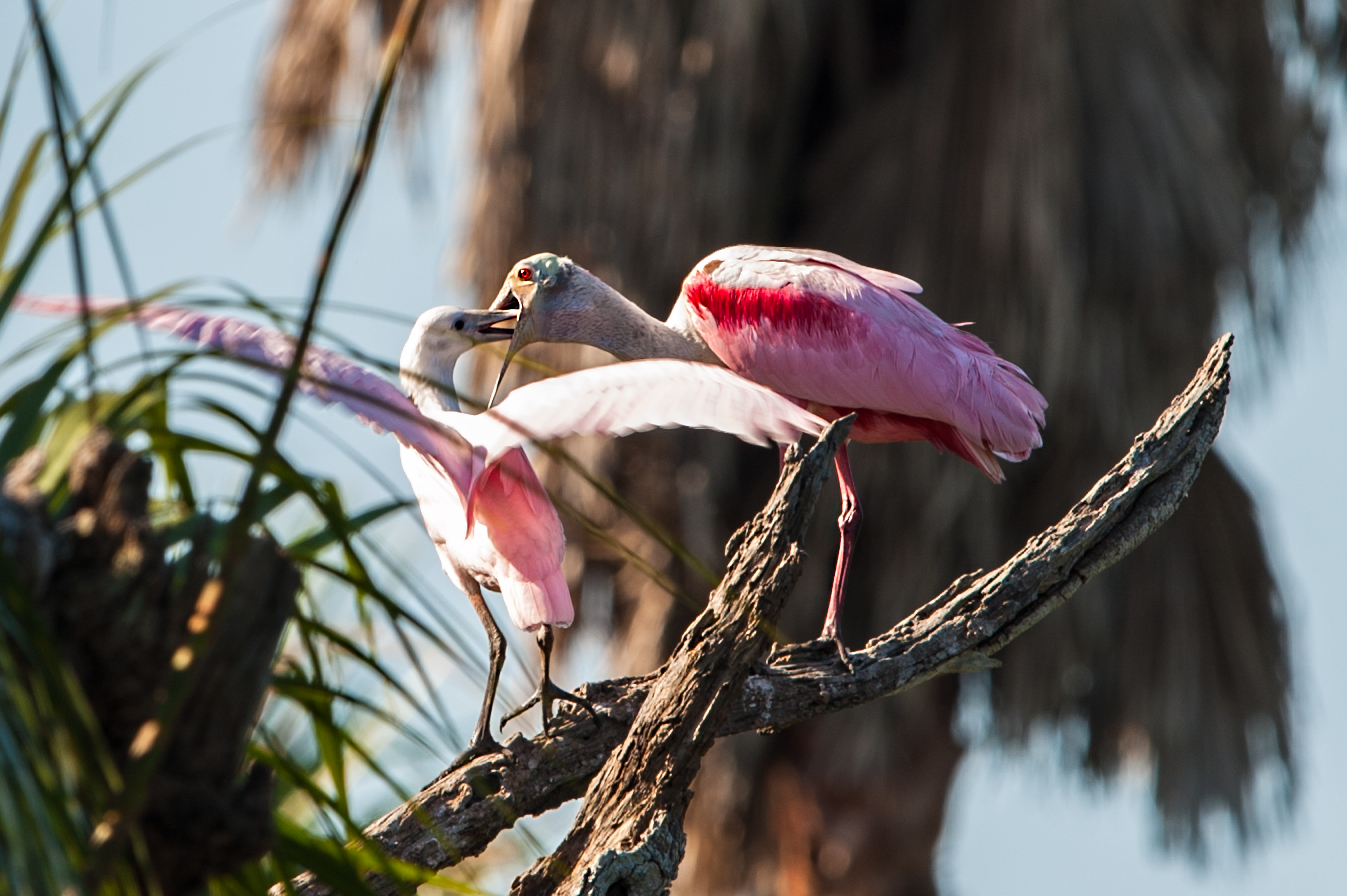
While in Florida in May, I photographed several mated pairs of Roseate Spoonbills. I was excited to see so many spoonbills and watch their behavior, and tried to capture some unique images. The spoonbill pairs were in different stages of mating, nest building, and raising young. There were a few pairs that were building nests; some with young chicks in nests; and at least two pairs’ young that had recently fledged, but were still at the rookery being fed by their parents. Therefore, there was plenty of activity and many photography opportunities. However, the spoonbills did not always cooperate (e.g., hiding in shadows, flying in the wrong direction, partially hidden by branches or leaves).

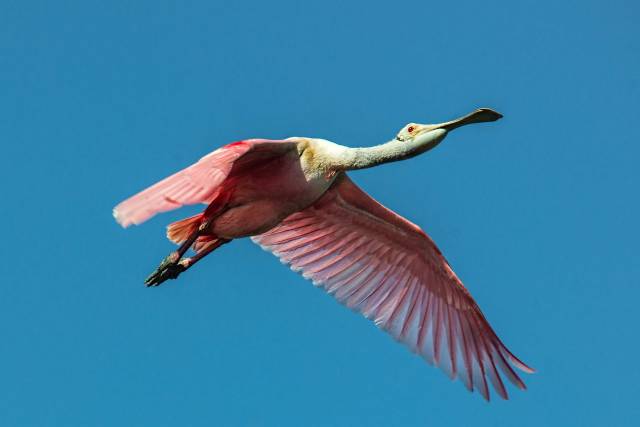
Roseate-Spoonbill-in-Flight

Roseate-Spoonbill-in-Flight

Roseate Spoonbills are large wading birds, spending most of their time in shallow water feeding, except when raising young. They are interesting to watch as they hunt for food (small fish, shrimp, mollusks, snails and insects), because they sweep their spoon-shaped bills back and forth in the shallow water for food. Scientists believe their pink and red colors are derived from some of the crustaceans that they eat.

Roseate-Spoonbill

The spoonbills’ colorful feathers were used to adorn ladies’ hats and fans in the 1800’s. Unfortunately for the spoonbills, by the 1930’s, there were only 30 to 40 nesting pairs, which were located on the keys of Florida Bay. Since becoming a protected species, their numbers have significantly increased to an estimate of over one thousand mated pairs. However, they may be in trouble again. In one of their favorite nesting areas, Florida’s Everglades, the number of spoonbills is declining. Poor water management in the Everglades has significantly changed water depths and salinity levels in Florida Bay, which is impacting the spoonbills’ diet. You can read about this at: http://www.audubonmagazine.org/articles/birds/roseate-spoonbills-send-warning-signs-about-florida-everglades

Spoonbill-with-Nesting-Material

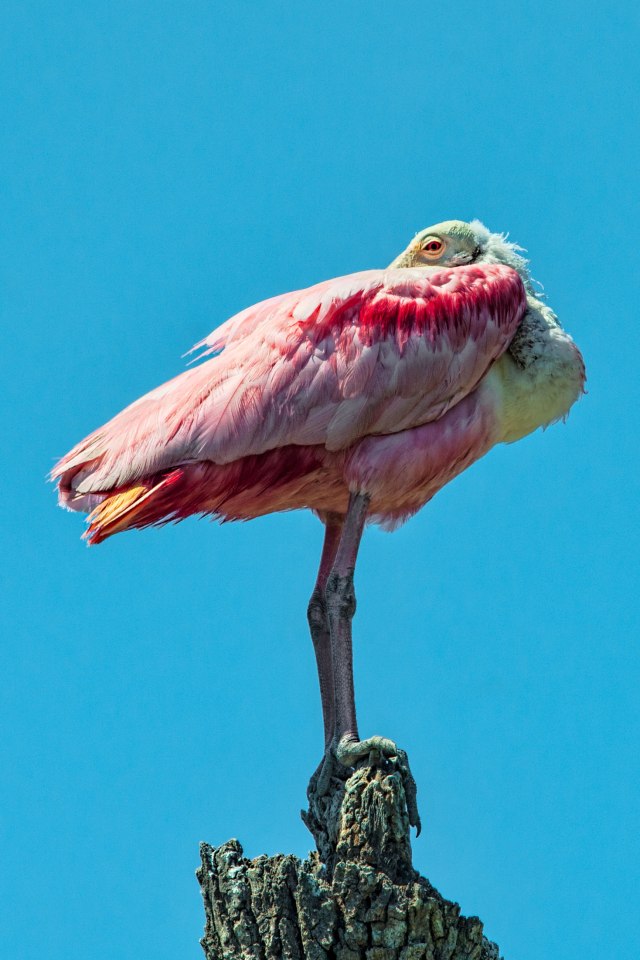
Spoonbill-Resting-on-Old-Post

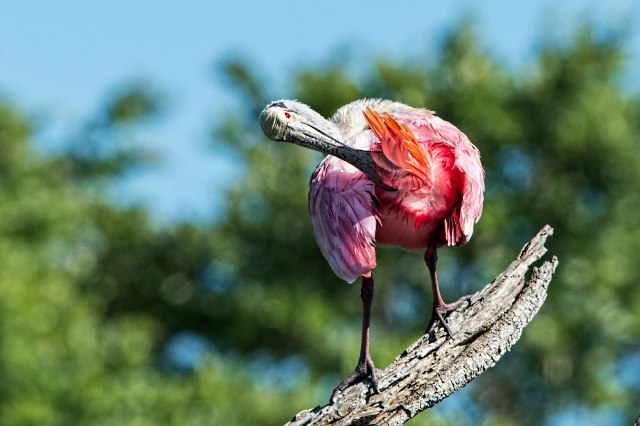
Besides their obvious red, pink, and white feathers, they have orange tail feathers, which can be seen in the above image and the last image. I really like the above image, even though the spoonbill’s unique bill is hidden, because of its “pose” on the tree stump and while trying to sleep, it kept a close eye on me from time to time by looking over its back when hearing my camera’s shutter.
Spoonbill-fw2

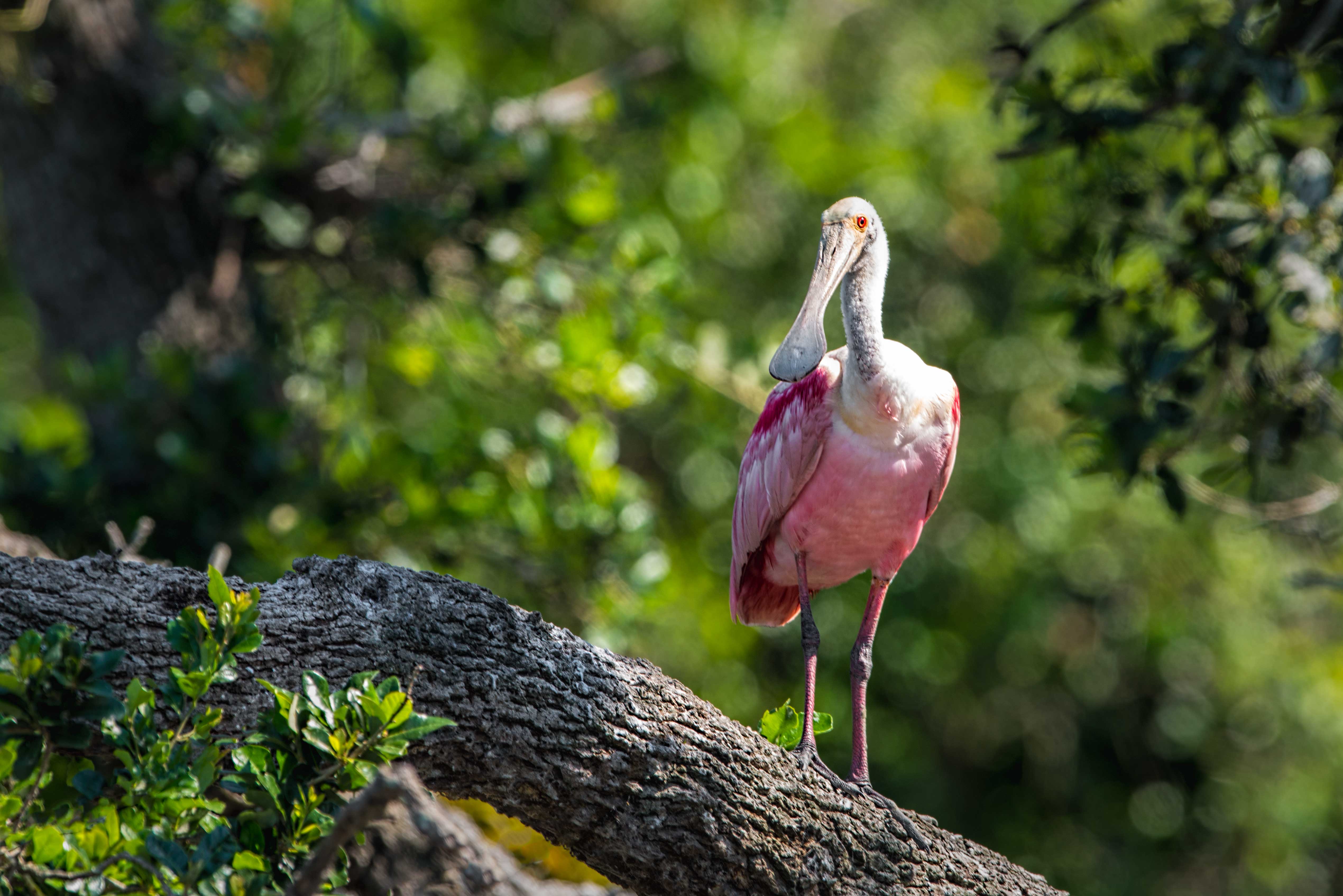
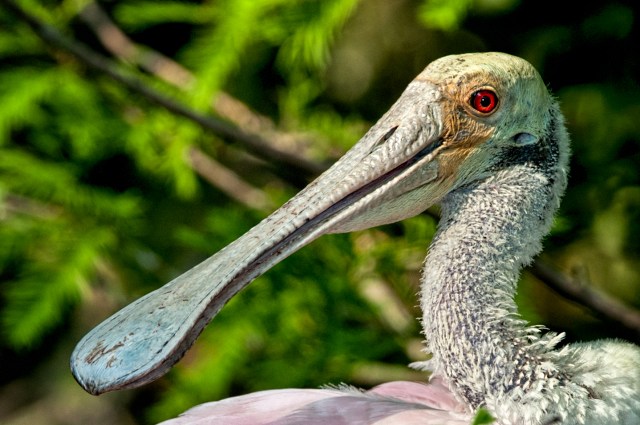
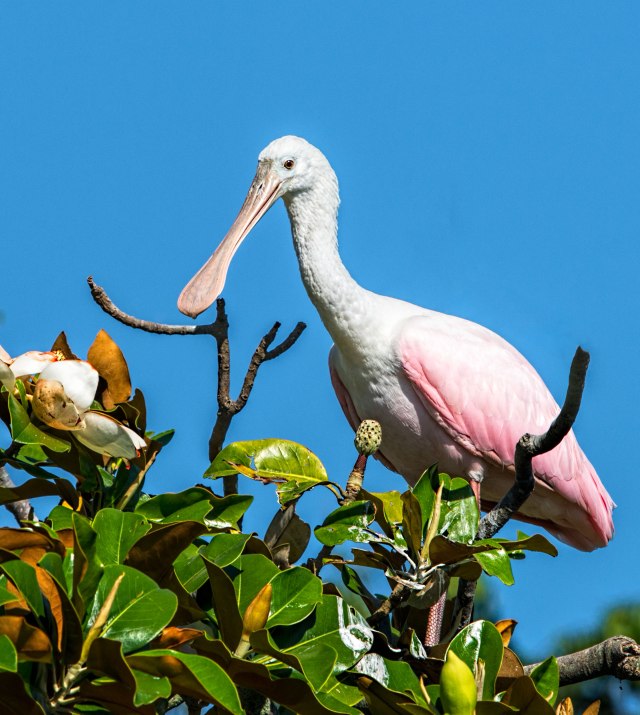
As you can see in the above closeup, Roseate Spoonbills have bright red eyes and both male and female adults have no feathers on their heads, which contributes to their very unusual appearance.
Immature-Roseate-Spoonbill

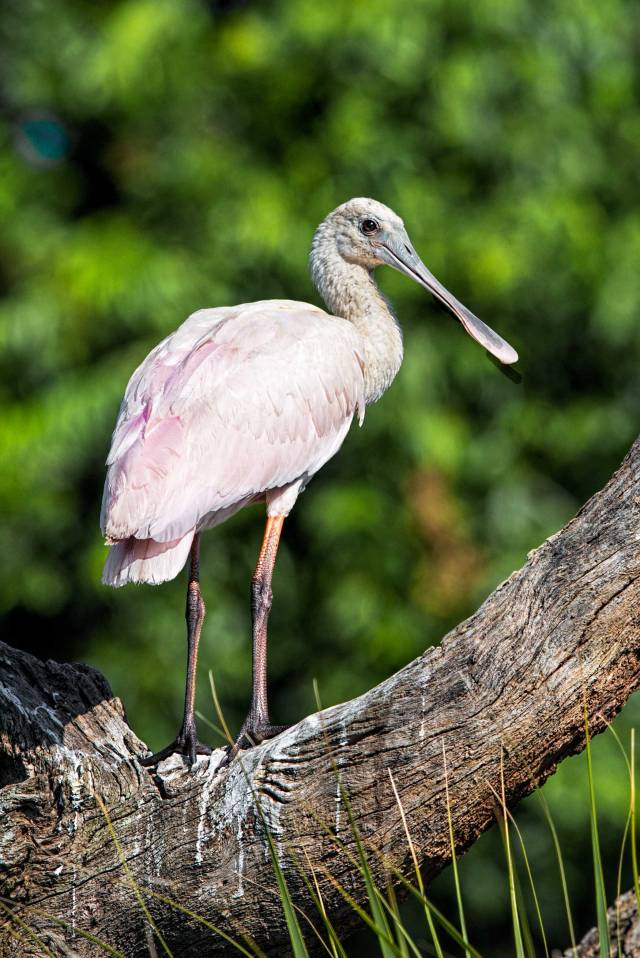
Above and below are recently fledged spoonbills. Their colors are muted, and they still have soft white feathers on their heads.
Immature-Roseate-Spoonbill-11

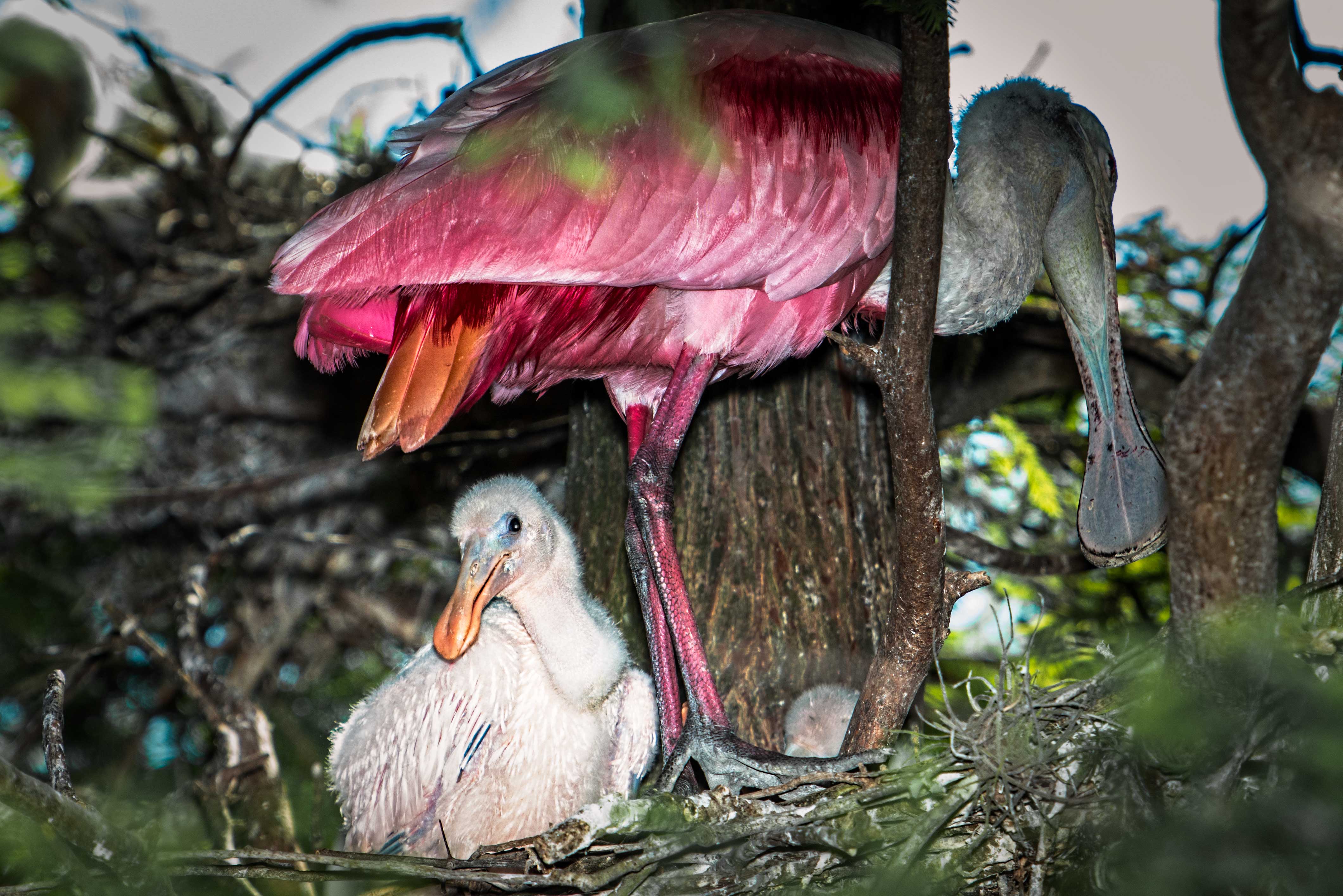
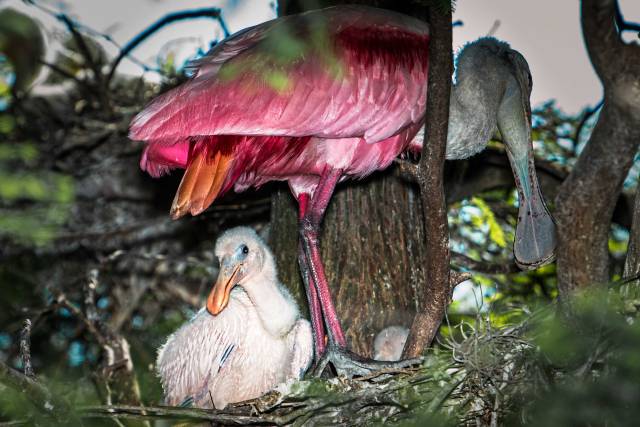
As mentioned above, a couple of the Roseate Spoonbills pairs had young in their nests (below). The young in the next images are about two weeks old.
Roseate-Spoonbill-Chick-in-Nest-Deep-within-a-Tree

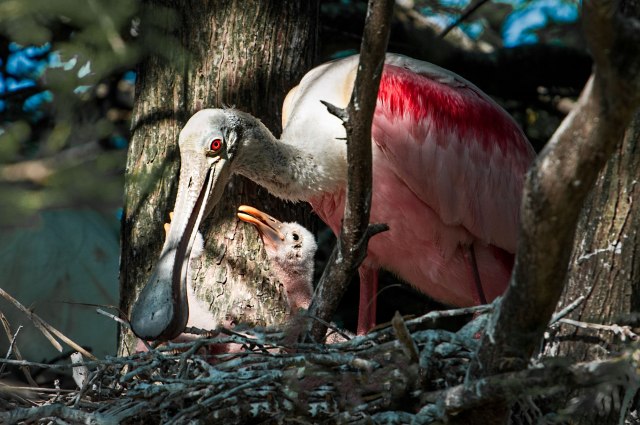
One of my favorite images is below showing the pitiful look on a hungry chick’s face looking up to one of its parents, wanting to be fed, which is what all young birds are constantly demanding. Both the male and female spoonbills take turns on the eggs (usually 2 to 5) in the nest and both will take turns looking for food and feeding their young.
Roseate-Spoonbill-with-Chick-in-Nest

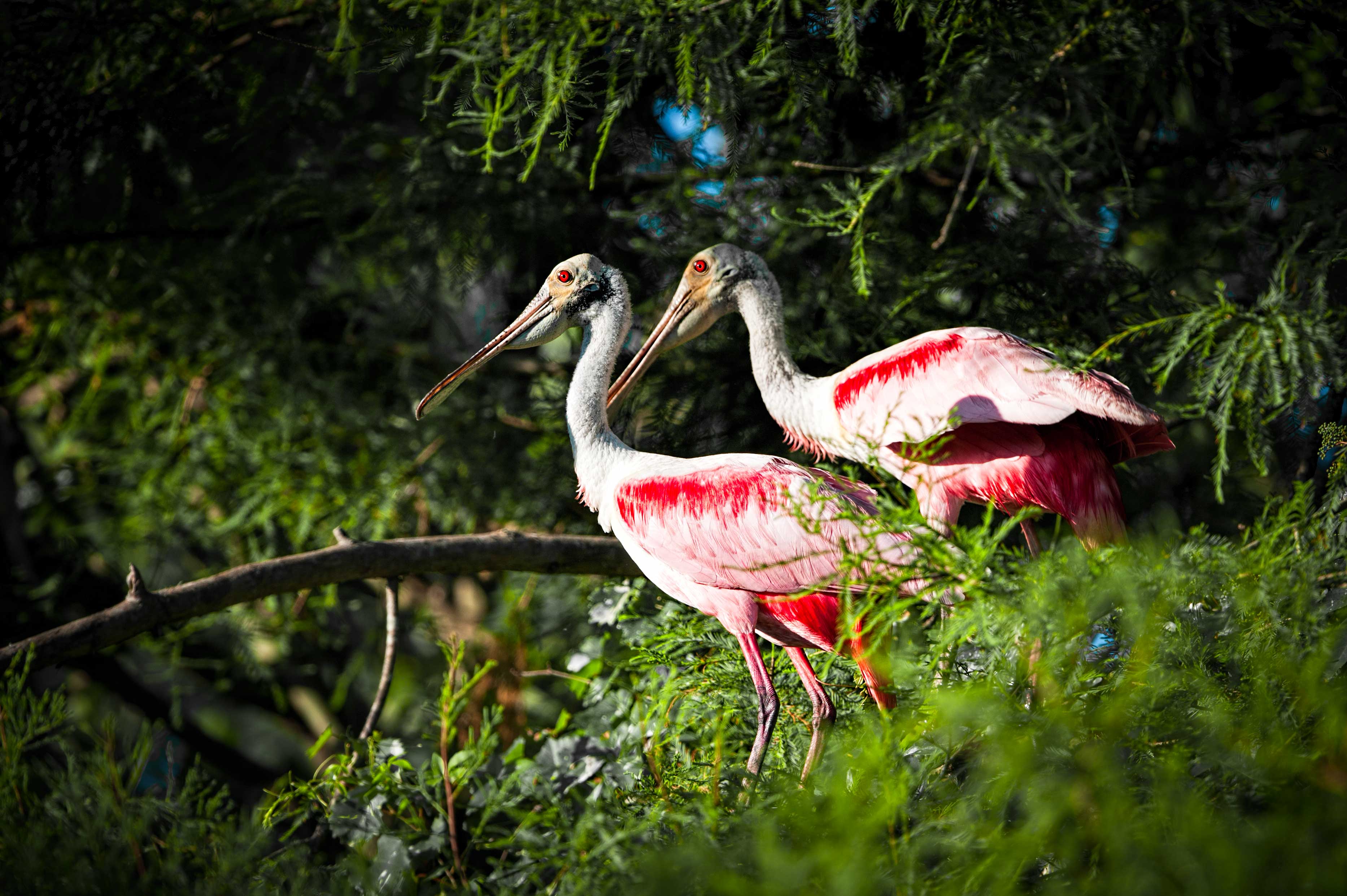
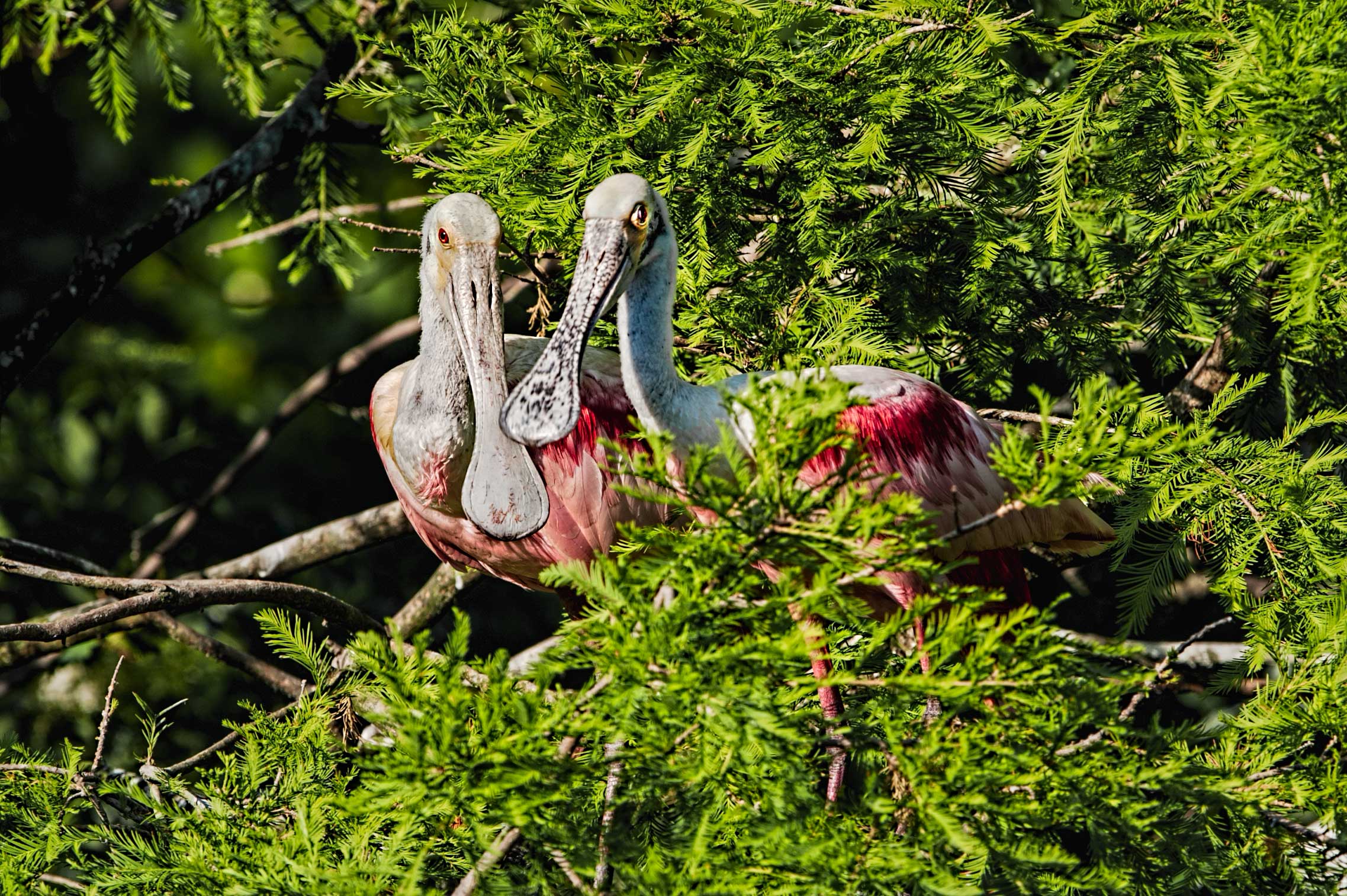
A couple more images follow of a pair that were building a nest deep within a tree.
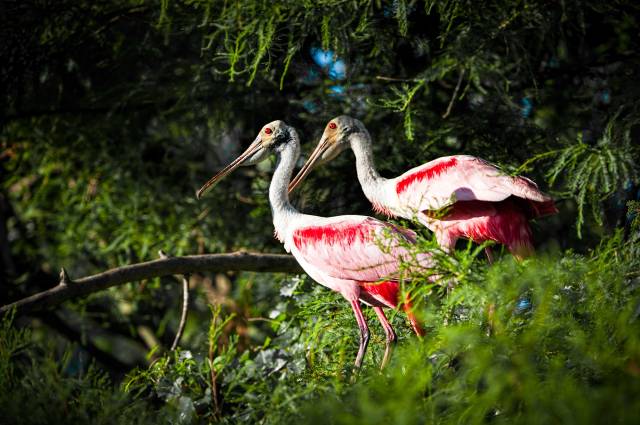
Pair-of-Roseate-Spoonbills-12

Pair-of-Roseate-Spoonbills-13

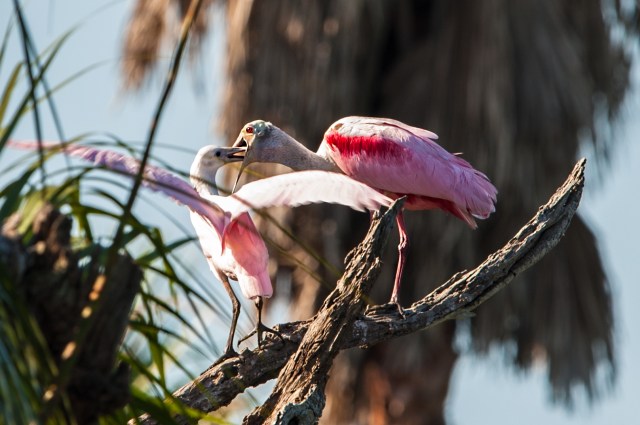
The loving couple pose above. Below are a few more images.
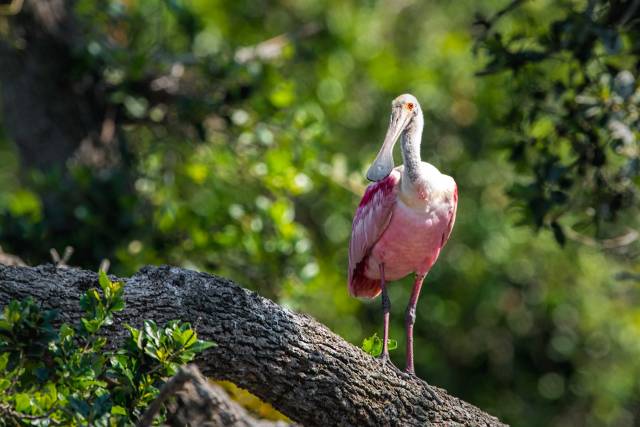
Roseate-Spoonbill-on-Tree-Limb

Roseate-Spoonbill-about-to-Take-Off

Feeding-of-Spoonbill-Chick

Above, a fledgling is being fed. Unfortunately, I only had one opportunity for this shot, because as I came around to the right to eliminate the foreground trees, the spoonbills quit feeding and flew away. Below is the perfect image to end this blog article, since it is a tail-end view of a Roseate Spoonbill showing its colorful wings and bright orange tail. They are very unusual and oddly beautiful birds–Mother Nature has quite a whimsical imagination.

Rosette-Spoonbill-Wings-Spread-from-Behind

One more…this is the end.

Roseate-Spoonbill-Preening

Comments on my blog and this article are appreciated and can be entered by clicking on “Comments” found below the Like this: section.  You can also read other’s comments there.

Posted in Bird Photographs, Nature, Wildlife | Tagged | 12 Comments

Great Blue Heron Spear Fishing

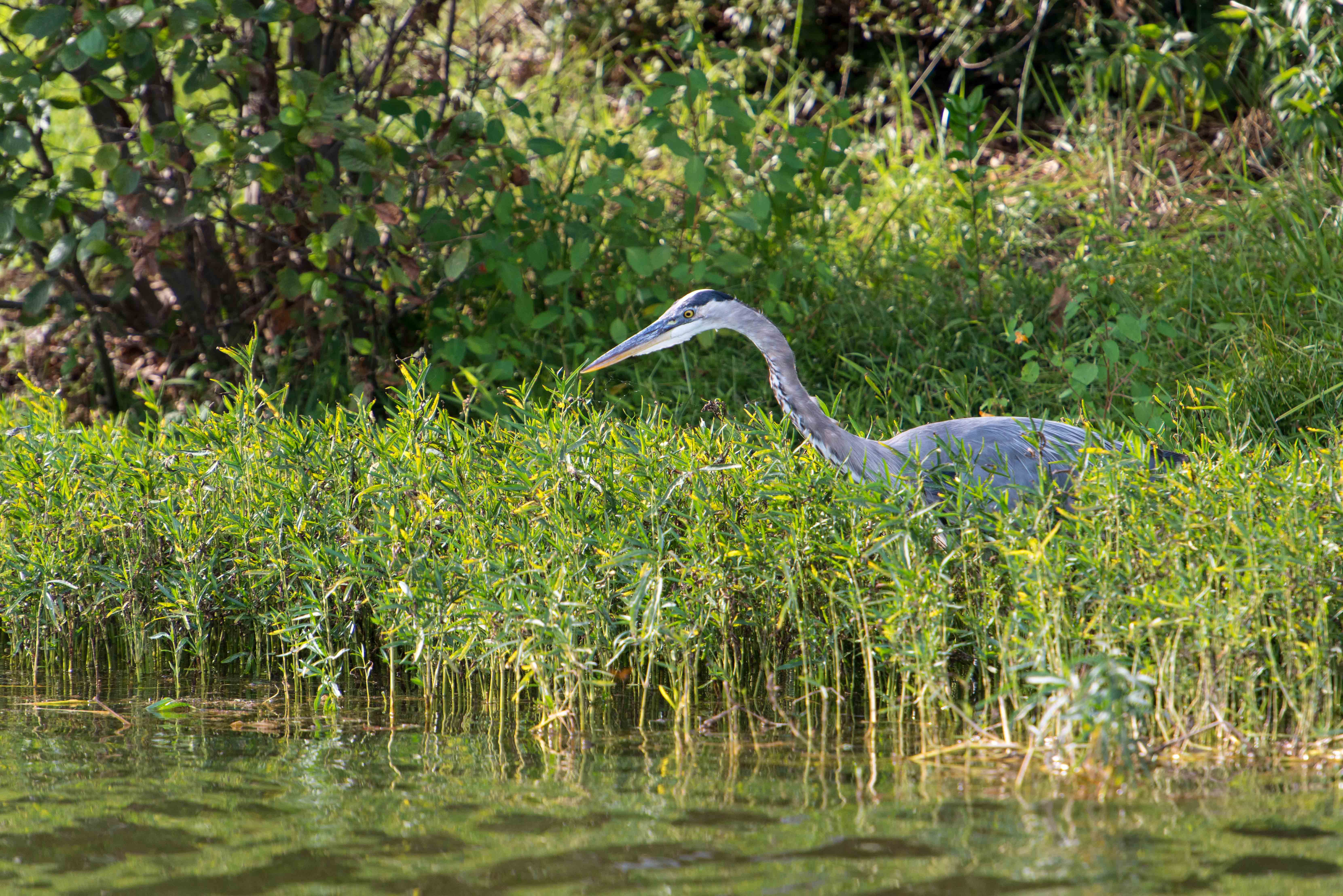
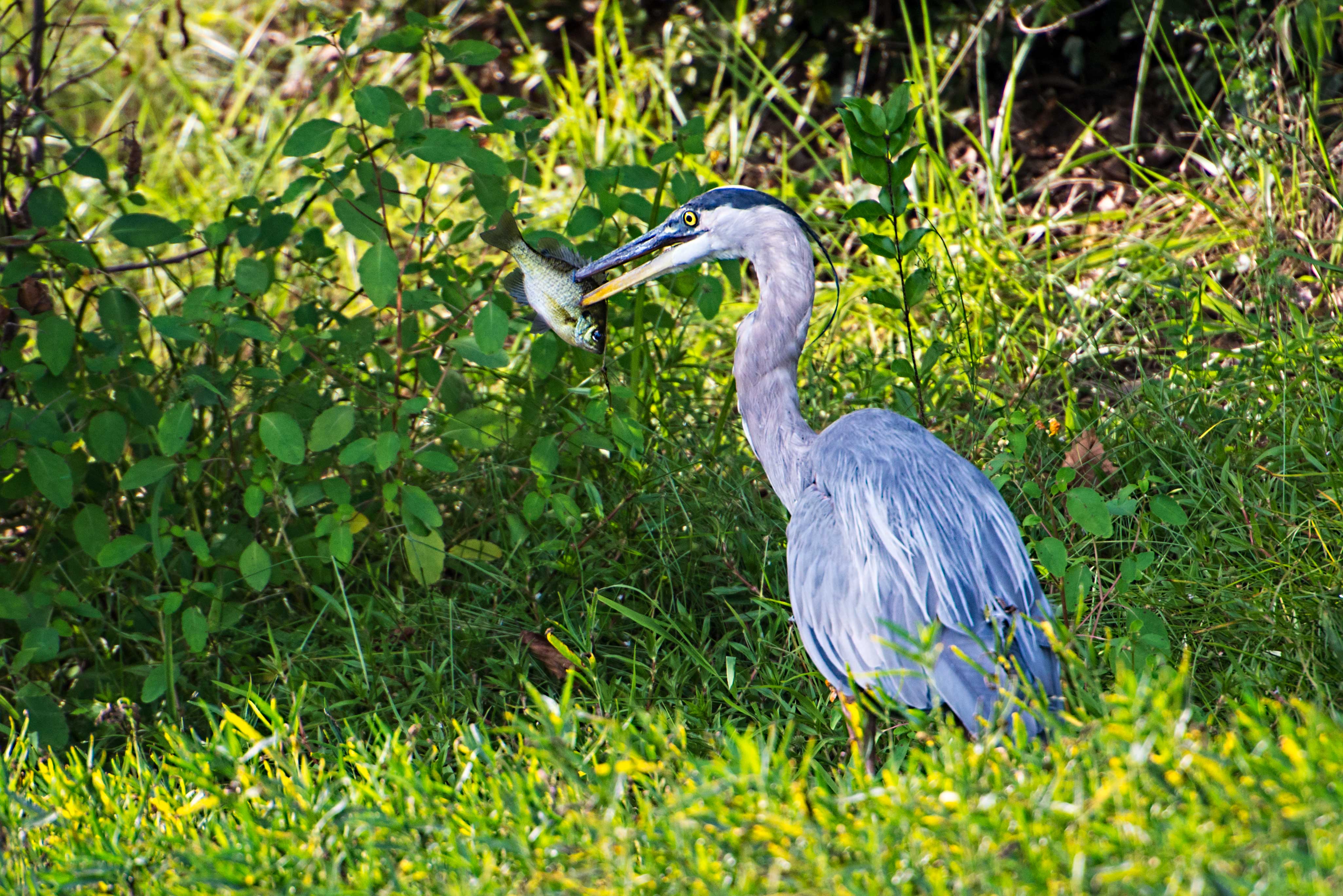
Great Blue Heron (1 of 1)Last week, while cruising leisurely around Lake Montclair, where I live in Virginia, I spotted one of the many Great Blue Herons that also live on the lake. I brought my boat within about 25 feet of the heron, who did not seem to mind, because it was obviously watching a potential nearby meal. The heron was intently looking into the water and ignoring my presence.

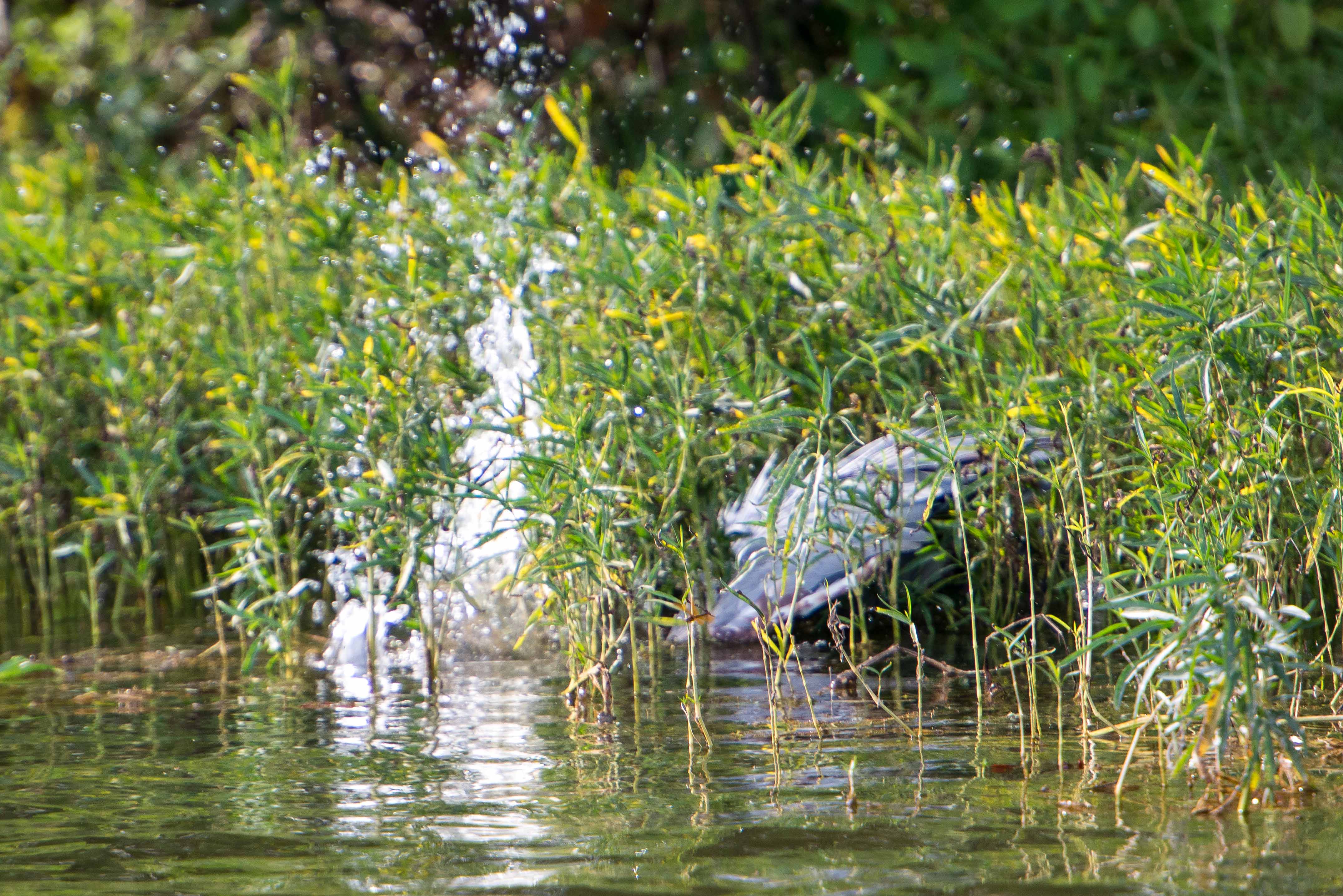
Great Blue Heron (2 of 3)Within about a minute after getting close to the heron, it quickly plunged its head into the water with a large splash. The heron slowly pulled its head out of the water, and I could see that it had caught a small, unfortunate fish.

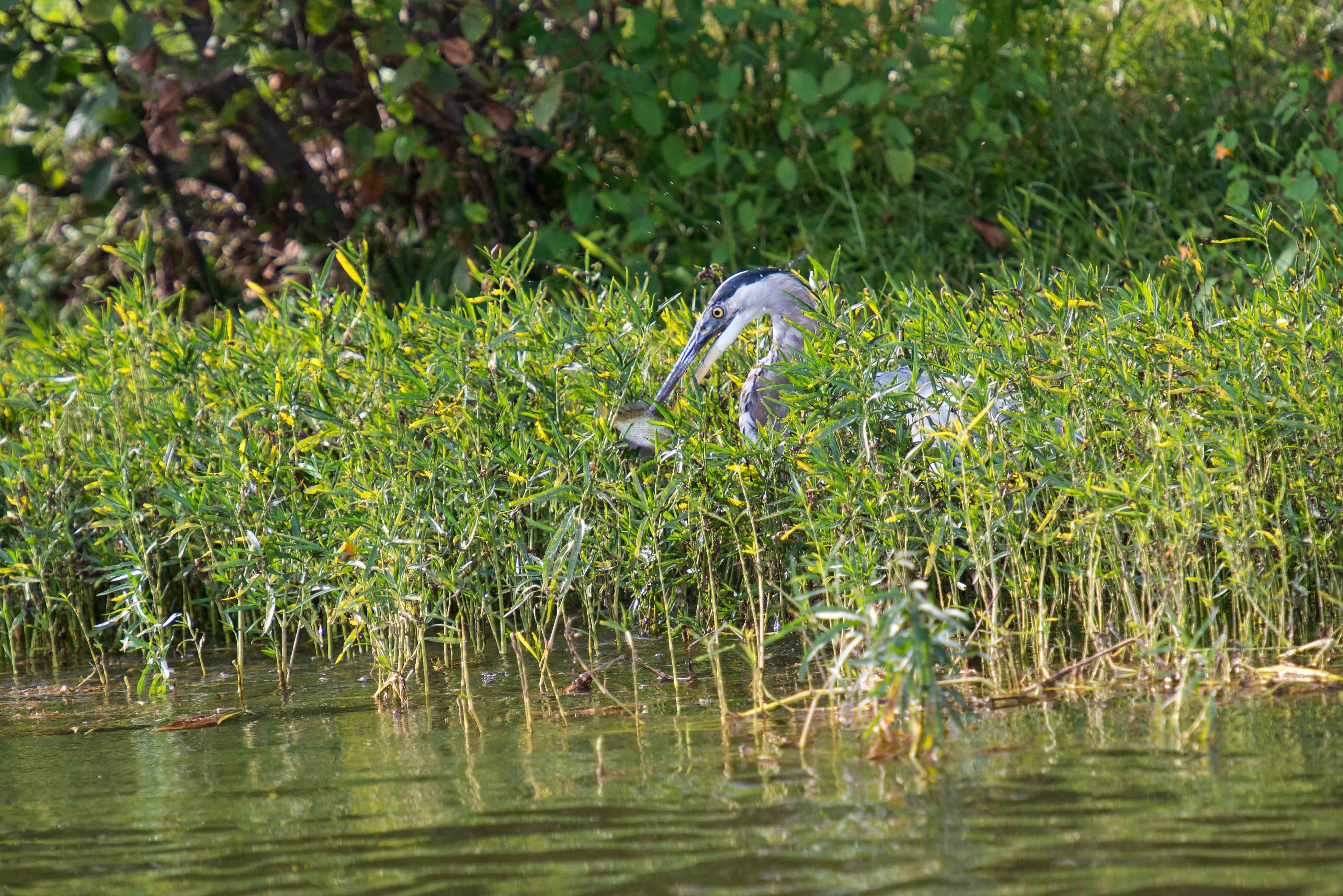
The fish was not moving or flopping about because, as I was able to see later on my camera, Great Blue Heron (3 of 3)the heron had speared the fish with both tips of its bill, which is the manner in which Great Blue Herons capture much of the fish that they eat.

The three images to the left show the sequence of the heron watching and catching the fish. If you click on the images, you can see them in more detail.

Below, you can clearly see how the heron speared the fish. Watching wading birds, like Great Blue Herons feed is interesting to observe, because the next step in the process is dislodging the fish from the end of its bill without losing it, and then getting the fish inside its bill and down its throat. I am sure that process takes a lot of practice and that young herons must lose a lot of meals.

Great-Blue-Heron-with-Fish

Below, you can see that the heron has managed to move the fish from the end of its bill and is about to swallow the fish.

Great Blue Heron (1 of 1)-3

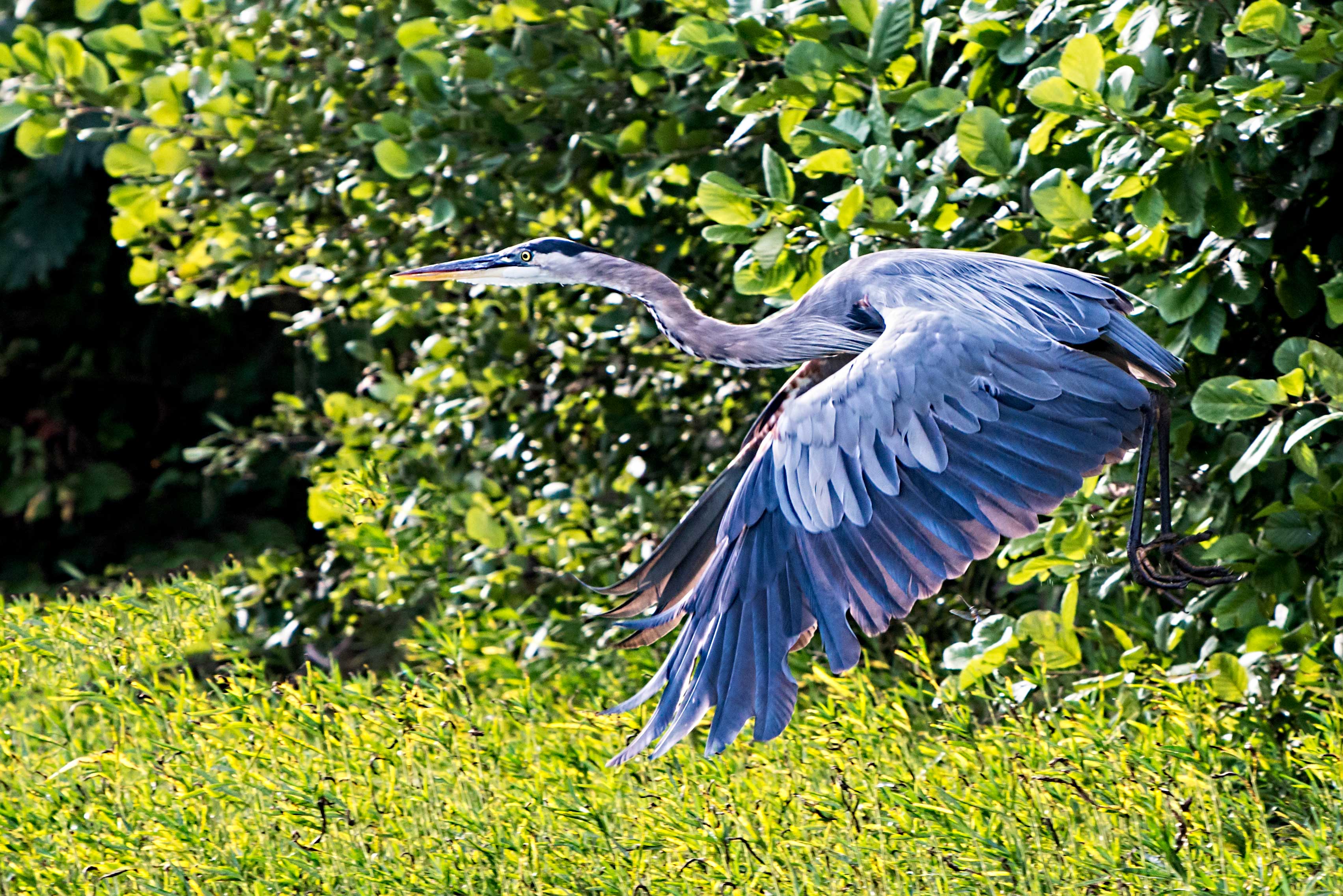
After swallowing the fish and having had enough of me watching and photographing it, the Great Blue Heron flew off.

Great-Blue-Heron-in-Flight

I always enjoy being on the lake, and always take one of my cameras, since I never know what I will see. Clearly, it paid off last week.

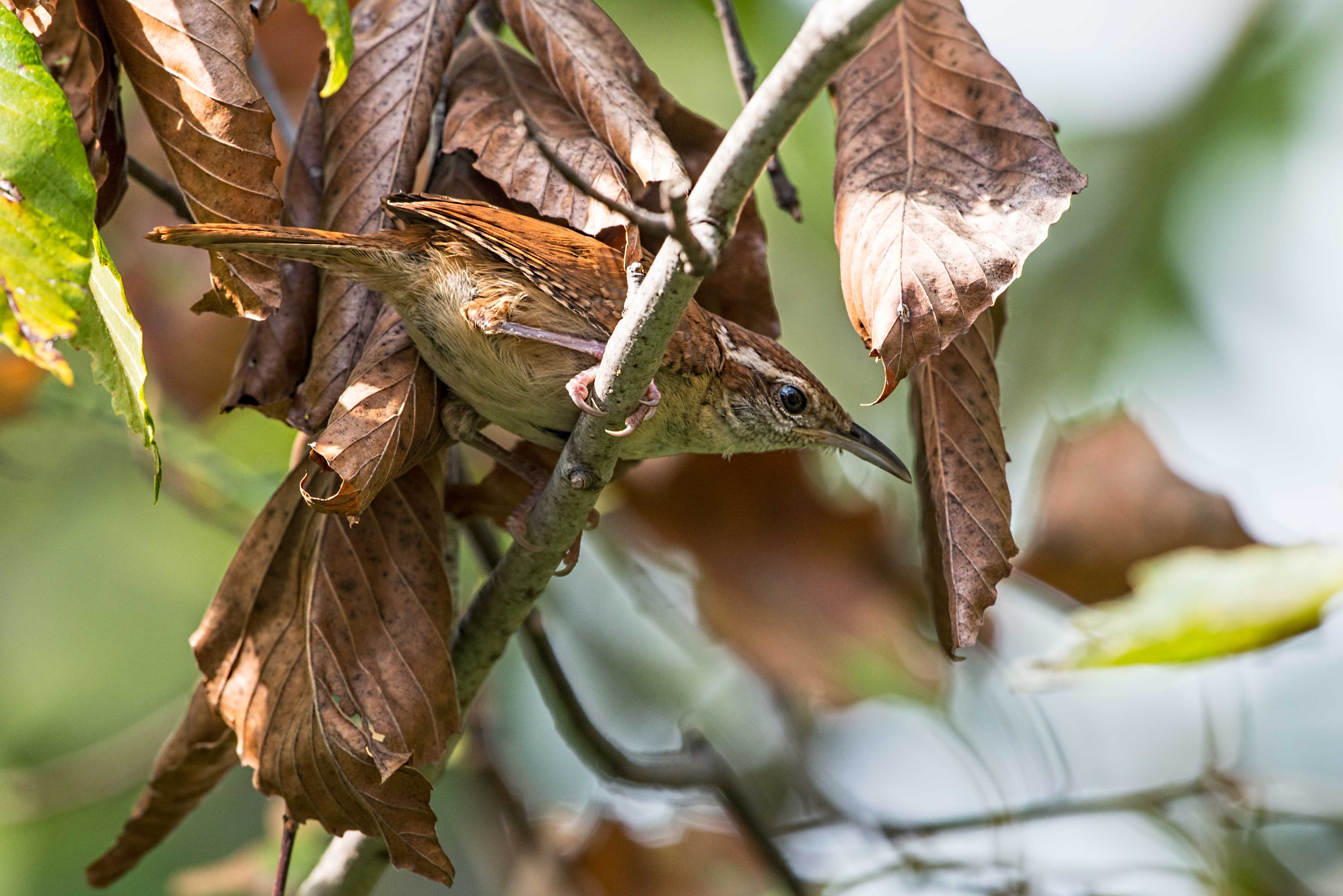
Although obviously not a Great Blue Heron, I am including an image of a Carolina Wren that entertained me last week too, when it was hunting for insects among the dead leaves in a tree.

Carolina-Wren

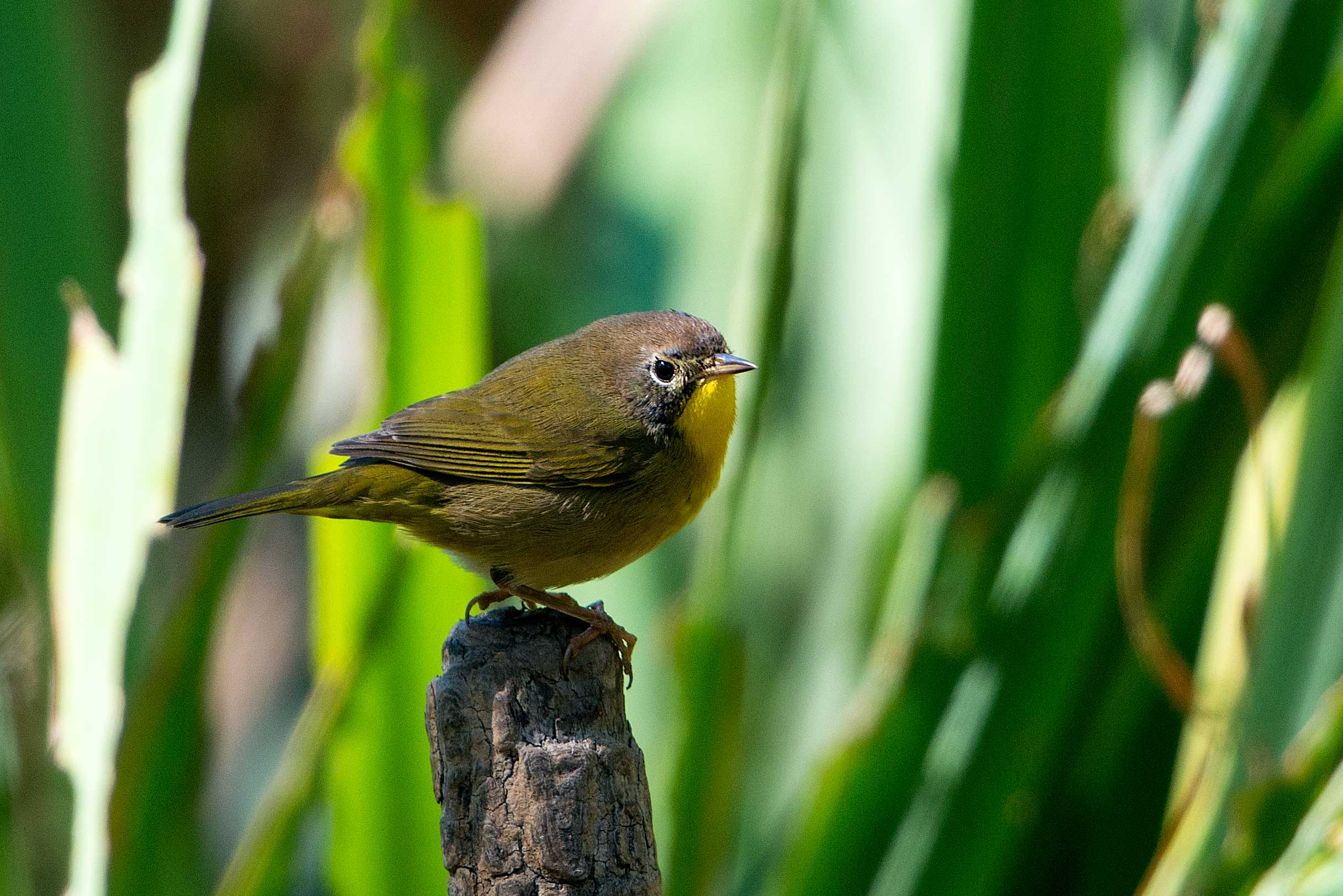
Finally, one more image to share, which is a female Common Yellowthroat Warbler. that I photographed last weekend while at Leesylvania State Park. I was hoping to see more migrating warblers, but this was the only one. I hope to find and photograph more this coming weekend.

Common-Yellowthroated-Warbler-3

Comments on my blog and this article are appreciated and can be entered by clicking on “Comments” found below the Like this: section.  You can also read other’s comments there.

Posted in Bird Photographs, Lake Montclair, Leesylvania State park, Nature, Wildlife | 2 Comments

Barred Owl

Over the summer, the Barred Owls that live around the lake where I live have been very active.  There are two mated pairs and at least one offspring that I have seen and photographed (previous blog article). Every evening, when I am outdoors or have my windows open, I can hear them hooting back and forth at dusk.  They are very loud, and for me, it is thrilling to hear their enthusiastic calls.

Recently, at dusk and early evening, the owls have been venturing further than usual from the heavily wooded areas across the lake and closer to my home. I was able to photograph one of the owls over the weekend and was excited to get the shot and posted it to Facebook. It was totally dark and very challenging to get that image due to its distance, branches that covered parts of the owl at times, and getting the settings just right on my camera and flash. Nevertheless, I was pleased to see the owl and get the less than perfect shot.

Barred-Owl-at-Night-5

However, this evening was different. The owls were back, but this time one was closer than before and perched on an unobstructed tree branch. I also had a bit more time to get the camera and flash properly adjusted to get a few perfect shots before it silently flew away. One of those images is above. (Click on the image to see it in more detail.)

For me and most nature photographers, the “perfect shot” is one that is sharp, properly exposed with no noise, and well composed, and getting such an image in total darkness is very challenging. The image was taken with a Nikon D800, 70-200mm lens with a TC20 teleconverter at 310mm, at f/5.6 and ISO 400, and using a Nikon SB900 Speedlight with a Better Beamer. This image will be hanging on one of my walls very soon.

Posted in Bird Photographs, Nature, Wildlife | Tagged | 16 Comments