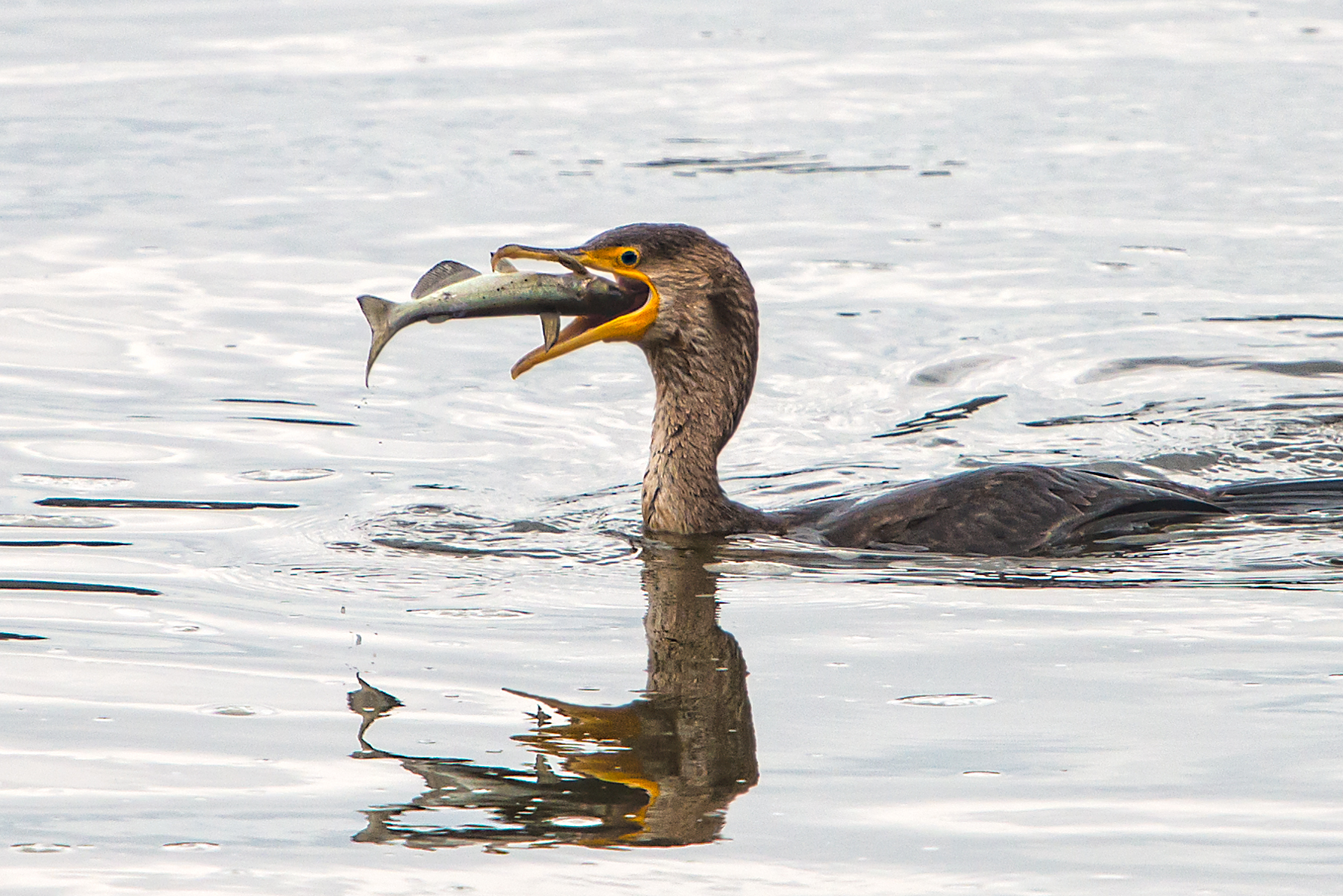
Recent Images of a Variety of Birds

Over the last few weeks, I have been photographing a variety of birds at a number of nearby northern Virginia locations, and it is time to devote an article to them, starting with a male Indigo Bunting (above and below).

Indigo Buntings are common, brilliantly colored birds found all over the eastern U.S. Although males are a bright blue, the females are brown with a faint streaking on their breasts (below image). The male Indigo Bunting in the above images was molting, and therefore, not fully feathered in bright blue feathers.

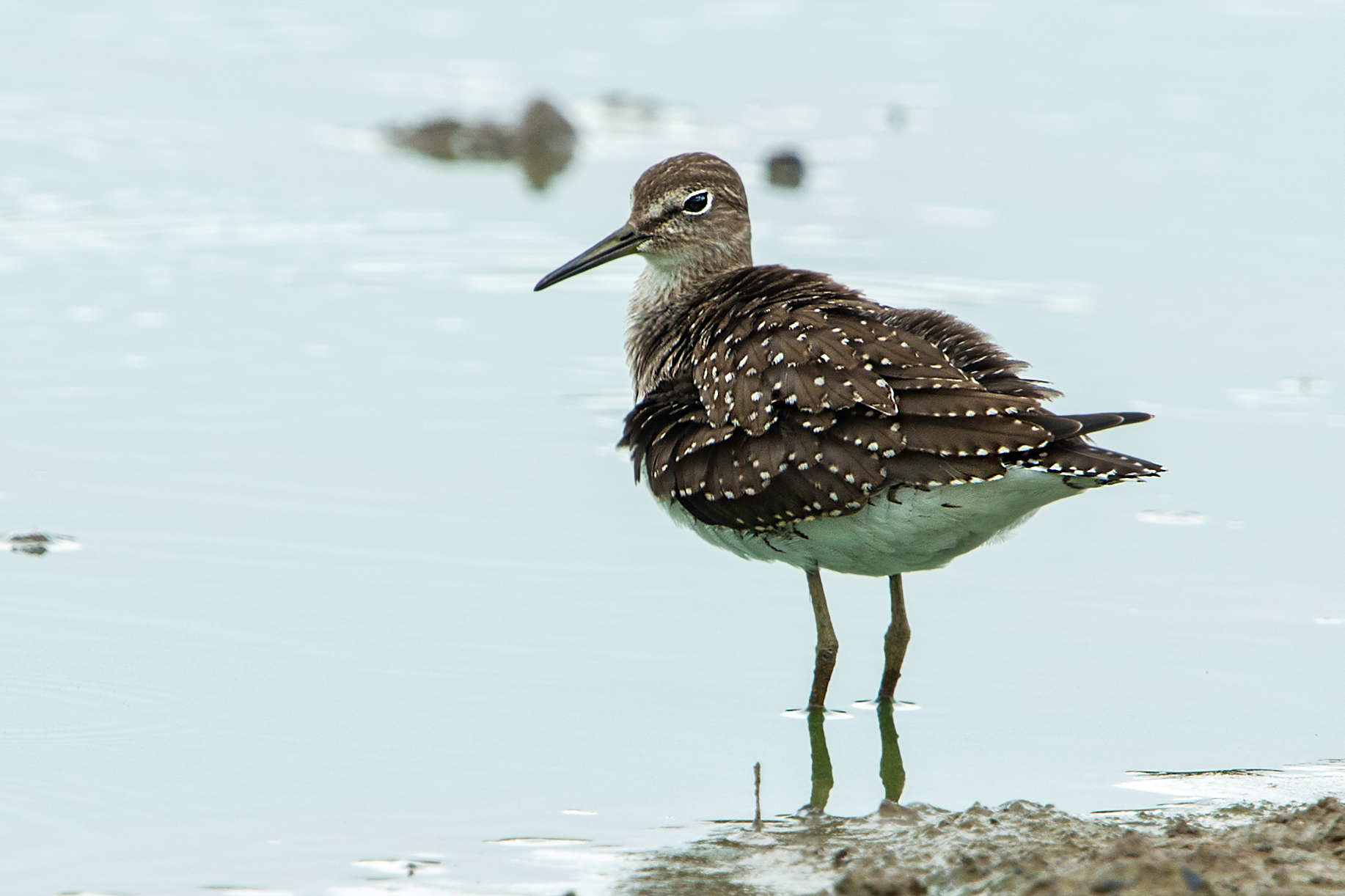
Below is a Sandpiper, which is an active shorebird that is typically seen moving quickly along shorelines in shallow water looking for food.

The Indigo Buntings and Lesser Yellowlegs were photographed at Huntley Meadows Park. The next image, below, is of an Willow Flycatcher.

I photographed this Willow Flycatcher at Leesylvania State Park last weekend. Willow Flycarhers are medium-size flycatchers and forage high in forest trees for flying insects.

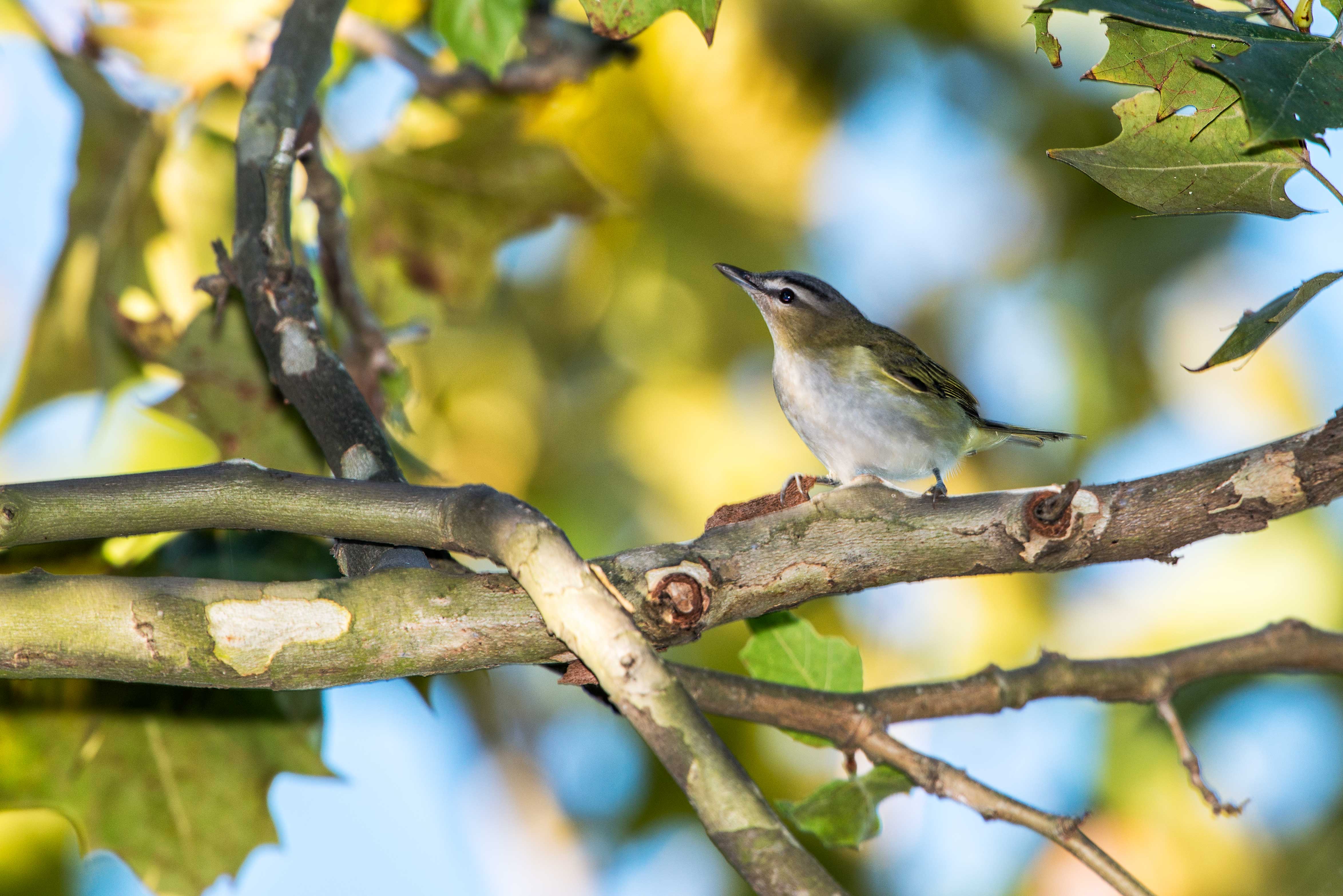
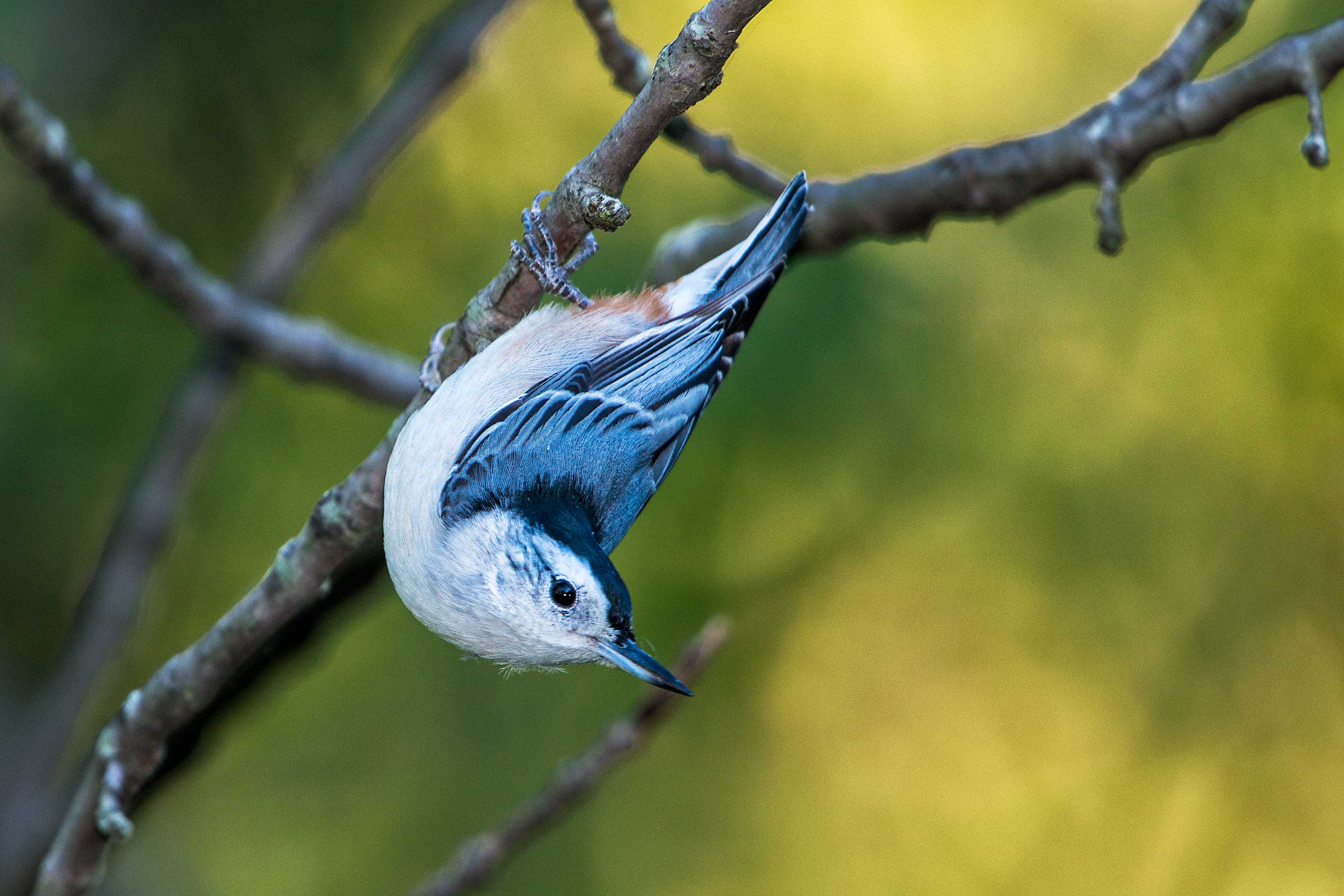
My visit to Leesylvania State Park was very productive, seeing and photographing a variety of birds shown below in the following order: Red-eyed Vireo, White Breasted Nuthatch, Carolina Wren, Black and White Warbler, and Northern Parula.

(Note to the above bird images and their identifications/names:  If you are reading this article as a result of my email notification, you may have noticed a change in the birds. Actually, the images are the same, but a friend and amazing photographer, Jim Flowers, was quick to correct some of my misidentification. It can be very difficult to properly identify many birds. Thank you Jim! You can see some of Jim’s incredible photography at Arts N Images or Wildlife South.)

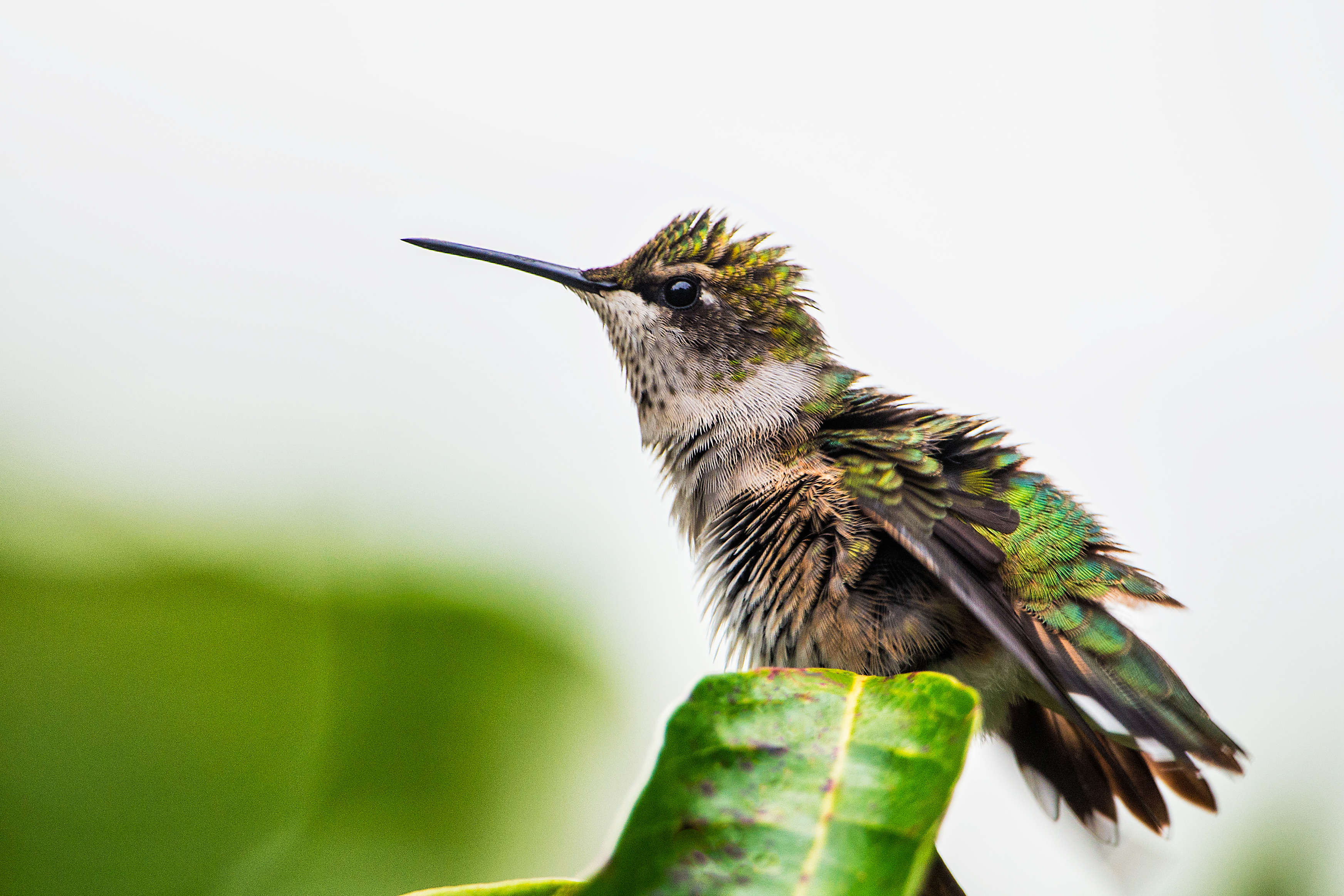
Finally, I was fortunate to be able photograph one more time this season a male and female Ruby-throated Hummingbird. Very soon , they will be migrating south and leaving northern Virginia. The first two images are of the male hummingbird, who also was molting when this image was shot. That is why he looks a little roughed up.


The next images are of the female hummingbird. In the first image, she is sitting alert on a branch protecting her territory from other hummingbirds, which I witnessed as she warded off intruding hummingbirds. Her feathers are tight against her body, as she was preparing to soar off. In the next image, she was fluffed up, and more relaxed and preening.

 In this last image (below), a closeup of the female Ruby-throated Hummingbird, her one and only bright red feather on her throat can be seen. Although the male Ruby-throated Hummingbirds have a large band of bright red feathers on their necks, the females have only one that is rarely seen and only when the light strikes it just right, making it glow brightly.

After doing some research this week, I found a location in Maryland where 80 Wood Ducks were spotted last Sunday. I am heading there this weekend and hope to find and photograph at least a few of the eighty. Wood Ducks are very skittish, and every time I have approached them, they quickly flew away. Maybe, this weekend I will get lucky!

Posted in Bird Photographs, Leesylvania State park, Nature | Tagged , , , , , , , , , | 8 Comments

Maryland Sunflowers

This past Sunday morning, I drove 110 miles to photograph a sunflower field on a farm in Maryland at sunrise. I am very thankful to the owner of the farm, who had planted the sunflowers and who invited me to the farm to photograph them. I was warned that the sunflowers were beginning to wilt and had passed their peak bloom, but only by a few days. I was concerned about missing the peak bloom, as well as the damage the sunflowers might incur as a result of severe thunderstorms that were passing over Maryland Saturday evening. Nevertheless, I could not pass up the opportunity to see and photograph the sunflowers regardless of their condition, because it is not everyday that I am granted access to a private farm. Even if the sunflowers were wilted and damaged by the storm, it was going to be a perfect, cool late summer morning.

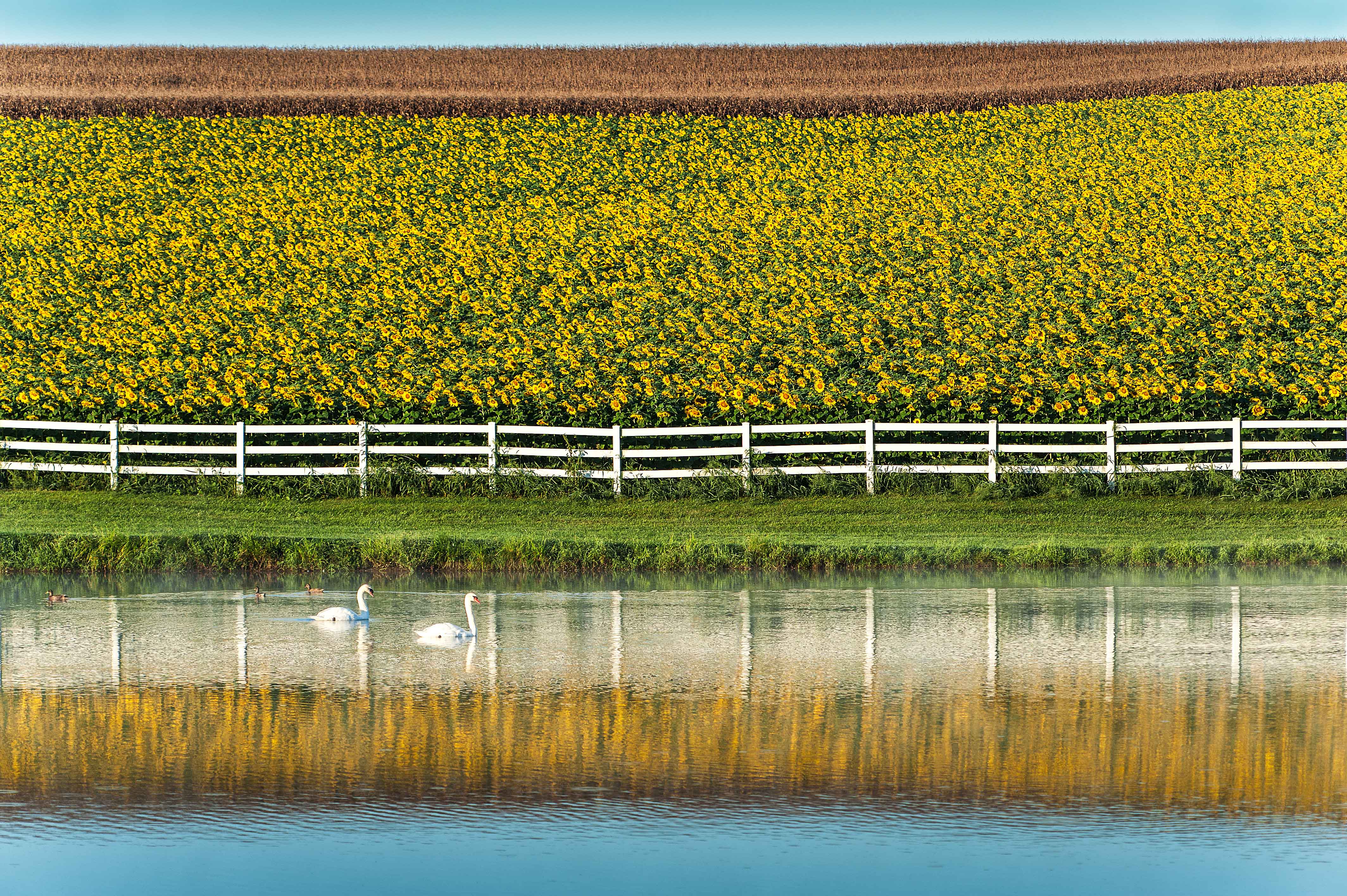
When I arrived at the farm and located the sunflower field, the sun had just risen and was lighting up the field of sunflowers, making their yellow and orange colors brilliantly glow in the morning light. My timing was perfect, and so was the setting. The sunflowers were located in a large field separated by a bright white fence and a large pond. The setting was  breathtaking, and I was excited to be there.

The view of the sunflower field from where I was located was made even more beautiful by the reflection of the sunflowers in the pond, and making it even more picturesque, were two swans that swam across to the other side, as I approached. It seemed as though they were posing for me by aligning themselves in the frame.

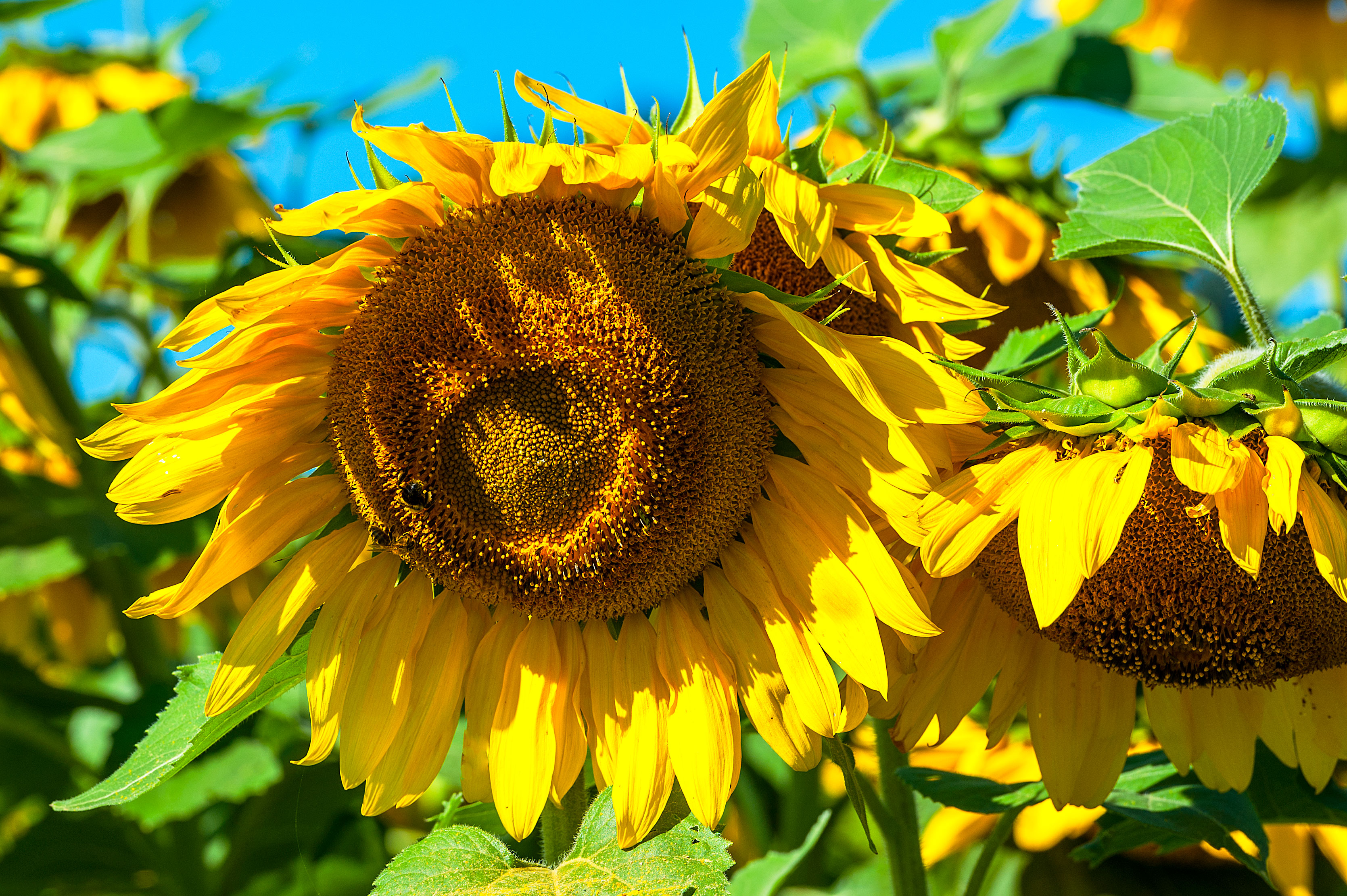
After photographing the sunflower field from across the pond, I worked my way along the fence, and then, it was obvious that in fact the sunflowers were wilting and also weighted down by the soaking evening rain. The majority of the large sunflowers were hanging over, rather than standing up straight. It certainly would have been better if they were standing erect facing the morning sun, as I have photographed them before when they were at their peak bloom. (https://stevetabone.wordpress.com/2011/09/19/sunflowers-in-jarrettsville-maryland/)

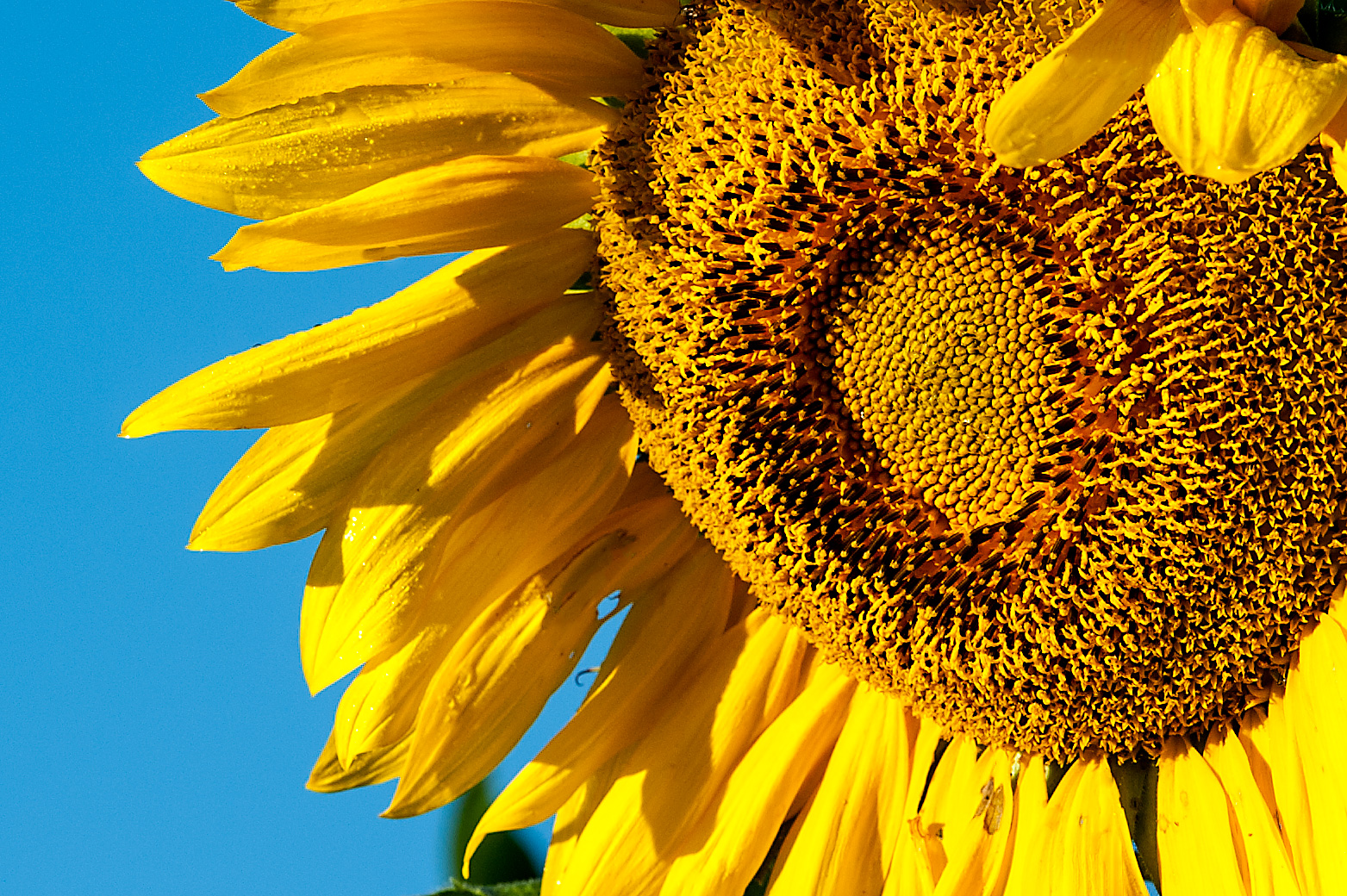
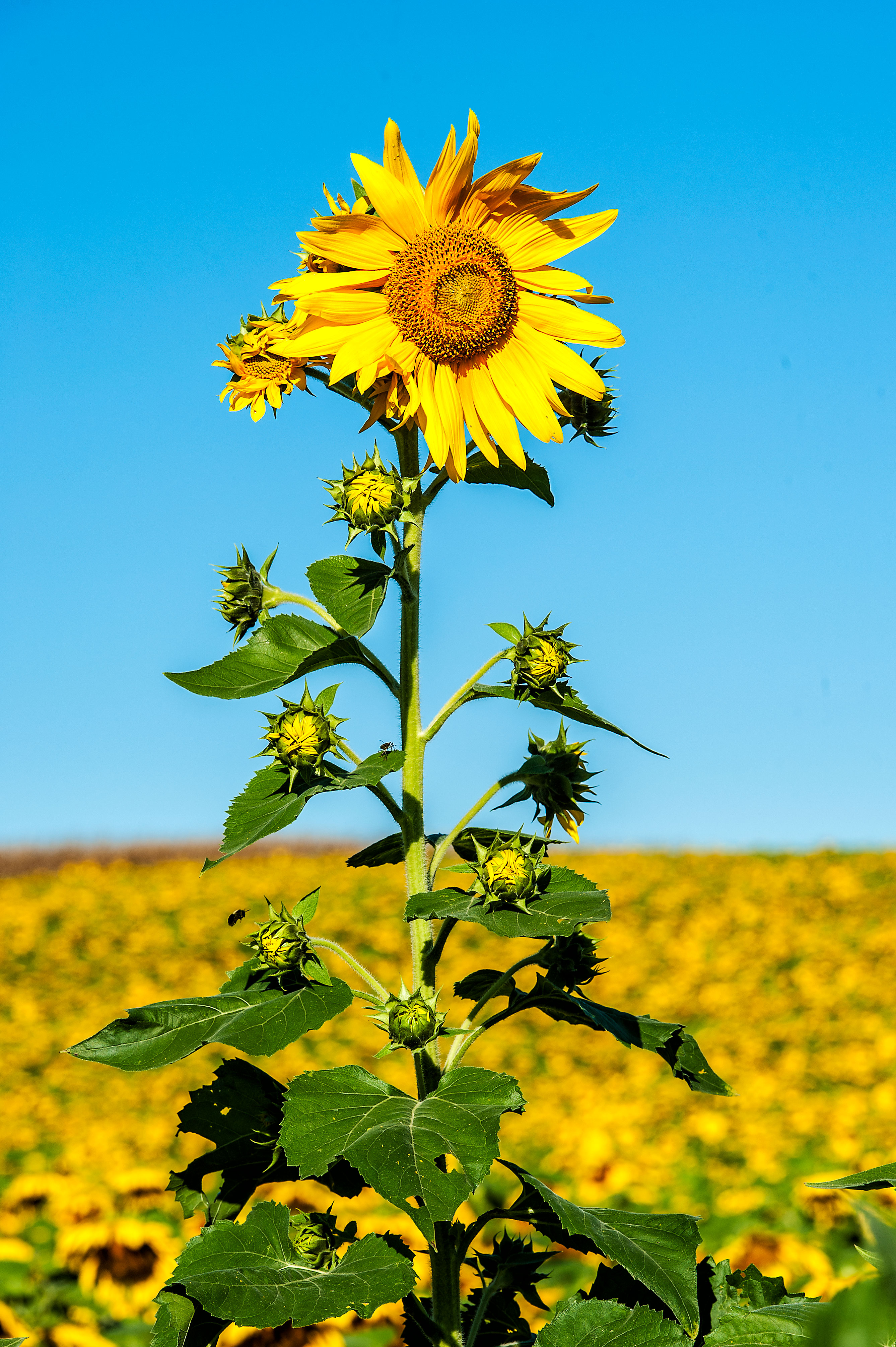
As I walked along the field of sunflowers, I did see a few “late bloomers” that were standing erect among all of the others. I photographed as many of them as I could. A couple of those images are above and below.

In addition to photographing the sunflowers, I took a few videos, one of which is below. If you make the video full screen and turn up your sound, you will better experience what I did that morning–tranquility, solitude and breathtaking beauty!

Obviously, if I had been there earlier in the week, it would have made a difference, but it did not matter, because I spent over three hours wandering around admiring the beauty of the flowers and thoroughly enjoying the cool morning.

The below sunflower not only stood tall above the others, it was not wilting and healthy, had withstood the evening’s storm, and had an unusual number of flower buds growing from its stalk. It was one wild and crazy sunflower! There always has to be one that stands out in the crowd.

In closing, I want to send my sincere appreciation to the owner of the farm that invited me to enjoy and photograph a little of the beauty that she enjoys daily.

For the photographers that follow my blog, the images and video in this article were taken with a Nikon D800 and Nikon 24-70mm lens. The opening panoramic image is a composite consisting of 9 images that were “stitched” together in Photoshop 6. The original TIFF file was 2.3G, which was significantly reduced in size for this article. Nevertheless, click on the opening image to see the detail in this high resolution composite image.

Posted in Landscape Photographs, Nature, sunrise | Tagged , | 15 Comments

Sunrise at Dyke Marsh in Alexandria, Virginia

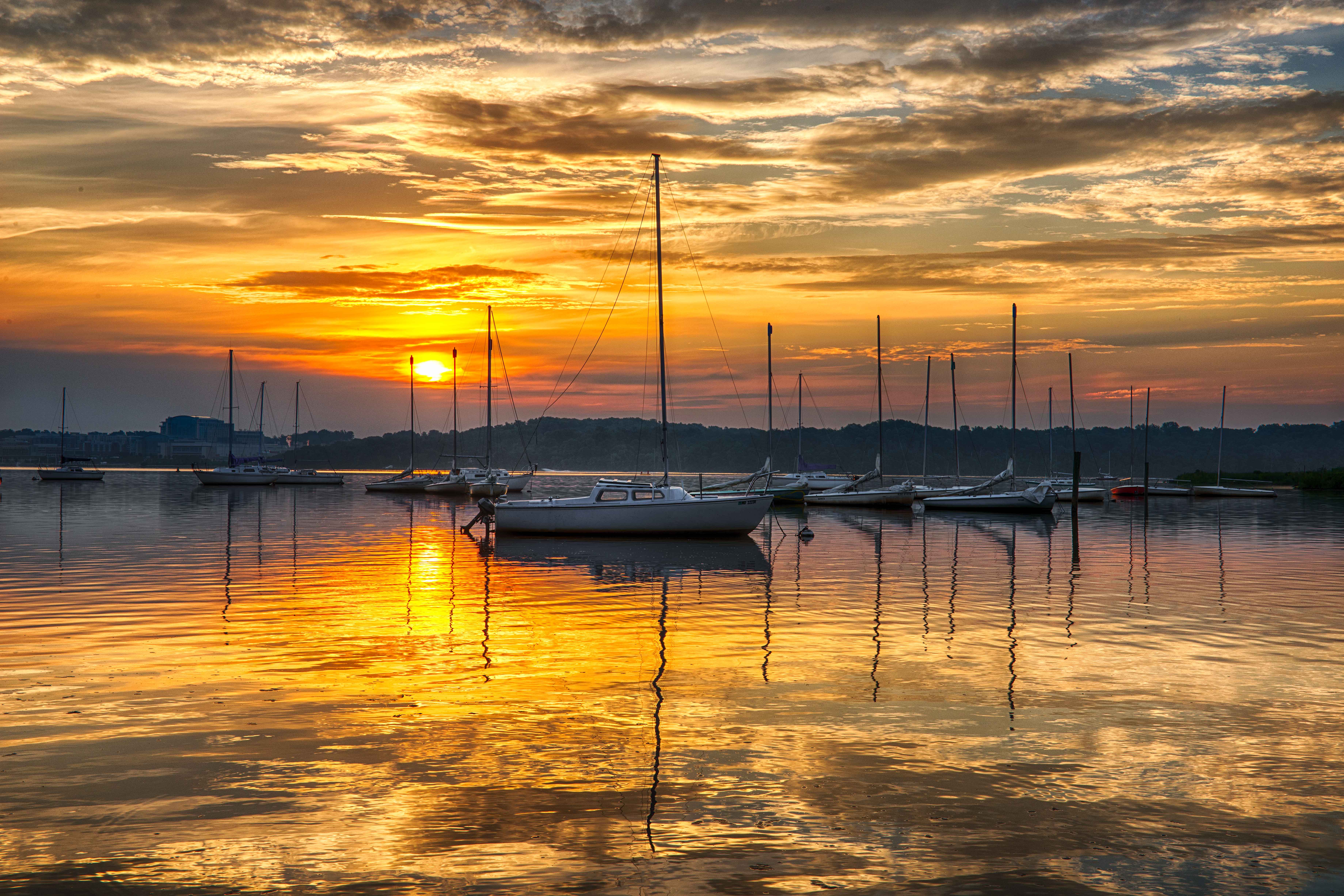
Early this Saturday morning, I went to Dyke Marsh Wildlife Habitat located south of Alexandria, Virginia, to photograph the sunrise and migratory birds. Dyke Marsh is located on the west bank of the Potomac River and consists of 380 acres of marsh, floodplain and swamp forest, and is known for its abundance of wildlife. Almost 300 species of birds have been seen there.

As a nature photographer, I had hoped to align myself and camera toward the rising sun in a location that predominantly, if not entirely, looked over the marsh toward the sun across the river on the Maryland side. However, having never been to Dyke Marsh, I found that the best location to capture the rising sun was a spot on the river’s bank facing the moored sailboats at Belle Harbor Marina, which is adjacent to the marsh. Although initially disappointed, as the sun rose and the sky’s colors intensified and were reflected in the river, my disappointment quickly waned. As you can see from the above image, there was nothing to be disappointed about. I was witnessing and capturing an amazingly beautiful and breathtaking sunrise, and the sailboats and their reflections added to the interest of my photographs.

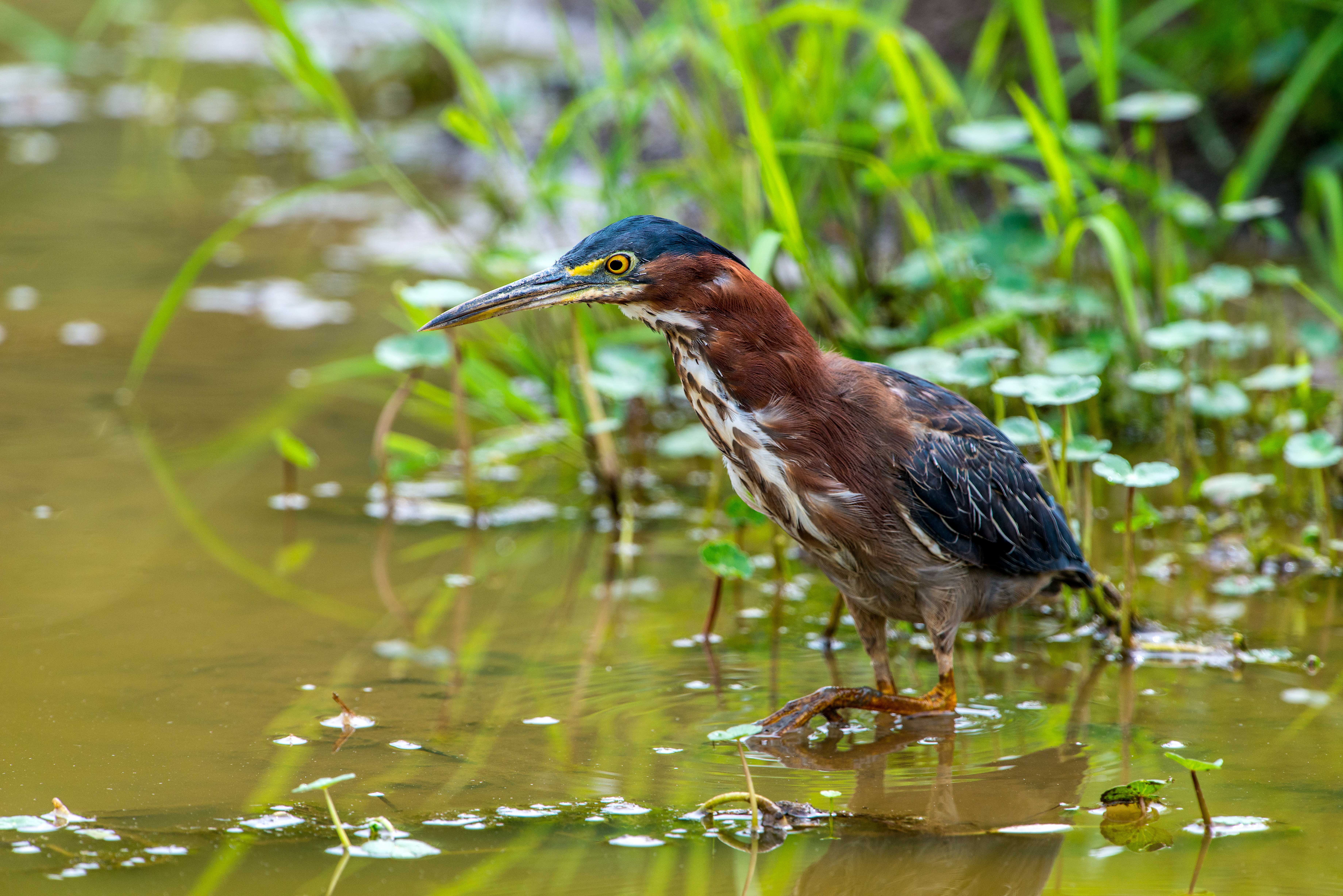
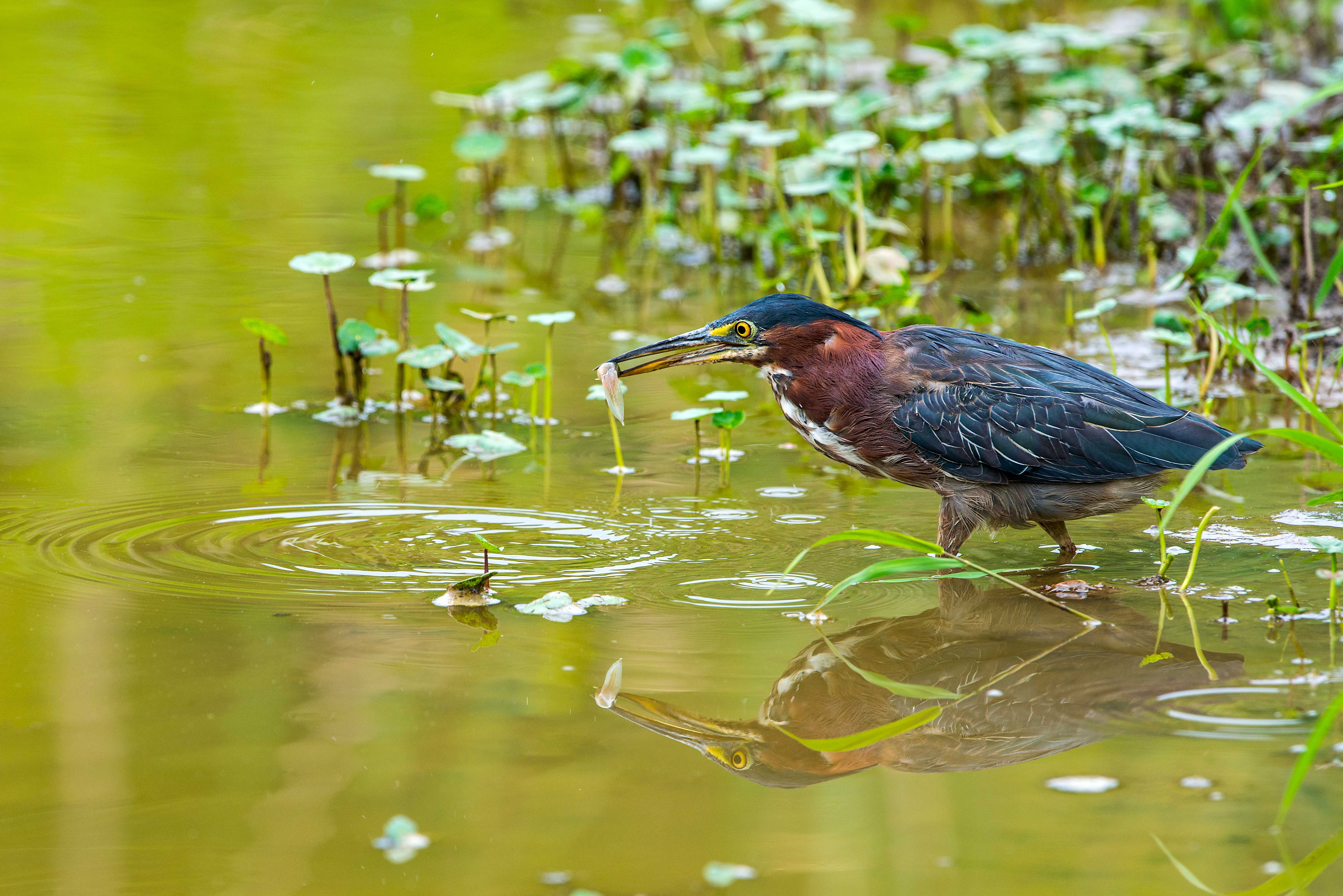
After photographing the sunrise and not seeing any migratory birds, I left and went to Huntley Meadows, a 1,425 acre Fairfax County Park. I was at Huntley Meadows last weekend and hoped to see and photograph something different than I saw last weekend. Again, I was not disappointed, because I was able to photograph a Green Heron that was stalking its prey in one of the few wet areas in the park. The park is presently very dry due to the local drought.

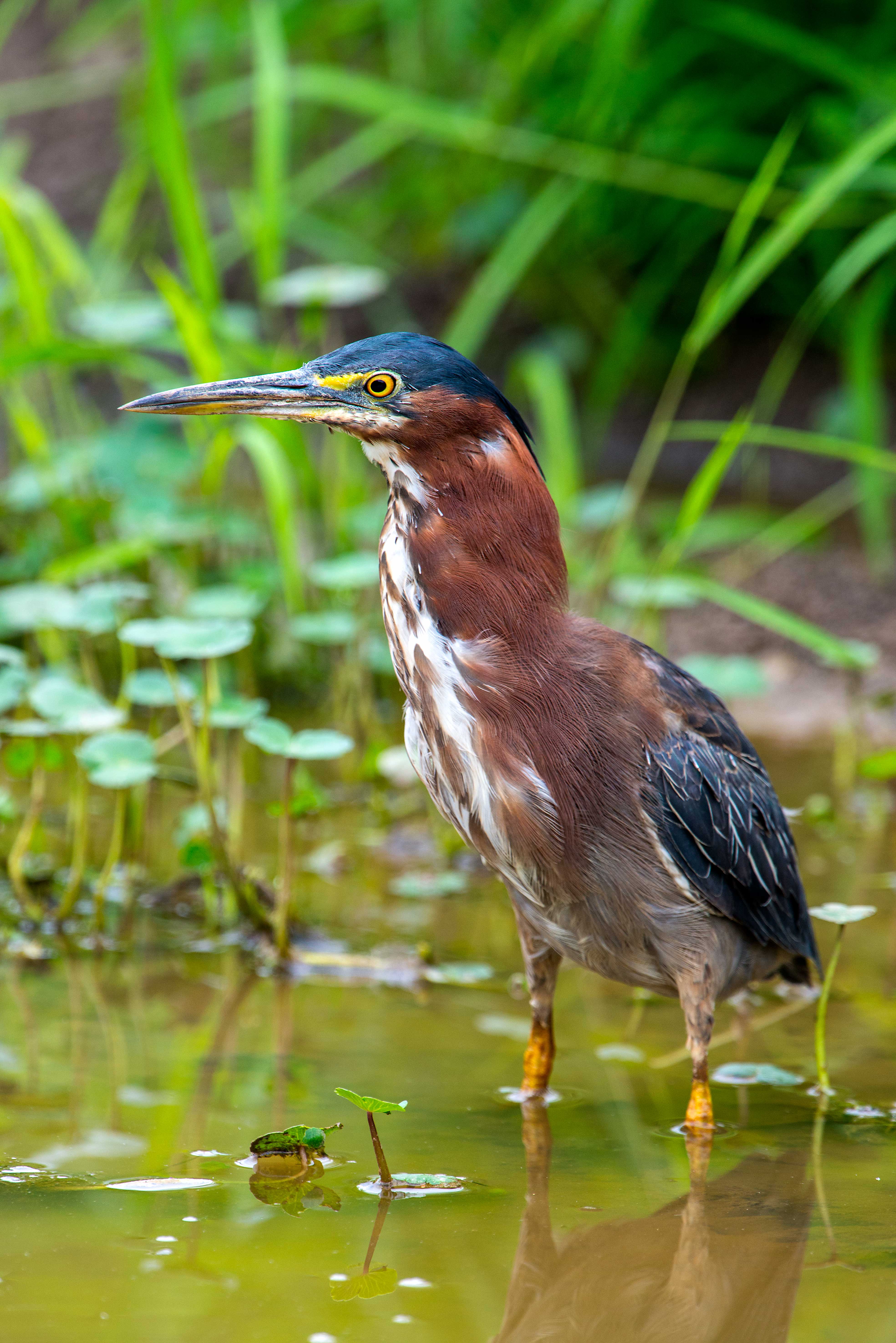
Unlike Blue Herons, who are often seen in the same areas, Green Herons are small, stocky herons with short necks in comparison. Green Herons typically live in small wetlands in low-lying areas. They are most active at dawn and dusk, and more nocturnal than diurnal. However, they will feed during the day, if they are raising young.

Green Herons are very unique birds, because they use bait to attract their prey. They drop insects, worms, and other objects on to the surface of the water to attract small fish and then quickly strike grabbing them in their beaks. In the below image, the heron had just caught what appears to be a tadpole, and seconds after this image was taken, the heron swallowed it head first, as they do with much of their prey.

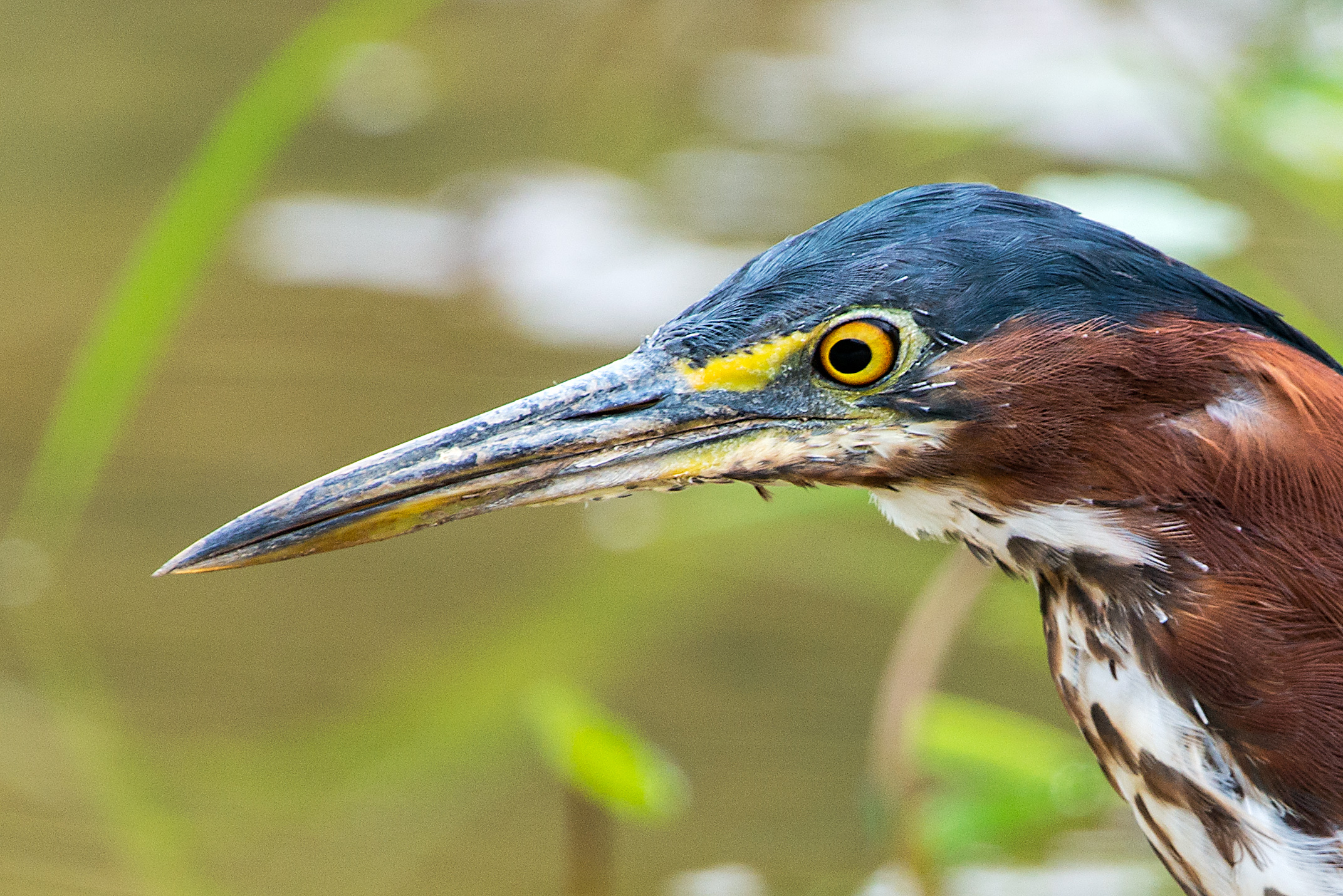
Below is a close up of the heron as it was intensely looking at a potential meal in the water.

Besides the Green Heron, I saw and photographed several other species of birds that I will post in other blog articles. As you can see from these images, it was well worth getting up at 4:15 in the morning on a Saturday when most other people were sleeping.

Posted in Bird Photographs, Landscape Photographs, National and State Parks, Nature, sunrise, Wildlife | Tagged , | 12 Comments

Common Snapping Turtle at Huntley Meadows Park

Last Sunday, I went to Huntley Meadows Park in Alexandria, Virginia, a 1,425 acre county park. If you are familiar with Alexandria, you know that it is densely populated and very developed suburb just south of Washington, DC. It is not a location where one would expect to find an unspoiled, natural area of forests, wetlands and meadows, that also is known for its significant and diverse wildlife population.

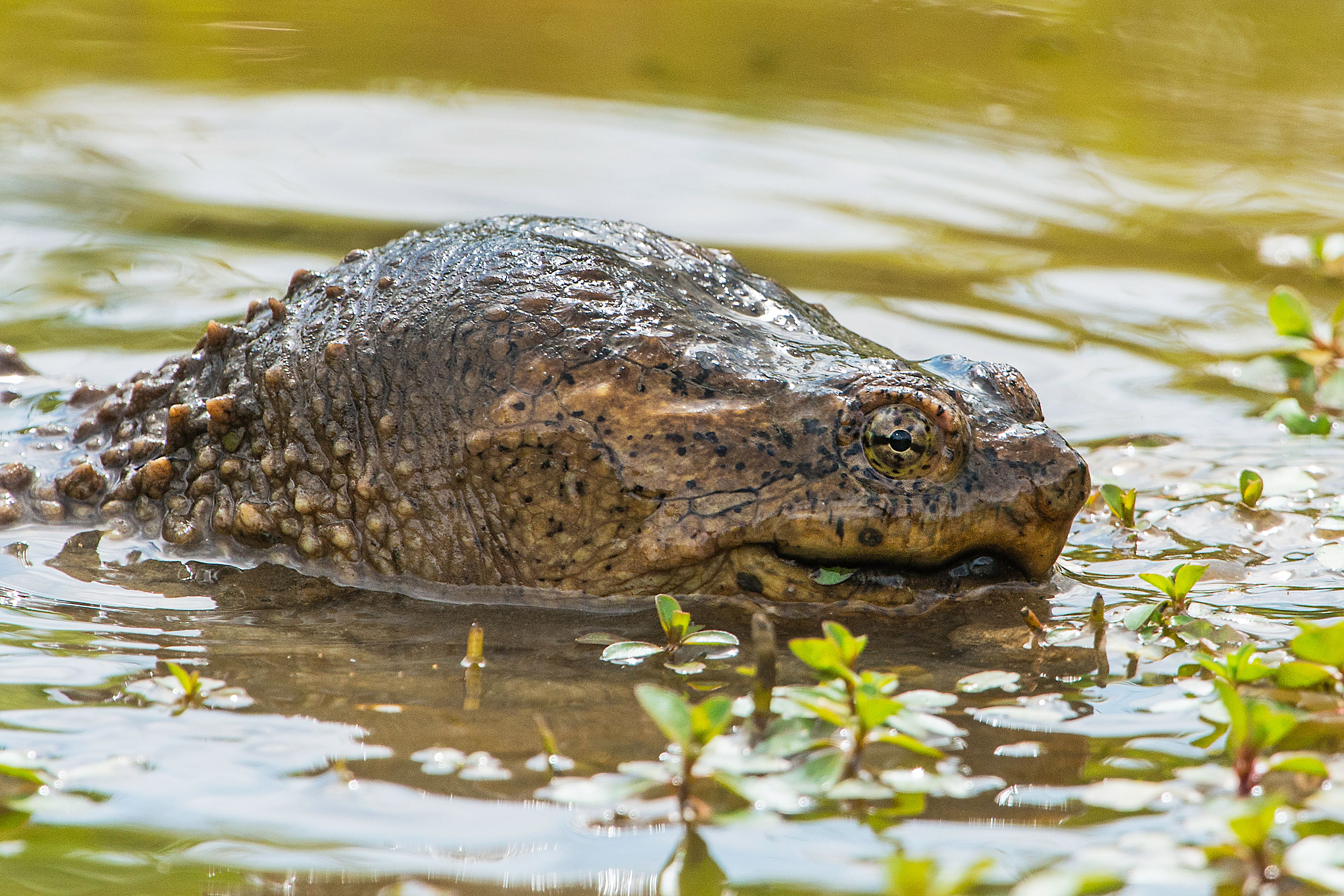
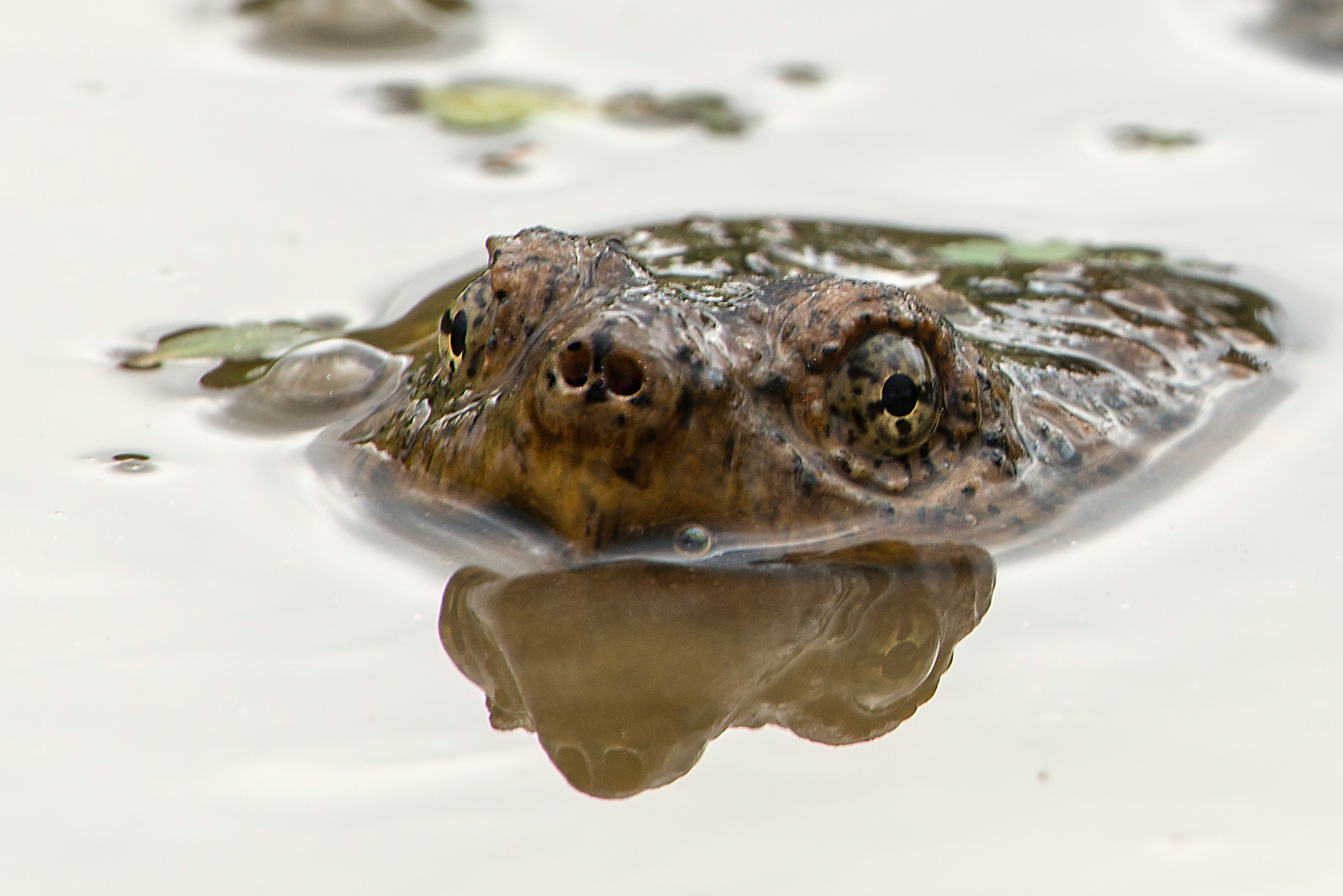
While there, I saw and photographed a variety of birds and turtles. Yes, turtles! I guess it is the boy in this old man that still finds turtles fascinating. There were River Cooters and Common Snapping Turtles, and a lot of each, but it was the snapping turtles that caught my attention. That is probably because of nearly losing a finger to one that I was trying to help as it tried to cross a street a couple years ago. I always stop to help turtles cross streets, but I have learned since that encounter how to safely handle snapping turtles. If you have not been close to one, they are very aggressive with a nasty disposition when out of the water, and have long necks that are capable of reaching far behind them very quickly and powerful beak-like jaws that can easily remove a finger or deliver a nasty, painful bite.

The snapping turtles were feeding on vegetation growing in the wetlands of the park. Since the wetlands were very dry, due to a lack of rain over the summer, the turtles were congregated in the small remaining areas with water, which made them easy to observe and photograph.

The Common Snapping Turtle is a large freshwater turtle that can be found in shallow lakes, ponds and streams in most of North America. Snapping turtles are omnivores, eating both vegetation, fish, birds and small mammals that venture too close. In fact, while at the park, a snapping turtle lunged at and grabbed a Lesser Yellowlegs, which is a fairly large shorebird, and pulled it below the water before it somehow managed to escape.

Snapping turtles were so named because of their ability to quickly bite, which is something they not only do to feed, but it is also their only defensive mechanism, since their heads are too large to retract into their shells like most other turtles. When in the water, snapping turtles are much less aggressive and will typically flee from people.

Snapping turtles mate from April through July, and the female will lay between 20-50 eggs. When the young turtles hatch, they instinctively know to head toward water.

The images in this article were taken with a Nikon D800 and 600mm lens with a Nikon TC-14E teleconverter.  The opening image within the park was taken with a Nikon D700 with a 28-300mm lens.

Posted in National and State Parks, Nature, Wildlife | Tagged , , , , | 15 Comments

Shenandoah National Park, Virginia

This past weekend, I spent a couple days in Shenandoah National Park searching for cooler weather in the mountains. I needed to escape the northern Virginia congestion, heat and get back to nature. I also wanted to photograph a mountain sunrise and sunset, as well as some of the beautiful views. I had not been there since the fall.

Unfortunately, it was a cloudy, heavily  overcast late afternoon, and shortly after taking the above image, it started to rain. Therefore, I was not able to see and photograph a colorful sunset, which can be spectacular from Skyline Drive. Nevertheless, the mountain views were beautiful even in the rain.

The following morning, the heavily overcast skies from the evening before cleared up and left behind just enough clouds to produce a gorgeous, colorful sunrise. Below is an image after the sun had risen, but was partially hidden behind a cloud. I liked this image so much, I cropped it and used a slightly different version for my blog banner (above). If you had not noticed, I periodically change the blog’s banner image.

While in the park, I saw an adult black bear, but was not prepared to photograph it. I had one of my cameras with me almost all of the time, except when I saw the bear. I was disappointed, but nevertheless, it was an awesome sight. I have been successful in the past in photographing a bear in Shenandoah National Park. If you have not seen my images of an adult black bear 75 feet up in a tree feeding on acorns, one can be seen at: http://stabone.com/p69726889/h36cfd4a3#h36cfd4a3

I was hoping to photograph some wildlife while in the mountains, but unfortunately, the only “wildlife” that was cooperating were the ubiquitous butterflies. Therefore, I did spend some time photographing them. They definitely are not as exciting as photographing a bear, but still make interesting images. Below is a Swallowtail butterfly.

Below are a few other images from the weekend in the mountains. The first is of Old Rag Mountain with an elevation of 3,291 feet. It is one of the park’s most popular and dangerous hikes, based on the number of rescue missions that happen each year. Old Rag is unique to most mountains in the Blue Ridge Mountains, because of its exposed, rocky summit. I climbed Old Rag about 10 years ago with my office staff as a “team building” project. Everyone made it safely to the summit, and the views from the top were stunning.

As you can see from these images, Shenandoah National Park is a great place to visit, enjoy spectacular views and refresh one’s spirit from the hassles and stress of busy, city life. I go there as often as possible.

The images in this article were photographed with a Nikon D800 and the following lenses: 16-35mm, 24-70mm, 70-200mm.

Posted in Landscape Photographs, National and State Parks, Nature | Tagged , | 14 Comments