More Images of a Ruby-throated Hummingbird

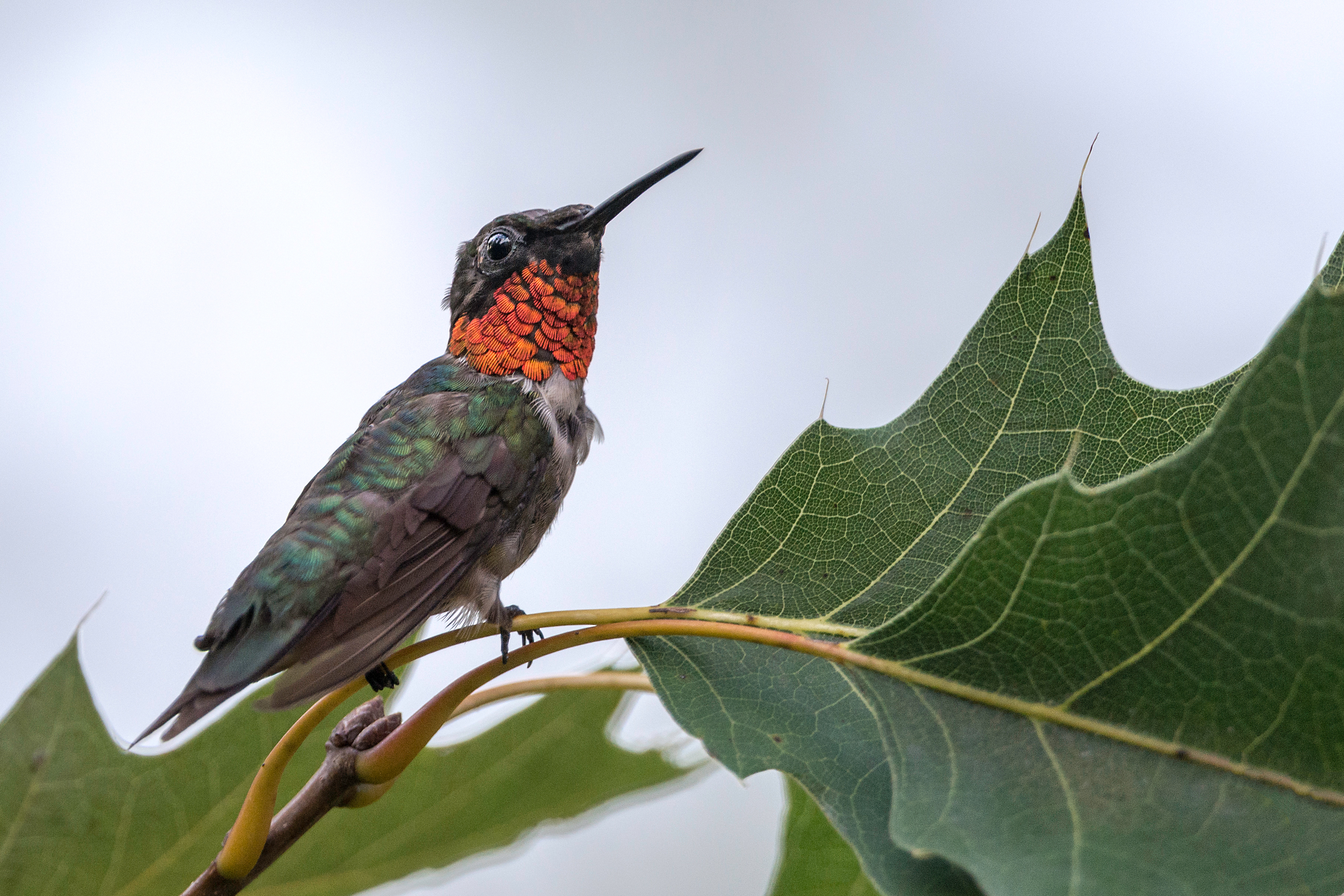
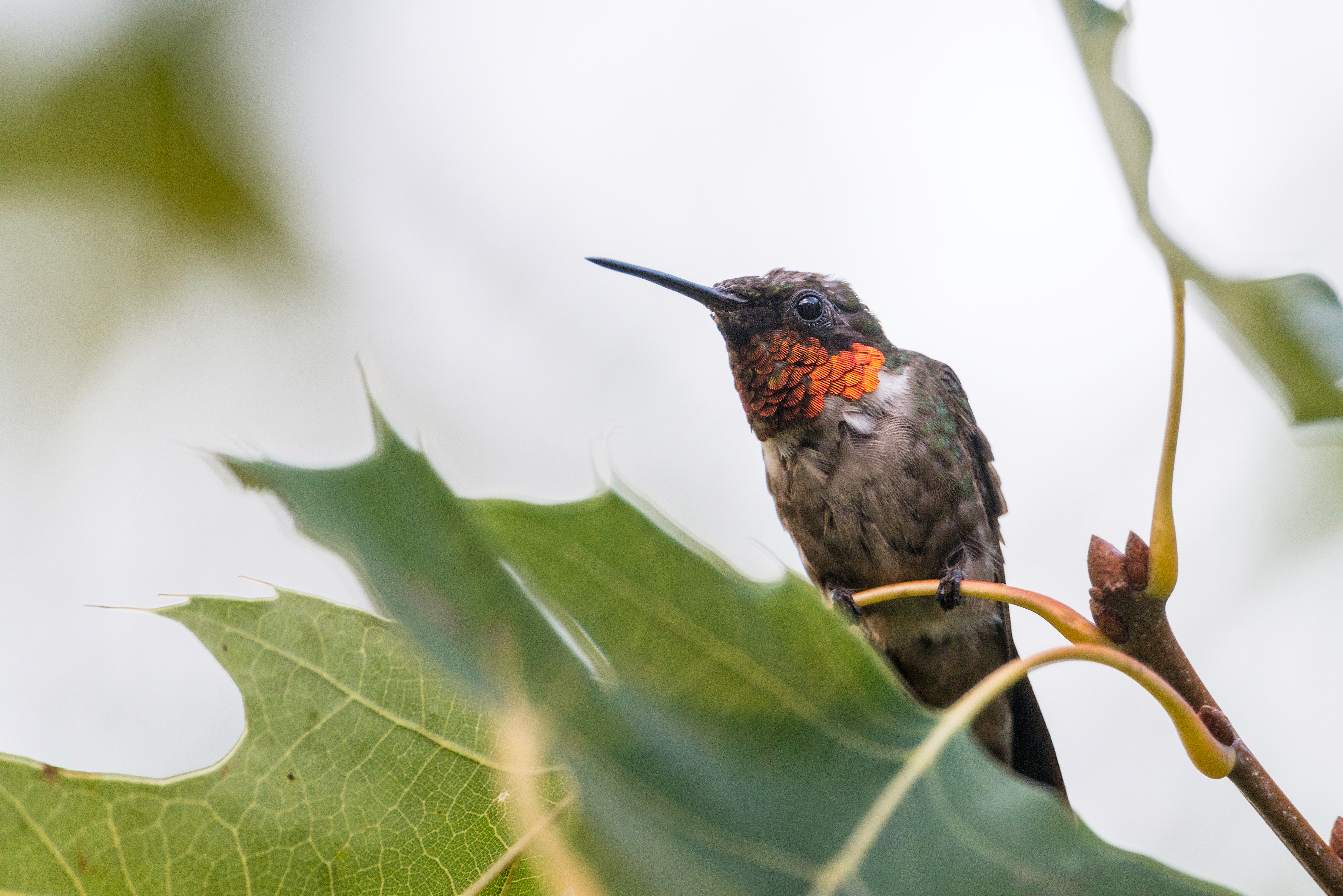
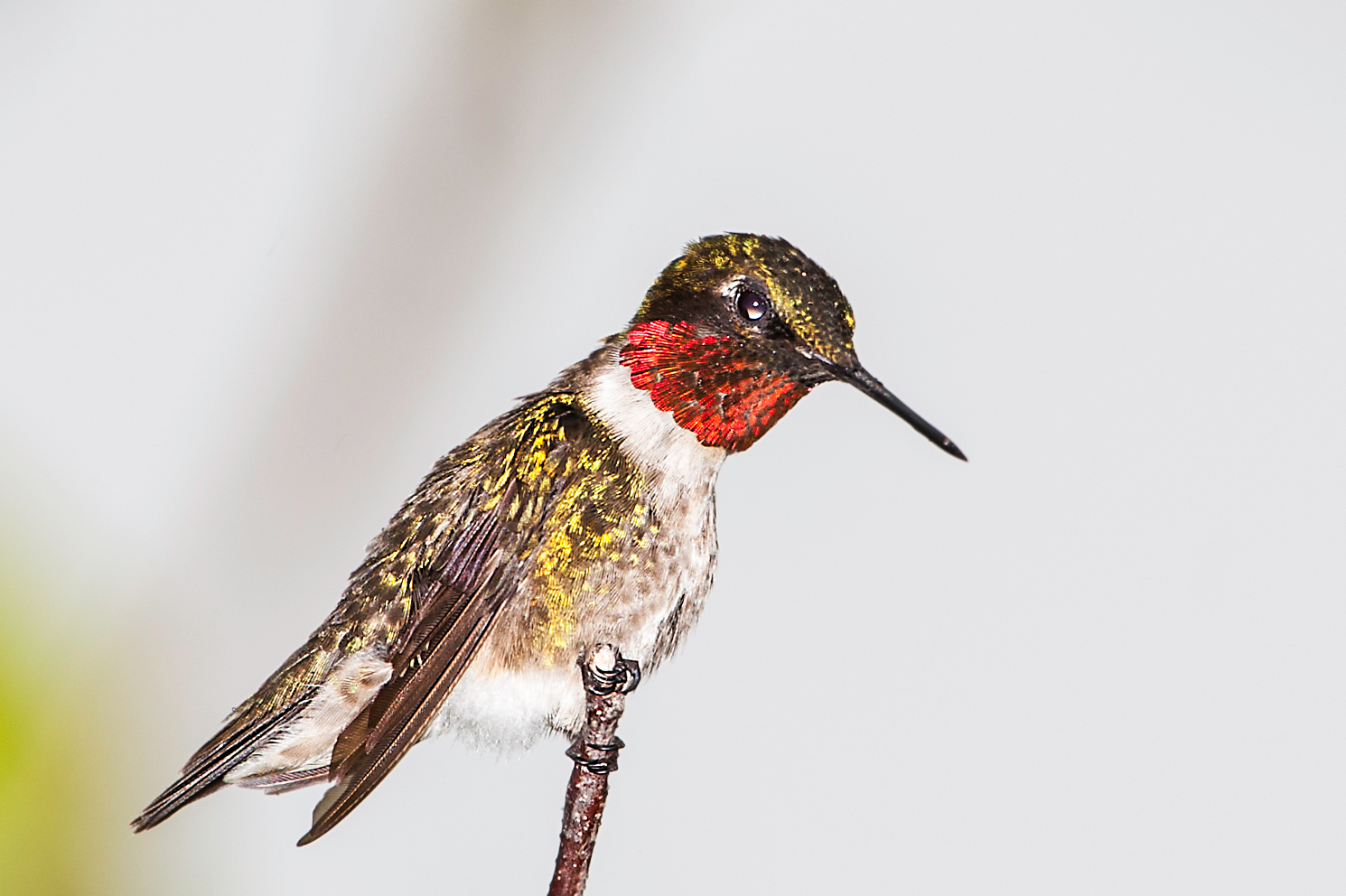
Late yesterday afternoon, until the sun went down, a pair of Ruby-throated Hummingbirds were buzzing up a storm as they were defending their territory from other hummingbirds. Of the pair, the male was by far the most active.  They were flying around like tiny jet fighters, and in between “dog fights,” the male frequently landed in a nearby tree to watch over their territory.

I could not just watch them without breaking out and setting up my Nikon D800 and 600mm lens with a 1.4 teleconverter (850mm). My presence with my camera did not slow them down, which would have helped as I attempted to photograph them. They continued to buzz back and forth.

I was not trying to photograph them as they flew by me. They were moving to fast and erratically. Instead, I focused on a few locations in the nearby trees where they would periodically land, rest and monitor their territory.

After chasing away other hummingbirds, the female disappeared deep into the trees, and the male returned to a few favorite perches on the outside edges of the trees. That is where and how I was able to get the images in this article.

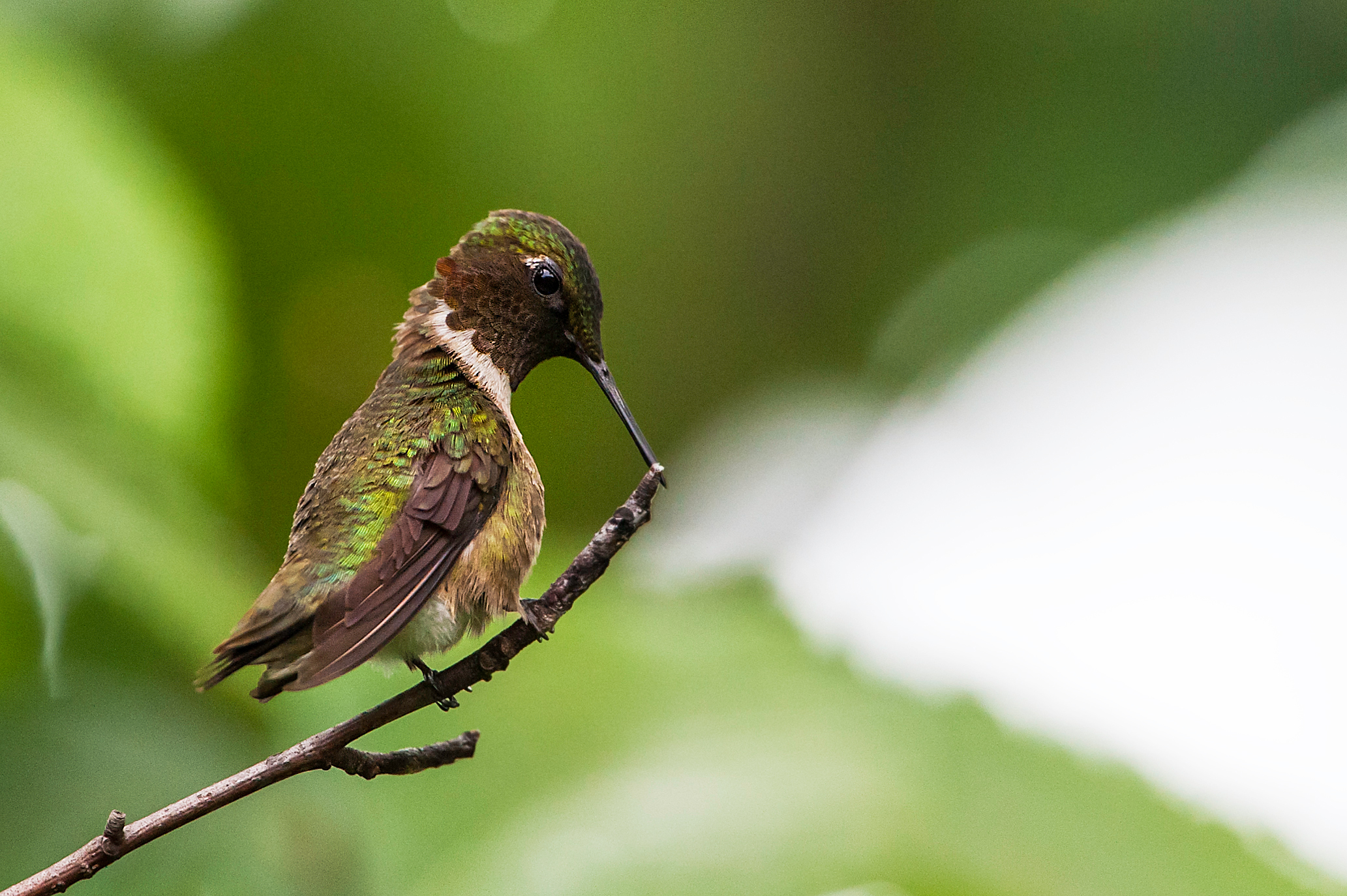
In the above image, I was able to photograph the male hummingbird with his tongue extended out of his beak. It is that long tongue that enables them to get nectar deep from within long narrow flowers.

In the above image, the male hummingbird was stretching up, looking around for an intruder, while being nicely lit by the warm glow of the setting sun.

I was very pleased with the detail captured in these images by my Nikon D800. If you did not click on the images to see them in more detail, I recommend you do. These images are low resolution for my blog. Higher resolution images and other hummingbird images can be see on my website at: http://stabone.com/p700411659 

Posted in Bird Photographs, Nature, Wildlife | Tagged , , , | 11 Comments

Ruby-throated Hummingbirds

When summer arrived in Virginia, so did the Ruby-throated Hummingbirds from Mexico or Central America, where they spend the winter. It is hard to imagine these tiny little birds flying such a distance with the most significant leg of their migration flying across the Gulf of Mexico. I maintain a hummingbird feeder behind the house that attracts them each year, entertains me with their amazing flying and aerial acrobatics, and provides me with the opportunity to photograph them. The images in the article were shot the last weekend of July.

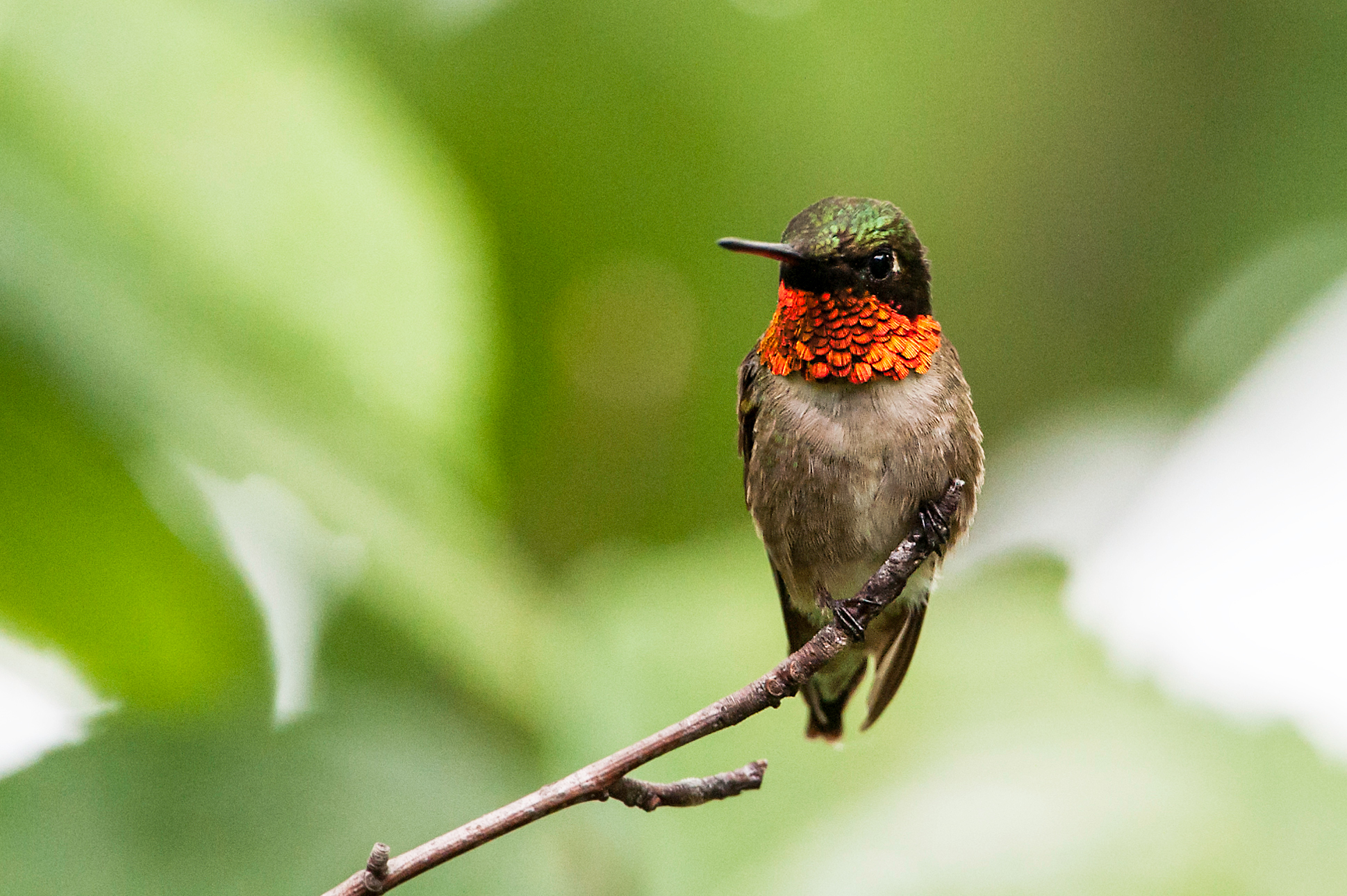
If you live along the east coast of the United States and have seen hummingbirds, they were most likely Ruby-throated Hummingbirds, since they are the only hummingbird species that regularly live east of the Mississippi River. Ruby-throated Hummingbirds get their name from the bright red feathers on the front of their neck and upper breast. Males have a large patch of red feathers, called a gorget, on their throats, and females only have a very small red spot of feathers. The red is highly florescent, bright and glowing when lit by the sun or other direct light. At other times, these feathers appear black, as in the below image of this male hummingbird stretching his wings and puffing out his body feathers.

Hummingbirds are solitary birds, only socializing during breeding season. Males arrive first in the breeding area and establish their territory. When the females arrive, they attempt to attract them with a courtship display. After breeding, the males depart and the females care for the young. The female lays two white eggs, which take 12-14 days to hatch. Only the female feeds the young hummingbirds, which fledge when they are 22-25 days old.

Both the males and females are aggressive toward other hummingbirds, protecting their territory. There are three hummingbirds that regularly come to my feeder, two males and one female. They all appear to defend the feeder and fend off each other when they approach the feeder. It is entertaining watching them interact, buzzing around the feeder and through the nearby trees. At times, they are aggressive toward other birds in the trees, but only the small ones, like the American Goldfinches. Below is an image of a male goldfinch that I photographed in the tree behind the house.

In late summer and early fall hummingbirds fatten up, almost doubling their body weight, for the long migration south. This is critically important because, as part of their migration, they must fly across the Gulf of Mexico, which requires a 500-mile, non-stop flight over water.

Below are more of the images I recently took of the hummingbirds. In the first one below, a male hummingbird was cleaning his beak by rubbing it against a small branch.

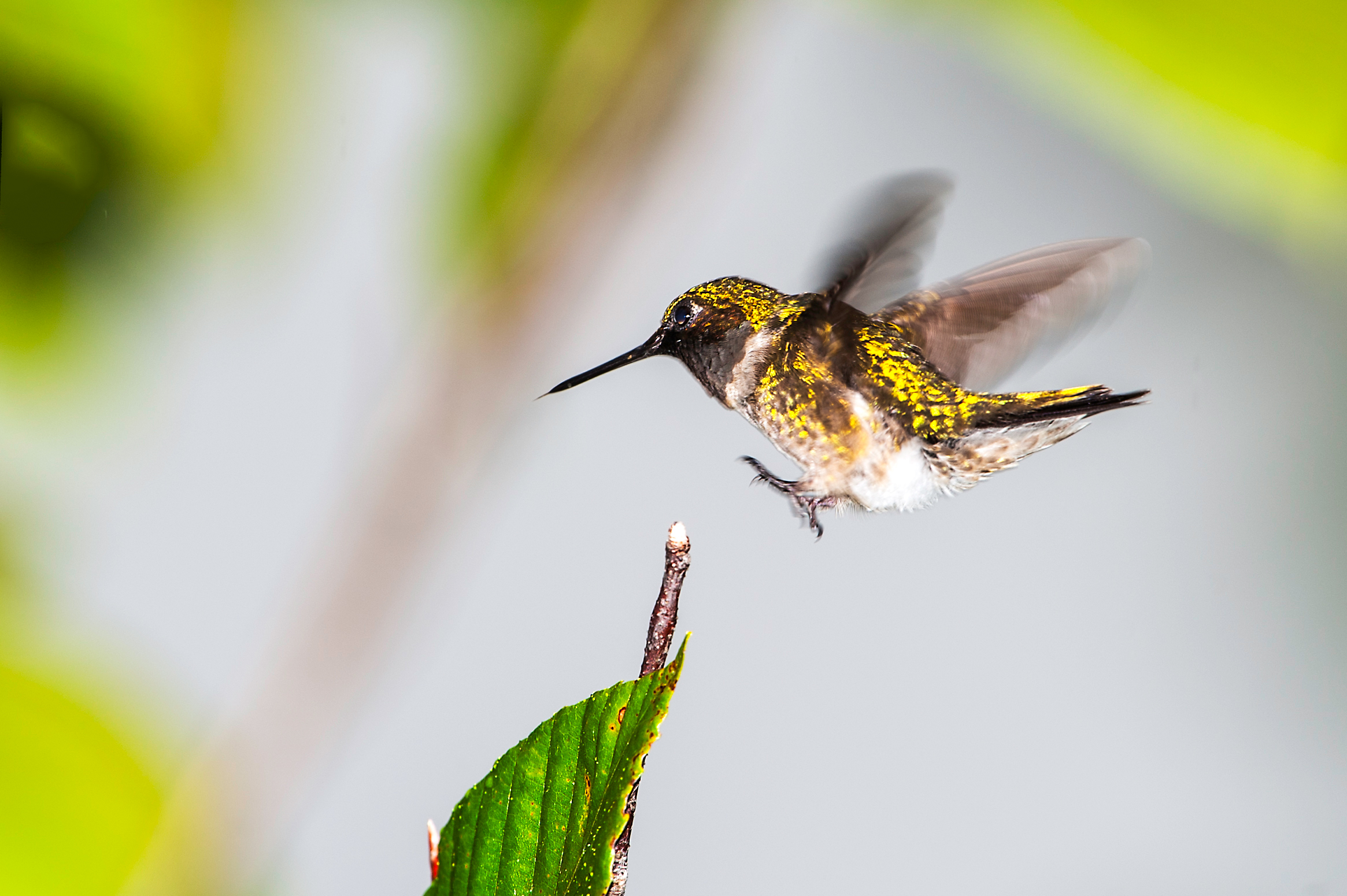
Photographing hummingbirds in flight is very difficult because of their speed and zig-zagging around. However, I was able to capture below this hummingbird as it was about to land in a tree.


The above image was taken with a flash and Better Beamer, which extends the reach of the flash. The light from the flash illuminated the male hummingbird’s throat. Based on the expression on his face, he did not appear to like the sudden burst of light. The following two images were also taken with a flash.

The hummingbird images in this article were taken with a Nikon D700 camera, while my Nikon D800 was being repaired by Nikon for a focusing issue. I used a Nikon 600mm lens with a 1.4 teleconverter. I have since welcomed home my D800 from Nikon, and it is operating perfectly.

Posted in Bird Photographs, Nature | Tagged , , , , | 12 Comments

More of Maine’s Wildlife

If you have been following my blog recently, you know that I spent two weeks on Mount Desert Island in Maine in June, and while there, I photographed some of the island’s breathtaking views, wildflowers, and wildlife that live on or near the island. In previous blog articles, I included images of some of the wildlife to include Puffins, Common Loons, and Grey Seals. In this article, I am including some images of a few other wildlife species that I saw and photographed.

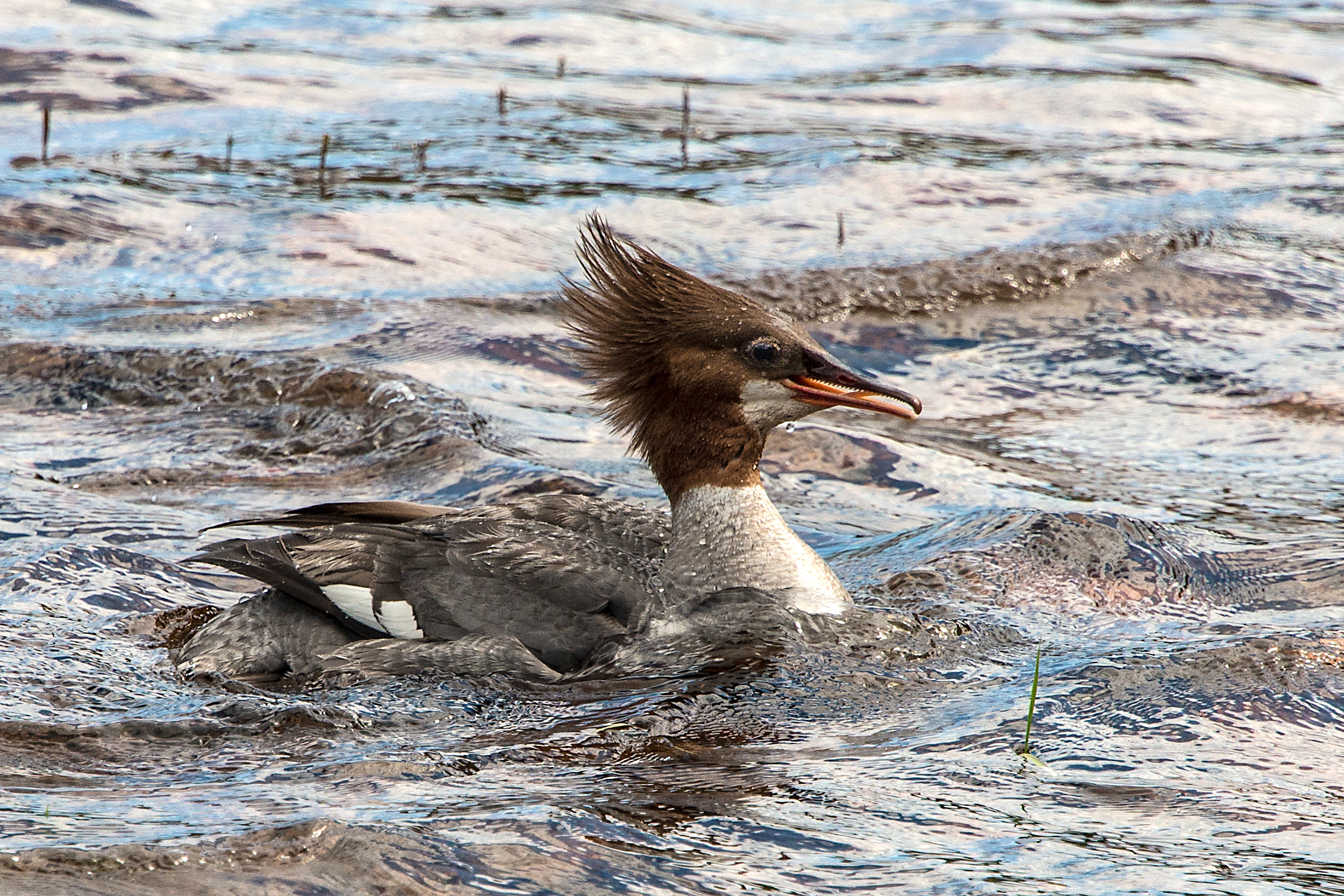
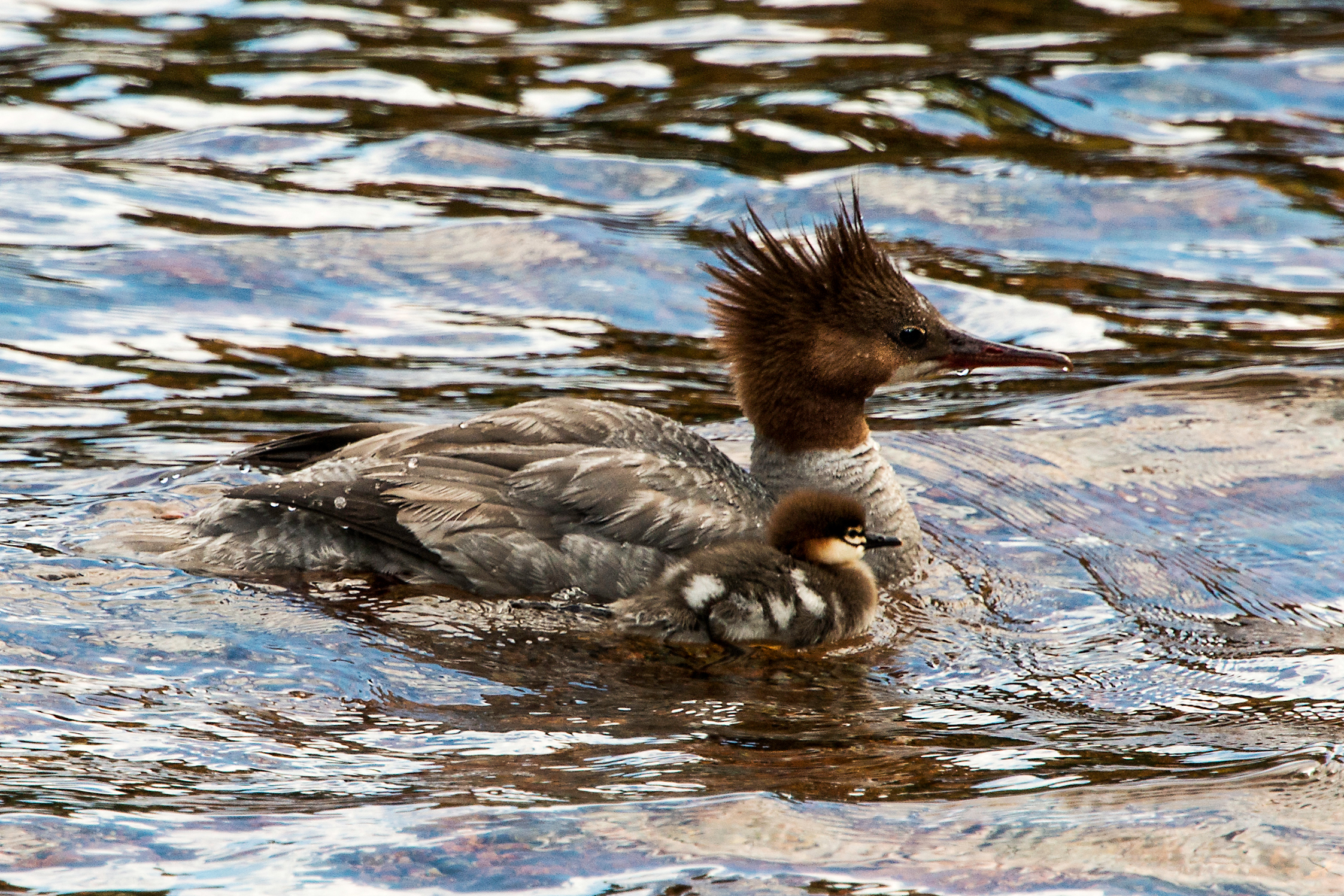
The opening image is of a female Red-breasted Merganser and its newly hatched chick that I photographed on Jordan’s Pond in Acadia National Park. Red-breasted Mergansers are large diving ducks found on lakes, rivers and the ocean, but prefer saltwater over freshwater. However, they typically breed and raise their young on lakes and rivers. As seen in the above and below images, they have very spiked rust-colored crests and long narrow bills with serrated edges for catching and holding their prey. They are one of the fastest, if not the fastest, level-flying birds, reaching speeds of 100 mph.

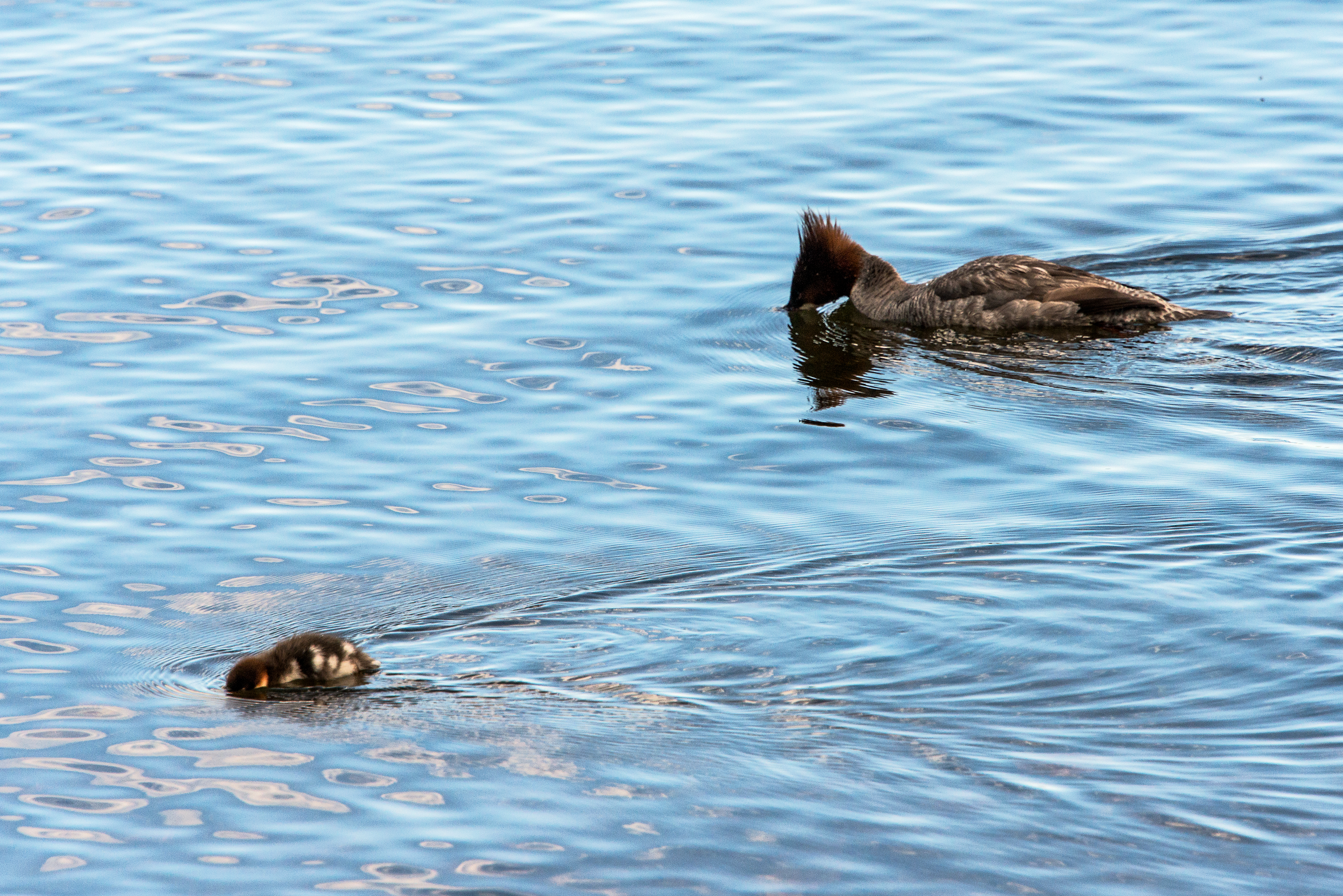
Red-breasted Mergansers swim with their heads submerged while looking for prey, as can be seen in the below image. When they spot a fish or other prey, they dive to catch it. It was amazing to see this very young merganser following its mother around doing the same thing at such a young age. They must instinctively know how to hunt for their food.

I was able to follow the mergansers for quite awhile as they worked the shoreline for food, but eventually, they swam toward the middle of the lake. However, before they left, I was able to capture the below heart warming image. (Merganser images taken with a Nikon D800 and 28-300mm lens.)

When I was at Echo Lake in Acadia National Park photographing three Peregrine Falcon fledglings, I learned about a Pileated Woodpecker nest in a tree cavity on the other side of the island. I was excited about the opportunity of seeing and photographing nesting Pileated Woodpeckers, so the next morning I went to the location that was described to me.

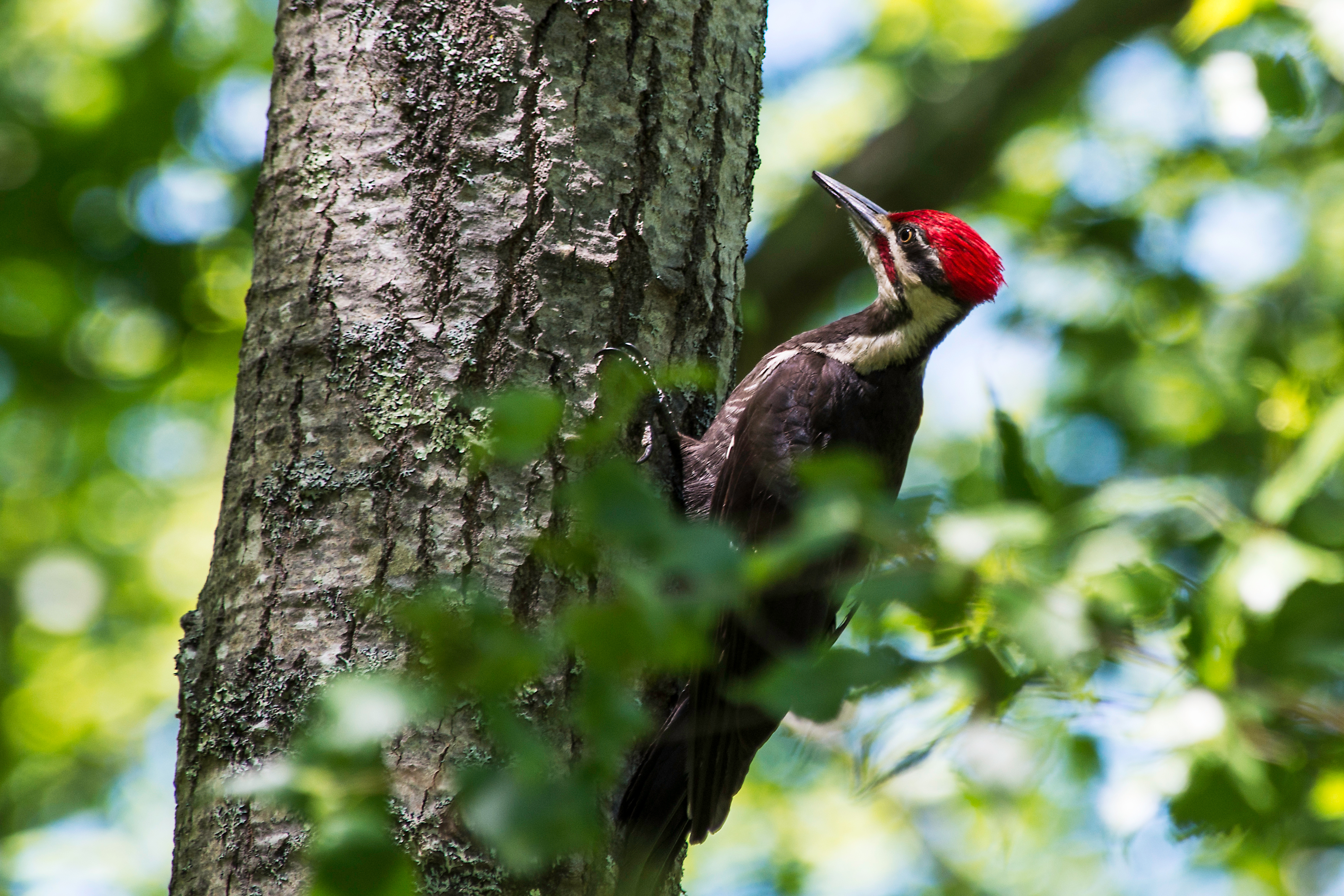
Timing is critical in nature photography, and unfortunately, I was a day too late.  The woodpeckers had fledged/left the nest. However, I could hear a Pileated Woodpecker deep in the nearby heavily wooded forest. Fledglings often stay near the nest for a short while after fledging, and apparently, there was one nearby. Eventually, I caught a glimpse of a woodpecker flying between the trees. I worked my way into the woods to the place where I saw the woodpecker, and found it on the side of a tree. Although partially blocked by the leaves of a tree, below is the first image I was able to take of the young woodpecker.

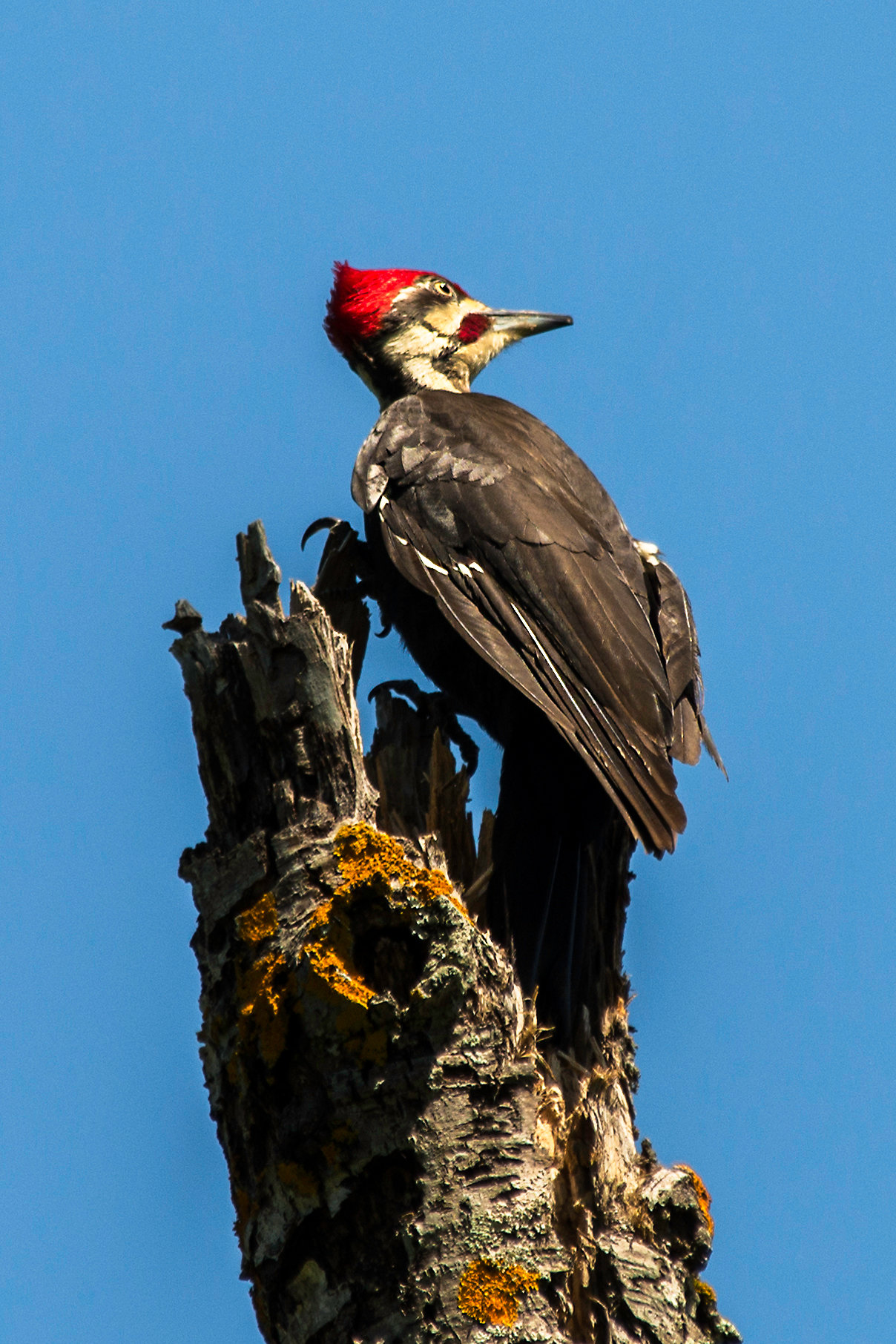
When the woodpecker saw me, it flew to the top of a dead tree. I was able to get a few more shots of the woodpecker before it flew off again back into the forest. Below is one of the images of the Pileated Woodpecker fledgling at the top of the old dead tree. (Woodpecker images were taken with a Nikon D800 and 80-400mm lens.)

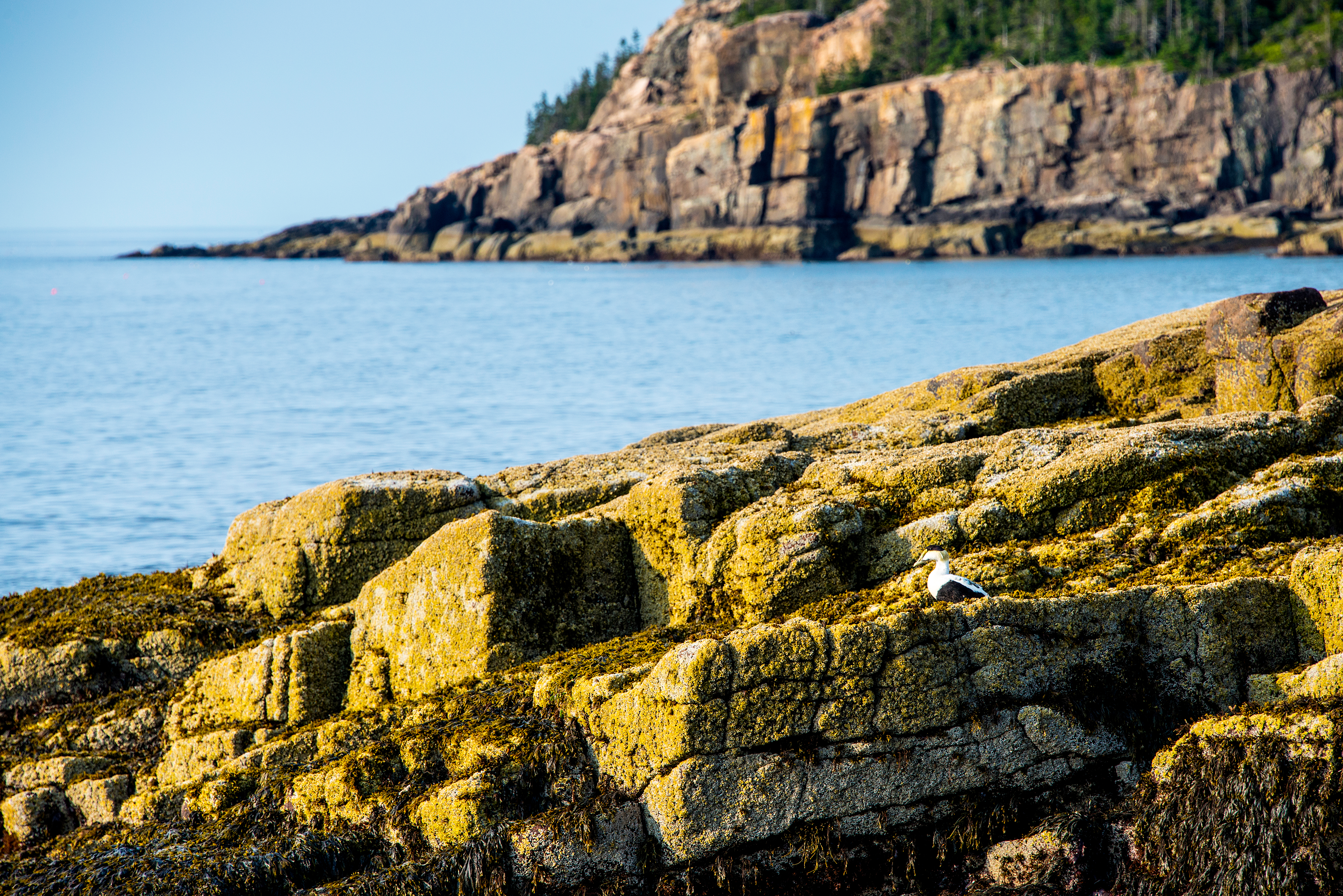
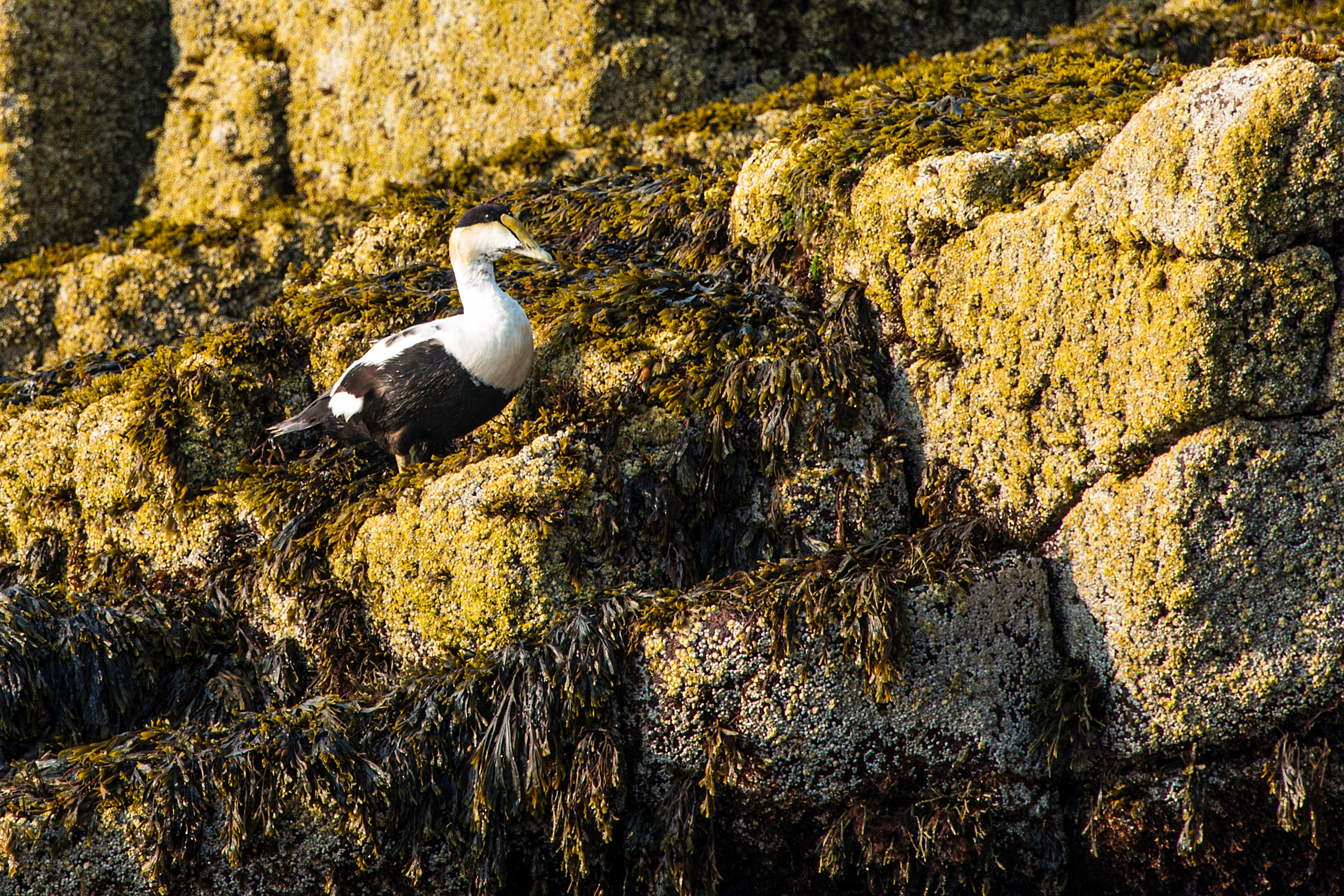
One morning after photographing the sunrise from the top of Cadillac Mountain, I stopped to photograph the Acadia National Park shoreline in the early morning light and noticed a very unusual duck swimming along the shoreline. It was a male Common Eider, and it worked its way up on the rocks exposed in the low tide to feed on crustaceans and molluscs in the exposed seaweed on the rocks.

Common Eiders are found on northern seacoasts and are the largest ducks in the Northern Hemisphere. The male’s bright white and black plumage contrasts markedly with the female’s camouflaging dull striped brown, which made it stand out against the sunlit rocks covered in seaweed, barnacles and other things growing on the rocks.

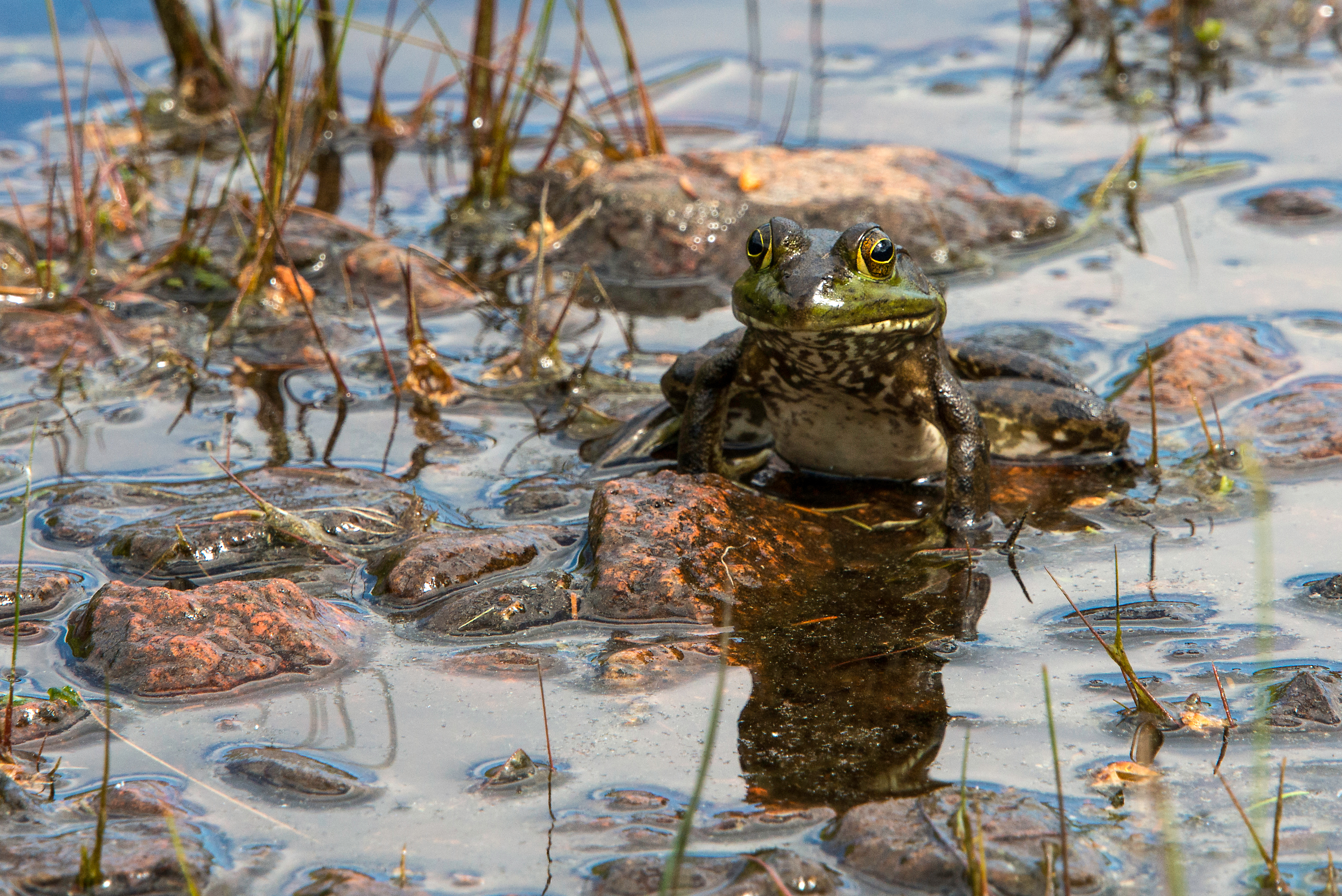
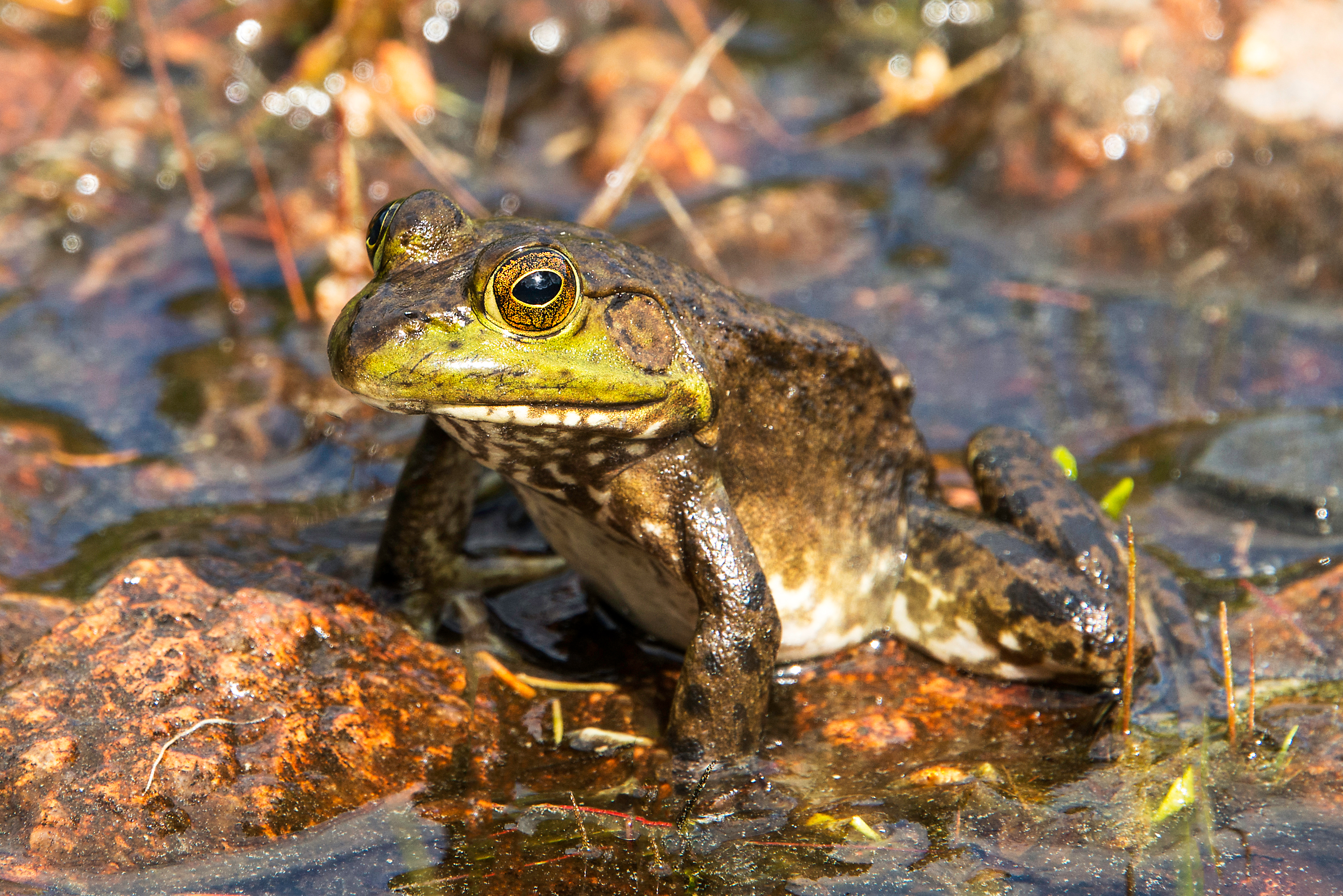
While hiking around Mount Desert Island’s lakes and wetlands, I saw and photographed a lot of American Bullfrogs, which make interesting subjects even if you are not “into” frogs. They are particularly interesting when you look closely at their large eyes, markings and colorful bodies, as well as some of their unusual characteristics such as their ability to absorb oxygen and eliminate carbon dioxide through their moist skin and the lining of the mouth. Their diet is interesting too; stomach content studies have shown that bullfrogs prey on any animal it can overpower and stuff down its throat. Bullfrog stomachs have been found to contain rodents, small turtles, snakes, frogs (including bullfrogs), birds, and a bat, as well as the many invertebrates, such as insects, which are their usual food.

Below are a few of my favorite American Bullfrog images from Mount Desert Island. (The frog images were taken with a Nikon D700 or D800 and 28-300mm lens.)

These and other images of the wildlife I photographed in Maine can be seen on my Website at:  http://stabone.com/p697190669.

Posted in Bird Photographs, National and State Parks, Nature, Wildlife | Tagged , , , , , | 5 Comments

Maine Wildflowers

When I arrived in Maine in early June, it was still spring and very obvious by the many spring flowers that were in full bloom and the lush, bright green of the new growth on the ground and in the trees. In addition to planning to photograph Maine’s breathtaking landscapes, seascapes and wildlife, I planned to photograph some of Maine’s wildflowers, and therefore, brought my 105mm macro lens for some intimate images of the flowers, like the one below of American Plum flowers that were blooming near a seaside marsh.

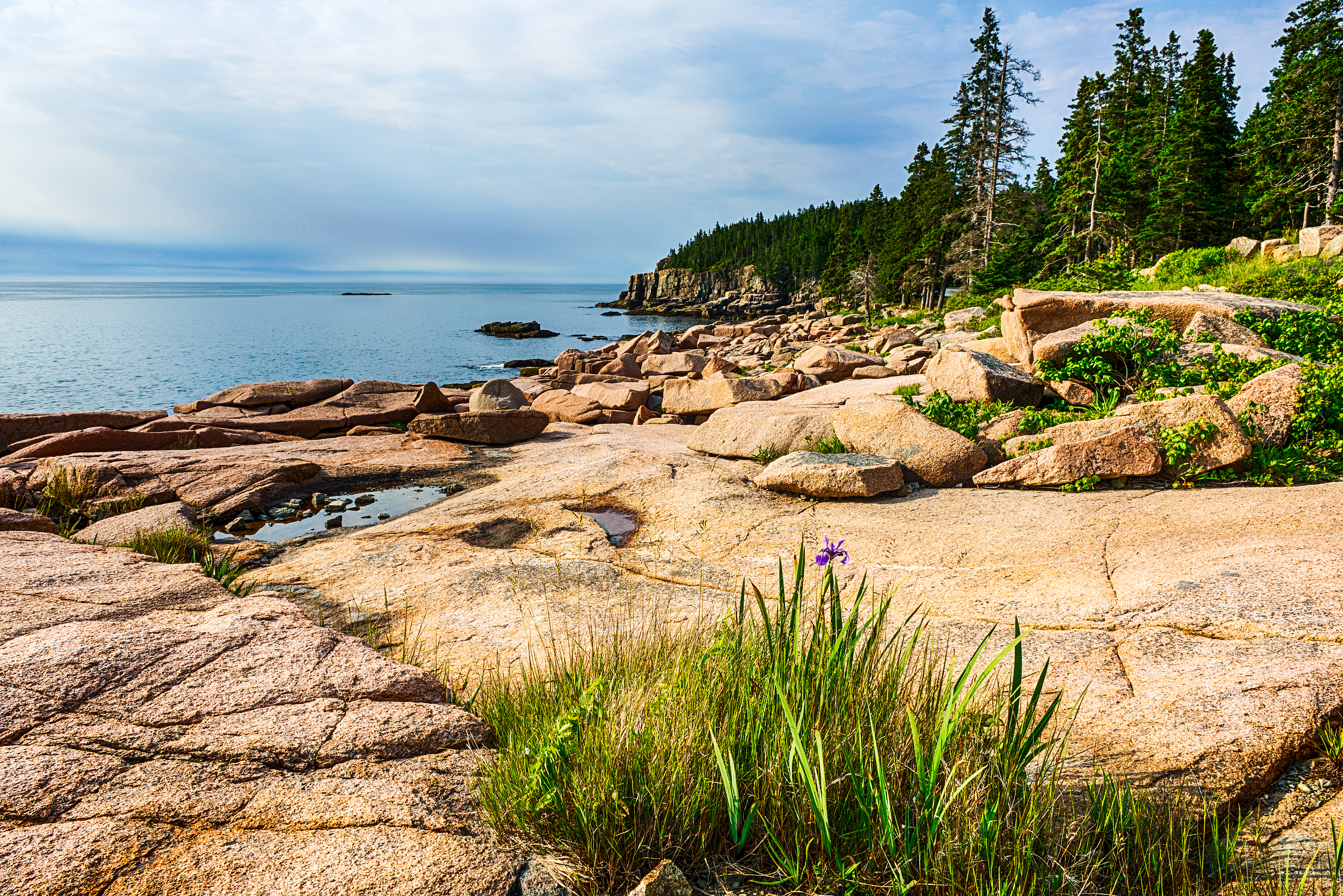
In the opening image above, there is a lone Iris flower growing between the huge rocks along the coast on Mount Desert Island. This image was taken shortly after shooting the sunrise from Cadillac Mountain, and the early morning sun was lighting the island’s eastern shoreline.

Because Maine’s landscapes and seascapes were so beautiful, I concentrated most of my time exploring, hiking and photographing them, but could not help but see and enjoy the wildflowers that were growing along the roads, in open fields and on the trails in Acadia National Park and nearby refuges and preserves. The wildflowers were like beautiful gems or jewels adding to the visual pleasure of Maine’s stunning natural sights.

Below is a Pink Lady Slipper that was growing along the trail that circled Jordan’s Pond in Acadia National Park. Pink Lady Slippers are unique in appearance and are attractive, rare flowers. The plant is actually an orchid that has two basal leaves that stay horizontal and a single stalk growing about a foot high bearing a single pink flower. It takes several years for a lady slipper plant to go from a seed to a mature plant that can live for twenty years.

Although I enjoyed seeing the ever present wildflowers, I did not spend enough time photographing them, which I realized towards the end of my second week in Maine. In an effort to capture some their beauty, I spent a couple of hours one morning with my 105mm and photographed some of the wildflowers along the road near the cottage. There was a good representation of some of the flowers I had been seeing around the island. The following are a few of those images.

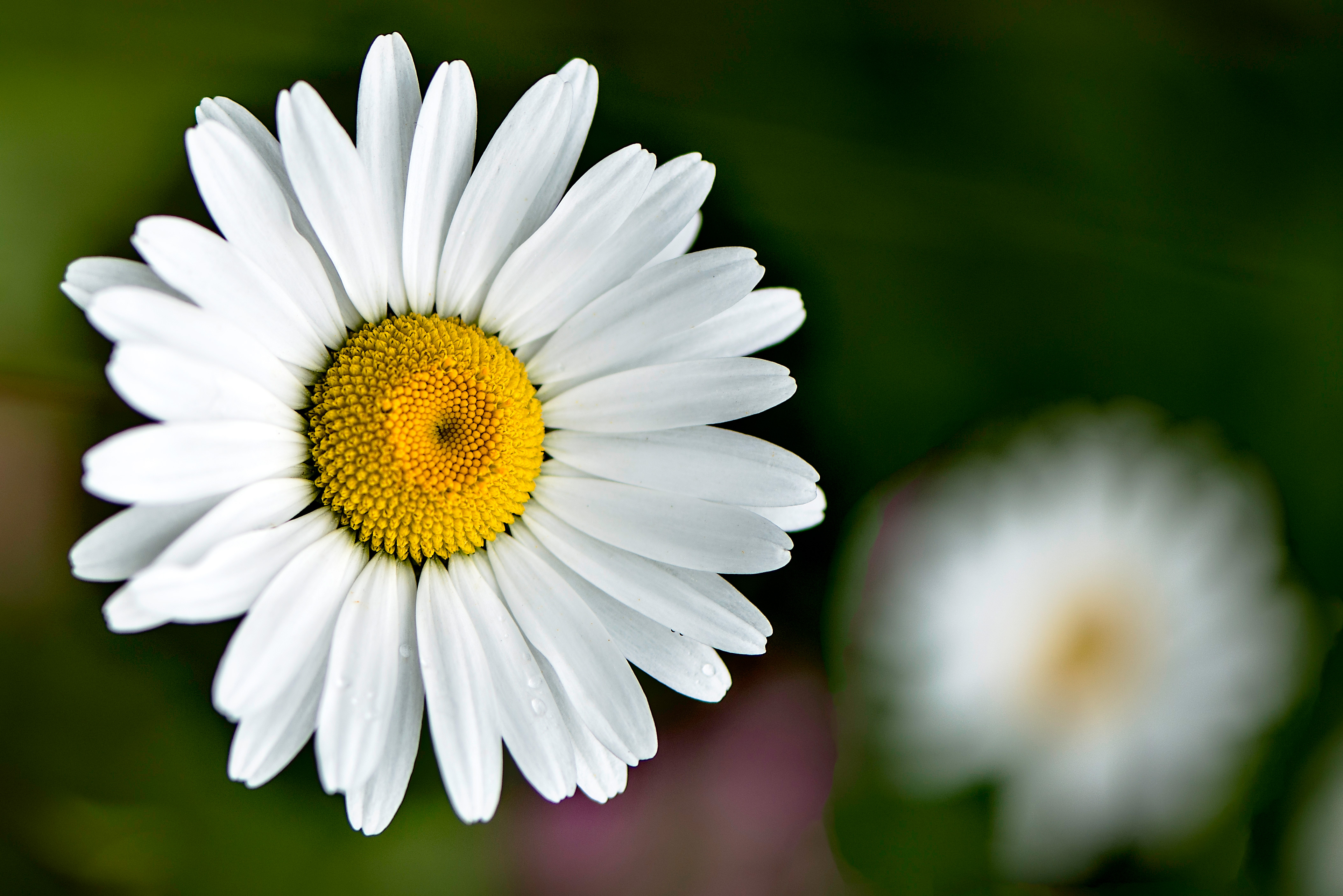
Above is an Oxeye Daisy, which is a wide spreading flowering plant native to Europe, but an invasive species in Maine and other States where it is now a common weed that forms dense colonies that displace other plants. Nevertheless, they are very attractive along country roads.

An Orange Hawkweed is above, and it too is native to parts of Europe, used as an ornamental plant here, and also considered an invasive species in some areas of the United States and Canada.

I do not know the name of the above flowers. If someone recognizes them, please leave a comment with their name.

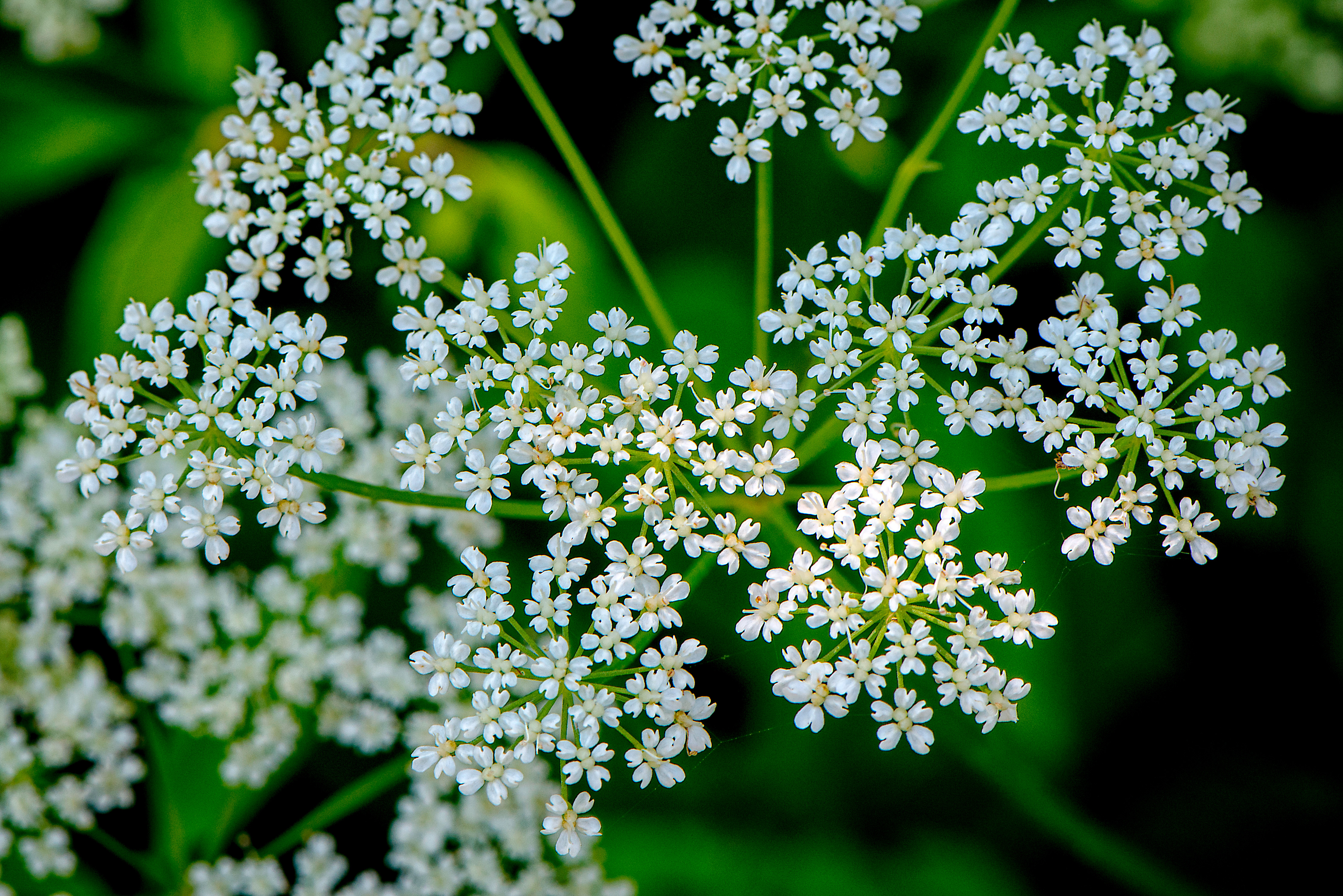
Above is Queen Anne’s Lace or also known as Wild Carrot. It too was introduced in the US from Europe, grows to three feet tall and has had many uses to include a companion plant to crops, herbal remedies, dyes, and its carrot-like root can be eaten when it is a young plant.

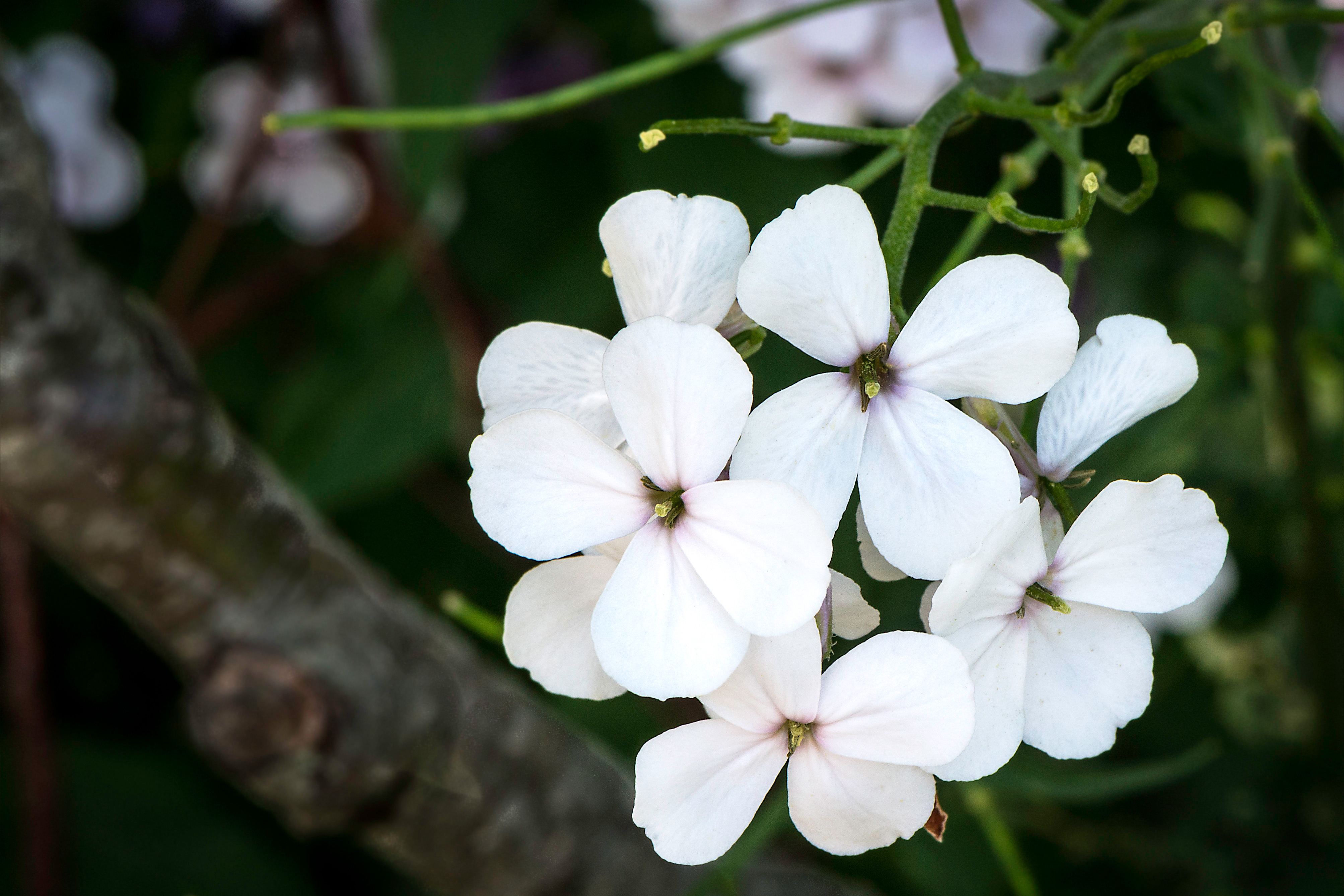
Watercress flowers are above. Watercress grows both in and beside streams, marshes, ditches, ponds and canals and is a native perennial.

Above is a sunlit Dogwood plant flower, not a Dogwood tree, but the flower is very similar. The Dogwood flowers are harbingers of spring, blooming early and before there is much green growth.

In addition to the above wildflowers, there were many Lupines growing in small and large groups along roads, in open fields and around people’s homes. They are predominantly purple, but there are also some pink and white Lupines, with white being the least common. Lupines do not grow in Virginia, or at least I have never seen any. They were beautiful and were amazingly striking when lit by the sun. I photographed Lupines many times while in Maine. Some of those images follow.

The above images, as well as other wildflower images, can be seen on my Website at:  http://stabone.com/p26222471 These wildflower images were photographed with D700 and D800 Nikon camera bodies and the following Nikon lenses: 105mm, 24-70mm, 28-300mm, and 70-200mm.

Posted in Nature | Tagged , , , , , , | 25 Comments

Atlantic Puffins and Grey Seals

One of my photography goals, when I was in Maine in June, was to photograph Atlantic Puffins. I had never seen a puffin, except in various media. They are very unusual, beautiful seabirds, and I was excited that I might have the opportunity to see and photograph them. In June, some Atlantic Puffins nest on several of Maine’s outer islands. Therefore, I knew my chances were good.

Puffins have predominantly black and white plumage, a stocky build, and large beaks. They shed the colorful outer parts of their bills after the breeding season, leaving a smaller and duller beak. Their short wings are adapted for swimming with a flying technique under water much like a penguin. In the air, they beat their wings rapidly (up to 400 times per minute) in swift flight, often flying low over the ocean’s surface at speeds reaching 55 MPH.

Puffins are pelagic seabirds, meaning that they remain at sea except during breeding season when they nest and raise their young. The female lays one egg per year, and both the male and female take turns with the egg and later the young puffin. Puffins nest in borrows within the rocky island cliffs.

Before leaving for Maine, I searched the Internet to locate the islands where the puffins nest, the accessibility of the islands, and availability of boats to take me to them. I was able to locate one charter company that was licensed to drop 16 people from its boat on Machias Seal Island to view and photograph the puffins from 4 blinds. Unfortunately, the boat was sold out. Determined to find a way to see some puffins, after arriving in Maine, I located a charter boat, operated by Buzzy Shinn, with a 26 foot boat that could take me and my wife to Petit Manaan Island. Petit Manan Island is a small island that is part of the Maine Coastal Islands National Wildlife Refuge and has over 140 pairs of nesting puffins.

Buzzy’s 26 foot boat, the Alyce K, was perfect for the trip, which was about 10 miles to Petit Manan from Milbridge, where Buzzy kept the Alyce K. Besides being a very experienced captain, Buzzy was an excellent “tour guide,” pointing out various sites along the way to include seals on one of the islands that we passed. Since we had the boat to ourselves, Buzzy circled the small island so that I could photograph the seals.

When we arrived at Petit Manan, we could see many puffins both in the water and on the  cliffs along the shoreline. Unfortunately, we could not land on the island; therefore, Buzzy kept the boat as close as he could without disturbing the puffins and other seabirds. It turned out to be extremely challenging to photograph the puffins, because the Atlantic’s waves were causing the boat to pitch up and down and from side to side, while at the same time the puffins also were moving up and down. Fortunately, the Atlantic was fairly calm that day, and I was able to get some decent photographs, considering the conditions.

It was about 9:30 AM, when we arrived at Petit Manan Island, so the morning light was good and not too harsh. We stayed there for well over an  hour watching and photographing the puffins. The below image is an example of how the waves hid the puffins, making photographing them difficult. They were in the camera’s viewfinder and then they were gone behind a wave.

Before leaving, Buzzy brought the boat in a bit closer, and I used my 600mm lens to photograph the puffins on the cliffs. There seemed to be as many puffins on the cliffs as there were in the water.  This too was challenging because of the boat’s rocking up and down as I tried to focus on the puffins. Below are two of those images.

Puffins are hunted for their eggs, feathers and meat, and their populations have drastically declined due to habitat destruction and exploitation during the 19th century and early 20th century. Unfortunately, they continue to be hunted in Iceland where they are part of the national diet, and where the species does not have any legal protection. Puffins are hunted by a technique called “sky fishing,” which involves catching low-flying birds with a big net. Sad, but true.

Puffins were listed as threatened in Maine in 1997 because of their small population size and limited distribution. All nesting islands (Petit Manan Island, Matinicus Rock, Seal Island, and Eastern Egg Rock) are intensively managed for seabird restoration.

The National Audubon Society started a project called Project Puffin in 1973 to help restore the Atlantic Puffin population to the Gulf of Maine. You can read about Project Puffin at: http://projectpuffin.org/index.html. It is a very informative Website on puffins with live video cams of the nesting puffins.

As you can see from my photographs in this blog article, my goal of photographing the puffins was achieved. Even if I was not able to photograph the puffins, just seeing them in their natural habitat would have been success enough. I have more wildlife images, as well as photographs of some of Maine’s wild flowers that I will be posting soon. However, before I do, I will most likely post an article containing images of a pair of Osprey chicks that I have been photographing since returning from Maine. They have been growing fast and will most likely fledge next week.

Posted in Bird Photographs, National and State Parks, Nature, Wildlife | Tagged , | 12 Comments