Maine, A Photographer’s Paradise

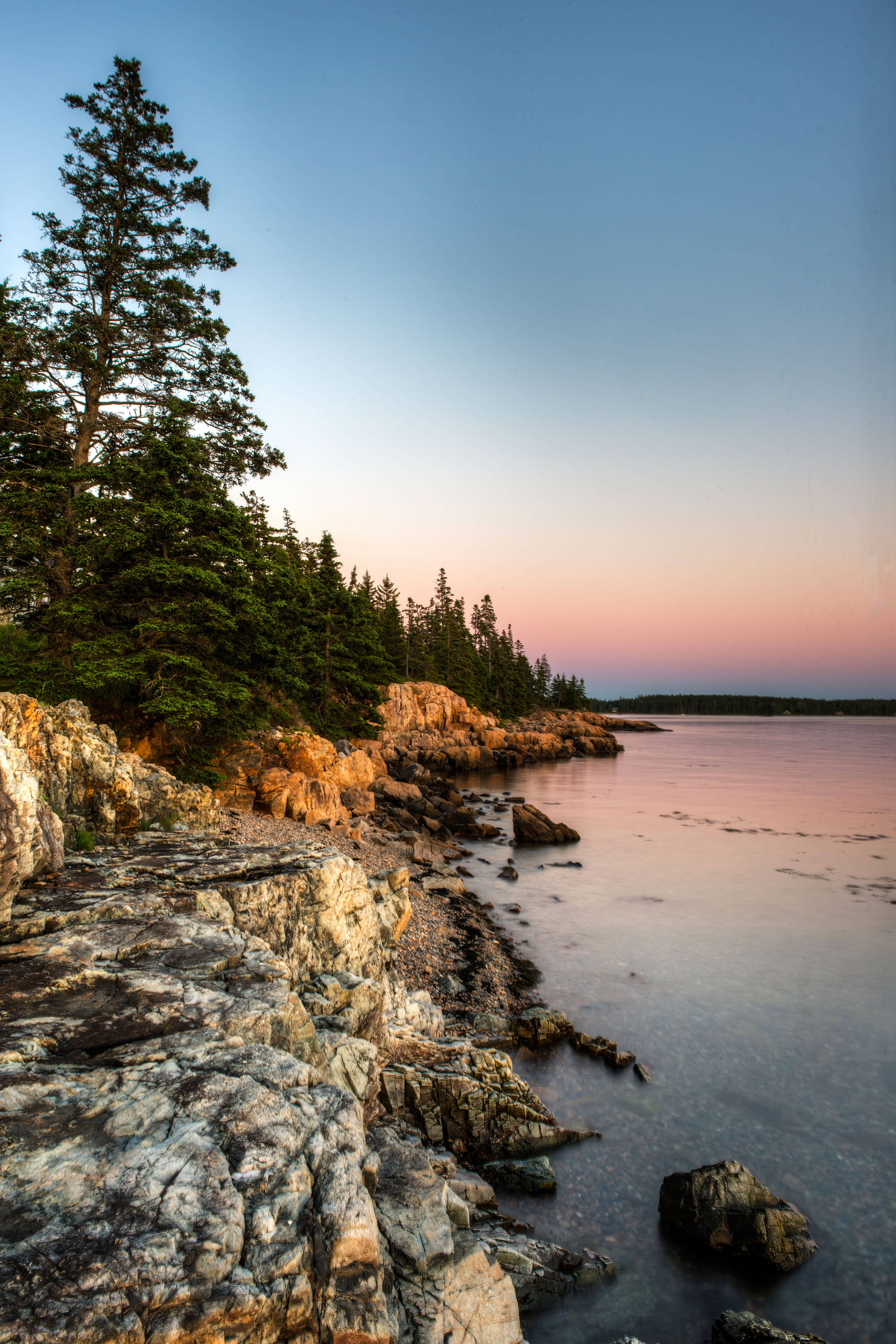
I was in Maine for 16 days in June, spending two days in Portland before driving the scenic route along the coast to Tremont on Mount Desert Island (MDI). In Tremont, I rented a quiet cottage (Seaside Cottages) on the Atlantic Ocean for two weeks, which served as my home base as I explored the MDI, Acadia National Park on MDI, and other nearby locations such as Deer Isle, Schoodic Peninsula and the Cranberry Isles. Below is an example of a sunset from the shoreline behind the cottage.

As you can see from the above images, Maine is incredibly picturesque with stunning landscape, seascape and mountain views. A friend, who is also a photographer, recently reminded me of a quote I had heard before that is so true and applicable to Maine, “if you want to take great photographs, stand in front of great locations.”

Maine is a photographer’s paradise with 3,478 miles of coastline, which is more than California (3,427 miles). The rugged coastline, thousands of islands, numerous harbors with quaint fishing villages, mountains, dense hardwood and pine forests, lush marshes and wetlands, and unusual wildlife (for someone from Virginia) provide endless photography opportunities. While in Maine, I explored, hiked, boated to islands, witnessed gorgeous sunrises and sunsets, and shot many photographs.  Included in this blog article are but a few of those images. I uploaded many more images to my website. This link http://stabone.com/p1023193572  takes you to the gallery I created solely for my Maine landscapes and seascapes. When you visit that gallery, I highly recommend using the slideshow capability by clicking on the Slideshow button in the upper right corner of the gallery.

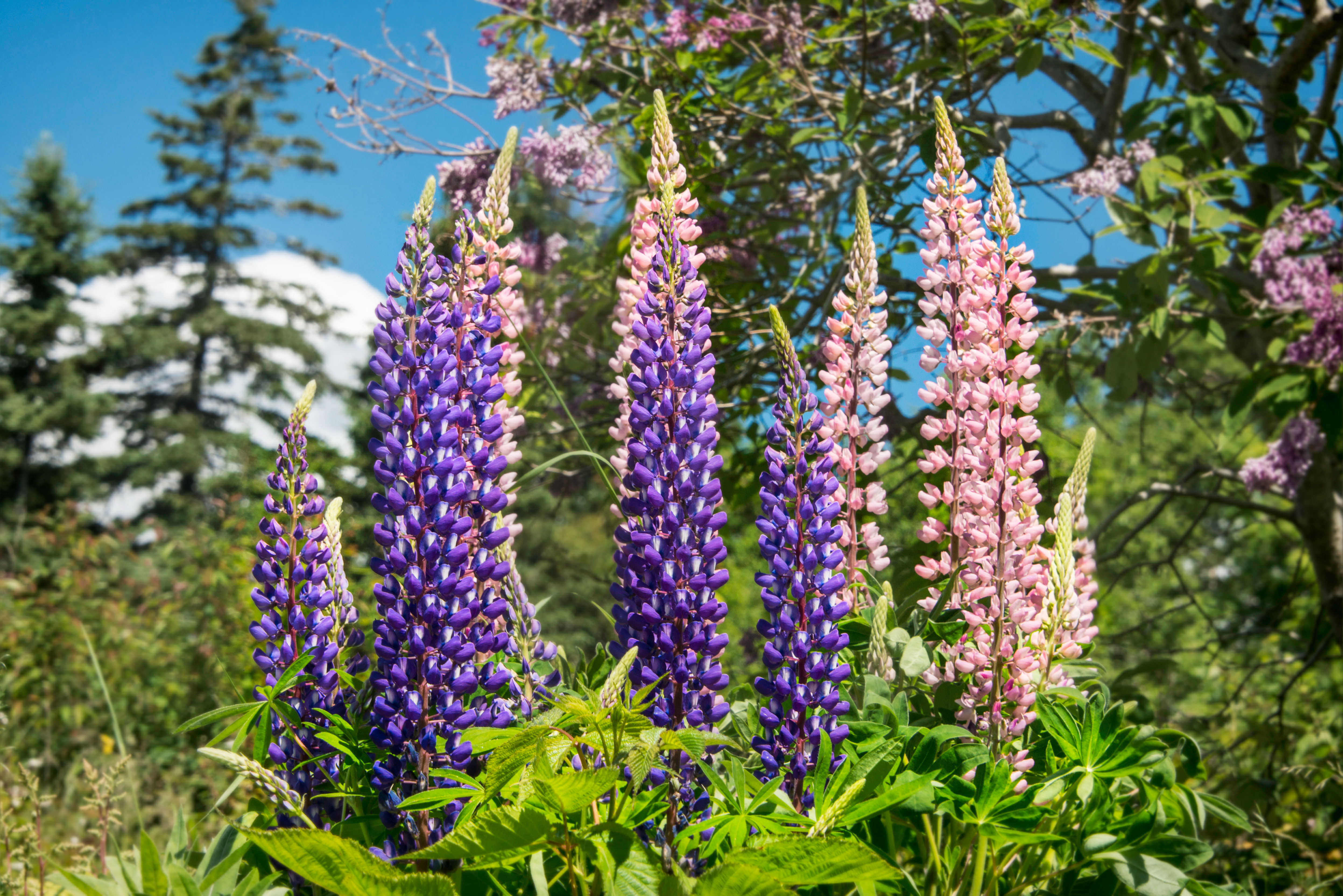
Since returning to Virginia, I have been concentrating on the landscape images I took in Maine, but I also processed some of the images of Maine’s wildlife (e.g., seals, loons, puffins, razorbills, mergansers) and wildflowers (e.g., Lupines, Oxeye Daisies, Pink Ladyslippers). They will be the subjects of other blog articles. Lupines and other spring wildflowers were still in bloom in late June. Below is an image of some Lupines, which were beautiful, all over, and should be (in my opinion) the Maine State flower, instead of the pinecone, which is not a flower.

Lupines grow in large patches in unused fields, near water and along side roads all across Maine. They are bi-annuals, and the seeds from this year’s plants sprout in the late summer making sturdy plants by fall. Those seedlings bloom the following June. Lupines flower in shades of purple, blue, pink and occasionally white.

I will not bore you with all of the details of where I went and what I did while in Maine, but instead, below are some of the highlights.

  • Explored and photographed much of Acadia National Park by hiking, boating, ferrying, and driving, and did it before the park is overwhelmed by other visitors that arrive in July and August. It is one the top ten most visited national parks.
  • Drove to and explored nearby Deer Isle and the lobstering village of Stonington, which dates back to the 1700s and produces more lobster than any other location in the country.
  • Drove to and explored Schoodic Peninsula where an unspoiled part of Acadia National Park is located. Both Schoodic Peninsula and Deer Isle are the home to many artists and potters. Both locations are very sparsely populated and scattered with very small towns.
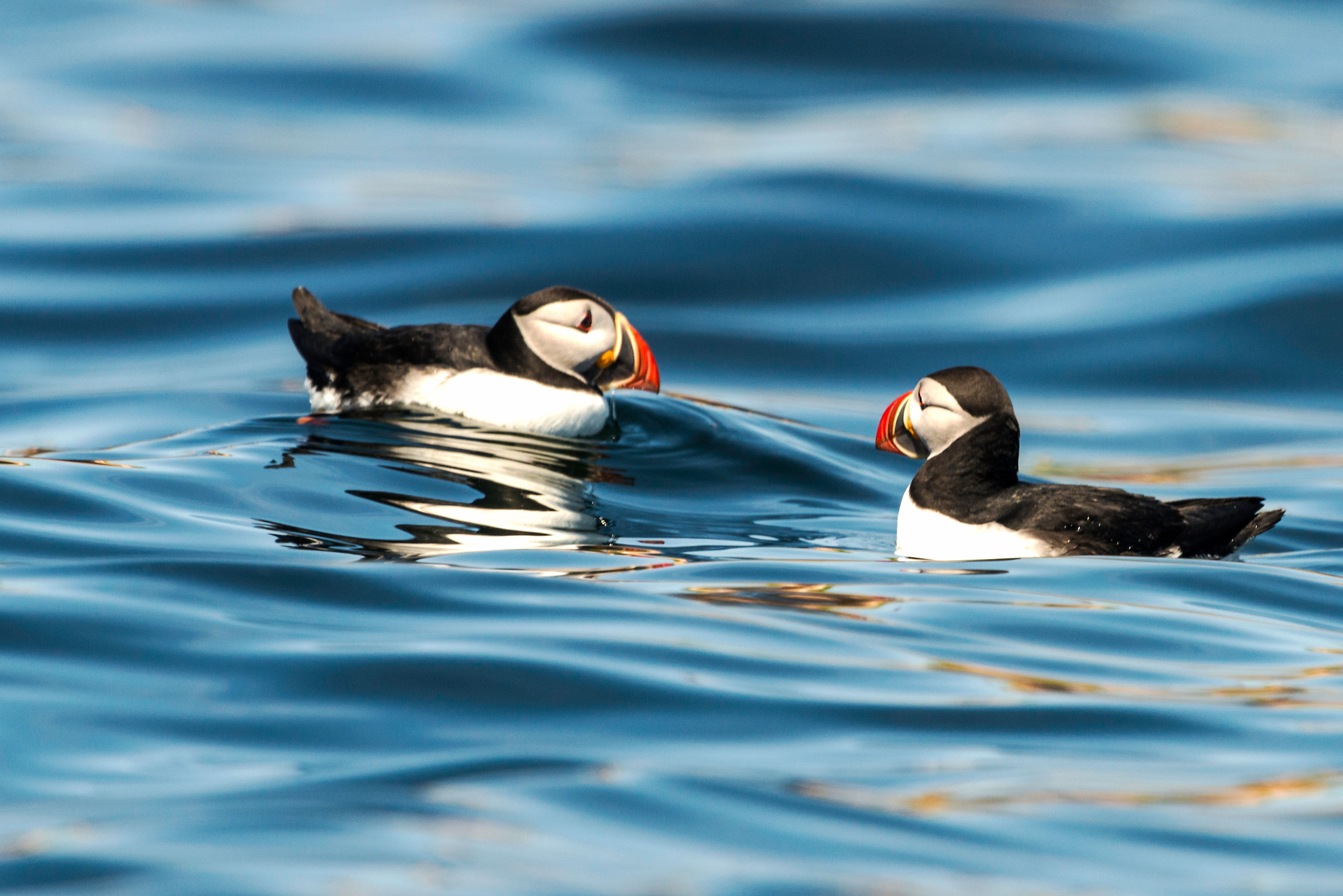
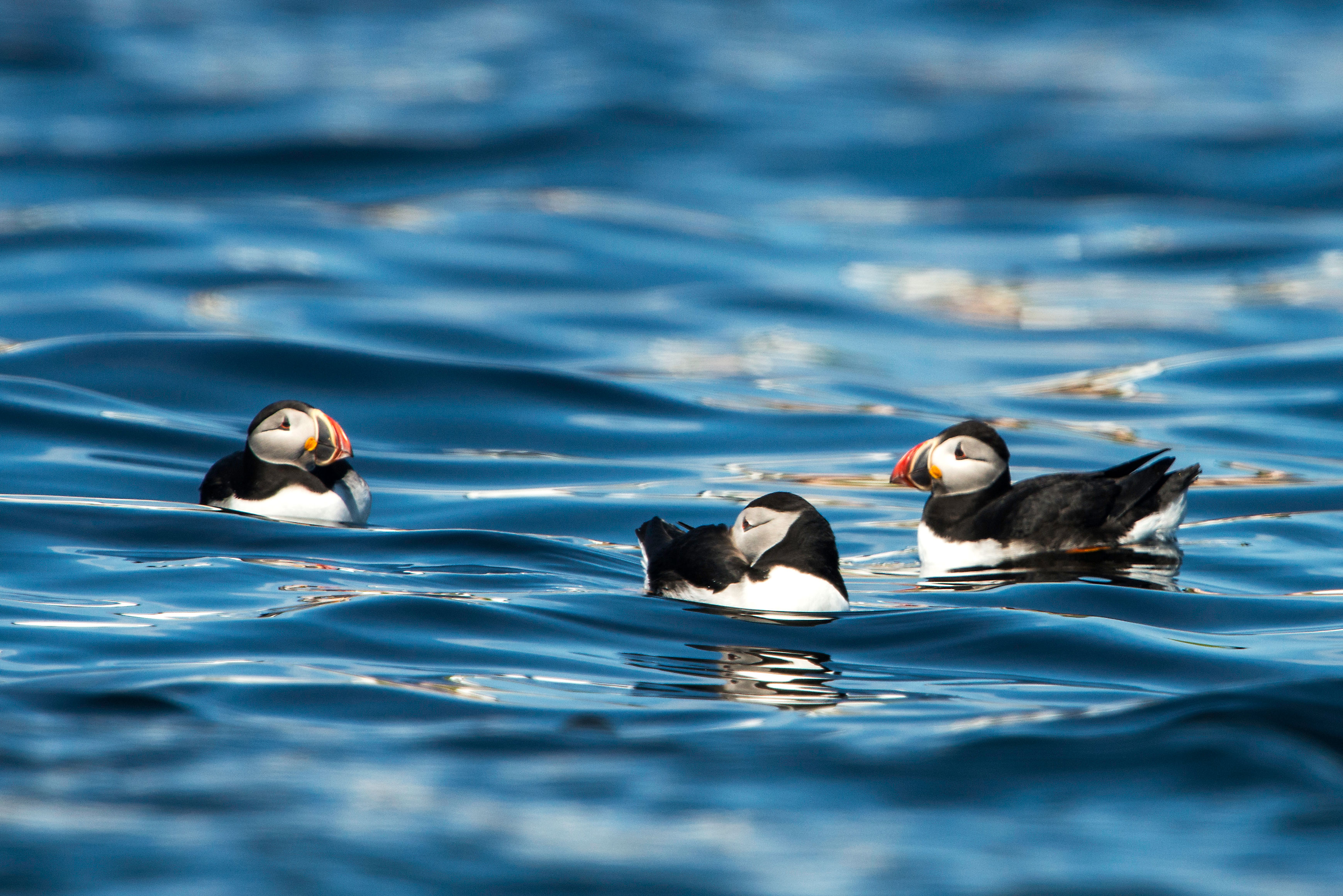
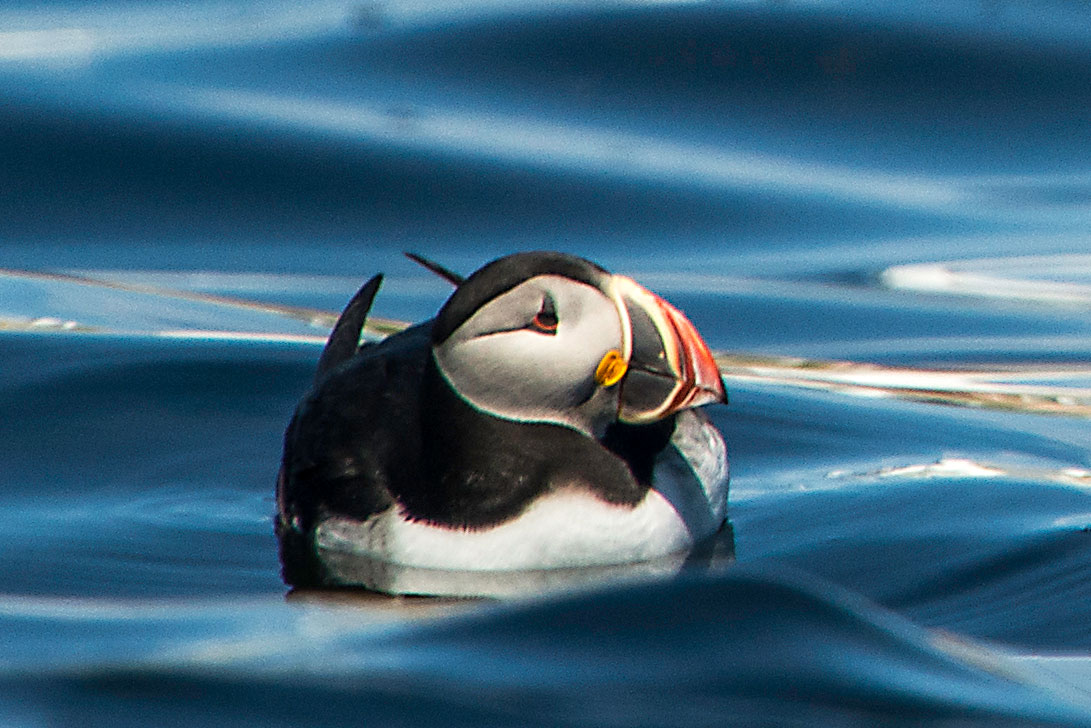
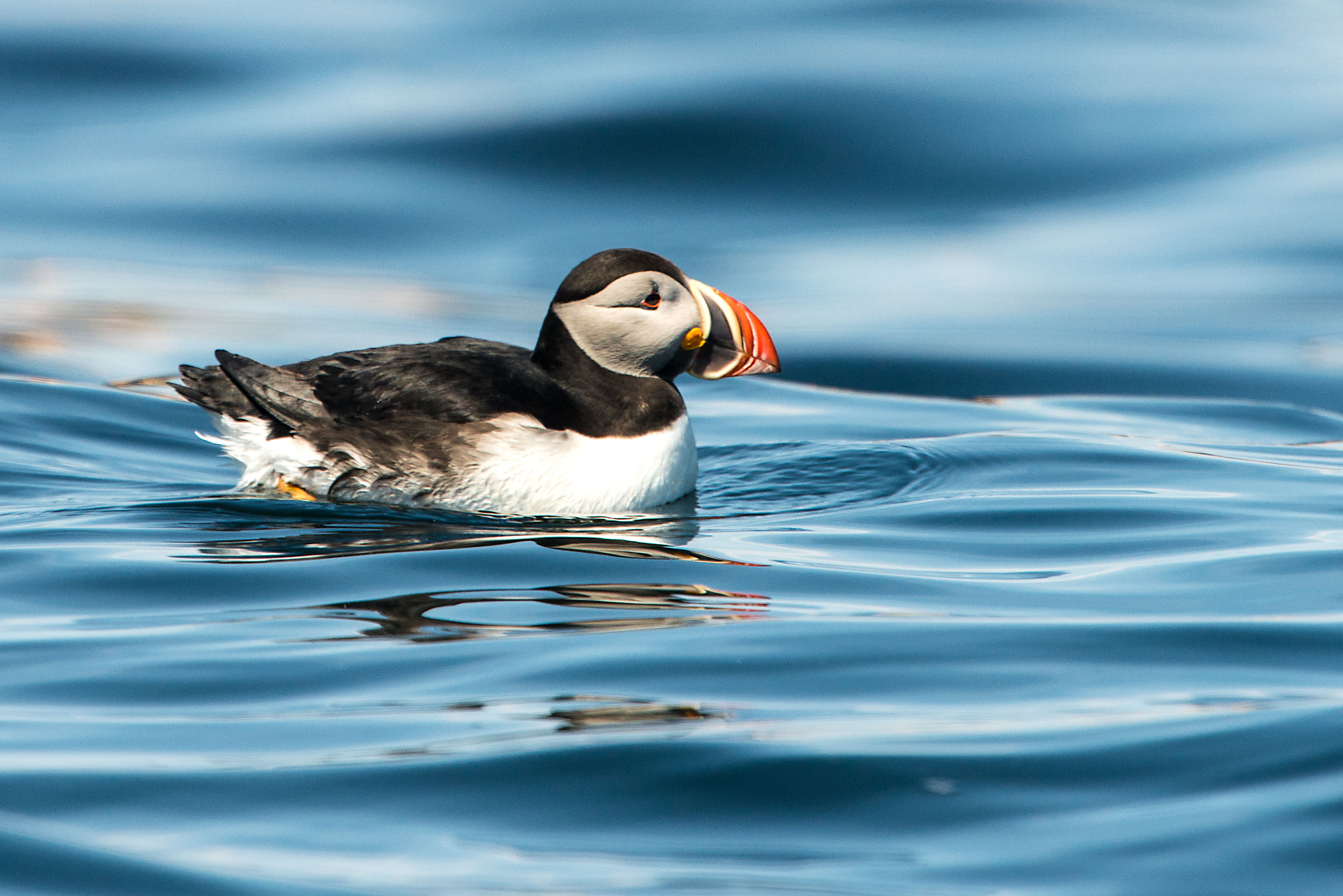
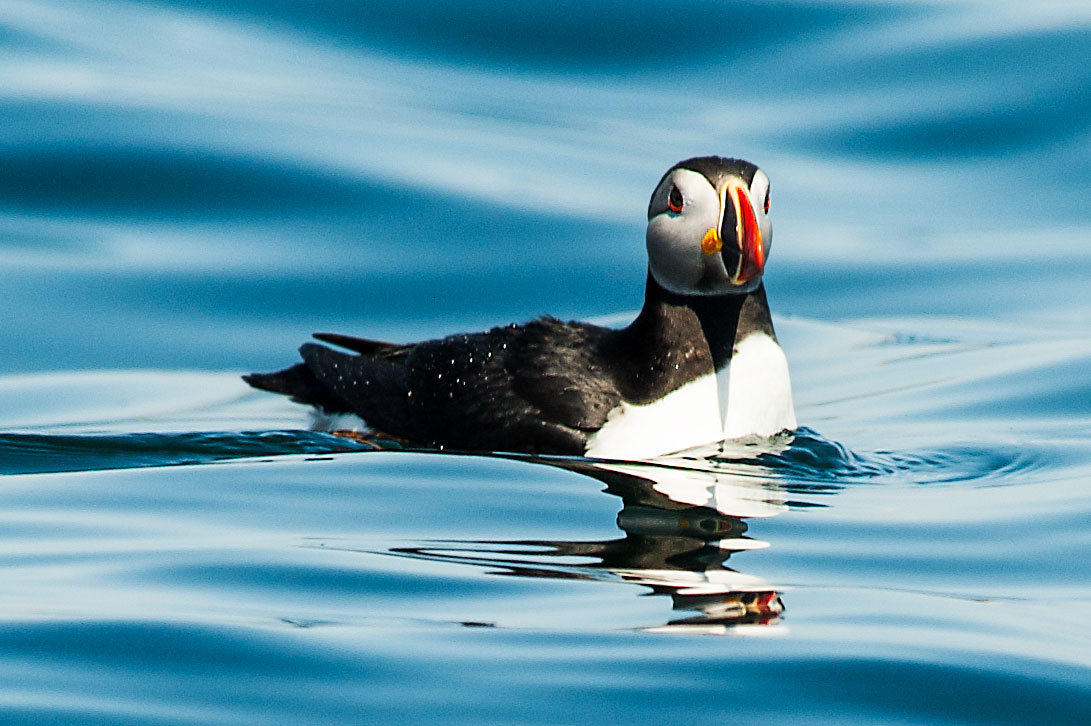
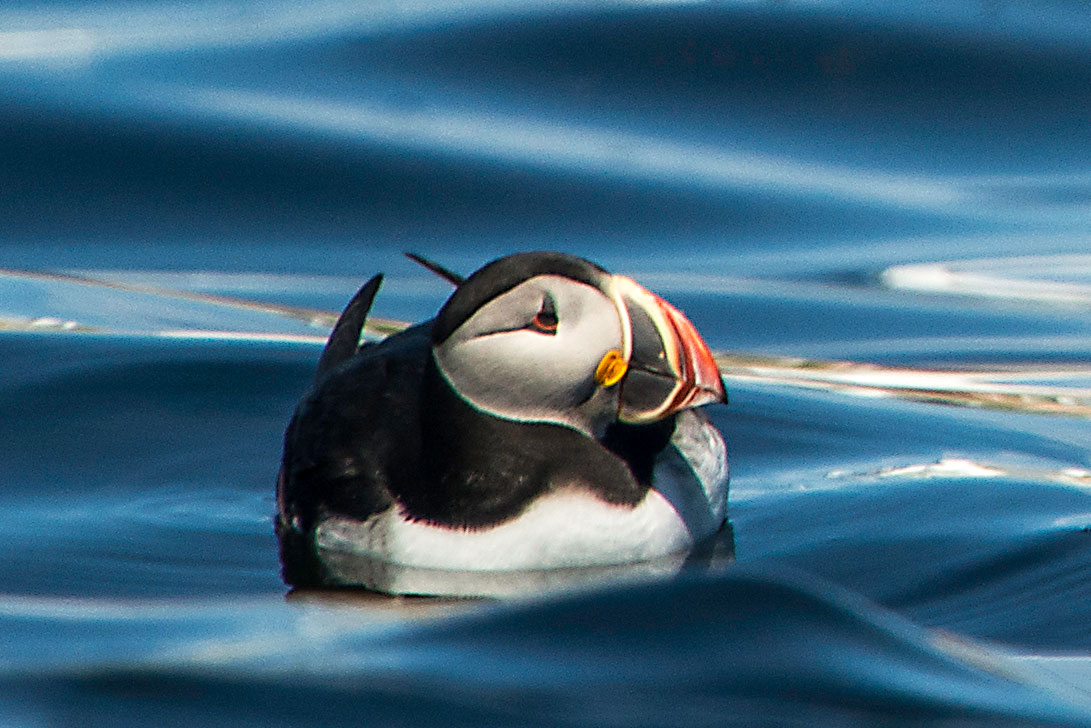
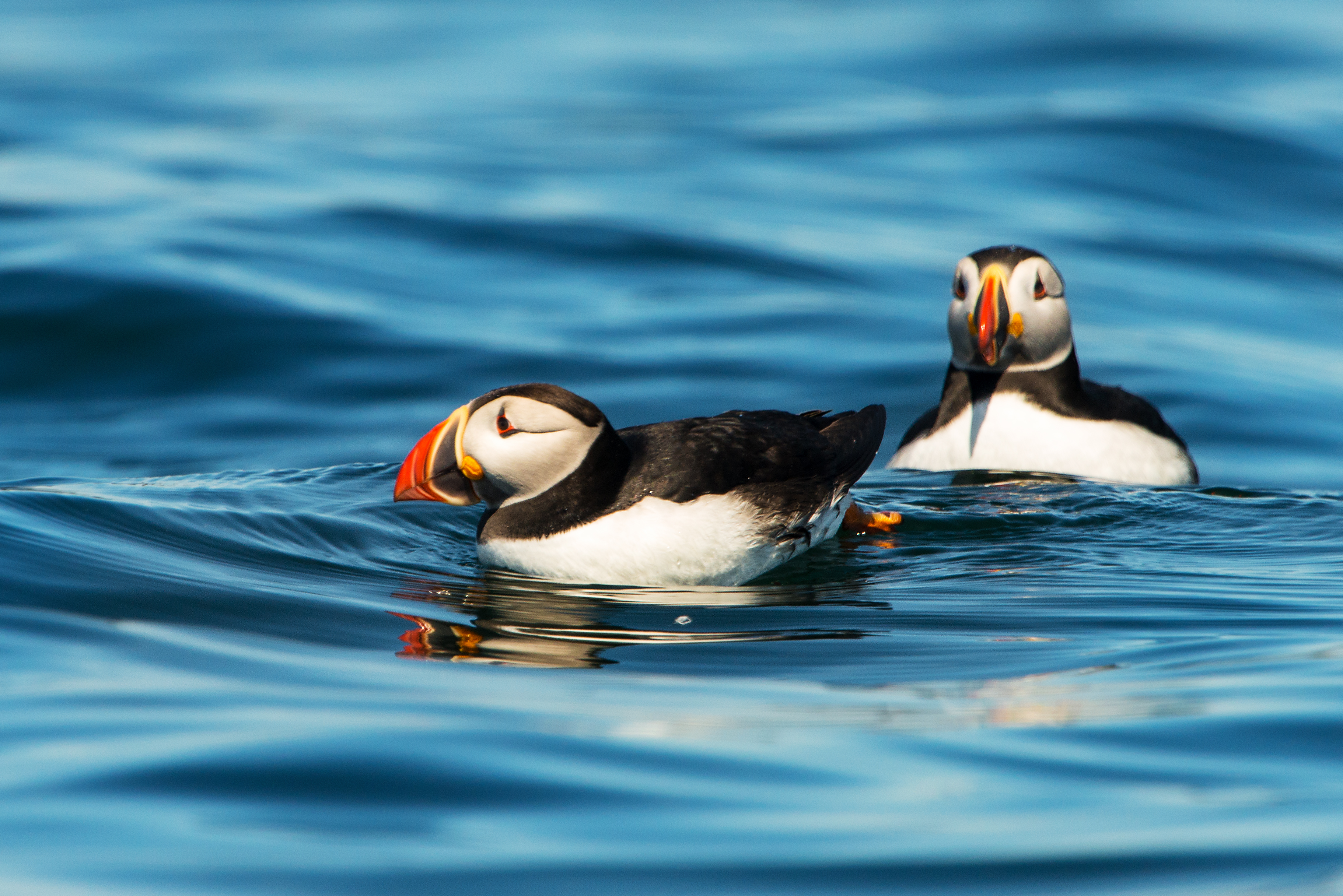
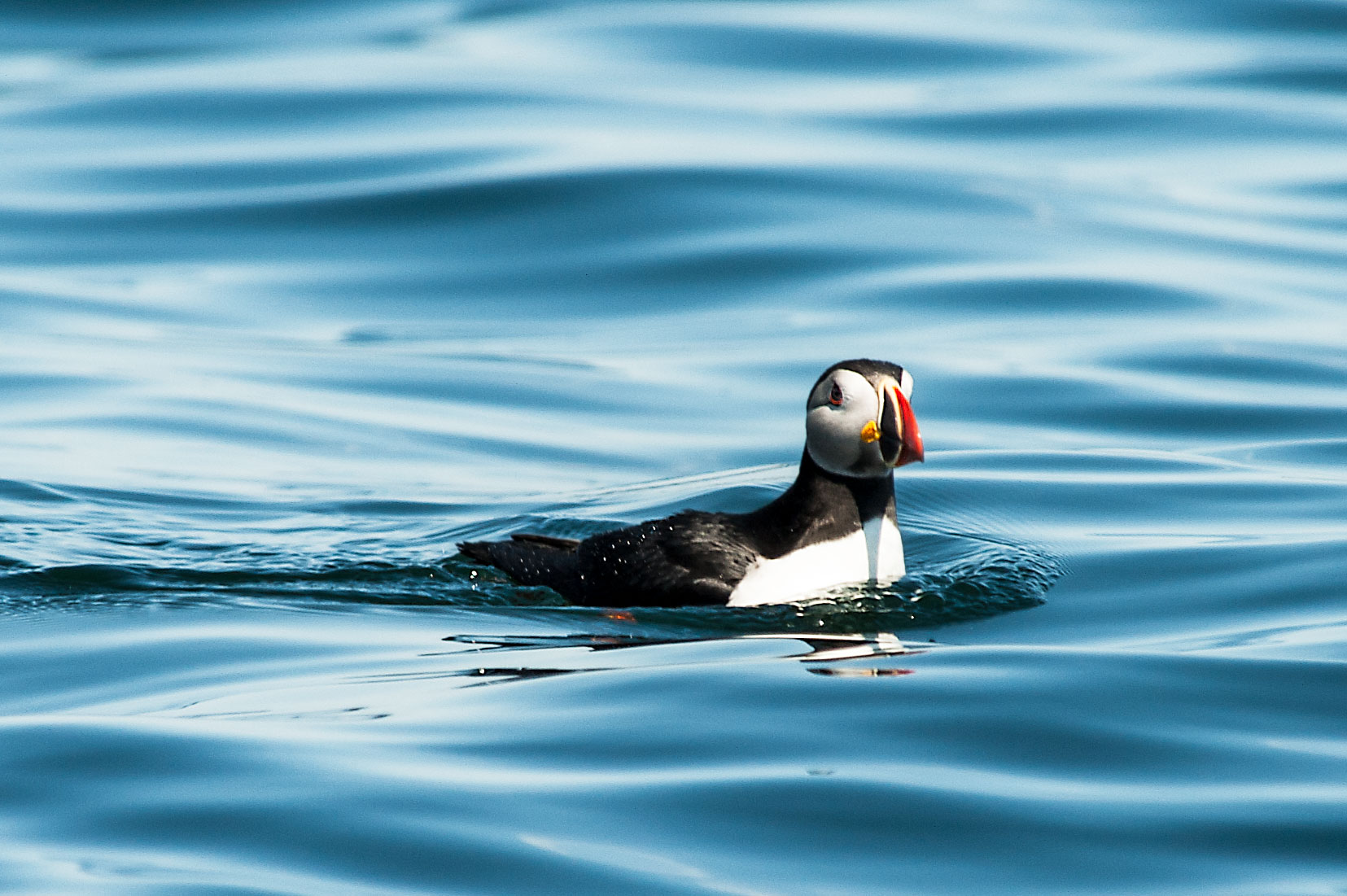
  • Chartered a boat from Milbridge to Petit Manan, a small island over 10 miles offshore that serves as the breeding home of over 140 pairs of Puffins, other seabirds and a lighthouse built in 1855. Below is one of the Puffin images, a pelagic seabird.
  • Photographed several sunrises from Cadillac Mountain in Acadia National Park, none of which were ideal due to fog or rain, but still beautiful. One of the challenges to photographing sunrises on MDI is that the sun rises at 4:30 AM, which meant getting up at 3:30 AM.
  • Photographed, as millions before me, some of Maine’s many lighthouses and/or “head lights,” as they are called in Maine. Although I generally focus my photography on nature, I just had to do it, because they are located in very picturesque locations and make great photography subjects. The same goes for some of Maine’s fishing villages and harbors.
  • Early one morning, photographing a couple of MDI locations, that I probably would not have found, with Steve Bart, a professional photographer with a gallery in Bar Harbor. Steve’s website: http://www.katahdinphotogallery.com/
  • Enjoying cool, perfect weather with evenings in the 50s and days in the 60s and 70s, while back in Virginia the temperatures soared above 100.
  • Eating about more than one man’s share of lobster at many lobster pounds and restaurants. The lobster and other seafood were excellent, thanks to the many restaurant recommendations from the friendly Maine locals.

The list could go on and on, but the above is what immediately comes to mind. I am planning to return in January or February with a couple of other photographers to photograph some of the same sites, but in the winter. As you will see in the images in my Maine Landscape gallery: http://stabone.com/p1023193572, the greens of the trees and other vegetation is bright and fresh with new growth, but that will not be the case in the winter, when hopefully everything will be covered in a light snow. How’s that for wishful thinking?

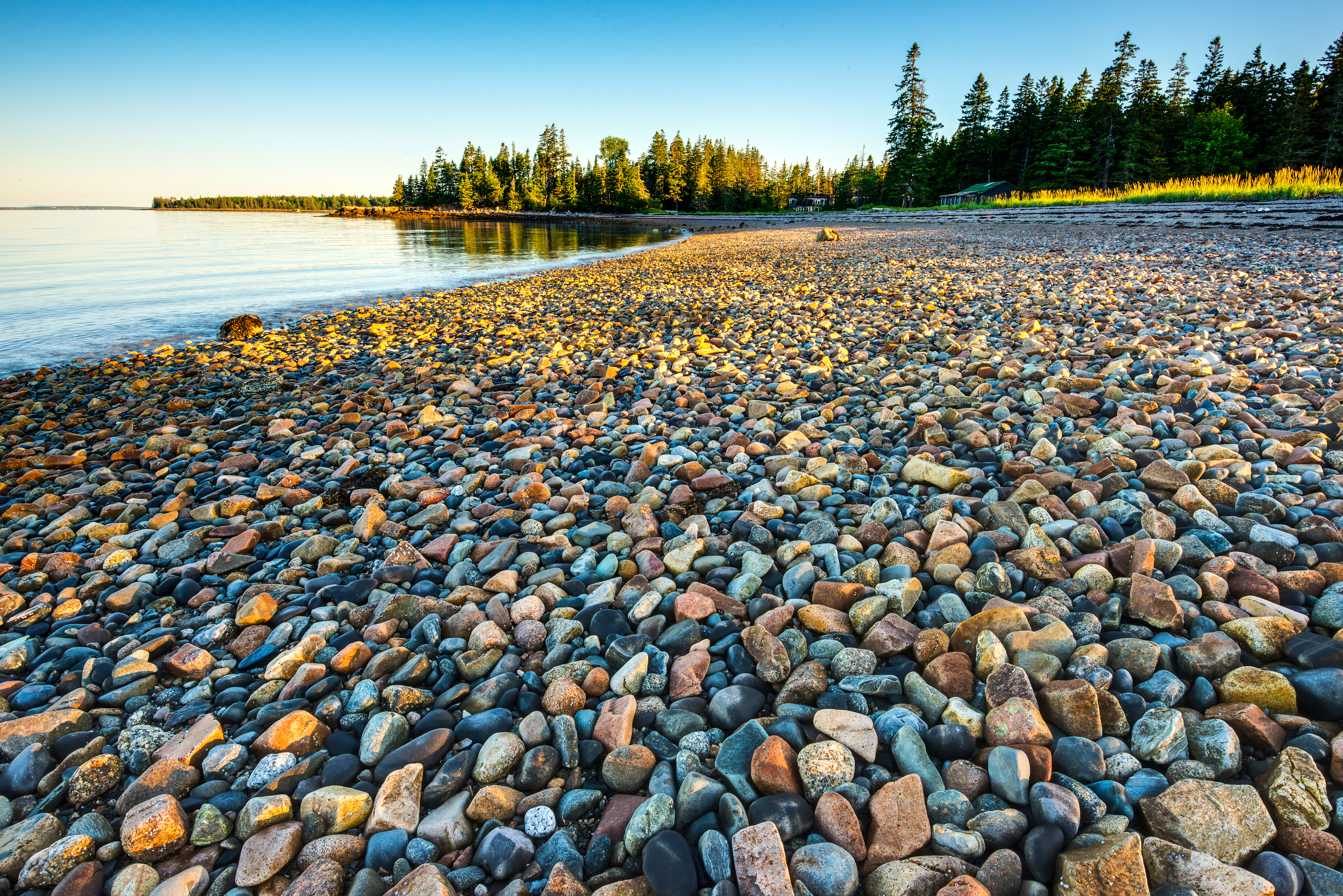
The below final image was taken at sunrise on a rock covered beach at Mitchell Marsh Preserve at low tide, which was just a short walk from the cottage. The tides fluctuated 10 feet on MDI, making for some interesting shoreline images

Now sit back, go to my Maine Landscape gallery (http://stabone.com/p1023193572), use the Slideshow, and enjoy a little bit of Maine.

Posted in Italy, Merrimac Farm Wildlife management Area, Paynes Prairie Preserve State Park, Spring Photographs | Tagged , , , , , , , , | 9 Comments

First Images from Maine — Bass Harbor Head Lighthouse, Puffins, and Common Loons

Before beginning this article, I want to share my excitement for reaching a blog milestone. As of today, I have had over 25,000 views on my blog in just a little over a year with more than 100 views daily in recent months. My blog has provided a means for sharing my love for nature and photography with many people around the country and the world. Hopefully, it inspires you to appreciate even more the natural beauty that surrounds us, but is often not seen due to our very busy lives.


I am in Maine, having arrived on Thursday last week, and am absolutely loving it. Maine is a nature lover’s and photographer’s dream. I arrived in Portland last Thursday after a ten hour, uneventful drive. After two days in Portland, I drove along Maine’s coast to Mount Desert Island, where Acadia National Park is located. I am staying on the quiet side of the island in a cottage on the Atlantic.

No more than ten minutes from my cottage is the Bass Harbor Head Lighthouse (above image) that I photographed during last evening’s sunset. The lighthouse was built in 1858 and stands 58 feet above the mean high waterline. The tide fluctuates 10 feet here, making for some very interesting sights during low tide. It was a bit treacherous getting the image of the lighthouse, having to climb over and around a lot of small and large rocks, like those in the photo.

One of my photography goals for this trip was to photograph puffins, and on Monday, I chartered a boat to take me to Petit Manan Island, a small island that is part of the Maine Coastal Islands National Wildlife Refuge. Petit Manan has a small puffin and seabird colony during the spring breeding season. It was a perfect day to be on the Atlantic and for photographing the puffins. However, it was very challenging to photograph the very active puffins that were constantly moving and bobbing up and down in the ocean waters, while the boat too was moving up and down. We also could not get too close to the puffins or the island, because they are protected, and the island is a refuge. Nevertheless, I managed to get some good images, one of which is above.

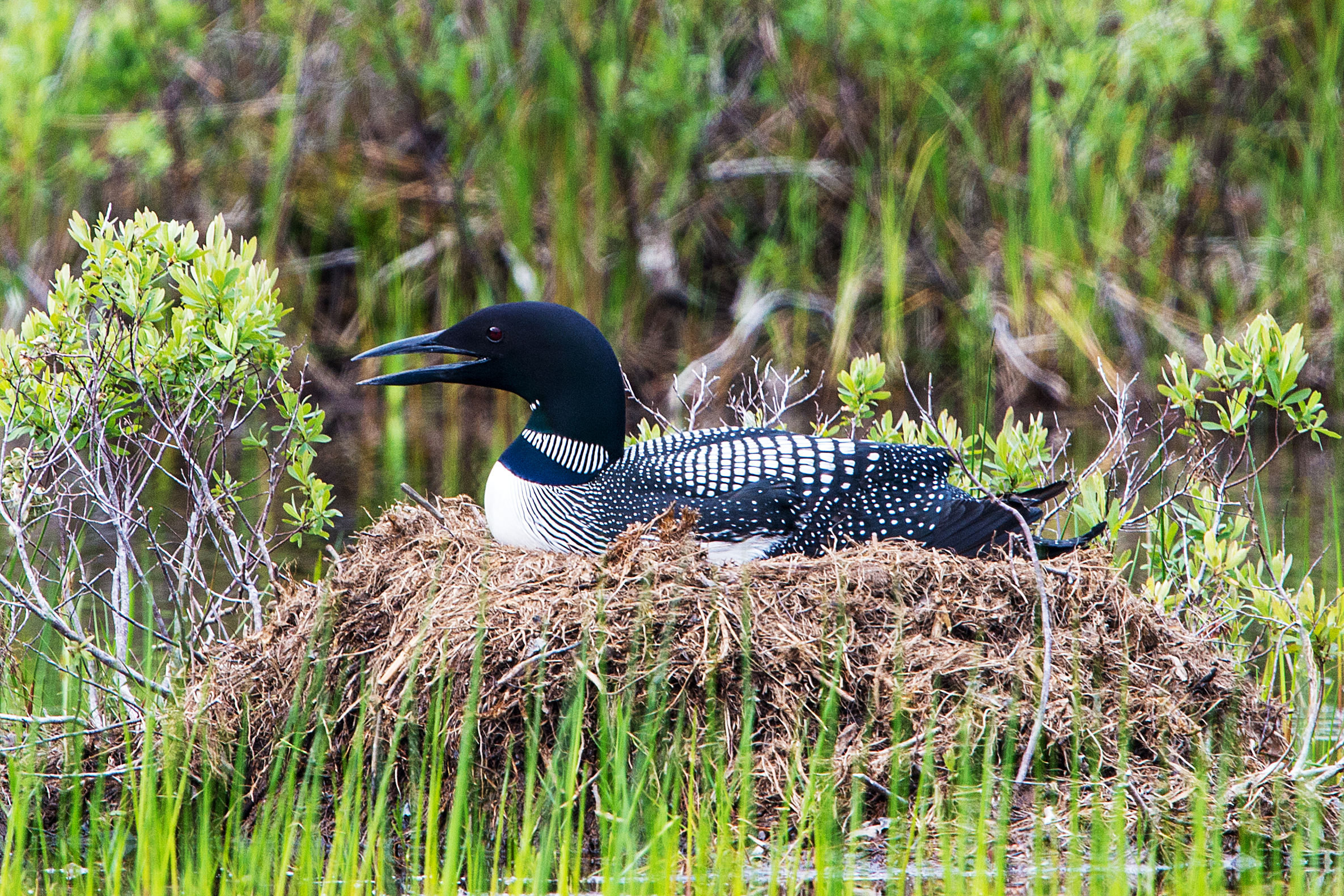
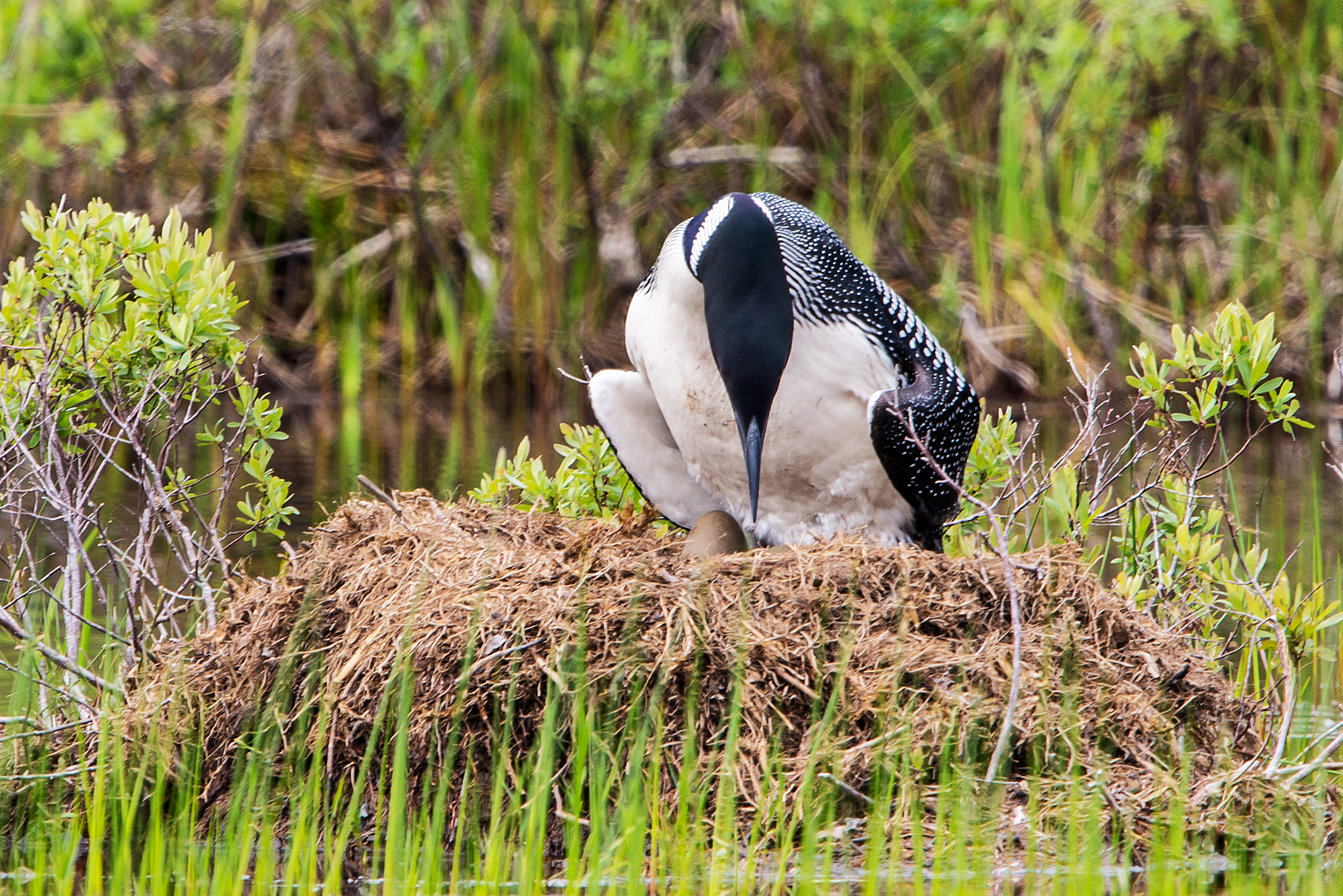
The remainder of this article is devoted to a bird that I also had hoped to see and photograph while in Maine, the Common Loon. While photographing three young Peregrine Falcons in a nest at Echo Lake in the park, I was told about a loon that was sitting on a nest at Upper Hadlock Pond, also in the park. So yesterday afternoon, I hiked along the pond for what felt like many miles, since I was backpacking my 600mm lens and other camera gear if I was fortunate enough to locate the nesting loon, and I did find the loon sitting on her nest. Below are several images of the Common Loon on her nest. In the final image, when the loon stood up briefly to rearrange her eggs, one of the eggs can bee seen in the image.

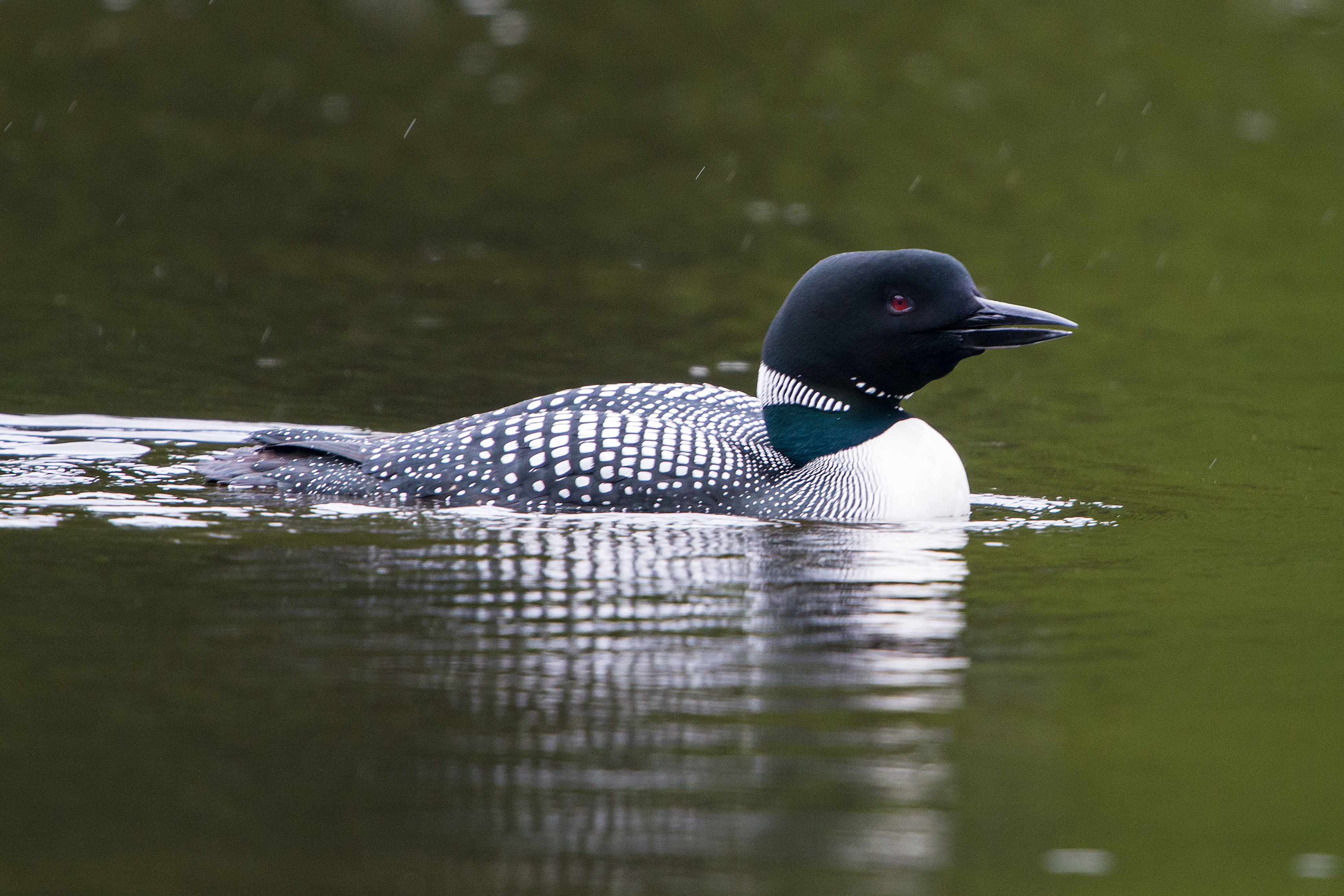
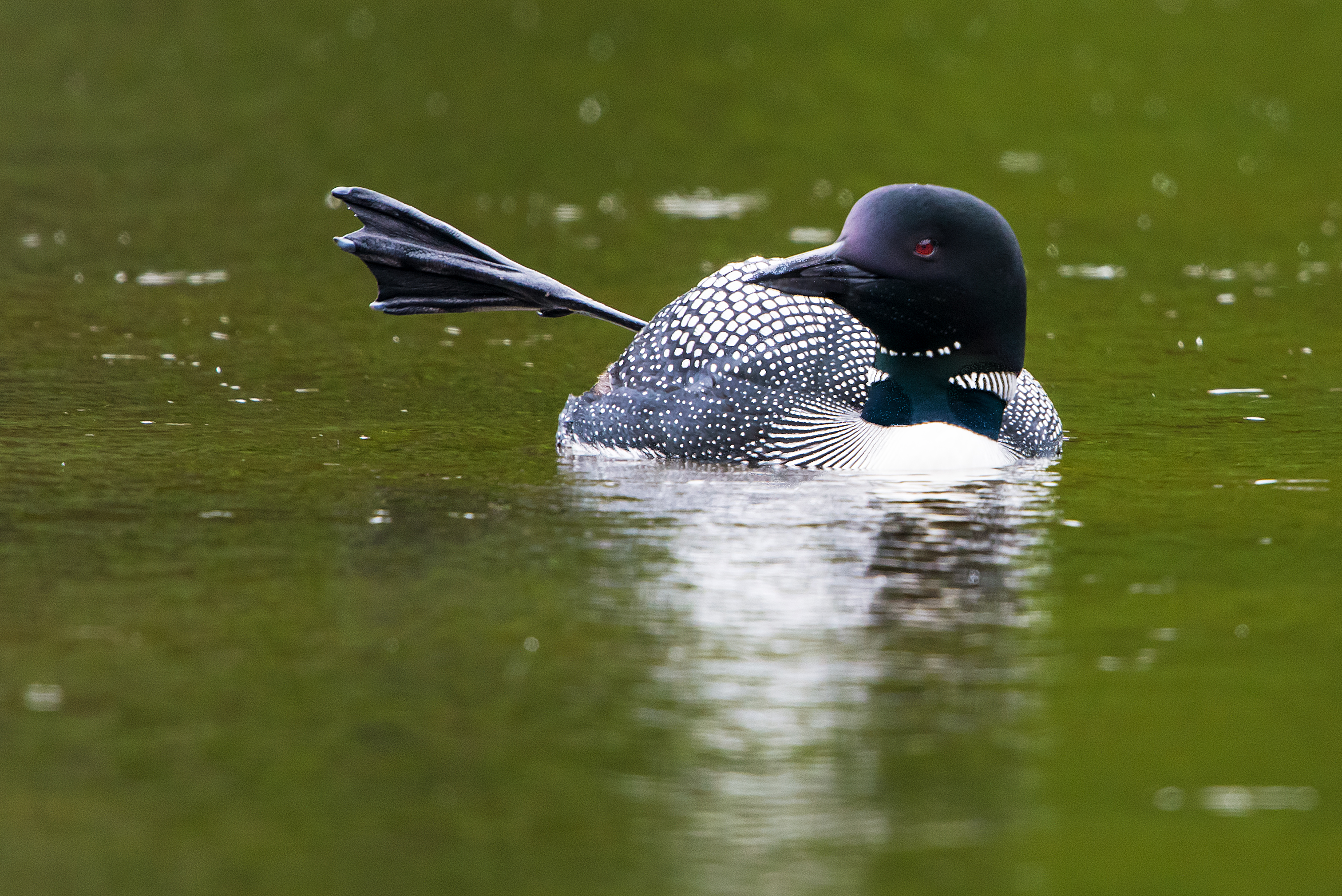
This morning, I went back to Echo Lake to photograph the young Peregrine Falcons, which I will do until they fledge, or I leave the island. While there, a Common Loon landed on the lake, and below are two images of this loon. Common Loons swim underwater to catch fish, propelling themselves with their large webbed feet (as seen in the second image). They swallow most of their prey underwater. Loons have sharp, rearward-pointing projections on the roof of their mouth and tongue that help keep a firm hold on slippery fish.

I also will be checking the nesting loon over the next week to see if I can photograph its hatchlings. Loons are known to swim around with their young on their back, and if I am lucky enough to be able to photograph them, I will include an image in a future article.

In between continuing to explore Mount Desert Island and Acadia National Park, I will be reviewing and processing more of my images from here and post them in future blog articles. I have taken many landscape and seascape photographs and will devote my next article to them.

Posted in Bird Photographs, Nature, Wildlife | Tagged , , , | 17 Comments

Nesting House Wrens

On Wednesday morning last week, I went in search of the pair of Barred Owls that I have photographed on several occasions. I was hoping to find them on their nest and possibly with young owlets. The owls are in a heavily wooded area alongside a creek that is only accessible by kayak.

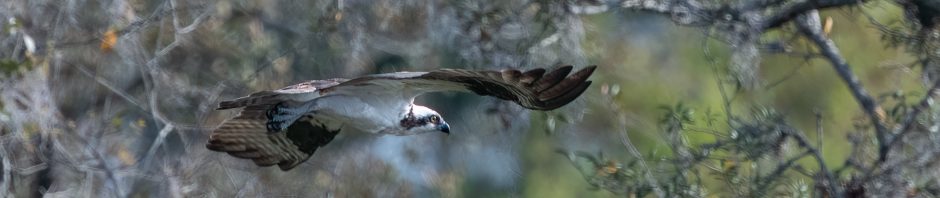
When I got far up the creek, I found the owl’s nest, but it appeared abandoned, and the owls were nowhere in sight. I searched the area and waited, but they appeared to be gone. (My recent Barred Owl images can be see at:  http://stabone.com/p765775325/hec585a5#hec585a5). While up the creek, I saw a Great Blue Heron that got nervous when it saw me, and it immediately took flight, but not before I was able to get few photographs of it (opening image above).

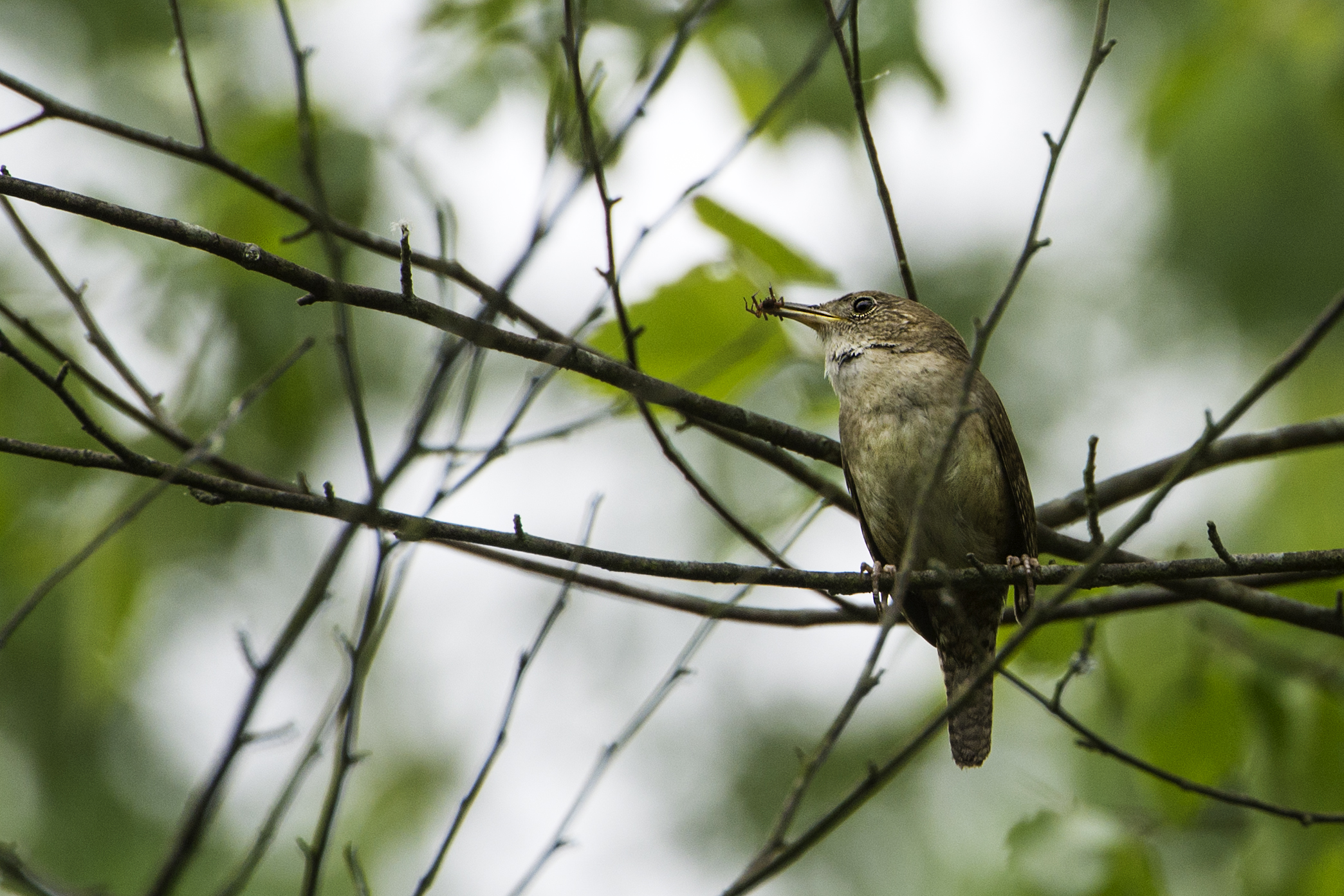
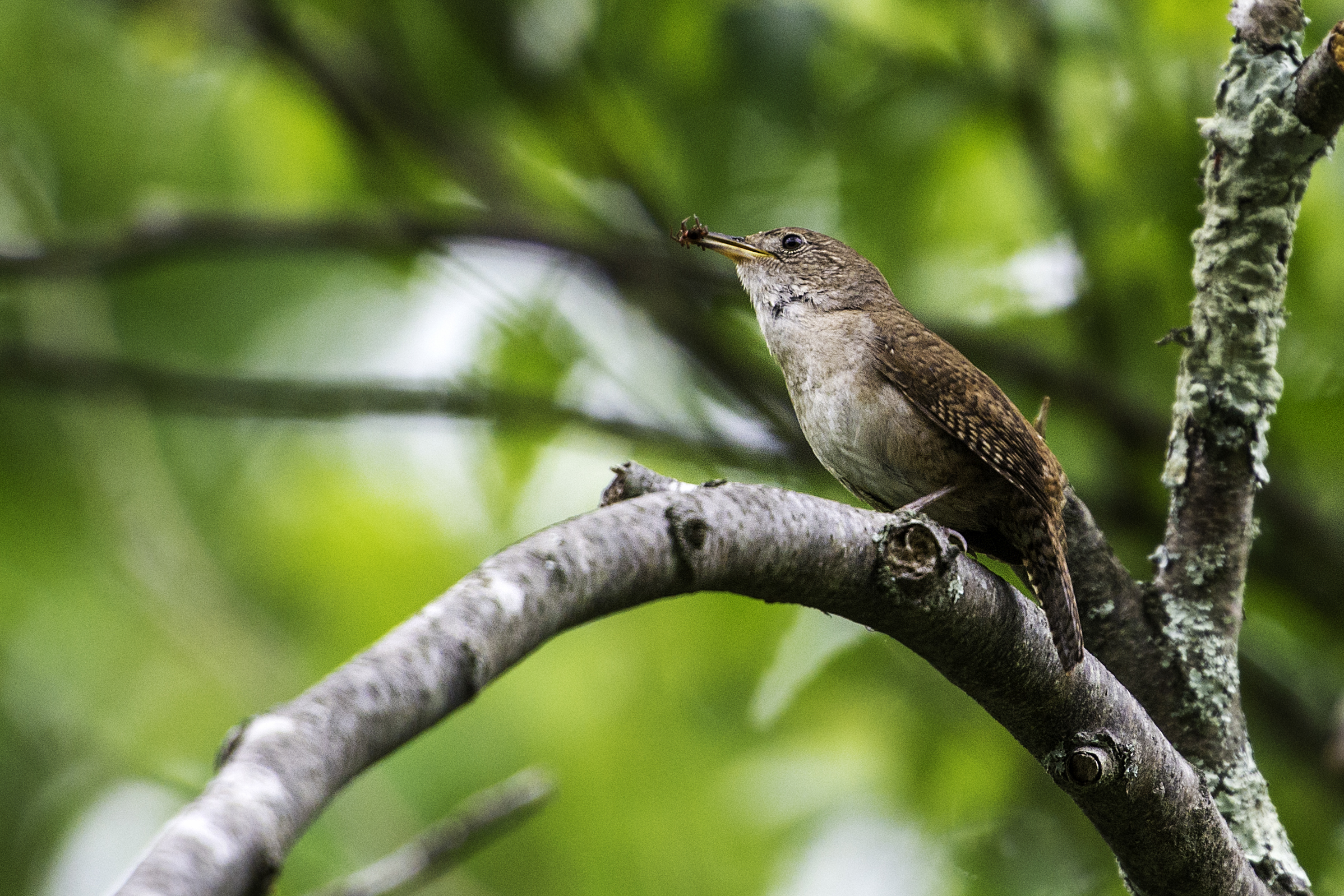
Disappointed about the missing owls, I began to paddle out of the creek. As I approached the end of the creek, I noticed a couple of House Wrens flying back and forth to a tree. As I got closer, I noticed a large hole in the side of the tree, and the wrens were taking turns entering the tree with insects and other food. It obviously was their nest, and apparently there were young wrens in it. I got over my disappointment about the owls quickly, as I photographed the wrens.

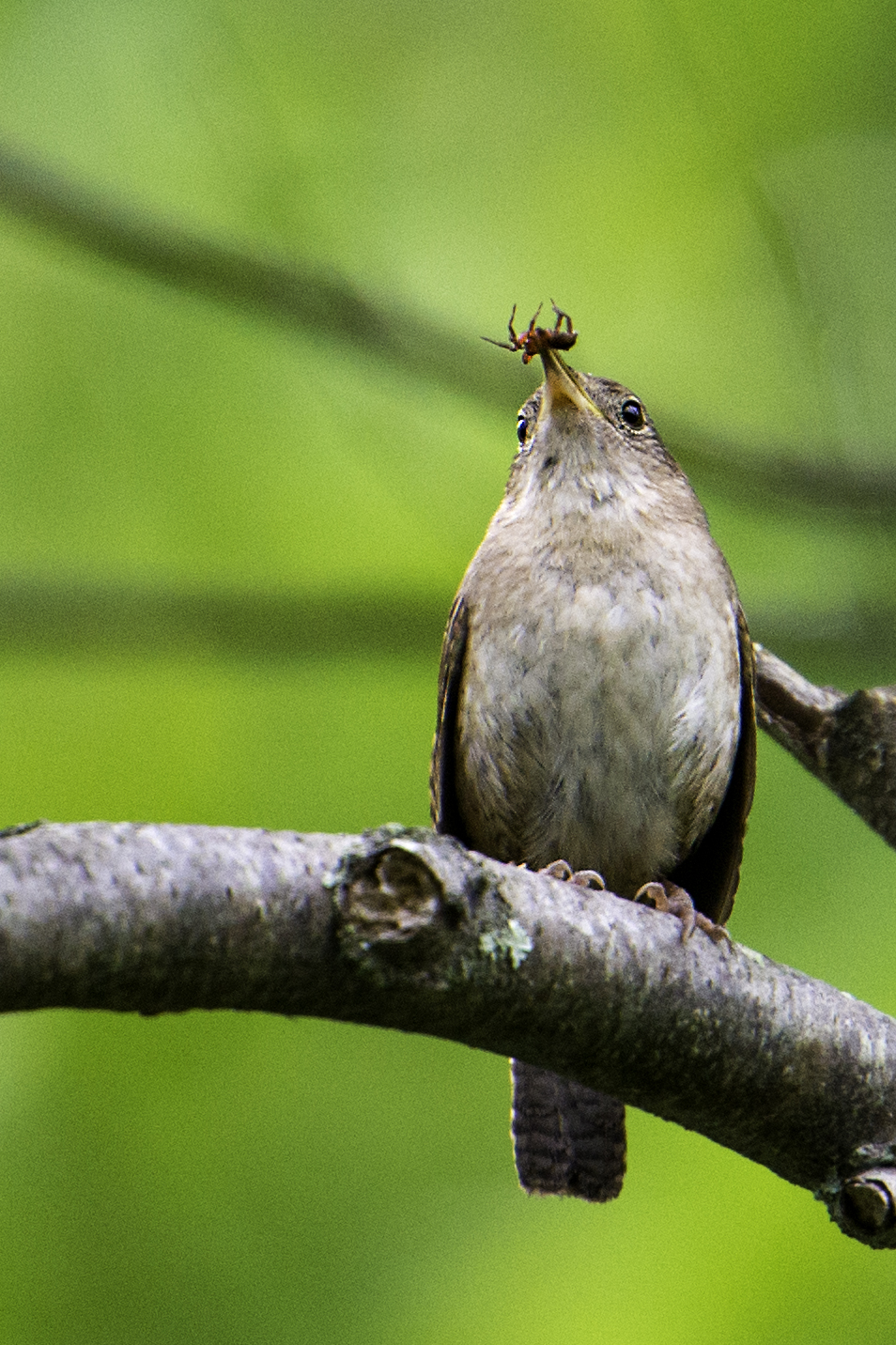
Above and below are the wrens with food for their young.

It was difficult to photograph the House Wrens, because there were frequent gusts of wind that blew the kayak around, and the nest was not well lit by the sun. I was constantly repositioning the kayak, or attempting to paddle with one hand while shooting with the other.

Although House Wrens are very common from Canada to southern United States, they were the first nesting pair that I have seen. During the summer and when nesting, House Wrens are very active and have a loud bubbling song. In fact, I was amazed how the wren with the spider in its beak (above) could still sing loudly without losing the spider. House Wrens are feisty, pugnacious birds considering their small size. They are known to occasionally destroy the eggs of other birds nesting in their territory by puncturing the eggshell. They also fill other birds’ nests within their territory with sticks to make them unusable.

Below are more images of the House Wrens.

So, although I was disappointed about not seeing the owls and thinking they had left the area, the House Wrens made my day.

Before leaving the the creek, I noticed several large (approximately 3 foot long) carp in the nearby, very shallow and muddy water. I have seen them before, and when they see me or feel my presence, they burst through the water to get far away. At times, it can be startling because it happens so unexpectedly. This time, I was able to capture their movement before they exploded away.

Last night, since the weather was cool, our windows were open, and for the first time in a long time, I heard the owls hooting across the lake. Apparently, they have not left the area. When I return in late June from Maine and Nova Scotia, where I will be photographing some of Maine’s and Canada’s breathtaking landscapes and wildlife, I will look for the Barred Owls again.

I am taking my laptop while away and expect to continue processing images from my recent Florida trip. I have started to review and process the images that I took of Pelican Island in Port Orange. It was an incredible sight. The entire island was covered with hundreds of Brown Pelicans and other birds sitting on nests with young birds in them. Below is one of those images.

My next blog article will be from Maine.

Posted in Lake Montclair, Nature, Wildlife | Tagged , | 13 Comments

Tree Swallow Fledgling at the Rappahannock River

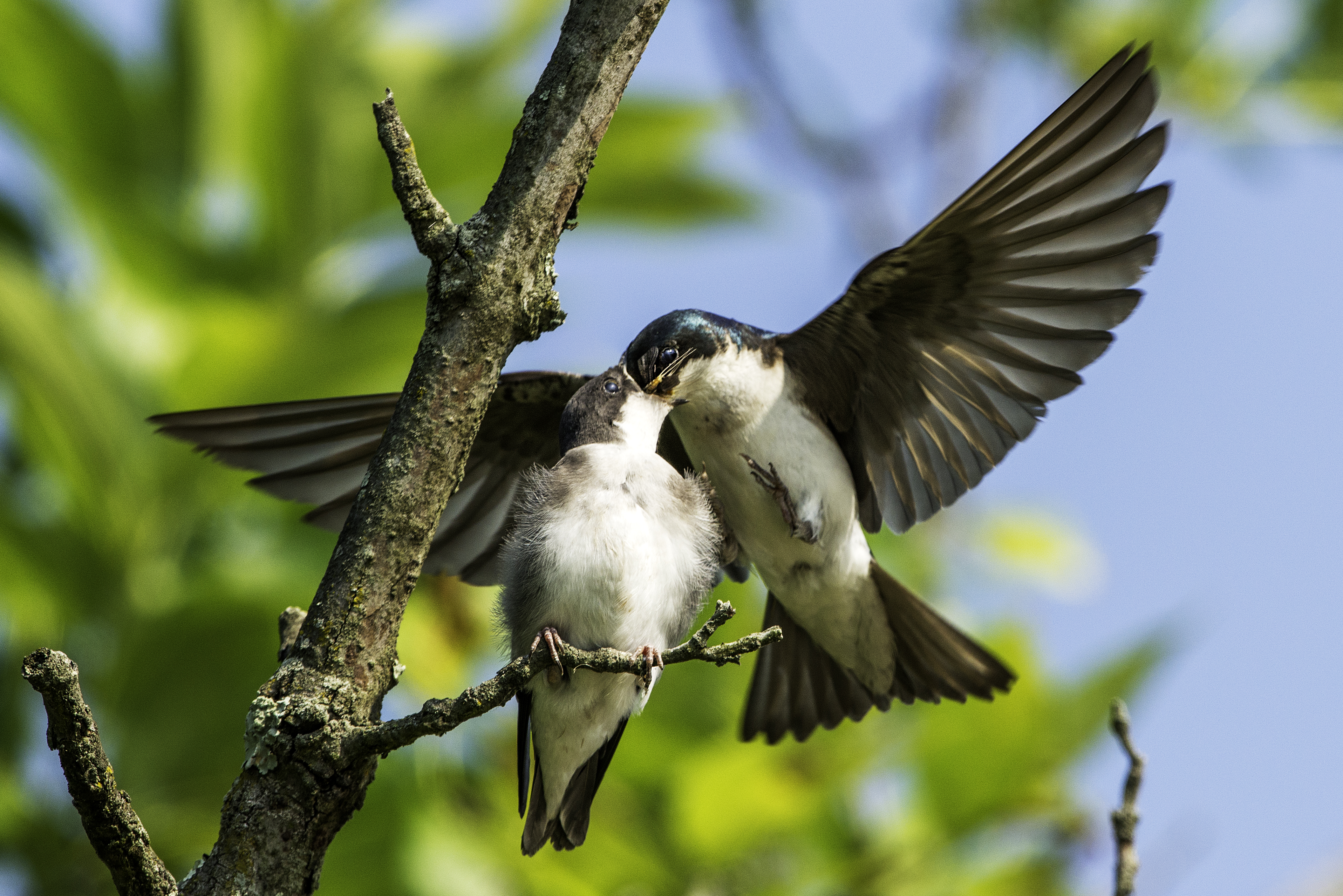
This Saturday morning, I went to the Rappahannock River in northern Virginia to photograph the sunrise and the large number of Great Blue Herons that frequent the river. Unfortunately, it was overcast from an early morning fog; therefore, the sunrise was poor and not photography worthy. The river was flowing rapidly from recent rain storms, and there were many Great Blue Herons working the shoreline, looking for fish. As I was photographing the herons from the top of a very large bolder alongside the river, a Tree Swallow fledgling flew into a nearby tree. As you can see from the opening image, the fledgling was adorable, and I refocused my attention from the herons to the swallow.

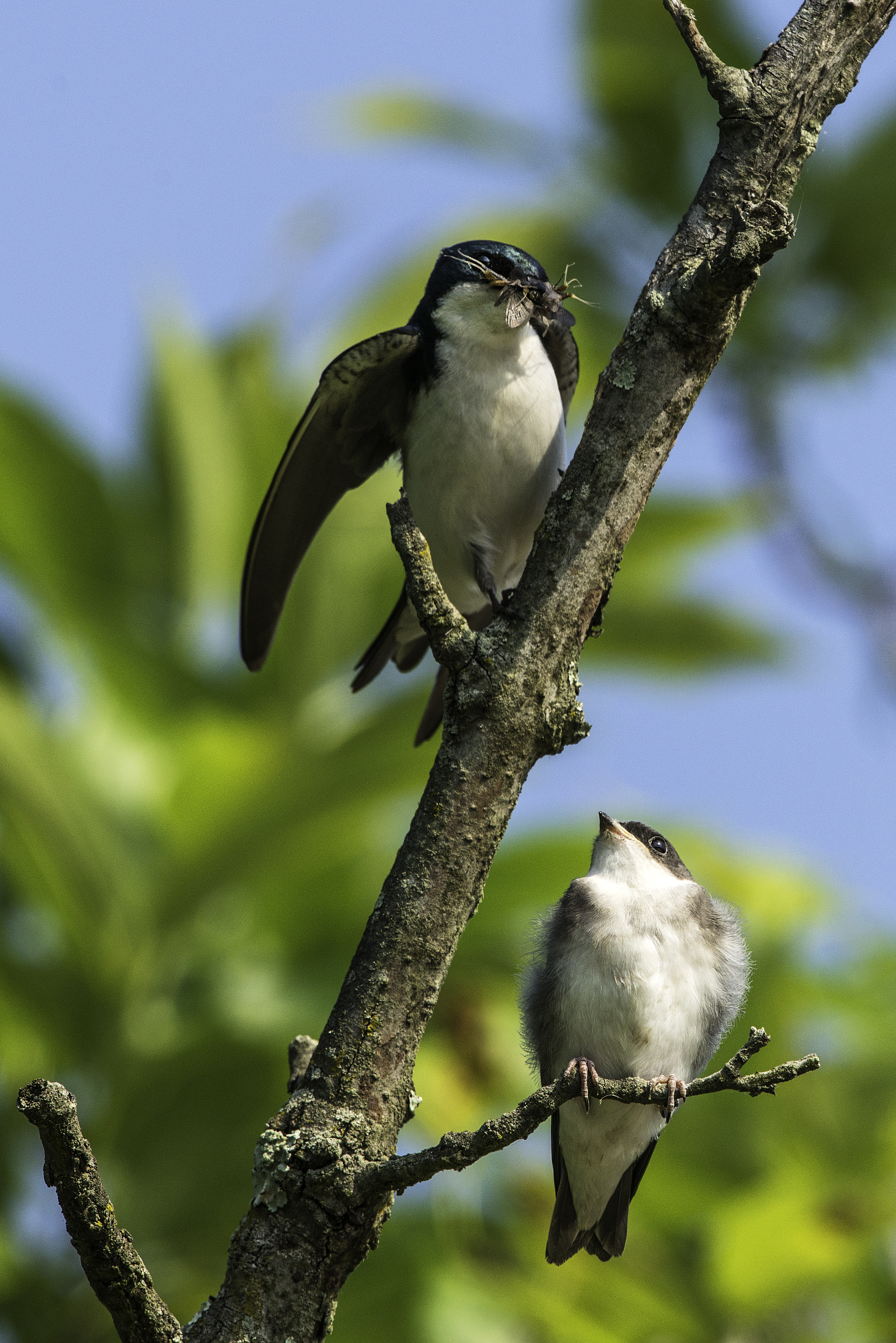
Tree Swallows are small, fast flying birds with iridescent greenish blue feathers and white underparts, sometimes with a faint brown band across their breast. Juvenile swallows, as in the above image, have sooty gray backs without any greenish blue feathers, and their underparts are a dull, brownish white. Generally, Tree Swallows live in open areas near fields and water, such as marshes and shorelines. They feed on insects and berries.

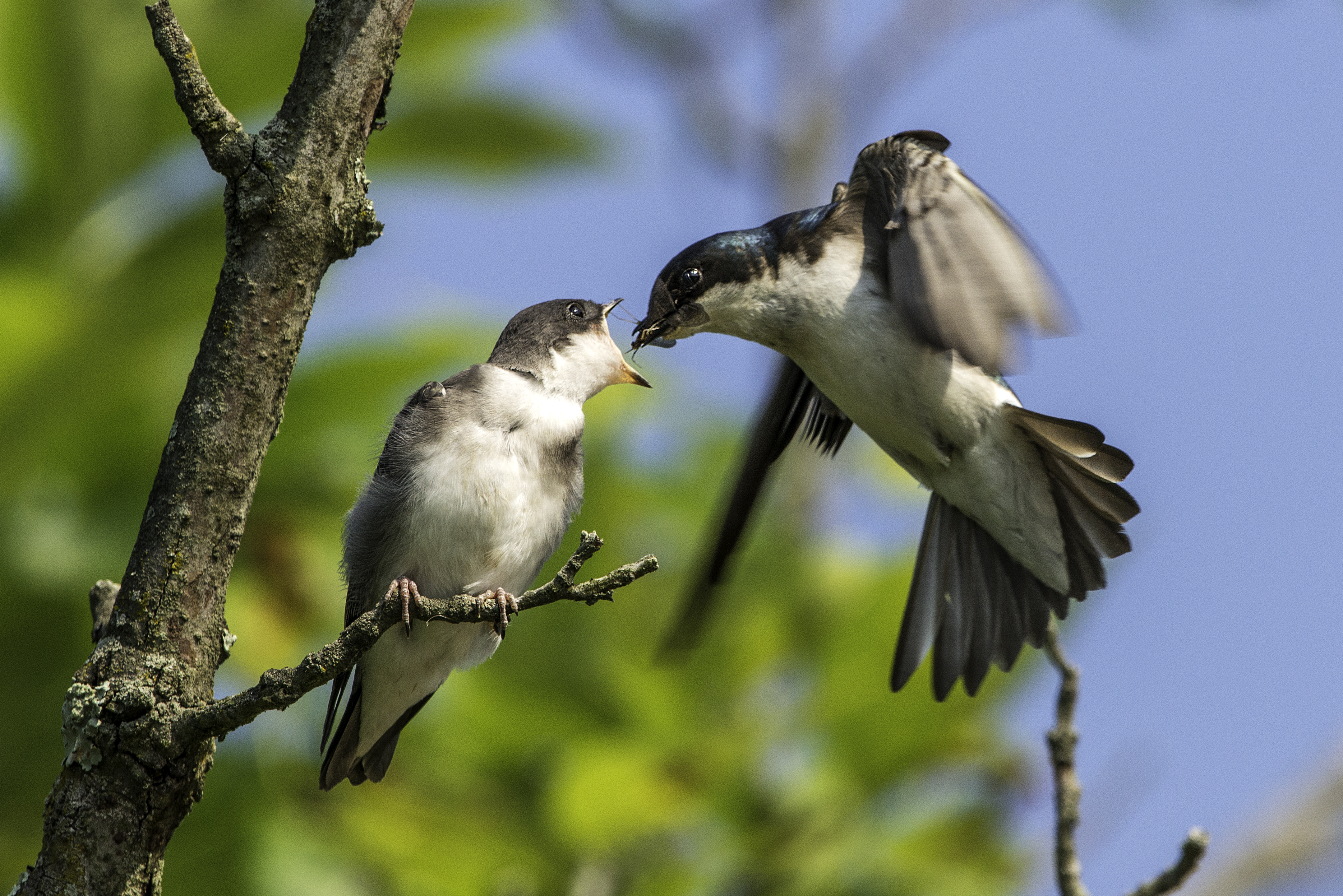
Shortly after the juvenile swallow perched on the nearby tree, I noticed a couple of adult Tree Swallows flying closely around the area. Then, the fledgling opened its beak wanting to be fed, and the adults took turns feeding the juvenile swallow. Below, one of the adults landed above the fledgling with an insect.

The following are several images of the juvenile swallow being fed insects. Click on the images to increase the size.

In addition to photographing the swallows, I videoed the fledgling being fed by one of the adults. Click on the below image to start the video. I recommend watching it in HD mode and full screen. The sound you hear on the video is the river rushing below where I was standing.

Finally, below is an image of the juvenile swallow just before finishing its insect breakfast.

As I mentioned at the beginning of this article, my trip to the Rappahannock River was to photograph Great Blue Herons, so I am including a couple of those images below. Although I was successful in photographing many herons, the highlight of the trip was definitely the Tree Swallow fledgling. One never knows what to expect when out in a natural, unspoiled environment full of wildlife and beautiful scenery.

Later this week, I am planning to begin posting several articles with some of the images I took while in Florida in May at Merritt Island National Wildlife Refuge and Paynes Prairie Preserve State Park.

Posted in Bird Photographs, Nature | Tagged , | 13 Comments

Black-necked Stilts Mating

Today, I spent a few hours at Merritt Island National Wildlife Refuge photographing a wide variety of birds to include Sandpipers, Plovers, Great Blue Herons, Great White Egrets, Red Herons, Tricolor Herons, Snowies, White Pelicans, as well as a few others to include Black-necked Stilts. I have yet to review and process any of these images, but did review and process a very special video that I am anxious to share.

While photographing a pair of Black-necked Stilts as they foraged in shallow water, they stopped and began a courtship ritual. Believing that I was about to witness them mating, I switched my Nikon D800 from shooting stills to video. My suspicion was correct. The male pranced around the female several times, while she maintained a rigid, forward looking stance until the mating had ended. Then, the two stilts walked away quickly and very closely together, appearing to be gazing into each others eyes.

Be sure to watch the video in the full screen mode.

I have a lot of image processing to do from other locations as well as Merritt Island, and will eventually upload them to my website and/or this blog, but I thought this video was worth posting by itself.

Posted in Bird Photographs, Nature, Wildlife | Tagged , , | 8 Comments