More Images from Florida

I am slowly making my way through the thousands of images I shot while spending 4 weeks in Florida in December and January. “Making my way” means reviewing them and culling out those that are not “keepers.” Then, after selecting the best, they must be processed.  If you are not a photographer and are interested in understanding what processing entails, the last couple paragraphs of this article explains it (without going into too much detail). If you already know or are not interested, skip the last paragraphs. Now, to the images in this article.

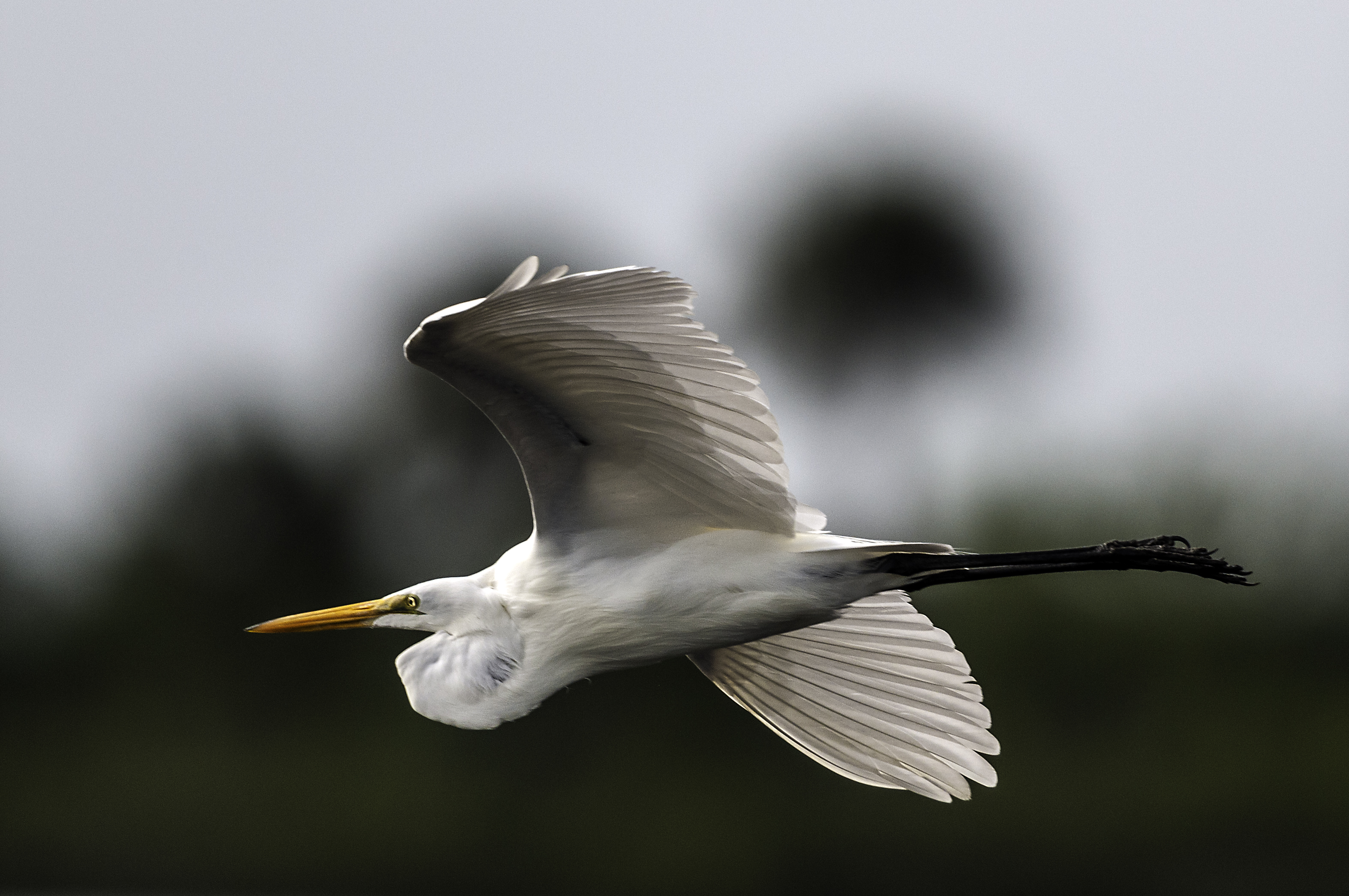
The above opening image is a Great Egret taken at Merritt Island National Wildlife Refuge. They are also known as Great White Egrets or Common Egrets. Males and females are identical in appearance. Egrets have a slow flight, with their necks retracted. This also is a characteristic of herons and bitterns, and distinguishes them from storks, cranes, ibises, and spoonbills, which extend their necks in flight. Great Egrets feed in shallow water, feeding mainly on fish, frogs, small mammals, and occasionally small reptiles and insects. They will often wait motionless for prey, or slowly stalk their victims.
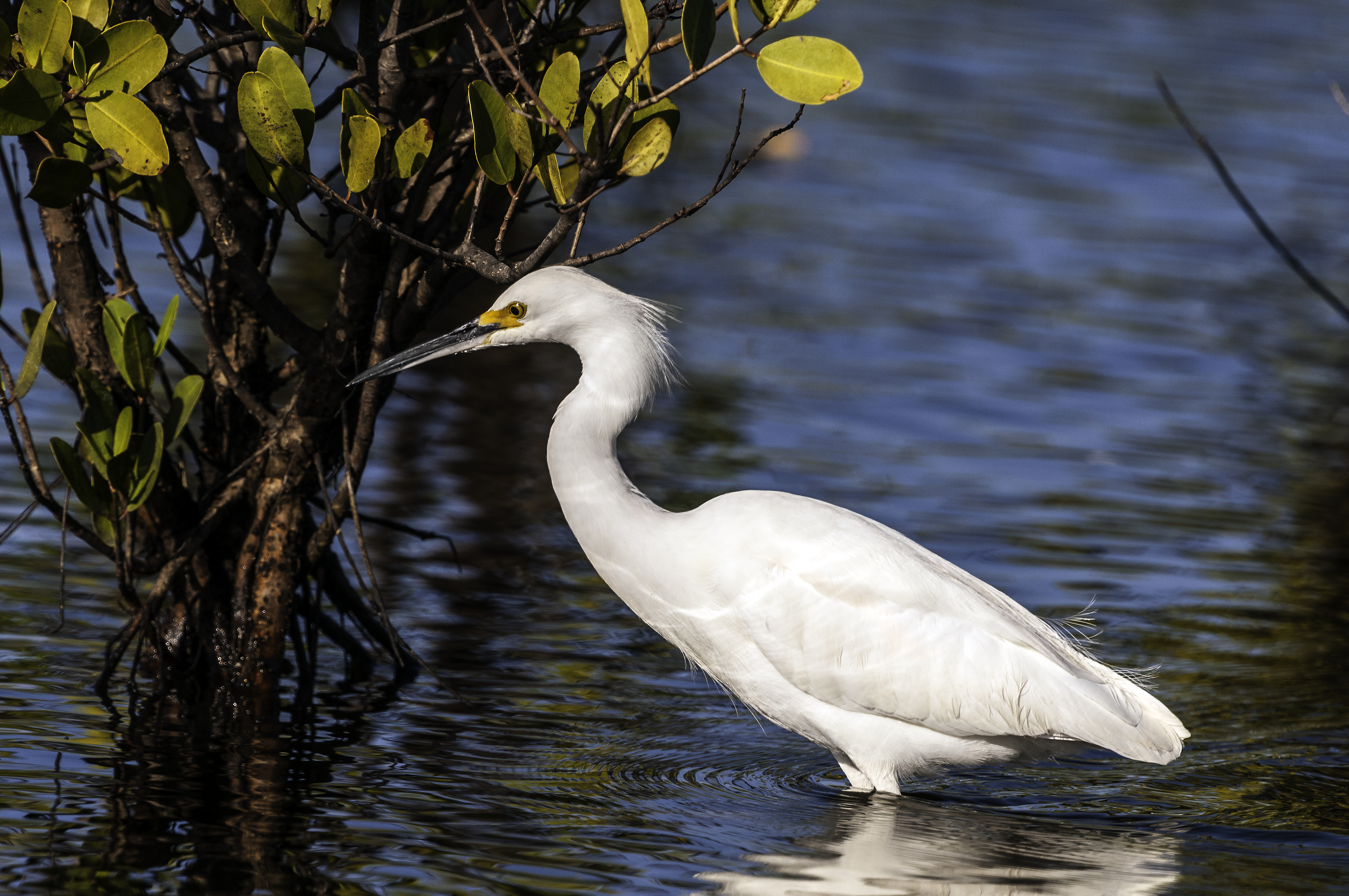
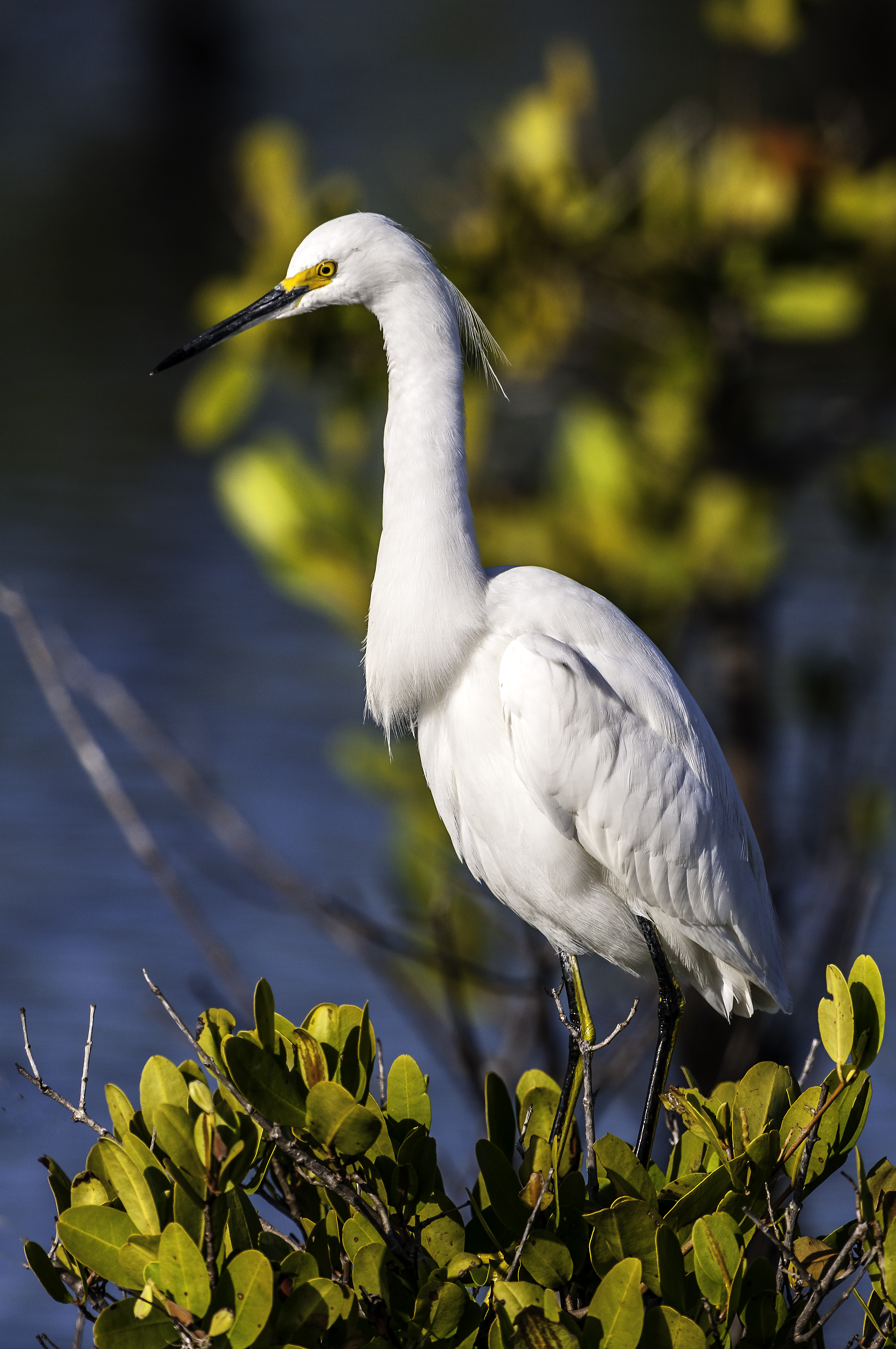
Often mistaken for the Great Egret is the Snowy Egret (above and below), which is a small heron.  Snowy Egrets are smaller than Great Egrets and have a slim black bill and long black legs with yellow feet. The area of their upper bill, in front of their eyes, is yellow but turns red during the breeding season. Snowies, as they are sometimes called, eat the same prey as Great Egrets, and although they too will sometimes slowly stalk their prey, at other times they run through the shallow water shuffling their feet to flush prey into sight. This behavior is entertaining to watch.
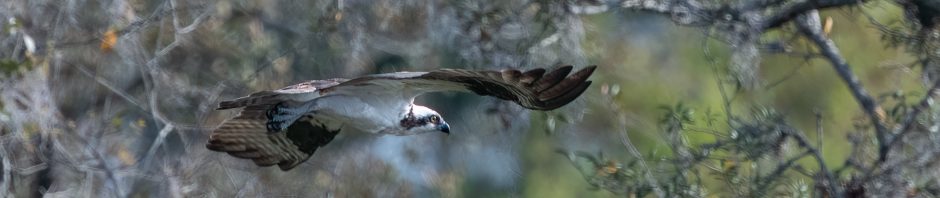
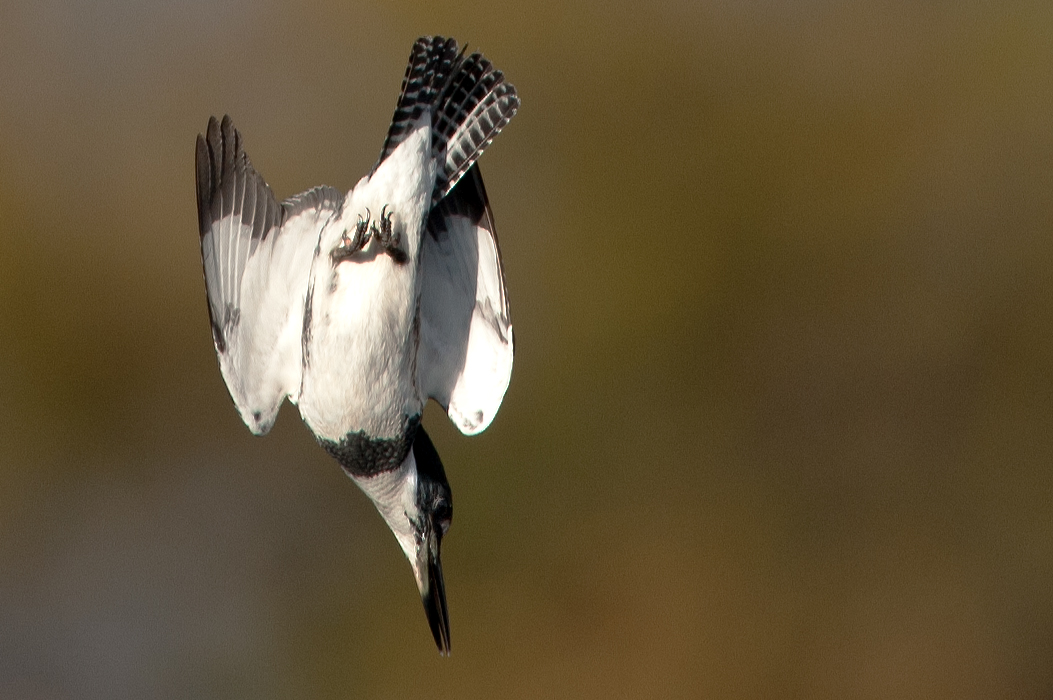
Below is a Belted Kingfisher photographed at Paynes Prairie Preserve State Park. The kingfisher is a stocky, medium sized bird with a large head and long, heavy bill. Kingfisher’s habitat is near inland bodies of water or coasts and are often seen perching on trees where they can watch the water for fish. When they find a fish, they will fly over the water hovering for the right opportunity to dive down to the water to catch their prey. I photographed this kingfisher as it was hovering over a flooded sinkhole and was also able to photograph it (below) as it dove down to the water. It is easy to tell when a kingfisher is in the area because of their unique reverberating metallic call.

As noted in the opening paragraph, the following explains what image “processing” means in my photography workflow. Processing includes converting the images from RAW files to JPG files. RAW files are the files made by a camera’s sensor and contain all of the digital information captured when a photograph is taken. RAW files must be converted to JPGs in order to be seen on the Internet, printed, or when emailed to a recipient. When processing, I may do any number of things to create my artistic vision of what I saw and what I want to present in the final image. Examples of some of the things I do in post processing include cropping, adjusting exposure, combining more than one image of different exposures, “burning and dodging” to darken or lighten selected areas, modifying color vibrance and/or saturation, sometimes converting to black and white, and sharpening, which is necessary for all digital images. It all depends on the image and my artistic representation of what I saw or want to present.

Post processing images is a critical step in digital photography. However, many people set their digital cameras to record images as JPGs, and then, no post processing is required. Adjustments can be made to such JPG files, but with limitations. Shooting images in RAW provides all of the unprocessed data and the ability to better render an image that represents what the photographer saw when the picture was taken.

With the above explanation, you now know why it takes time to review and process digital images. It can be time very consuming. Many professional and amateur photographers do not enjoy this part of photography. They would rather be taking pictures than sitting behind a computer. For me, I enjoy processing my images for two reasons. First, I am able to “relive the moment” when the image was made, and second, I enjoy creating an image that best represents the beauty I saw and want to share with others. Besides, I do most of my image processing in the evenings or on rainy days, when I cannot be outside photographing some of nature’s spectacular beauty.

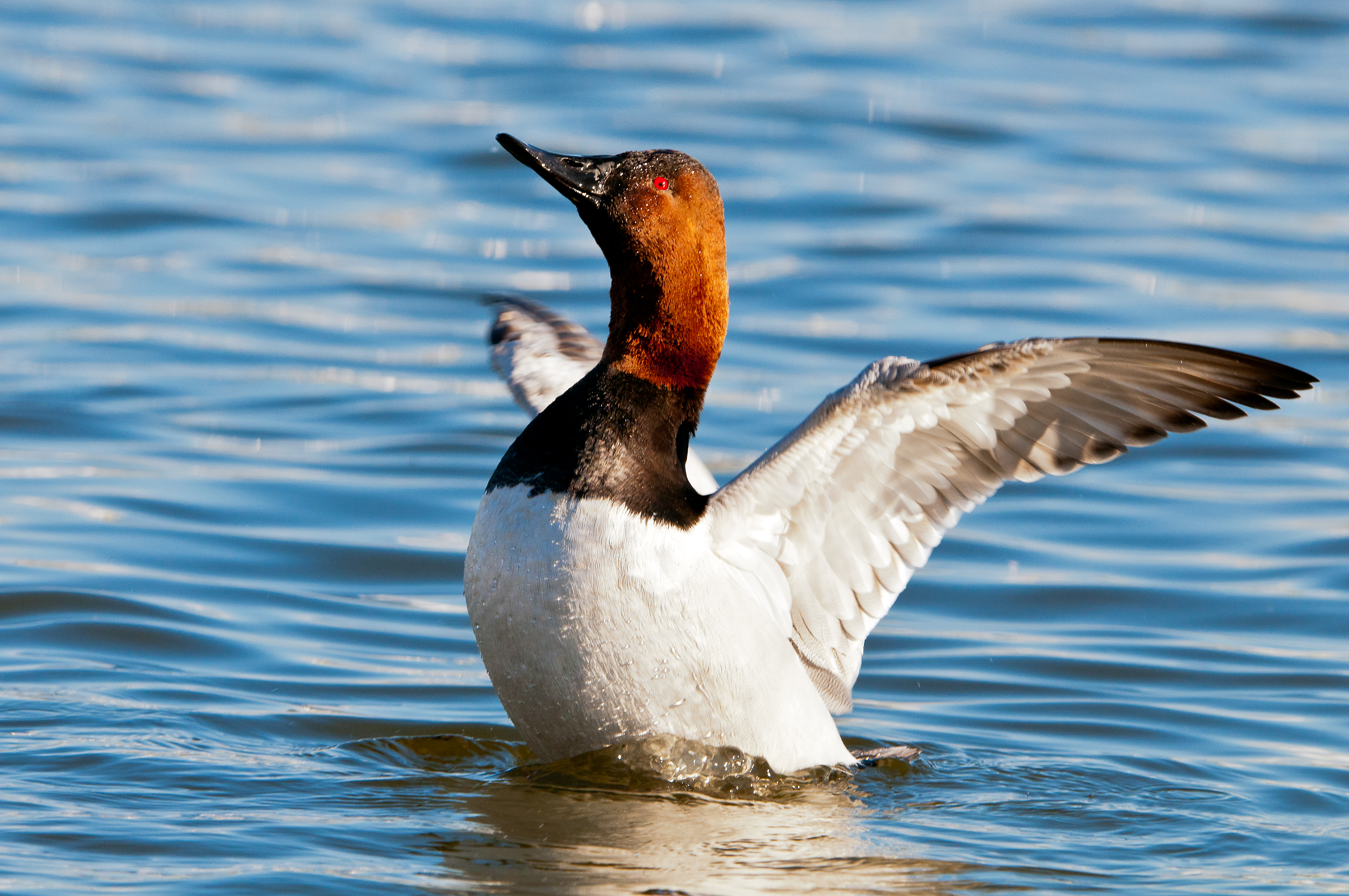
In conclusion, Saturday, I spent the day in Cambridge, Maryland, photographing several species of ducks on the Choptank River. It was a fabulous day and a very successful day from a photography perspective. As a sample of a future blog post images of the ducks, one of the images is below. It is a Canvasback Duck. The Canvasback has a distinctive wedge-shaped head and long graceful neck. The adult male has a black bill, a chestnut red head and neck, a black breast, and bright red eyes. Standby for more…
Posted in Bird Photographs, Merrimac Farm Wildlife management Area, National and State Parks, Paynes Prairie Preserve State Park | Tagged , , , , , , | 7 Comments

Recent Images of Birds in Virginia

If you have been following blog, my recent articles have contained images that I made while in Florida in December. Since returning to Virginia, I have been photographing some of our local birds. This article contains some of my favorite recent images of those birds.

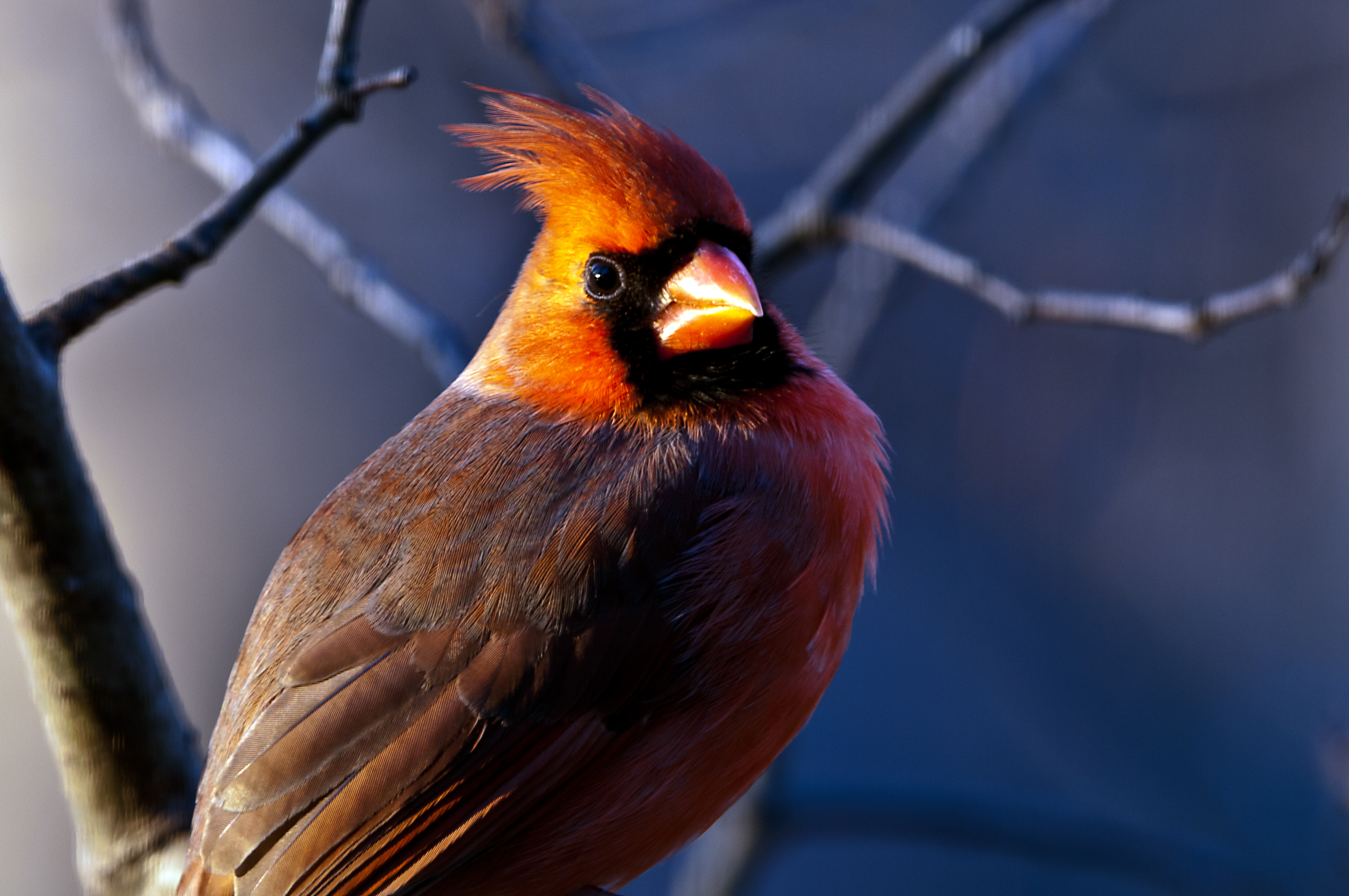
The above image is obviously a male Cardinal. It was taken in the late afternoon as the sun was setting. I love the way the sun is illuminating the Cardinal’s head and how the Cardinal is contrasted against the dark blue background through the tree to the lake. The image was made with my Nikon D300 and 600mm lens at ISO 200, aperture at f/8.0, and shutter speed of 1/40 sec.

The below image is of one my favorite birds, a Carolina Wren. They are hyperactive birds that rarely sit still moving quickly through the trees and on the ground while flicking their short tails up and down. It had just stopped raining and was overcast. Therefore, the light was very subdued. I used my Nikon D700 because of its high ISO/low noise capability with my 600mm lens, and shot it at ISO 1600, f/5.6, 1/250 sec. The high ISO setting enabled a faster shutter speed to capture the quick moving wren.

Below is another image of the Carolina Wren also shot as described above.

I recommend double clicking on the images to see the image details.

Above is another one of my favorite birds, a White Breasted Nuthatch. Nuthatches are also small, fast moving birds. They forage for insects on trunks and branches of trees and are interesting to watch because they hang upside down on branches and climb down the side of trees head-first. Because it was overcast and nuthatches are fast moving, I also shot this image with my Nikon D700 with the 600mm lens at ISO 1600, f/5.6, 1/640 sec.

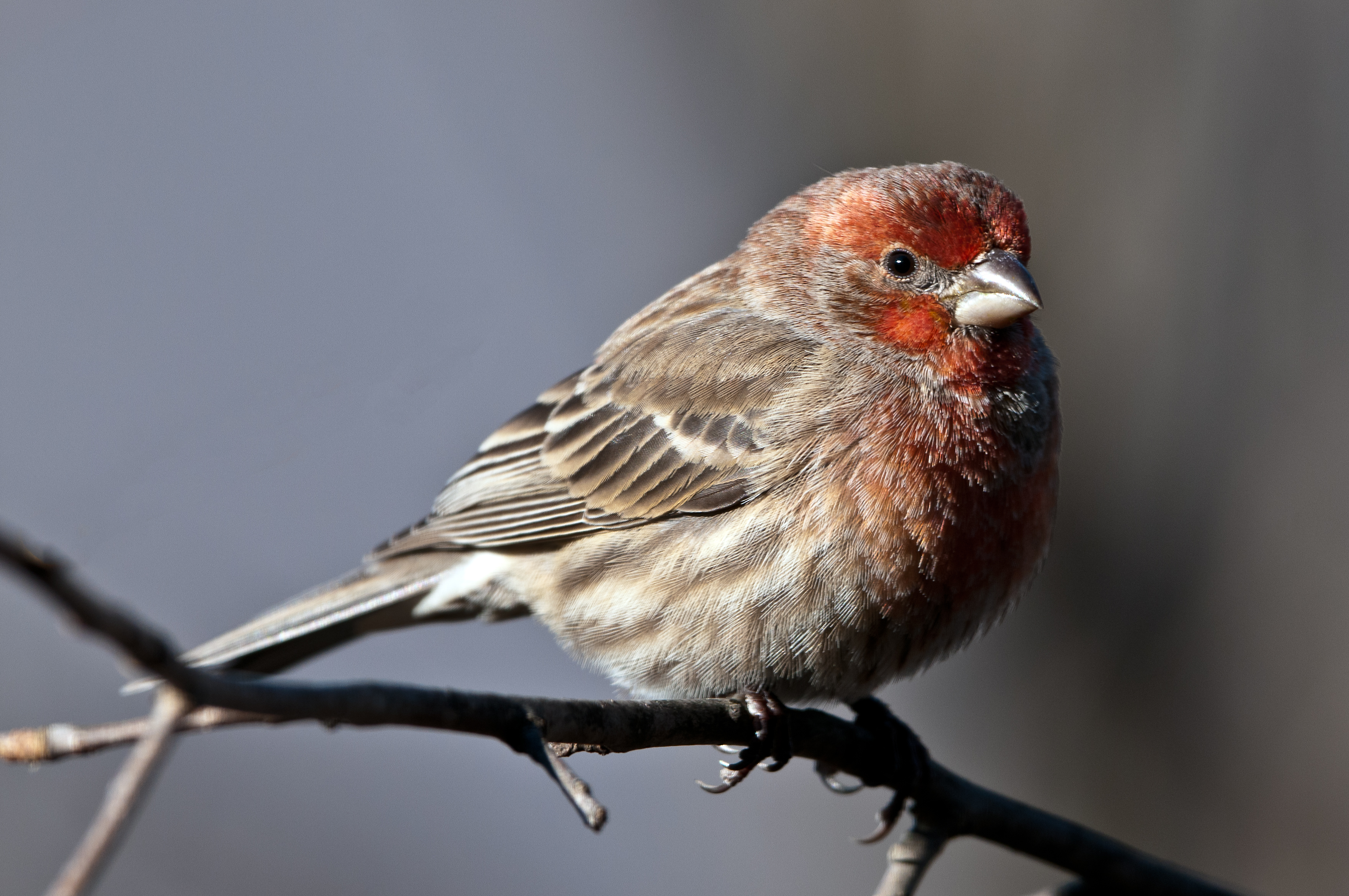
Above is a male House Finch. They too are small birds, but not as quick moving as the wren and nuthatch. They will perch on a branch for longer periods of time, as this one was doing while slightly puffed out. Only the male has bright red feathers. This image was made late in the afternoon with the sun shining on the finch lighting up his red feathers. Since it was a bright day, I used my Nikon D300 and 600mm lens and shot it at ISO 200, f/6.3, 1/400 sec.

Above is a female Downy Woodpecker. Females are distinguishable from males, because males have a small red patch of feathers on the back top of their heads. Downy Woodpeckers make lots of noise, both with their shrill whinny call and by drumming on trees. I photographed the Downy Woodpecker with my Nikon D300 and 600mm lens at f/7.1, 1/200, ISO 200.

Below is a male American Goldfinch in its winter plumage. During the summer after molting, the male’s feathers are a vibrant yellow. American Goldfinches are social birds and are seen in flocks of various numbers. I captured this image with my Nikon D300 and 600mm lens at f/8.0, 1/250 sec, ISO 200.

Above is a male Bluebird starring straight at me as I photograph him. He does not look like he is happy about being photographed. Females are not as brightly colored. Bluebirds are medium size birds that predominately eat insects. They are territorial, prefer open grassland with scattered trees, and are cavity nesters. I photographed the Bluebird with my Nikon D300 and 600mm lens at ISO 200, f/5.6, 1/30 sec.

Posted in Bird Photographs, Wildlife | Tagged , , , , , , , , | 7 Comments

Wood Stork at Merritt Island National Wildlife Refuge

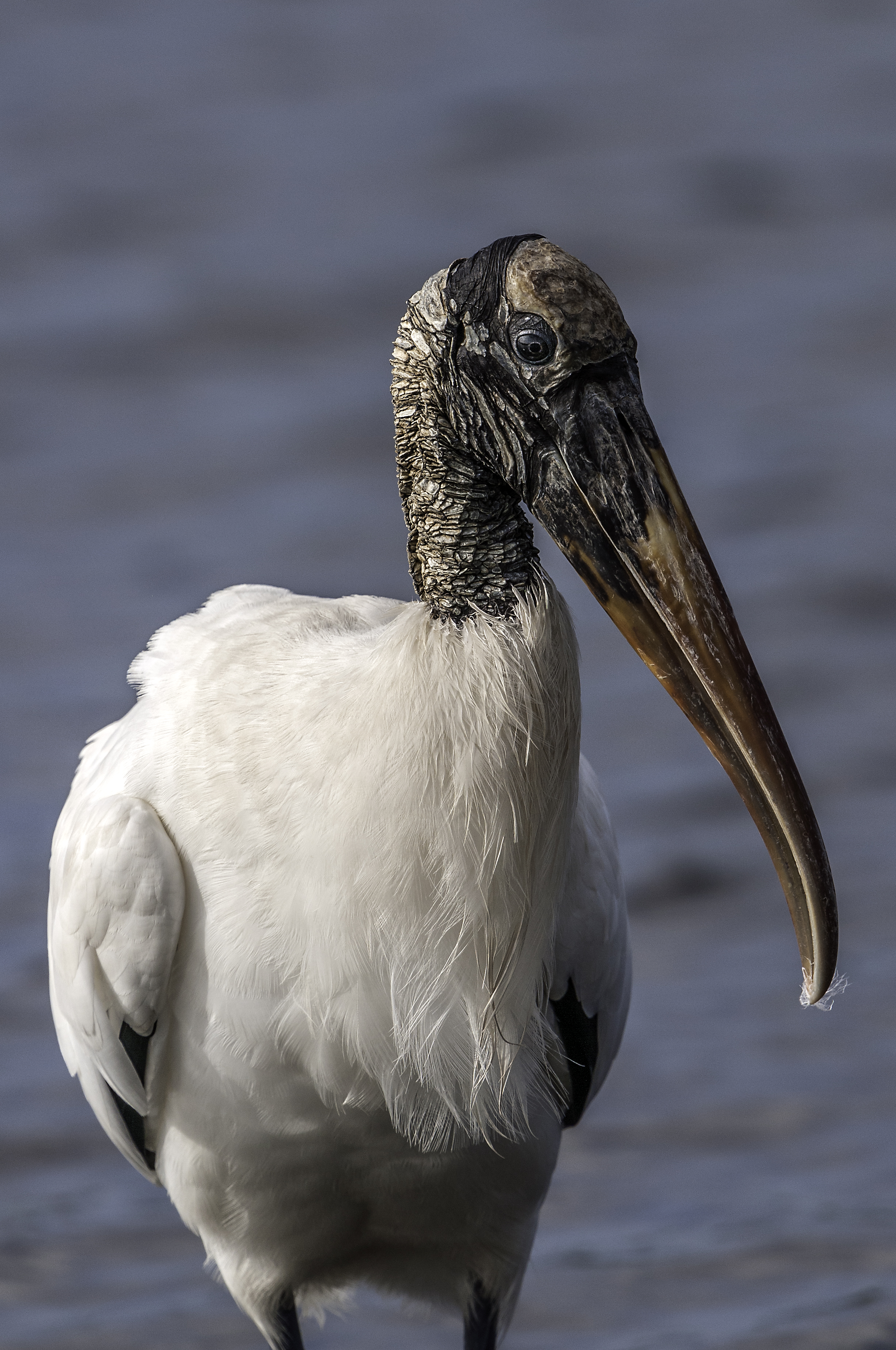
While at Merritt Island National Wildlife Refuge and photographing White Pelicans, a Wood Stork flew into the area and began feeding on the same pond. Although I was enjoying photographing the pelicans, I could not resist watching and photographing the Wood Stork.

Wood Storks are the only stock species in North America and are on the U.S. Endangered Species List. There are about 5,000 breeding pairs in the United States. They are large birds 40-44 inches in length with a wingspan of 5 feet. As you can see from the images, their feathers are predominantly white except for the edges of their wings, which are black, and their necks and heads are naked of any feathers. Males and females look alike, which is a good thing given how strange they look.

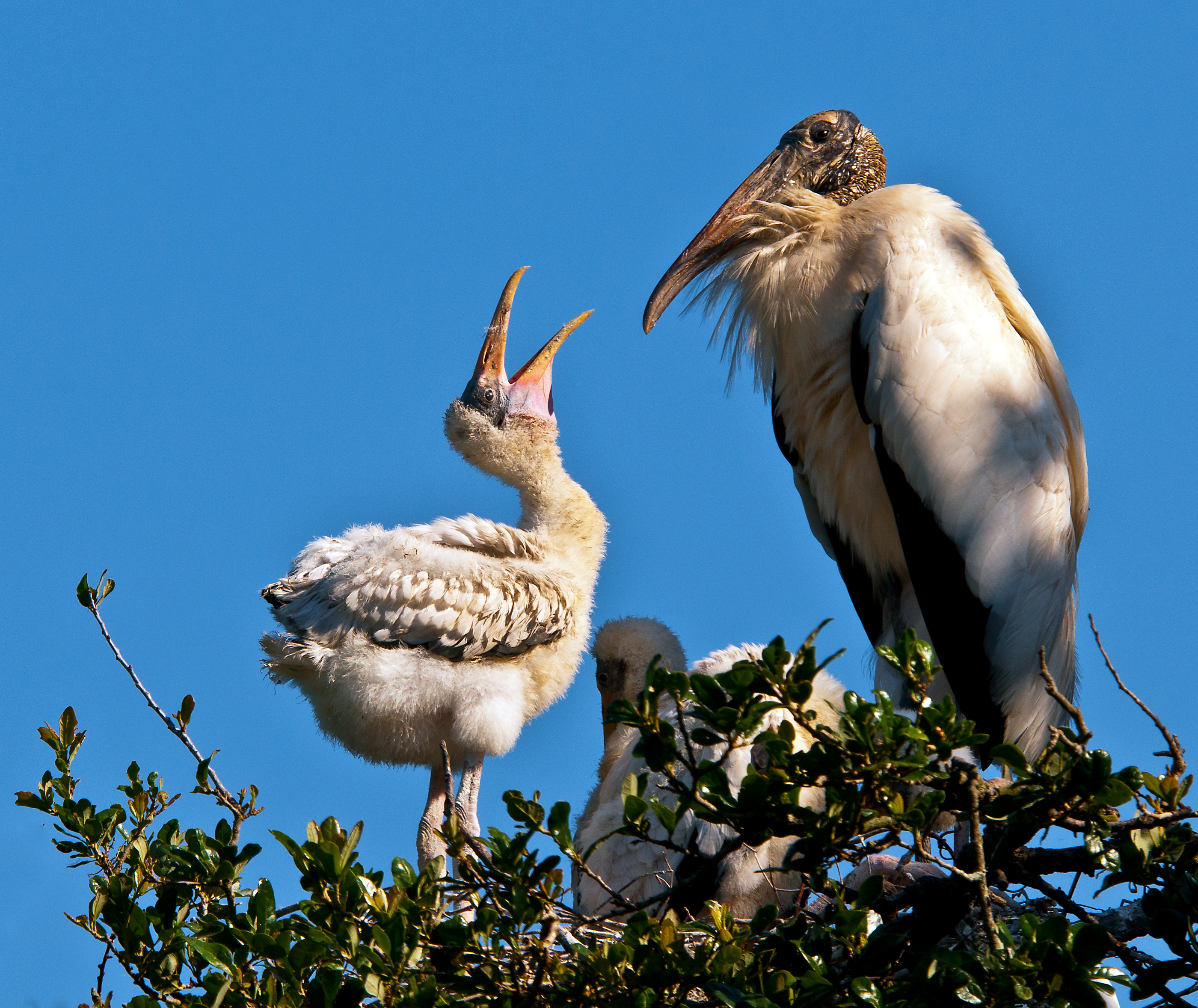
Clearly, they are not one of the prettiest bird species Mother Nature has created. However, they do not start out their lives looking so odd. Below is an image I photographed a couple years ago of a Wood Stock on its nest with two chicks. As you can see, the Wood Stork chicks start out fully feathered and are definitely more attractive than the adults. It appears the chick is hungry, begging to be fed, but being ignored by the parent stork.

A few more interesting facts, Wood Storks:

  • Mate for life and breed in Florida, Georgia and South Carolina usually returning to the same colony site year after year.
  • Are found predominantly in coastal areas, marshes, tidal waters, swamps, mangroves, and streams.
  • Feed during the day and night and eat small fish, frogs, snails, insects, snails, and aquatic invertebrates.
  • Nest in trees, as seen above, and lay 2 or 3 eggs with both parents taking turns incubating them. Chicks fledge in about two months.
  • Are excellent fliers soaring at times several thousand feet above the earth.
Posted in Bird Photographs, National and State Parks, Wildlife | Tagged , , | 7 Comments

Northern Shoveler

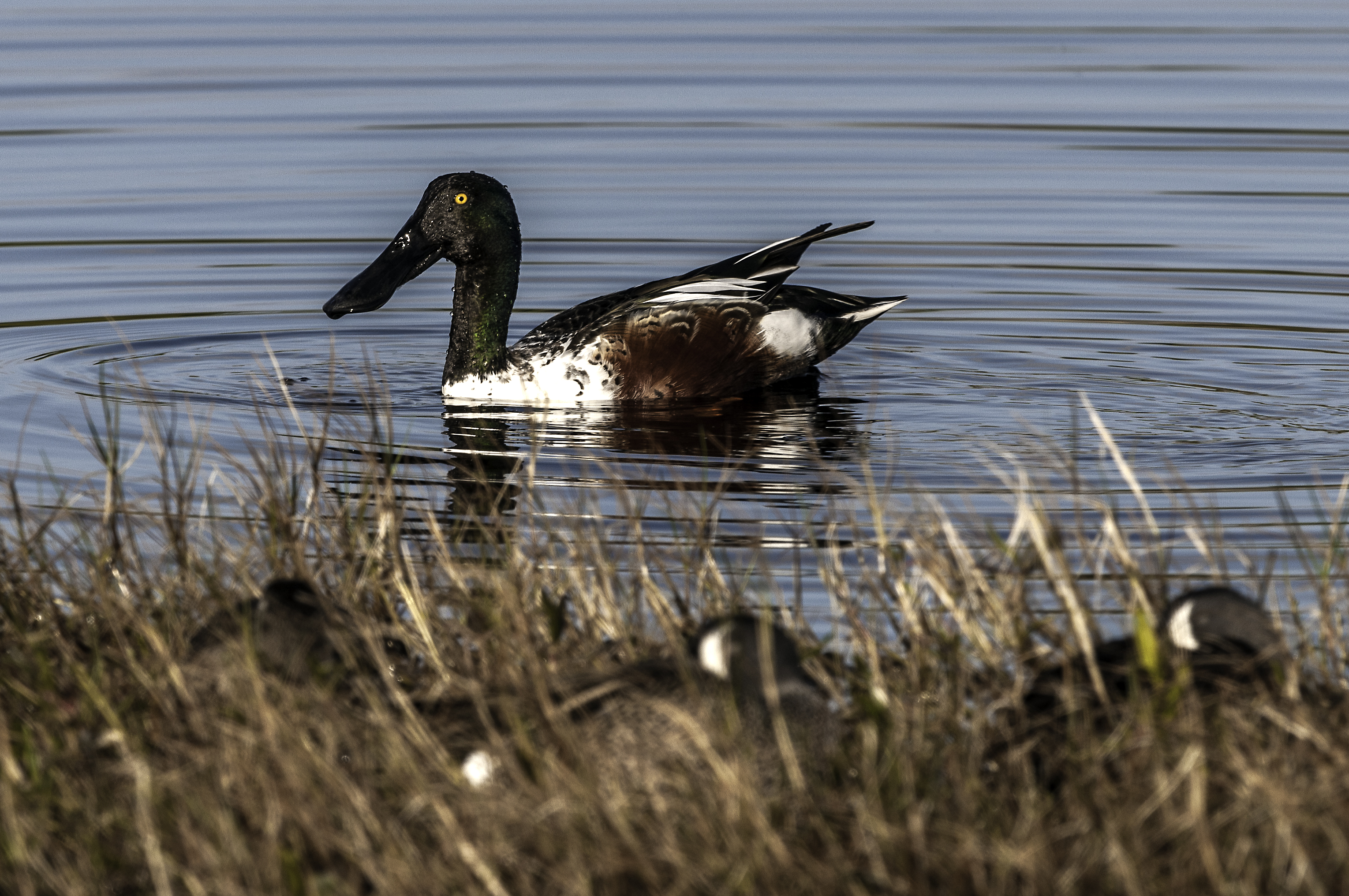
I was on the “hunt” for waterfowl at Merritt Island National Wildlife Refuge in December–hunt to locate and photograph them, NOT to hunt them as hunters do. I was successful and hopefully the hunters were not. One of the types of waterfowl that I located and photographed was a small group of Northern Shovelers that were in the company of a very large group of Coots (well over a thousand).

Before I continue with my images and description of the shovelers, I want to share a disturbing article I read this morning about Sandhill Crane hunting in Kentucky. Yes, Sandhill Crane hunting! Apparently, Kentucky is the only eastern state to allow the hunting of Sandhill Cranes. The article, which can be found at this link: http://focusingonwildlife.com/news/a-win-for-the-cranes/, explains how Kentucky issued 400 hunting permits this year for Sandhill Cranes. Fortunately, only 50 were killed during the 30 day hunting period. I find it appalling that anyone could shoot and kill such a magnificent, helpless bird, or for that matter any bird.

Speaking of Sandhill Cranes, it is somewhat coincidental that yesterday I read an article written by a free lance travel writer for the Florida Rambler blog and Florida newspapers and magazines, who found my images on the Internet and contacted me for permission to use them in an article about Sandhill Cranes at Paynes Prairie Preserve State Park. Her article and my images can be seen at: http://floridarambler.com/florida-getaways/migrating-sandhill-cranes-central-florida/

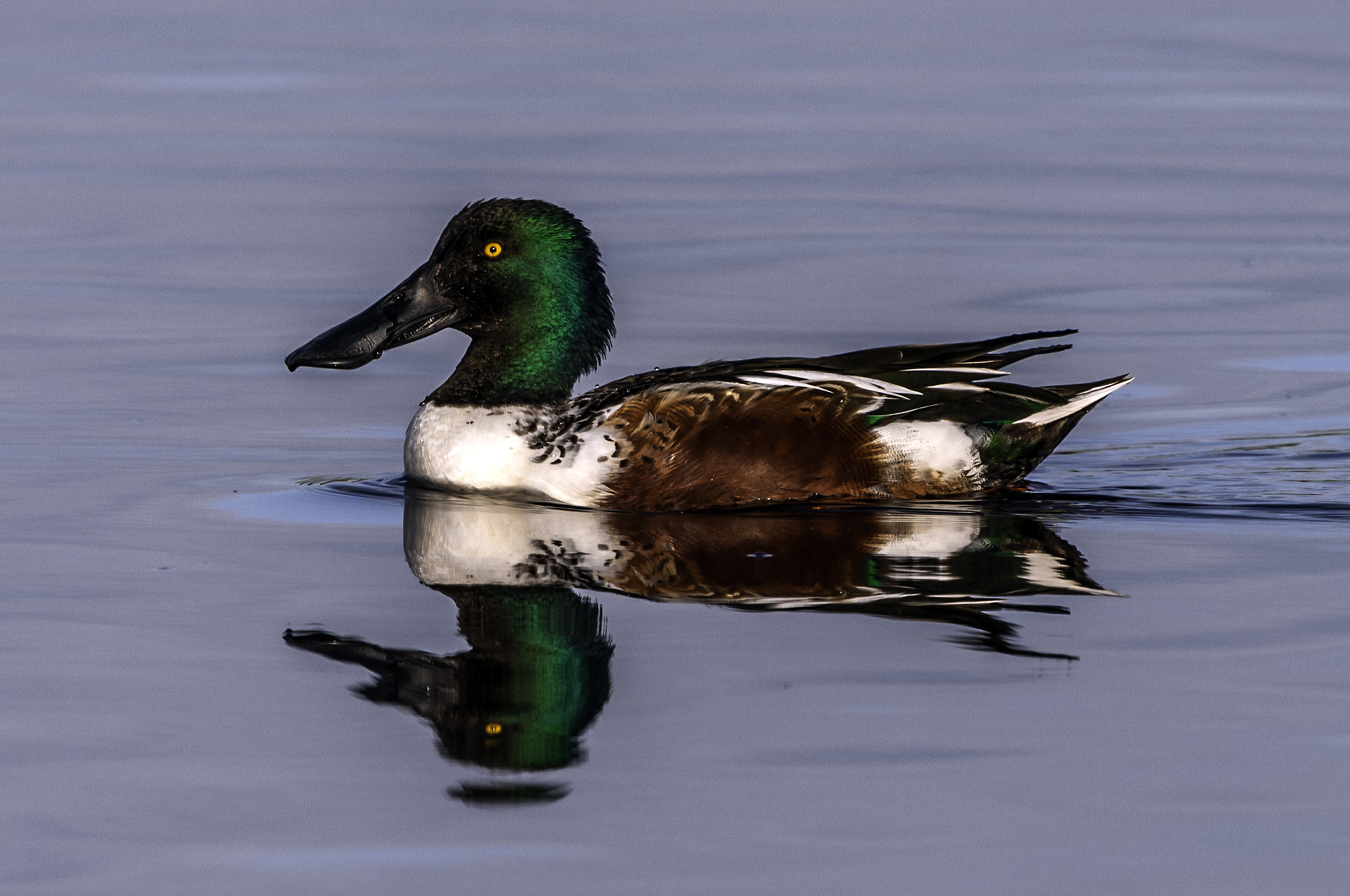
Back to the Northern Shovelers, above is a male Northern Shoveler that had just raised its head from under the water. In the opening image, a male Northern Shoveler can be seen above several Blue Winged Teals in the foreground. In a subsequent blog post, I will provide images of the teals.

Northern Shovelers get their name because of their elongated spoon-shaped bills that are used to shovel through the mud and water for food. Their bills are highly evolved for this activity with comb-like projections along the edge of their bills to filter the food from the water. The males are beautiful ducks whose heads are a highly iridescent green, when the light strikes it at the right angle.

The female Northern Shovelers (below) are rather plain, as is the case for most female ducks. The female shoveler below had just popped up from the water and was shaking it off when I shot this image.

I am slowly working my way through my many images from Florida in December. Upcoming articles and images will be about Green Winged Teals, Blue Winged Teals, Wood Storks, Red-shouldered Hawks, Kingfishers, several types of herons and egrets, and alligators. Today, I would be out with my cameras, but it is overcast and lightly snowing, and so I am housebound. I am anxiously awaiting spring!

Posted in Bird Photographs, National and State Parks | Tagged , , , , | 4 Comments

Roseate Spoonbill at Merritt Island National Wildlife Refuge

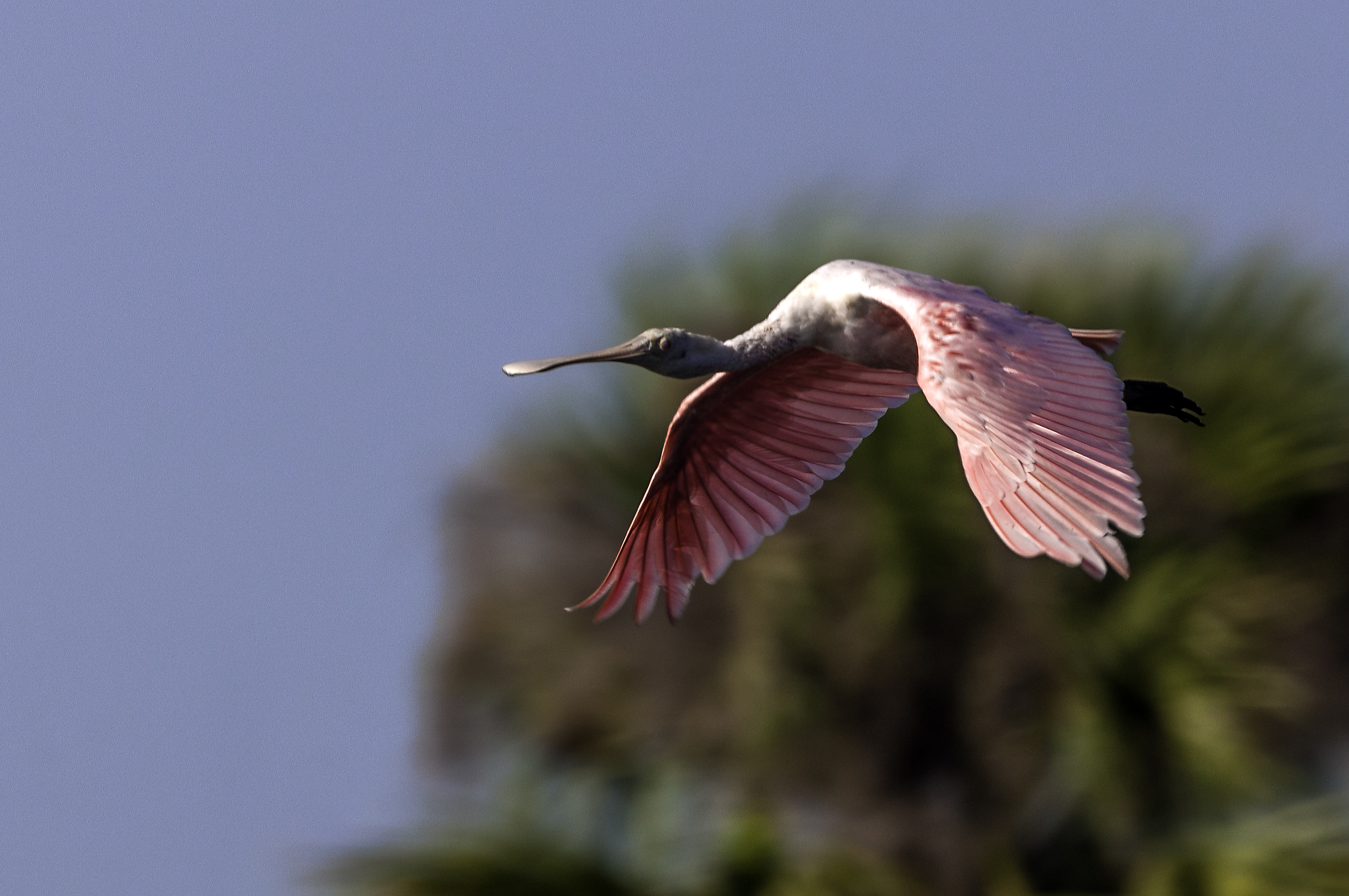
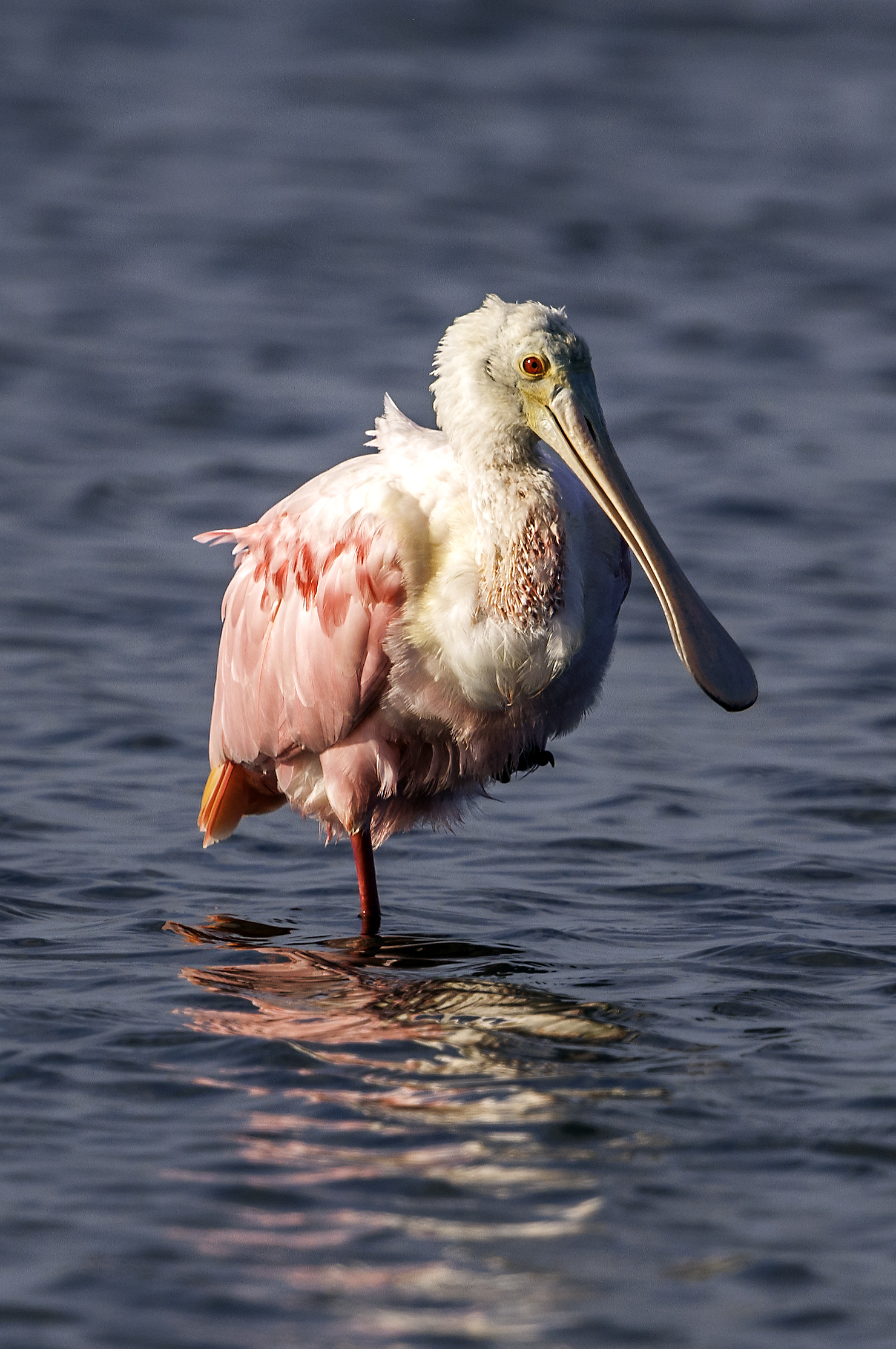
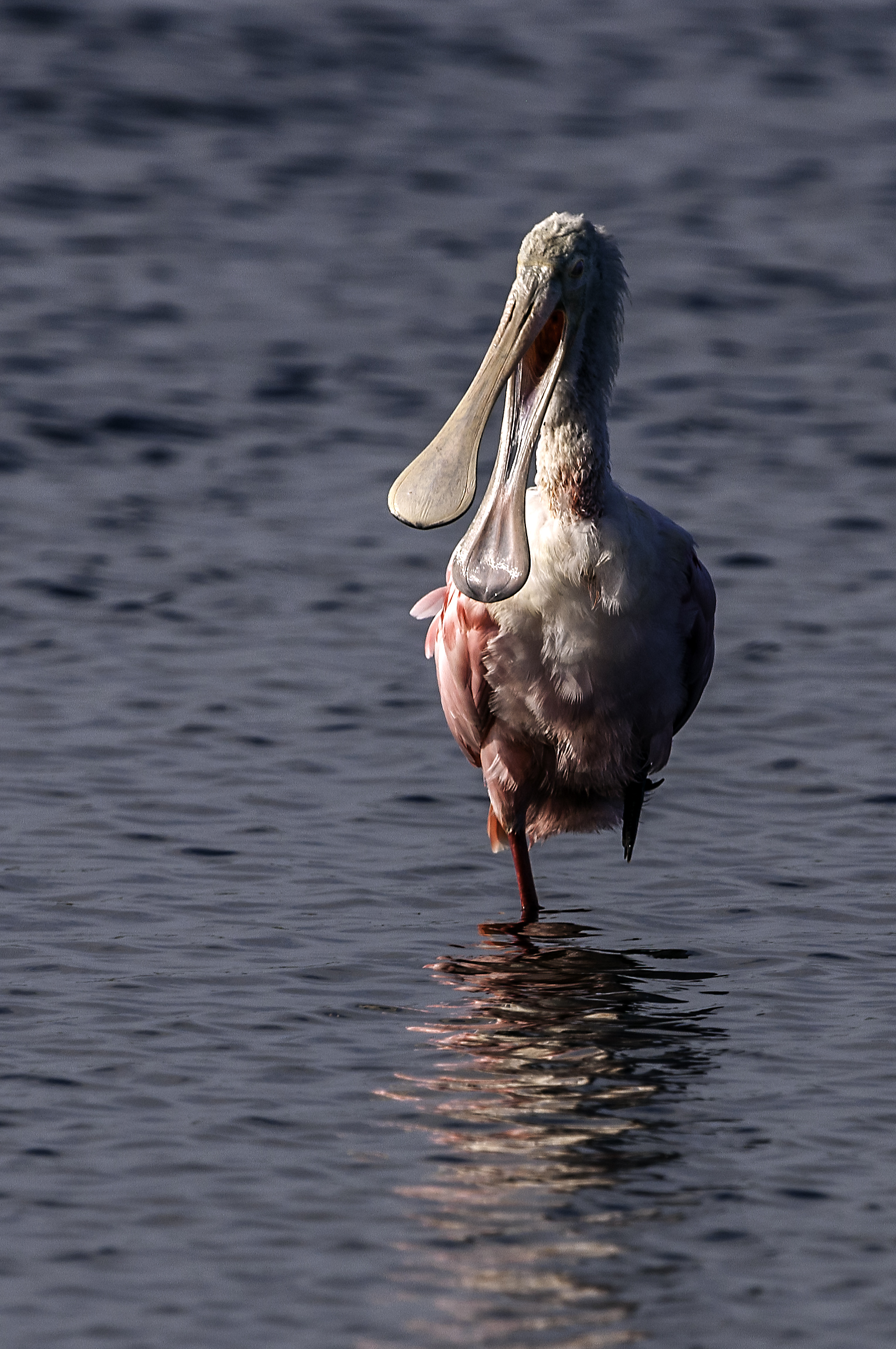
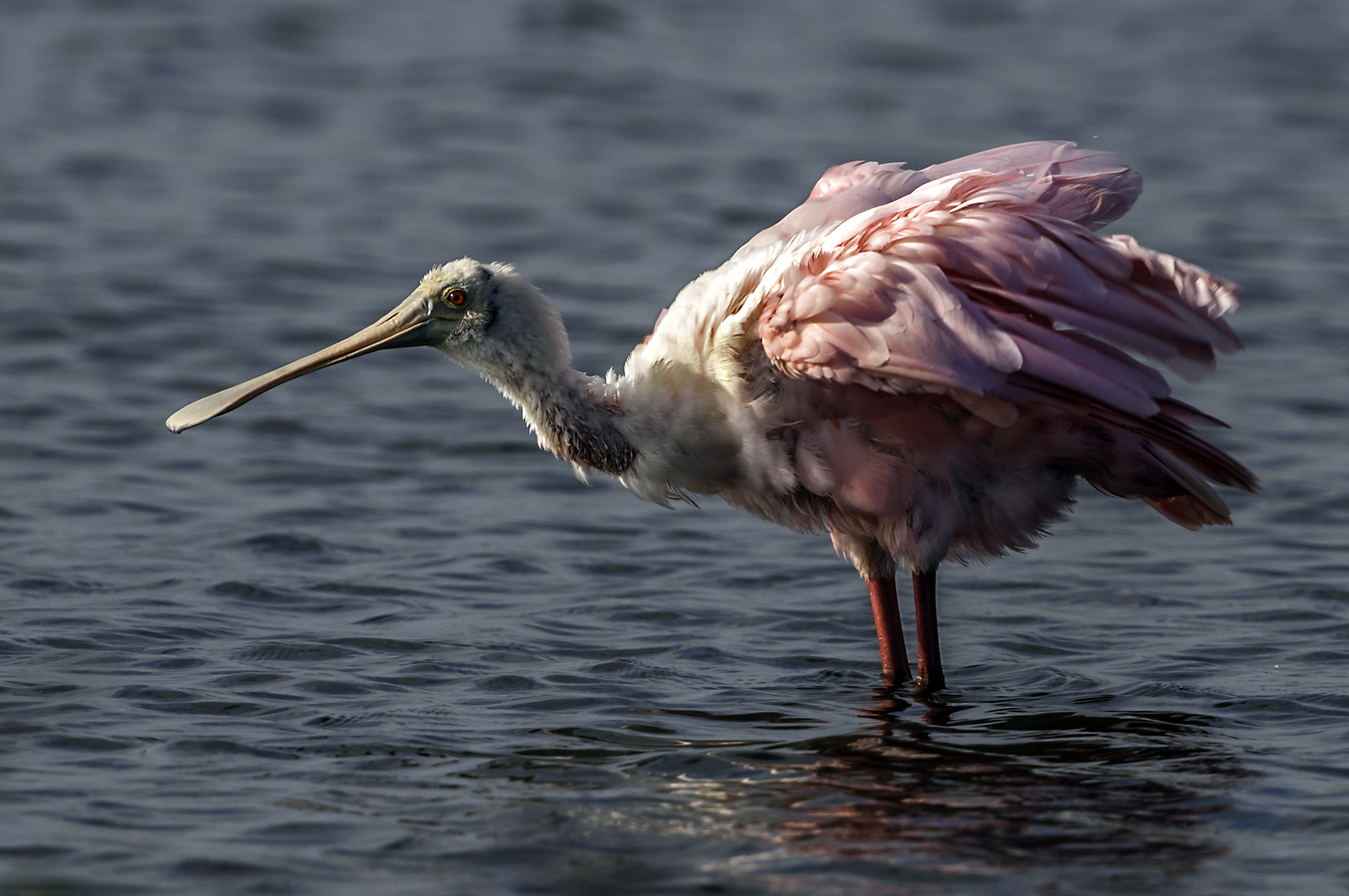
While exploring and photographing at Merritt Island National Wildlife Refuge in December, I was fortunate to see and photograph a Roseate Spoonbill. Roseate Spoonbills are very unusual, large wading birds with pink plumage, red eyes and legs, and a distinctive spatulate bill. They usually are seen and travel in small flocks, but this one was alone and flew into the pond where I was photographing other wading birds.

Roseate Spoonbills were hunted to near extinction because their pink primary feathers were sought after by hunters for use in the construction of ladies’ fans in the late 1800s and early 1900s. By 1930, there were only 30-40 breeding pairs in Florida. Today, because they were banned from hunting, they have rebounded, and there are over 1,000 breeding pairs in Florida.

Roseate Spoonbills inhabit marshes, swamps, ponds and rivers, and feed in both freshwater and salt wetlands. They consume a varied diet of small fish, amphibians, aquatic invertebrates, and some plant material. They feed in shallow water and are interesting to watch, because they walk through the water swinging their heads back and forth with their spoonbills in the water snapping shut when they feel prey in it.

My favorite image of this spoonbill is below with its feathers ruffled out. Double click on the image to see it in more detail.

For the photographers reading this article, all of the above images were taken with a Nikon D300 at 850mm, Aperture Priority at f8 with varying shutter speeds, and ISO 200).

Posted in Bird Photographs, National and State Parks, Wildlife | Tagged , | 5 Comments