Most people, and probably many of you who read my blog, do not like snakes. However, I do not feel the same way and, therefore, was excited when my wife, Angela, found an Eastern Ribbon Snake and called it to my attention, while we were visiting the Virginia Arboretum near Winchester, VA, At that time, I was shooting landscapes, but quickly changed lenses putting on my 105mm macro lens to photograph the snake.
The Ribbon Snake was about 24 inches long and very cooperative, letting me get in close. We noticed its very bright, red tongue quickly moving in and out of its mouth as it was sensing my presence. It was a challenge to photograph it while its tongue was out, but I did have some success. The snake tried to strike or bite me several times while I was in close, but it was not successful. That made for more excitement.
Below is a closeup clearly showing the Ribbon Snake’s attractive face and red tongue.
The Eastern Ribbon Snake gets its name from its very thin black body with yellow stripes, one on each side. They are found in the Northeastern United States and Southeastern Canada, and can usually be spotted in wetlands and near the edges of ponds and streams. They are comfortable both in and out of water and are adapted to both environments.
When Eastern Ribbon Snakes are frightened, they take to the water or bushes. There was neither nearby, so this one just curled up and posed for me.
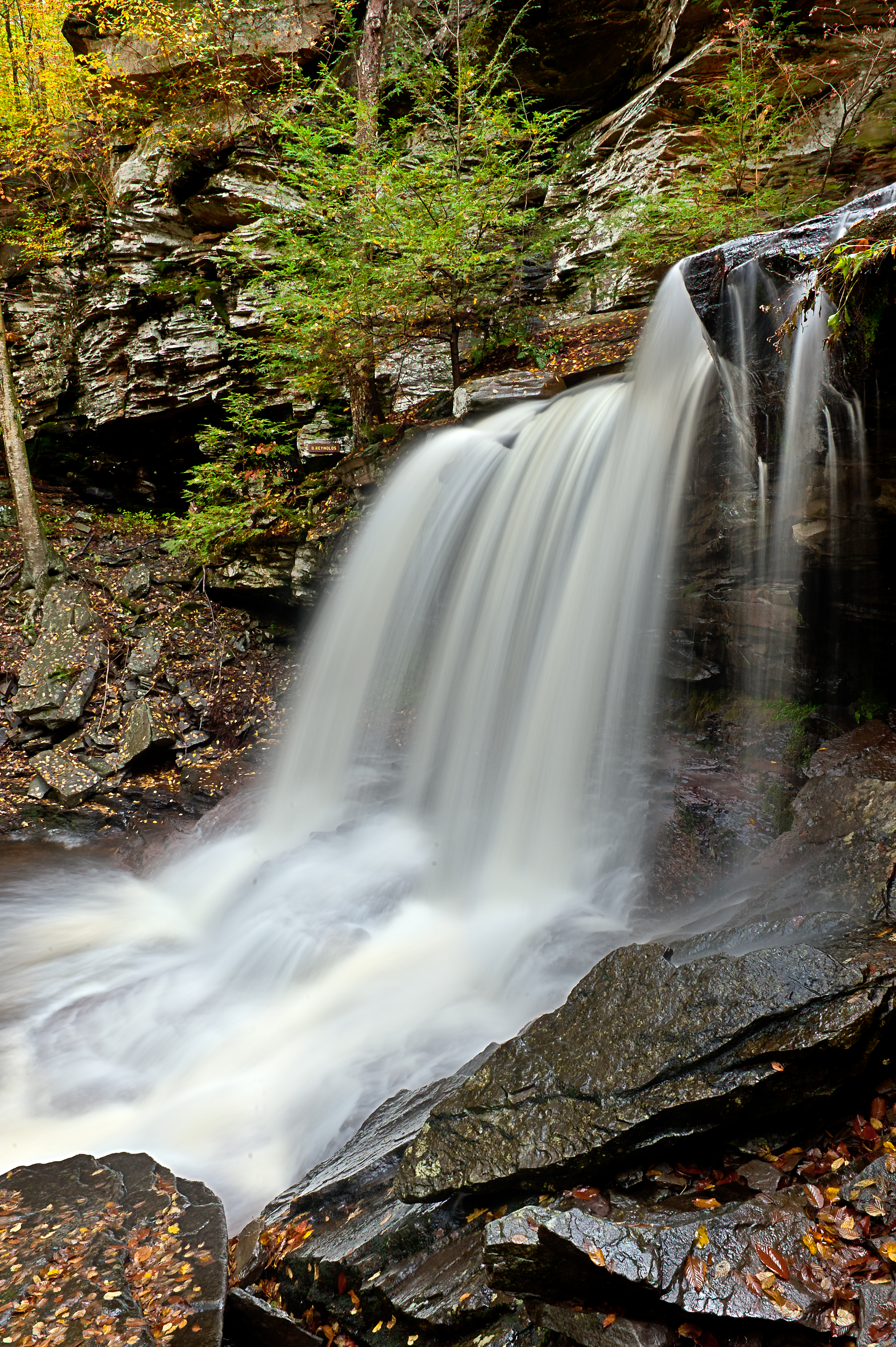
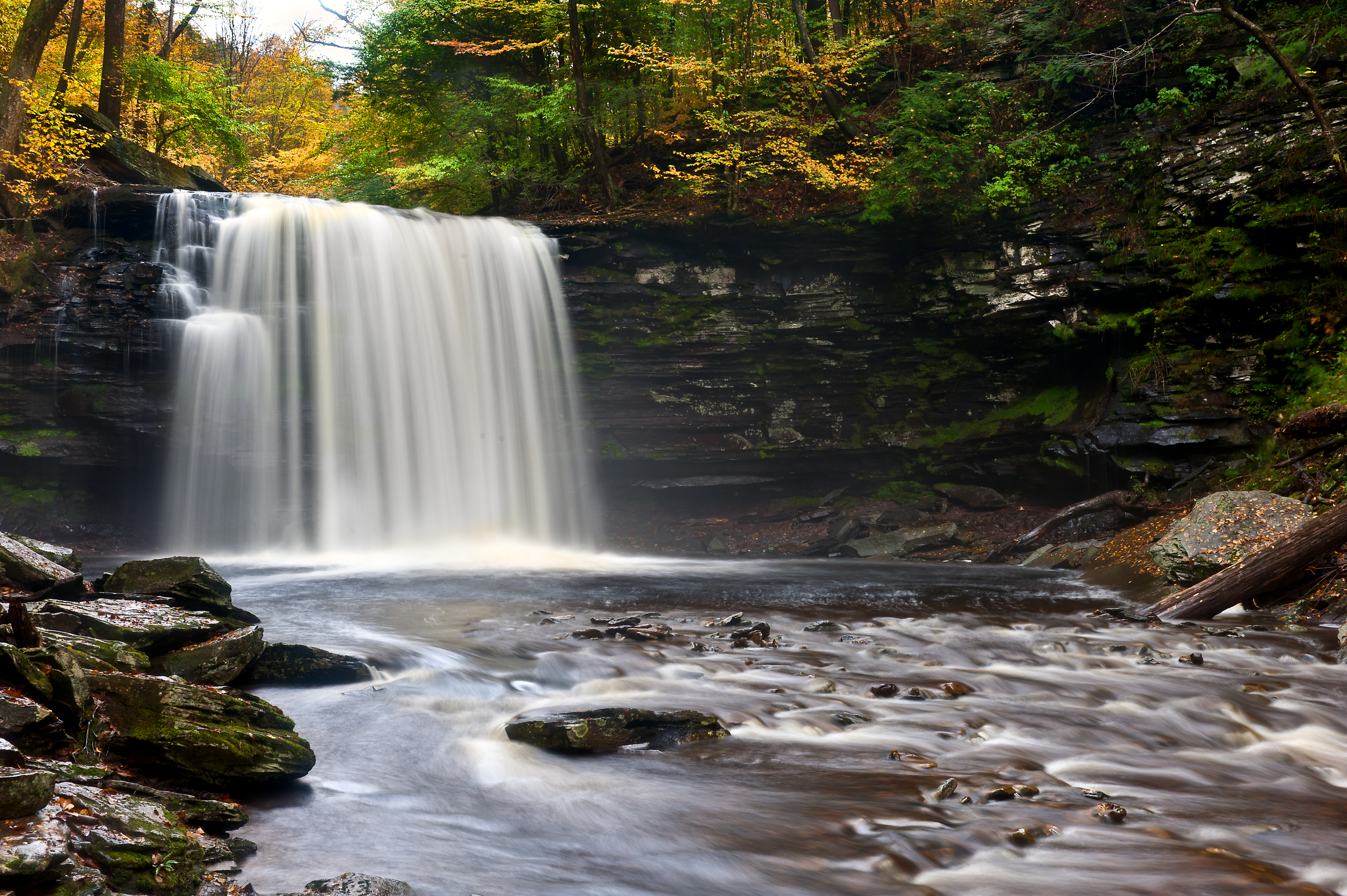
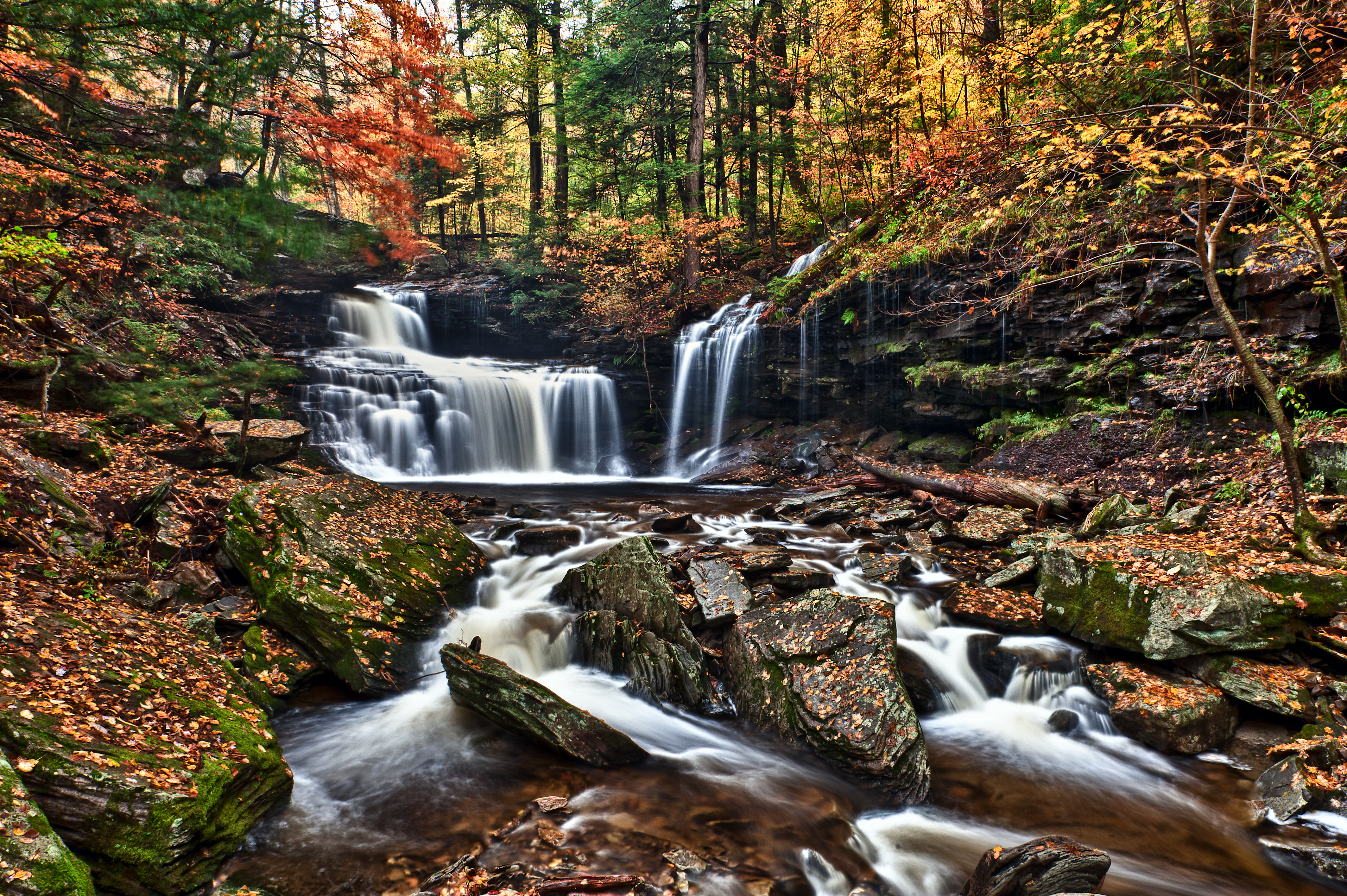
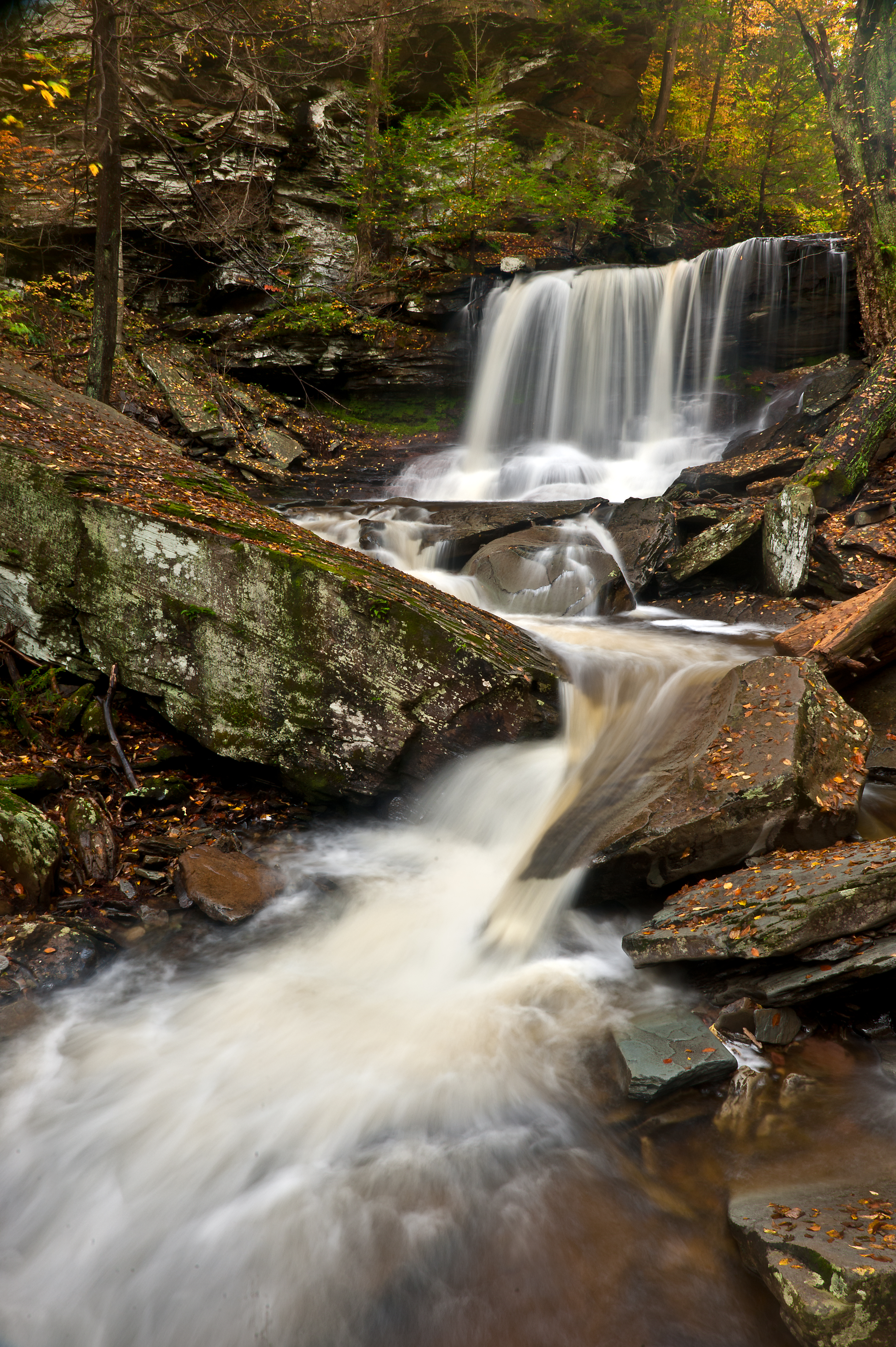
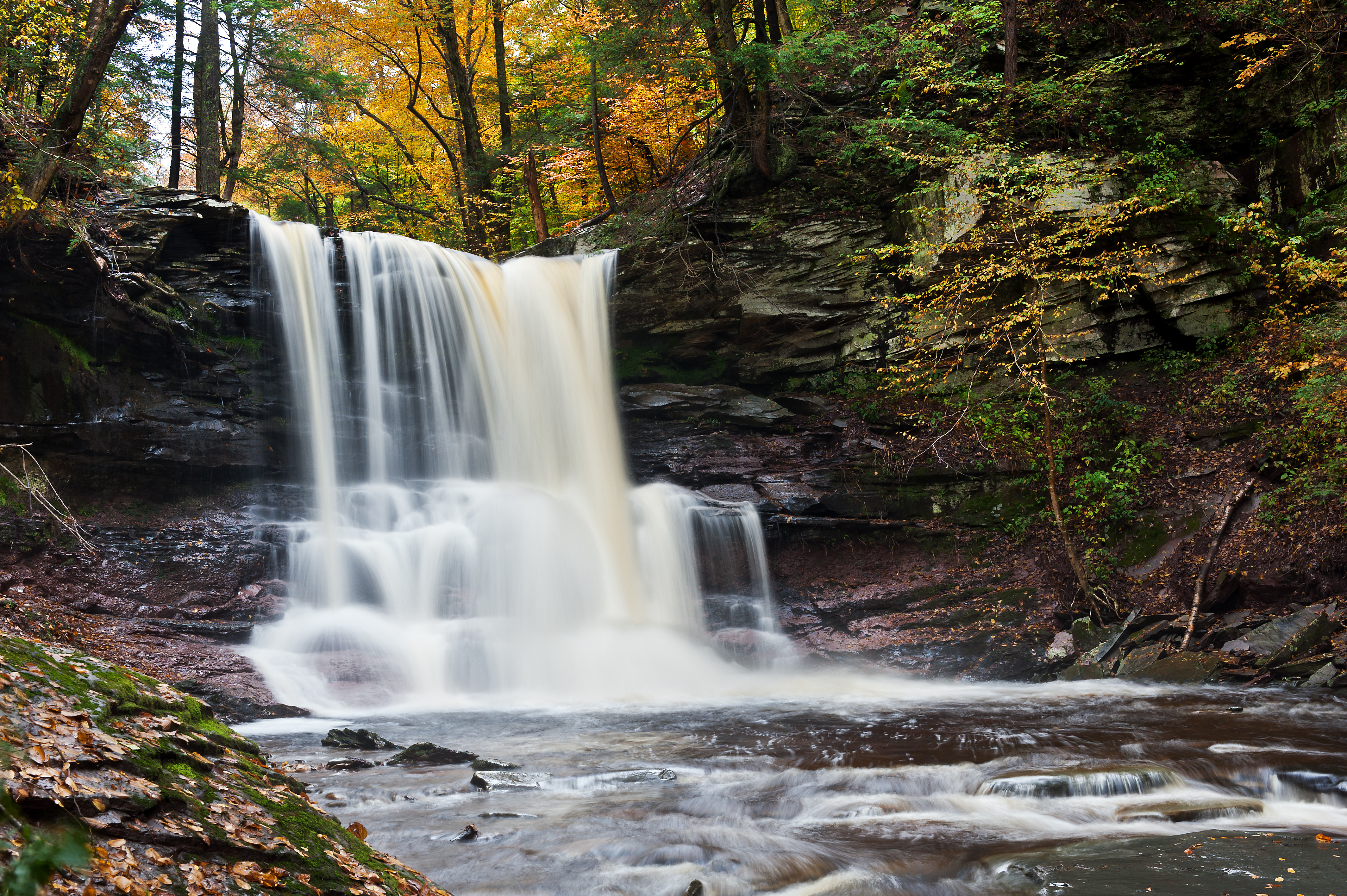
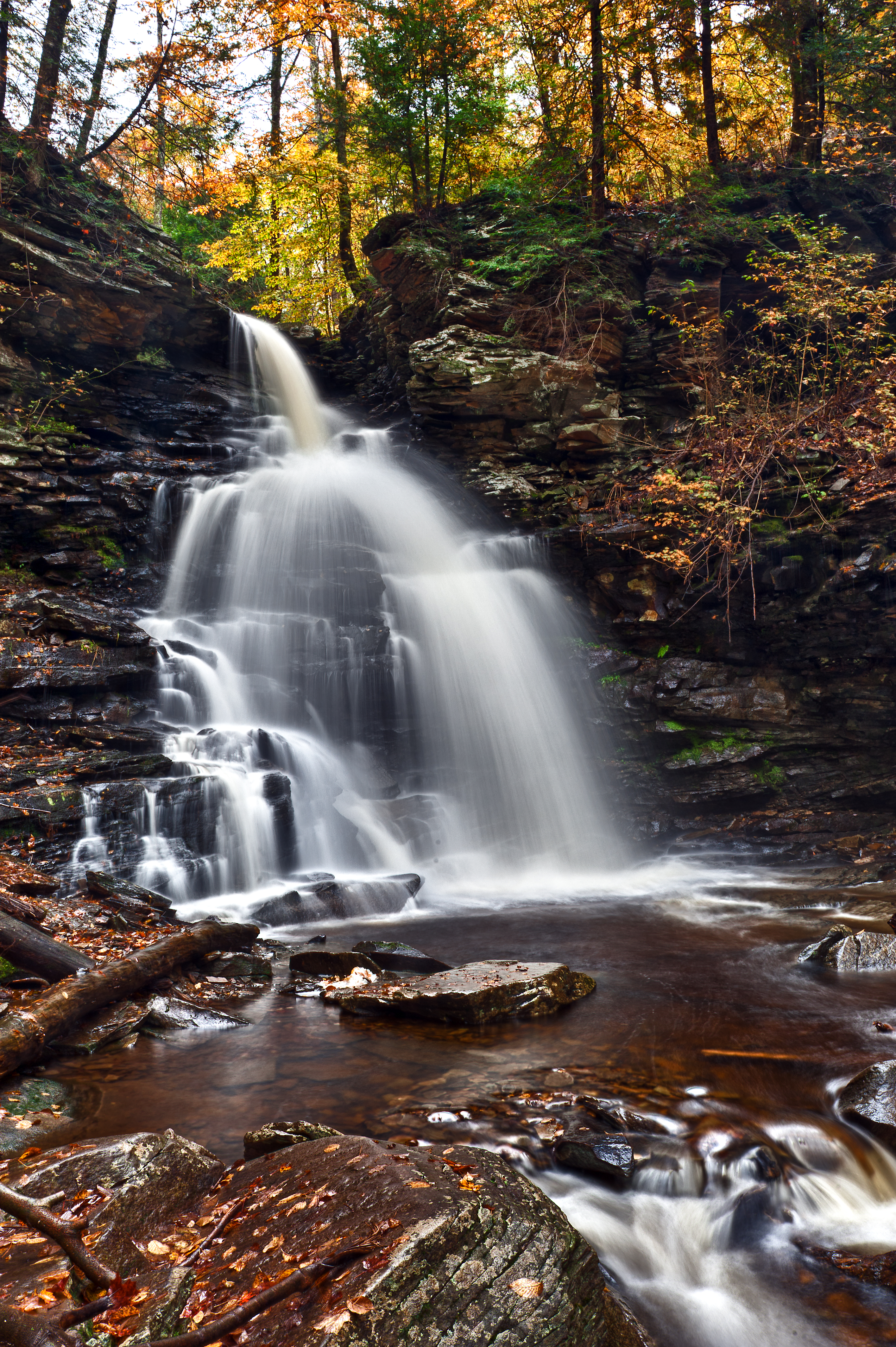
During the week, I posted an article with the first images that I reviewed and processed from my trip last weekend to Ricketts Glen State Park in Pennsylvania. The purpose of the trip was to photograph the park’s 22 waterfalls, framed by colorful autumn leaves of surrounding trees. I now have processed many more of the images, but I am not done. This article contains some Ricketts Glenn images of other waterfalls and the rivers leading to and from them.
I also embedded another video that was recorded with my iPhone. The video, besides providing a movie of one of the falls, provides the sound of a waterfall. Looking at the waterfall images without such sound minimizes their beauty and attraction. Click on the below image/video and turn up your sound.
As you can see from the photos, the autumn colors were at their peak.
Someone that has been following my blog since I started it, about six months ago, asked me this week about my image “processing,” that I refer to often on this blog. He thought I took the photos and directly uploaded them to my blog or Website. After explaining the process to him, I thought other readers might also be interested in knowing how I process my images.
As I explained to him, processing begins while taking the photographs. After deciding on a scene to photograph, I compose it in the frame, but before shooting it, I consider other key things that impact the image captured on the camera’s sensor, such as lens aperture or f/stop – which also affects depth of field, shutter speed, and the range of light and dark areas in the scene. If there is high contrast in light and dark areas, I often shoot multiple images at different exposures (“bracketing”). I bracket images so that I can blend them together to bring out details in the darkest areas and lightest areas. Sometimes, I merge two to five images together using HDR (High Dynamic Range) software, and other times, I blend them together using layers in Adobe’s Photoshop. I consider other factors while in the field, such as ISO (sensor sensitivity to light) and white balance, and I usually use a tripod and wired shutter release.
Image post processing begins back home, when I transfer the image files from memory cards to my iMac and back them up. I use Adobe’s Lightroom 3 to transfer and organize the images on my iMac. After all of the images have transferred and are backed up, processing begins with reviewing and rating the images. After reviewing and rating, I work on the highest rated images. Image processing also starts in Lightroom, where I adjust, if needed, such things as the image in the frame by cropping or straightening the horizon, white balance, overall exposure or exposure of specific areas of the image (“dodging and burning”), color vibrance and saturation, noise reduction, and a few other tweaks, as needed. Then, I transfer the image into Photoshop CS5.
In Photoshop, using layers, and masking when needed, I adjust contrast using either Levels or Curves depending on the image; delete any unwanted things in the image–like dust, UFOs or sometimes even people; make additional tweaks, again if needed, using various pluggins (e.g., Nik’s Color Efex Pro); and finally, I sharpen the image–usually not globally, but selectively. All digital images need to be sharpened when shot in raw format. Basically, raw means the camera records all of the digital image information captured on the sensor without any processing by the camera.
The above processing description is the short version. Hopefully, for those who were not aware of this and are still reading, you found it interesting. The amount of time I spend on each image varies, and there are short cuts that can be used at times. As Ansel Adams said, “You do not take an photo, you make a photo.” Ansel Adams used a darkroom and chemicals. Today, we use computers and software.
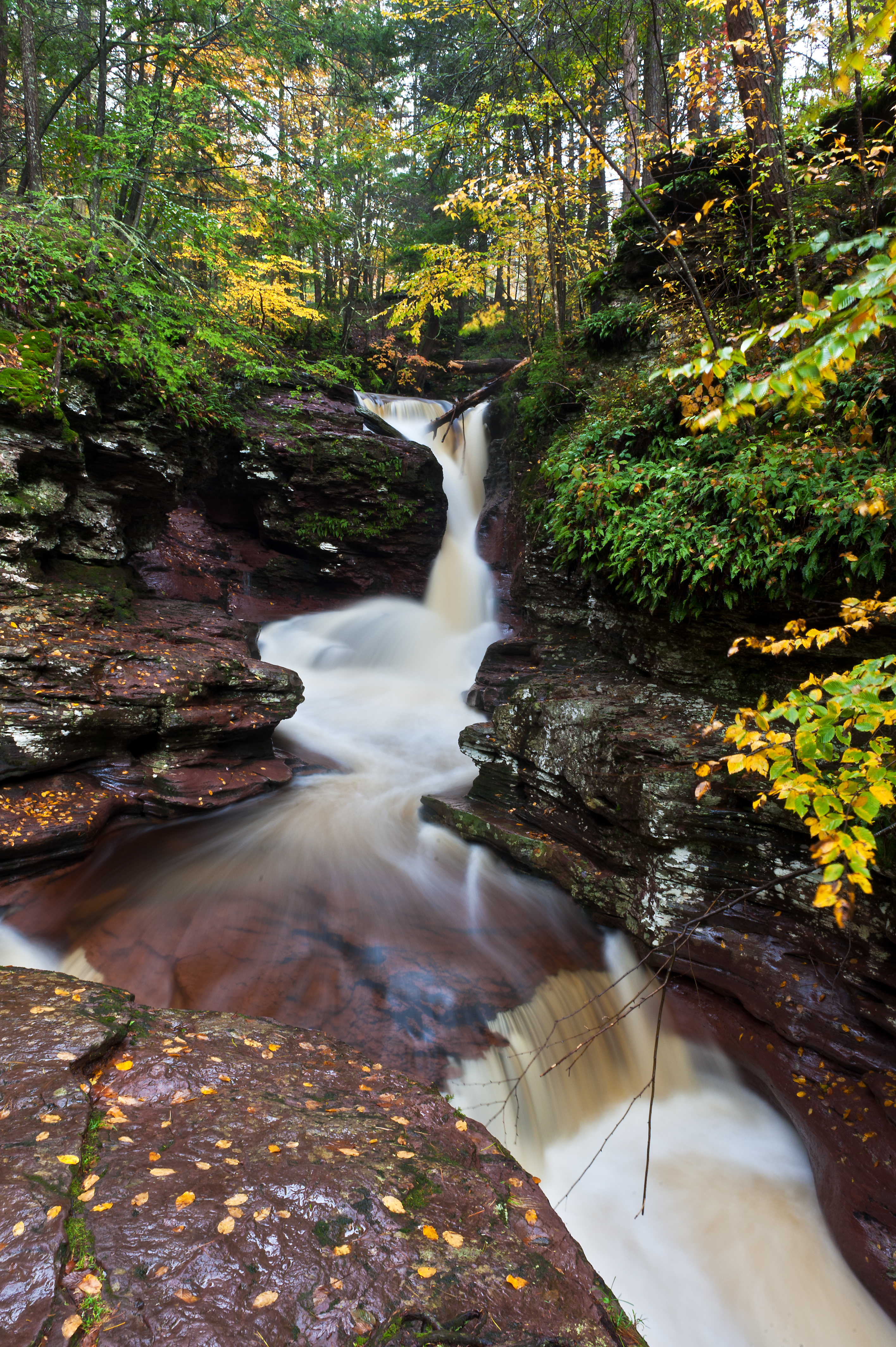
One last waterfall image for today. All of the waterfalls have names–the one below is Adams Falls.
I spent this past weekend at Ricketts Glen State Park in Pennsylvania with three friends, who are also serious photographers. We left early Friday morning in order to begin hiking through Ricketts Glen and photographing the park’s 22 waterfalls that afternoon. I had photographed the waterfalls at the park this past spring, but on this trip my goal was to photograph them framed by the autumn colors of the surrounding trees, and if timed properly, the trees would be at their peak color. I also was hoping that there would be many colored leaves on the ground around the base of the falls to add color to the rocks and cliffs surrounding the falls.
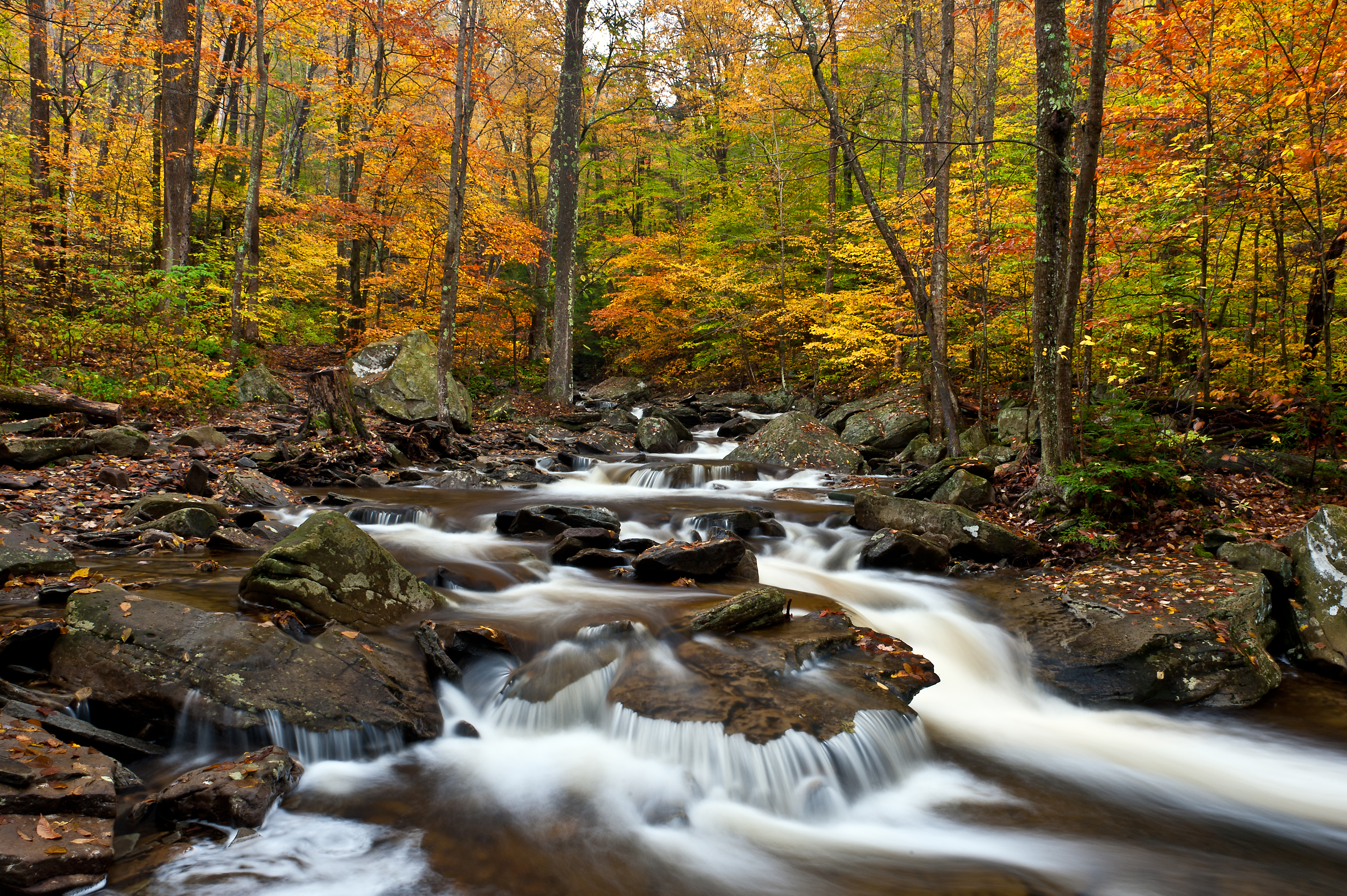
We timed the trip right for a number of reasons. As you can see from the images in this article, the autumn leaves peaked last week, and so there was plenty of color on the trees. Since the leaves had just peaked, and also because of a lot of rain last week, there were plenty of leaves on the ground around the falls. In addition, the rain last week, as well as on Friday when we first arrived, made the falls flow heavily. Due to all of the rain, much of the flowing water was brown from the run-off of surrounding soil. The brown color in the water added to the beauty of what we saw and captured digitally. Finally, with regard to perfect timing, Friday and Saturday were very overcast days making for ideal waterfall photography (filtered light and low contrast). We photographed 21 of the 22 falls. The 22nd was skipped because it was one of the smaller falls, and we were worn out.
Although the conditions were perfect for photography, it was very treacherous on the trails that paralleled the rivers and falls in the park. A significant amount of the trails are on very large rocks that were wet from the rain and mist from the falls and also covered in wet leaves requiring us to move cautiously. This was made even more difficult by all the photography gear that we were carrying. We were either hiking down steep slopes and cliffs or up them as we followed the rivers. There were a few slips and falls and a broken lens, but fortunately there were no serious injuries. There was one very close call, when one of the other photographers slipped on the edge of a large bolder that hung over the top of one of the waterfalls, and began sliding toward the river. It was a scary moment!
The sound of the waterfalls was almost deafening at times, and the when hiking between them the somewhat quieter sound of the river was a pleasant relief. I took some videos with my iPhone 4 to capture the movement of the water and sound of the waterfalls. One of them is below. Click on it to play the video.
I have just started to process the images from Ricketts Glen and some of them were included in this article. As I progress through them, I will add more to another blog article, as well as to a gallery on my website. The gallery is located at: http://stabone.com/p973245629
As you can see from the above image, the flowing rivers were as picturesque as the falls. One final image…
Ricketts Glen State park is a very unique park having so many waterfalls in one location. It is a nature photographers dream location. I will return. It would be a great place to photograph in the winter after a light snowfall, but also potentially very dangerous to hike.
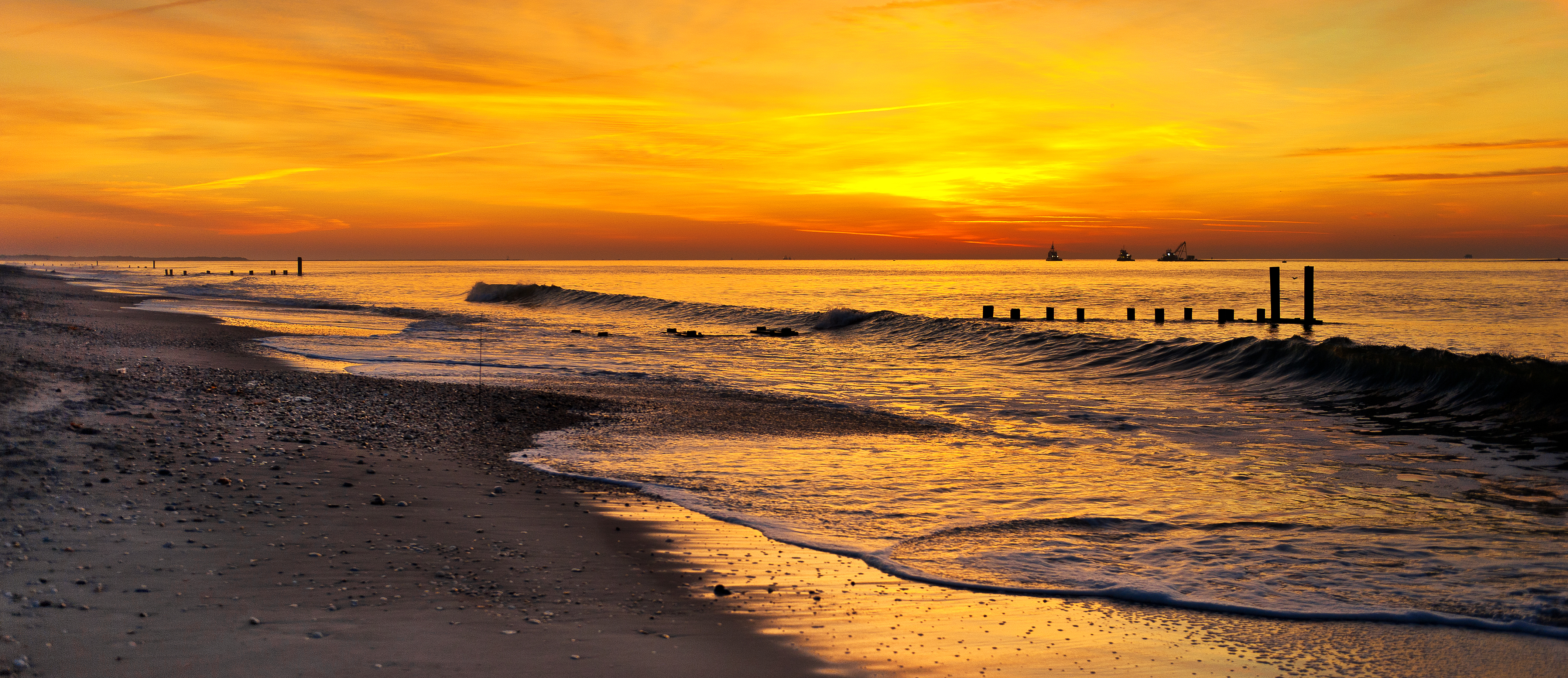
Cape May beach (above) just before sunrise this Monday.
I processed a few more images this evening from Monday morning’s sunrise. I had hoped to review and process some of the images from the other days and locations at Cape May, but did not get to them–maybe tomorrow evening in between packing and getting my gear ready for three days in northern Pennsylvania beginning on Friday. I am looking forward to that trip since the autumn foliage colors will be peaking in the mountains and at Ricketts Glen State Park where there are 22 waterfalls.
When the sun rose above the horizon, the colors shifted from orange to a deep red.
The above photo is an HDR image of Sunday evening’s sunset in Wildwood just north of Cape May.
We returned from Cape May early this evening after spending a long weekend there. It was our first trip to Cape May, and it was a perfect in every way. After unloading the car and unpacking, I only had time to transfer my image files to my iMac. However, I squeezed in enough time to process one image so I could post it to my blog.
This photo was shot this morning. Of the the three sunrises this long weekend in Cape May, this morning’s was the best, from a photography perspective. It was definitely worth getting out of bed early to witness and capture the beauty of the sun rising over the Atlantic as it turned the sky various shades of orange.
What was also interesting and helped to make the above image were the fishing boats that were out early too.
I have many more images from Cape May and will be processing them this week and posting some to my blog.
You may copy and use any images on this blog for personal purposes such as on your blog, Facebook page, desktop image, etc. as long as you indicate that I am the photographer and provide a link to my website. All other uses, such as for commercial purposes, are subject to licensing arrangements made with Stephen L Tabone.