Black-necked Stilts Mating

Today, I spent a few hours at Merritt Island National Wildlife Refuge photographing a wide variety of birds to include Sandpipers, Plovers, Great Blue Herons, Great White Egrets, Red Herons, Tricolor Herons, Snowies, White Pelicans, as well as a few others to include Black-necked Stilts. I have yet to review and process any of these images, but did review and process a very special video that I am anxious to share.

While photographing a pair of Black-necked Stilts as they foraged in shallow water, they stopped and began a courtship ritual. Believing that I was about to witness them mating, I switched my Nikon D800 from shooting stills to video. My suspicion was correct. The male pranced around the female several times, while she maintained a rigid, forward looking stance until the mating had ended. Then, the two stilts walked away quickly and very closely together, appearing to be gazing into each others eyes.

Be sure to watch the video in the full screen mode.

I have a lot of image processing to do from other locations as well as Merritt Island, and will eventually upload them to my website and/or this blog, but I thought this video was worth posting by itself.

Posted in Bird Photographs, Nature, Wildlife | Tagged , , | 8 Comments

Slaughter Beach and Blackwater National Wildlife Refuge

This past weekend, I left home at 2:30 AM to drive to Slaughter Beach in Delaware to witness and photograph the thousands of Horseshoe Crabs that come out of the Delaware Bay to spawn and lay eggs on the beach after a full moon in May each year. That weekend it also was the “super moon,” so my expectations were very high. What also makes this an amazing event is when the Horseshoe Crabs are spawning, thousands of shorebirds (e.g., Red Knots) arrive from as far away as South America to feast on the crab eggs in order to replenish their weight and food supply for the rest of their joinery to Canada, where they nest.

Unfortunately, I was told that the Horseshoe Crabs arrived for the Saturday evening high tide, but I arrived for the Sunday morning high tide, and there were only a few dozen Horseshoe Crabs and not many shorebirds. I felt like the (below) frustrated and struggling Horseshoe Crab on his back, disappointed that we missed the event. This is one of the crabs that turned over in the surf; I flipped it back over so it could return to the bay. They are prehistoric looking creatures, and it is no wonder, since the earliest Horseshoe Crab fossils were found in strata from the late Ordovician period, about 450 million years ago. (Double click on the below image to see the detail of this strange crab, as well as the other images in this article to see them larger.)

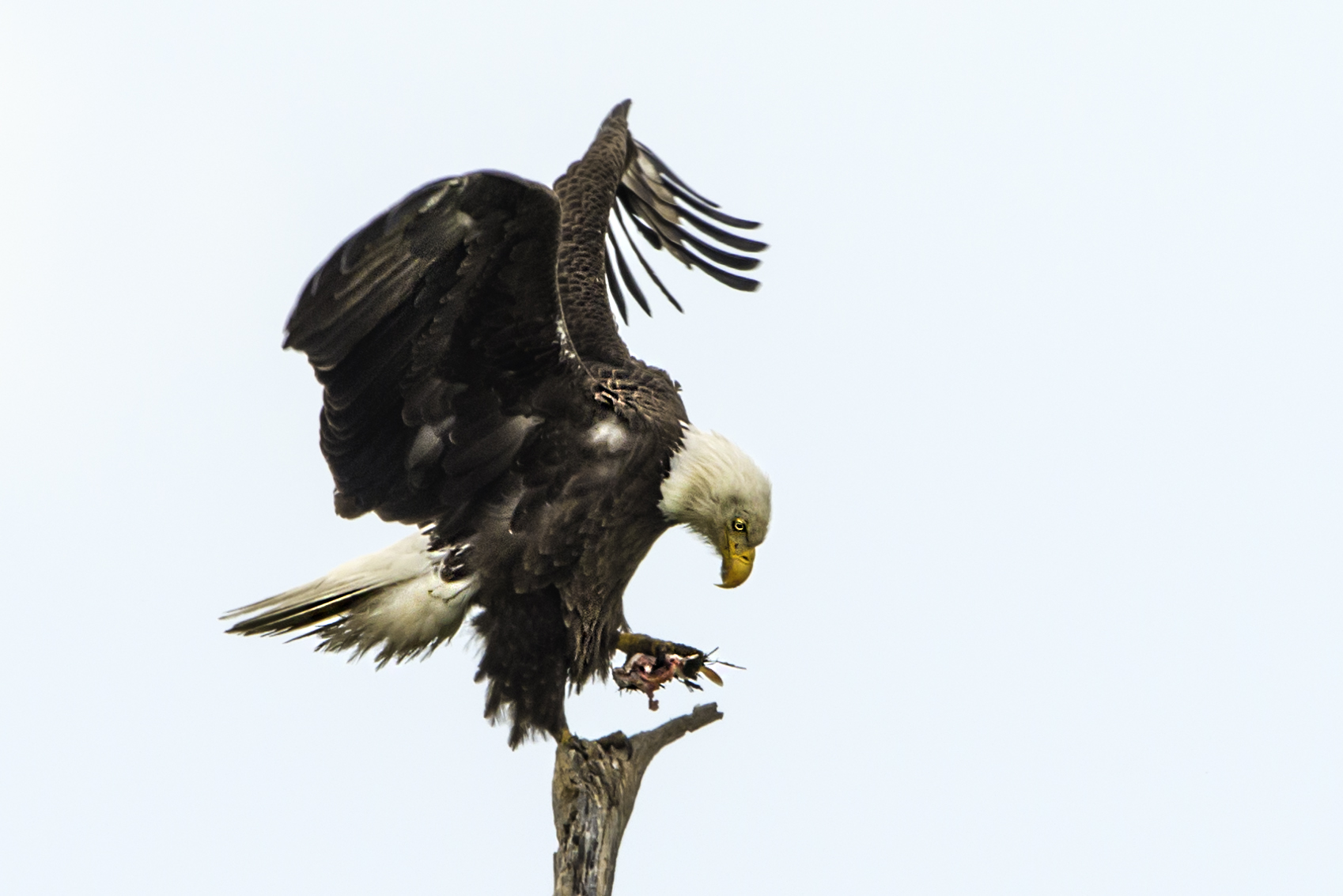
Since nothing was happening at Slaughter Beach, I went to Blackwater National Wildlife Refuge in Maryland. Blackwater was not disappointing, because it was very active with adult and juvenile eagles, as well as an active eagle’s nest with two eaglets in it. I have only started to process my images from last weekend, but below are two of the eagle images. In the below images, an eagle had just returned to a favorite perch in a tall, old dead tree with a piece of its prey.

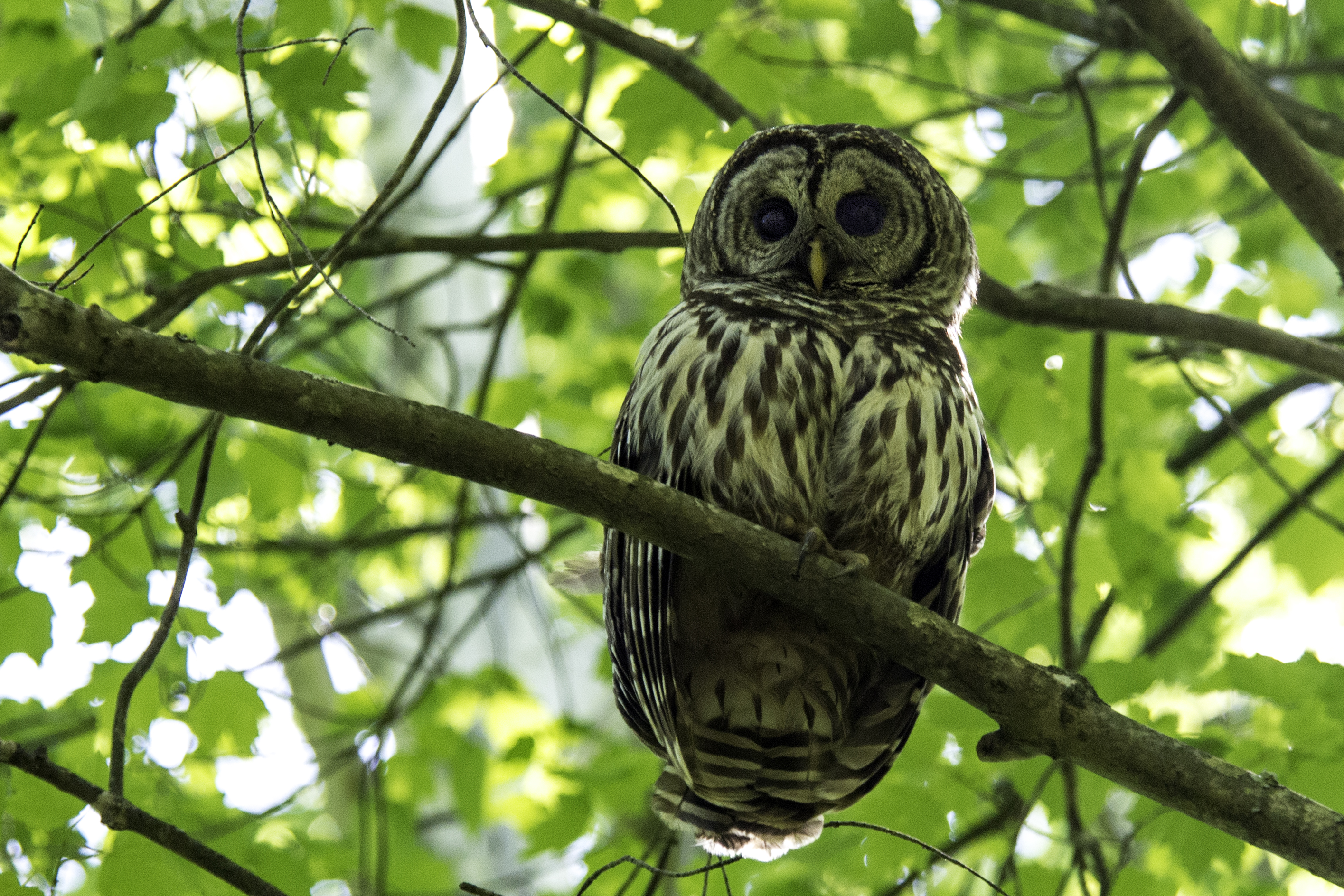
As mentioned above, I have many more images to review and process from last weekend, and will eventually upload them here or to my website. I am also behind in posting other images due to conflicting commitments and spending more time shooting photos than processing them. In an attempt to get partially caught up, below are two images of the Barred Owls that I discovered in late March and that I photographed about two weeks ago. The trees are fully leafed out now, which makes getting a clear shot of them very difficult.

I hope to get caught up on processing my images over the next couple weeks. However, that is unlikely, since I am planning several trips to national parks and refuges, but I will have my laptop with me and try to keep up and post additional articles and images to my blog. When I return from those trips, I hope to be able to photograph the Barred Owls’ owlets and the chicks of the Osprey that I photographed recently and posted to this blog.

Posted in Uncategorized | Tagged , , | 8 Comments

Warblers and Other Birds Photographed with the Nikon D800

This weekend, I went to Occoquan Bay National Wildlife Refuge (NWR) to locate a Great Horned Owl’s nest that I was recently told about. Unfortunately, the nest was empty and the owlets had fledged. Nevertheless, I was not totally disappointed because I saw and was able to photograph several other birds, many of which I had not seen before or very infrequently.

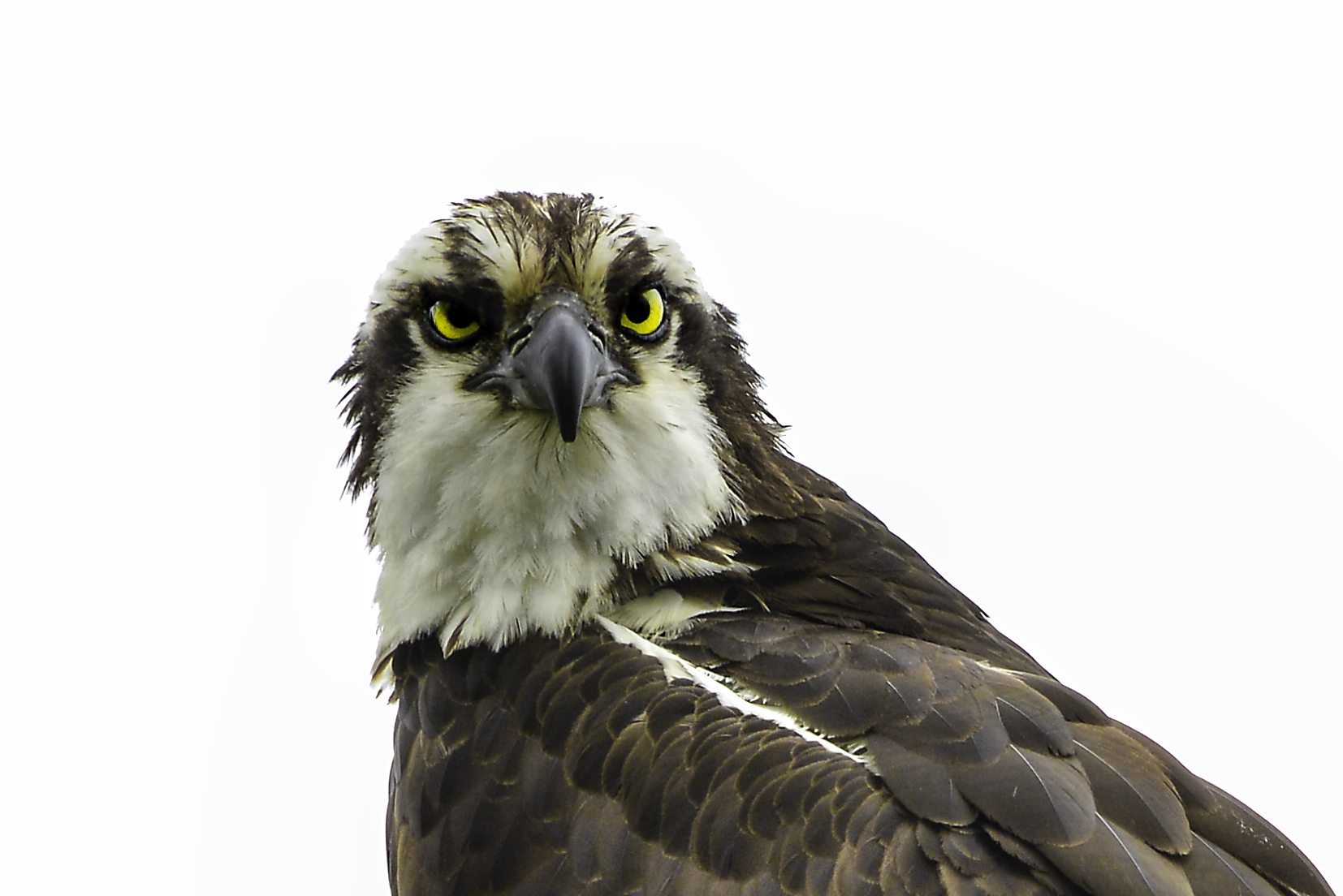
Early each spring, one of the very common birds to return to Occoquan Bay NWR are Ospreys (above and below). This Osprey was perched on a dead tree limb and did not seem to be bothered by my presence and occasionally stopped preening to take a close look at me. It was an overcast, cool morning with no color in the sky that provided perfect filtered light to capture this image.

Below is an image of a Rose-breasted Grosbeak. I had not seen one in three years. The grosbeak did not stay long, hid behind leaves in the trees and flew away quickly. It was a male; the females are drab and look much like a sparrow. I was disappointed that I could not get a clearer shot before it flew away.

Below is an adult male Blue-winged Warbler. They winter in Central America, and I suspect it, as well as the Rose-breasted Grosbeak, were migrating north through Virginia. The breeding male Blue-winged Warbler is unmistakable. It is yellow above and below. Its wings are gray with two white bars, and there is a black eye stripe. Females are duller, but otherwise similar. They feed on insects and spiders.

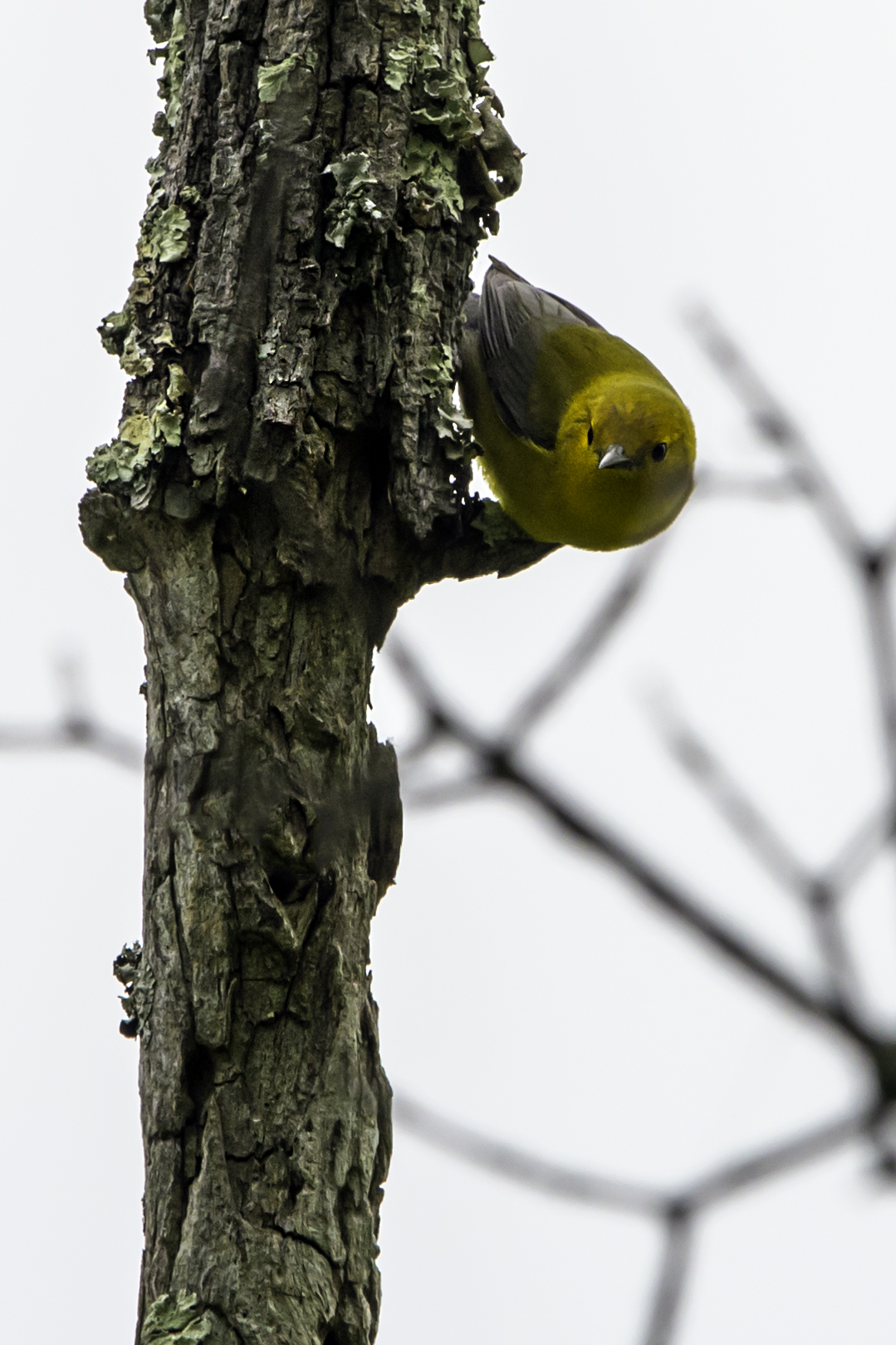
Below is a Yellow Warbler, one of over 50 species of warblers in North America. The Yellow Warbler was in a shaded location on an overcast day, and therefore, its brilliant yellow colors were not very well lit. As you can see, the Yellow Warbler does not have the black stripe behind its eye, like the Blue-winged Warbler above. Yellow Warblers winter in Central and South America and also feed on various insects that they forage in trees and shrubs.

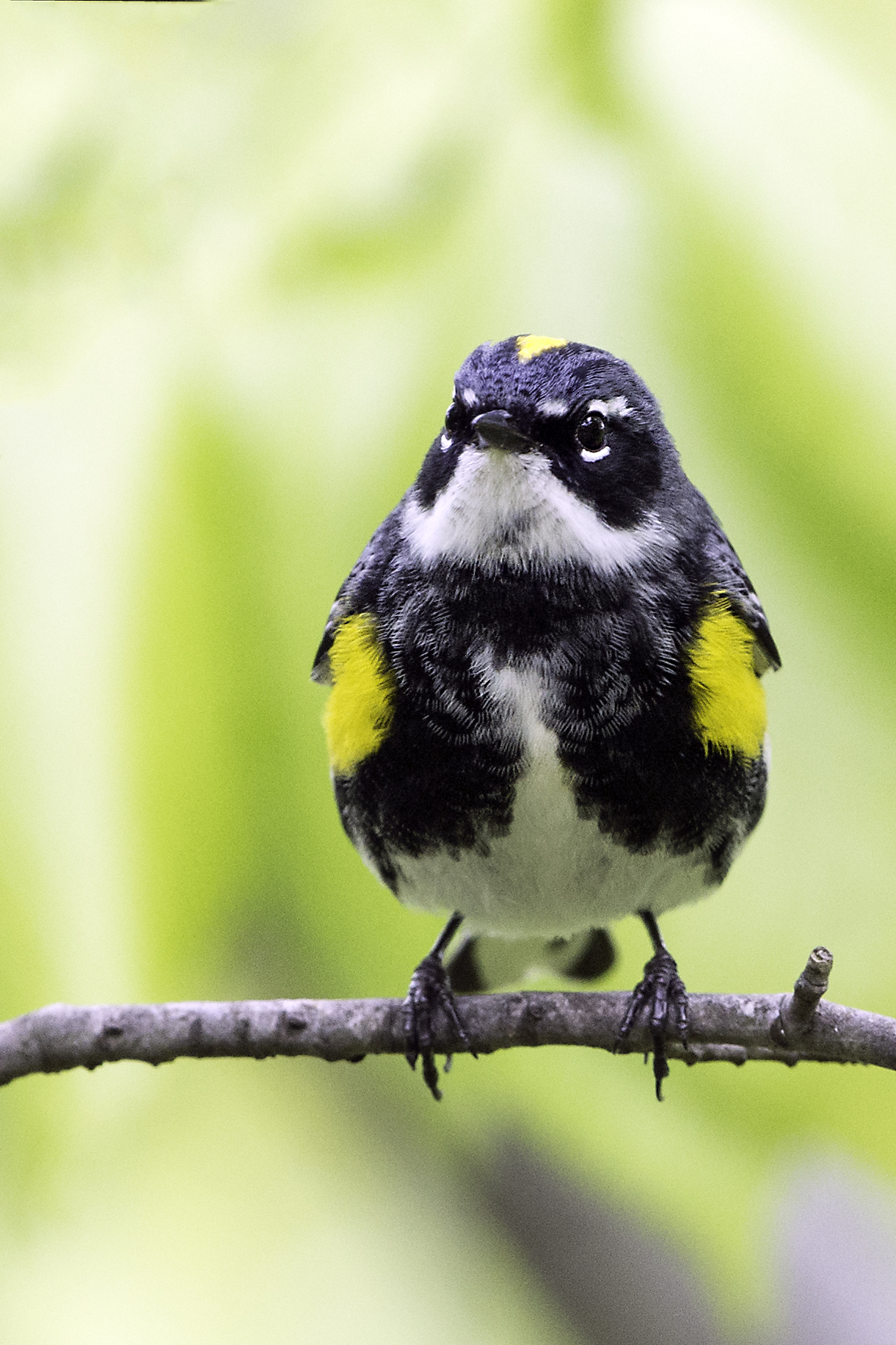
The next two images are of a Yellow-rumped Warbler. It was very difficult to photograph the warblers, and in particular the Yellow-rumped Warbler, because they were constantly on the move, fluttering around the trees looking for prey. However, this Yellow-rumped Warbler sat still just long enough for me to get a couple of good photographs. I included both so the bright yellow stripes on its wings and on the top of its head can be seen. It gets its name because it has a yellow patch on its back above its tail, which cannot be seen in these images.

Below is a Blue-gray Gnatcatcher that was singing away, which provided an opportunity to photograph it. Otherwise, this bird was in constant motion hunting for insects in the trees. They often mimick the songs of other birds.

Much of the time at Occoquan Bay NWR, I saw many Red-winged Blackbirds, but the one below caught my attention as I was walking along the edge of a wetland. The Red-winged Blackbird was in a small dead tree, backed by the green new growth in the wetland and signing very loudly, as they often do. As you can see below, its chest was puffed out from a full, deep breath enabling it to call back and forth to other nearby Red-winged Blackbirds.

Below is a short video clip of the Red-winged Blackbird calling to another blackbird. Be sure sure to have your sound turned up and view it on your full screen.

The above images and video are a small representation of the images that I captured last weekend. I am very impressed with the quality of the images I am capturing with my new Nikon D800. I will posting additional articles with more of the birds that I photographed last weekend to include more images from Sunday of the pair of Barred Owls that I have been monitoring.

Posted in Bird Photographs, Nature, Wildlife | Tagged , , , , , | 7 Comments

Baby Eastern Bluebirds and Bluebird Eggs

Last weekend, I checked the 15 Eastern Bluebird nesting boxes at Merrimac Farm Wildlife Management Area (WMA), which is something I volunteered to do last year, and I am doing again this year. It was the first time that I checked the nesting boxes this year.

In the 1960s, the population of Eastern Bluebirds declined to a level raising fears of extinction. However, through volunteer intervention and the use of Bluebird nesting boxes, the Eastern Bluebird is now doing well. As a volunteer, about once a month during the spring and summer, I take turns with other volunteers checking the nesting boxes. Checking the nesting boxes entails inspecting the contents of each nesting box for activity and recording findings in a log, cleaning out old nests and other debris such as wasp nests or nests of other birds, and identifying any nesting boxes in need of repair.

Merrimac Farm WMA consists of 300 acres, and the 15 Bluebird boxes are spread from one end of the wildlife area to the other. It takes a couple of hours or more to locate and inspect the nesting boxes, but it is very rewarding for many reasons to include just being outdoors in a natural environment with open fields and heavily wooded areas where other wildlife can be seen (and photographed).

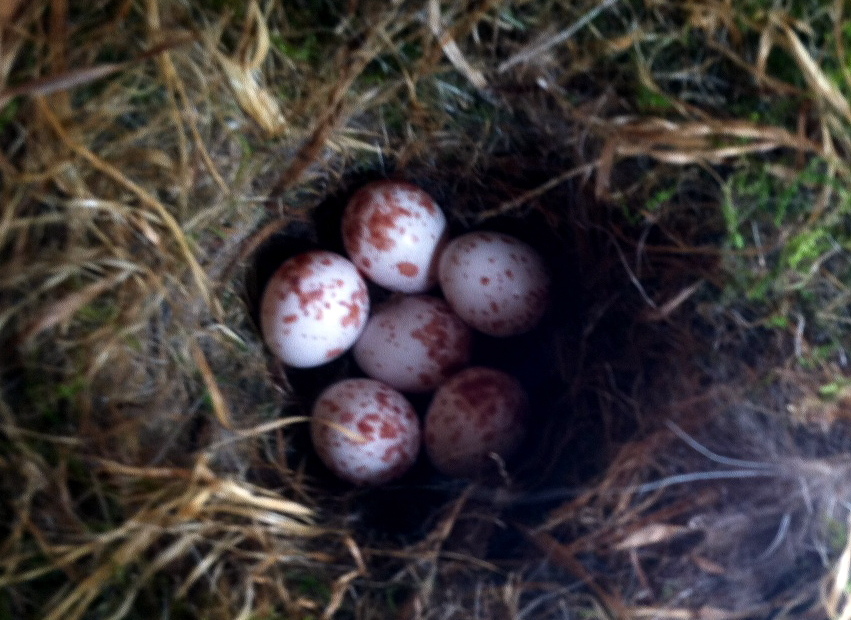
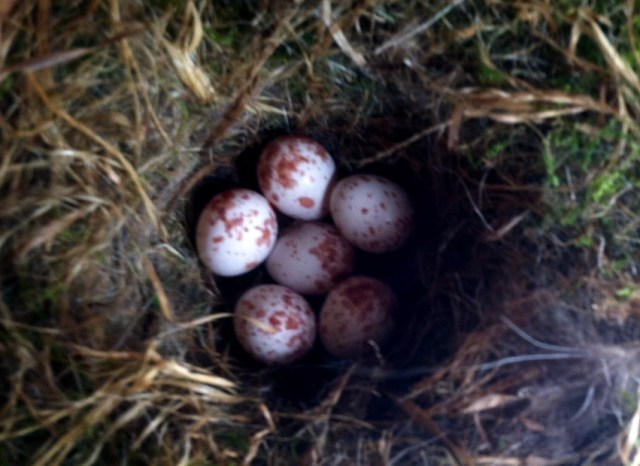
I found more than half of the nesting boxes had some form of ongoing activity. However, there was one nesting box occupied by Chickadees. That box with a Chickadee at its entrance can be seen in the opening image (above).  When I opened the box to check its contents, I found 6 Chickadee eggs (below–this photo and the others that follow were taken with my iPhone). The Chickadee, as well as the Bluebirds that I saw, while checking their boxes, kept a close eye on me and were glad to see me leave. By the way, we do not remove Chickadee nests from the Bluebird boxes.
Below is a photo of one of the boxes containing Bluebird eggs. You can easily see the difference in size and color from those of the Chickadee.

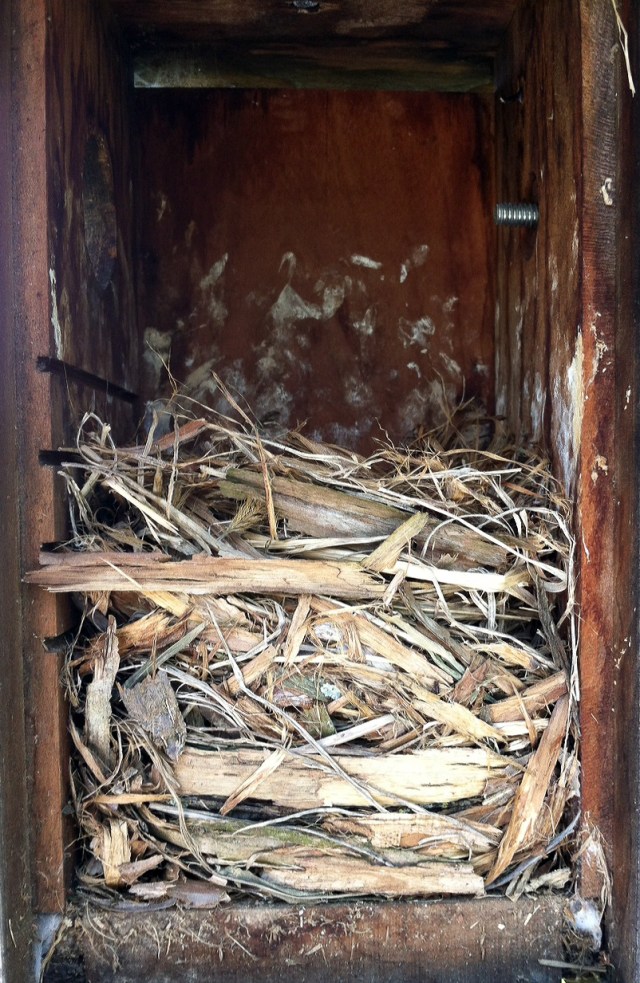
In most instances, when the nesting box is opened, it is not possible to see if the nest is occupied because of the height of the box from the ground. In order to see into the nest, I use my iPhone camera; however, most other volunteers use a mirror. Below is one of the nests after the box was opened.
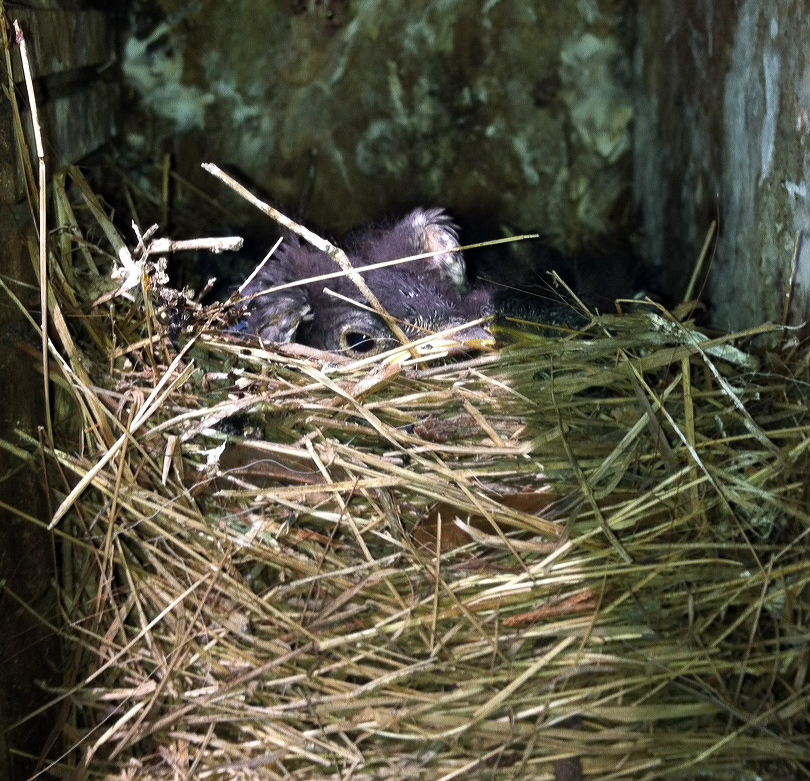
In the next photo, you can see a young bird’s eye looking at me after I opened the nesting box. Therefore, I quickly closed the box. As you can see, it is important to document the status of each nest and its contents so the next volunteer does not open a box with young birds that are about to fledge, thereby causing them to leave the nest too soon. Unfortunately, the volunteer program at Merrimac started late this year; therefore, I was documenting the status of the nests for the first time. Otherwise, this nesting box should not have been opened until after the fledglings had left the nest.

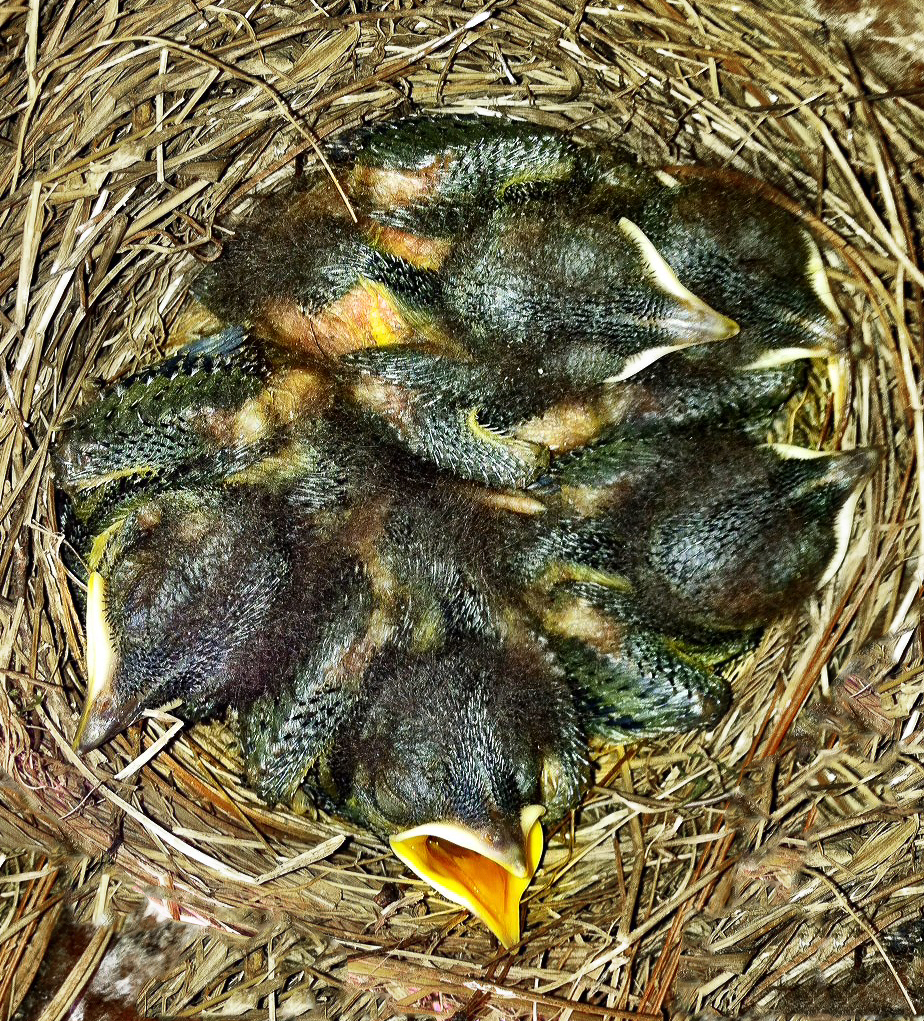
The next two images are of other nests containing very young Bluebirds. The first image shows Bluebirds less than one week old that are naked of any feathers. In the second photo, the young Bluebirds are more than one week old, and their feathers are beginning to grow.

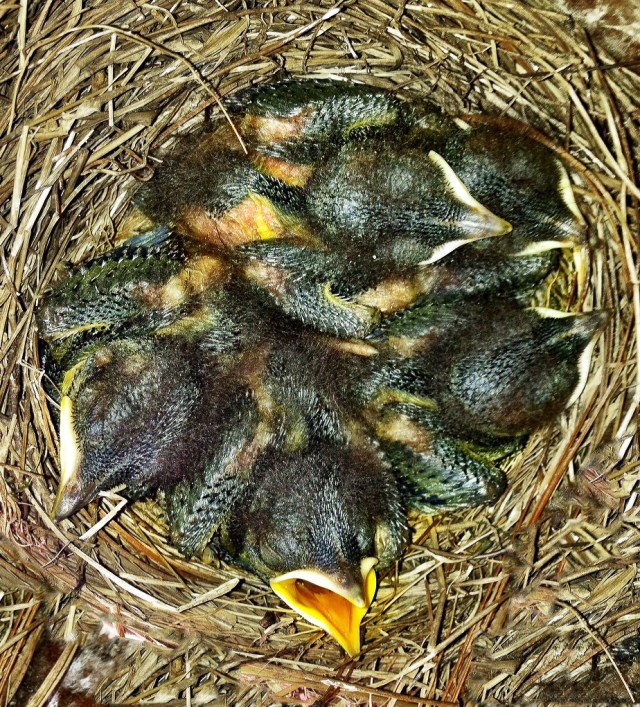
Bluebirds leave the nest between 17-21 days after hatching. The nesting boxes are cleaned out after the fledglings leave the nest. Eastern Bluebirds often have two broods of young each year.

Bluebirds normally eat a wide variety of insects, but during the winter months, when there are no insects, Bluebirds that do not migrate will often feed at bird feeders. We have two pairs of Bluebirds that come to our feeder during the winter months. Below is a photo I took of a Bluebird standing in the snow last winter after visiting out feeder.

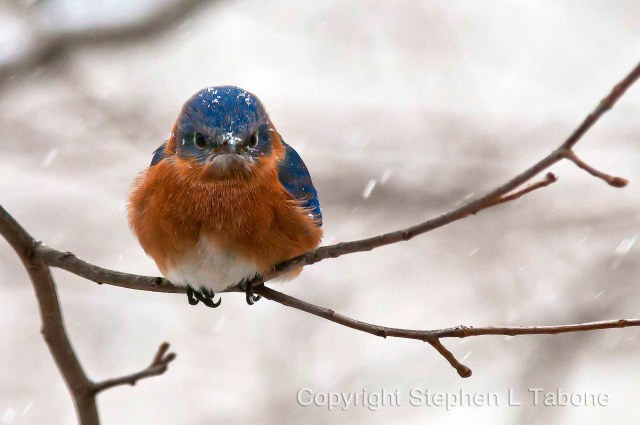
And, below is a photo that I took of another Eastern Bluebird two winters ago that was not enjoying the snowfall. The Bluebird certainly did not look happy.
I will be checking the Merrimac Farm WMA Bluebird boxes several more times throughout this spring and summer, and if I see anything interesting and can photograph it, I will post it to my blog.
Posted in Bird Photographs, Merrimac Farm Wildlife management Area, Nature, Wildlife | Tagged , , , , , , | 7 Comments

Canada Geese Goslings

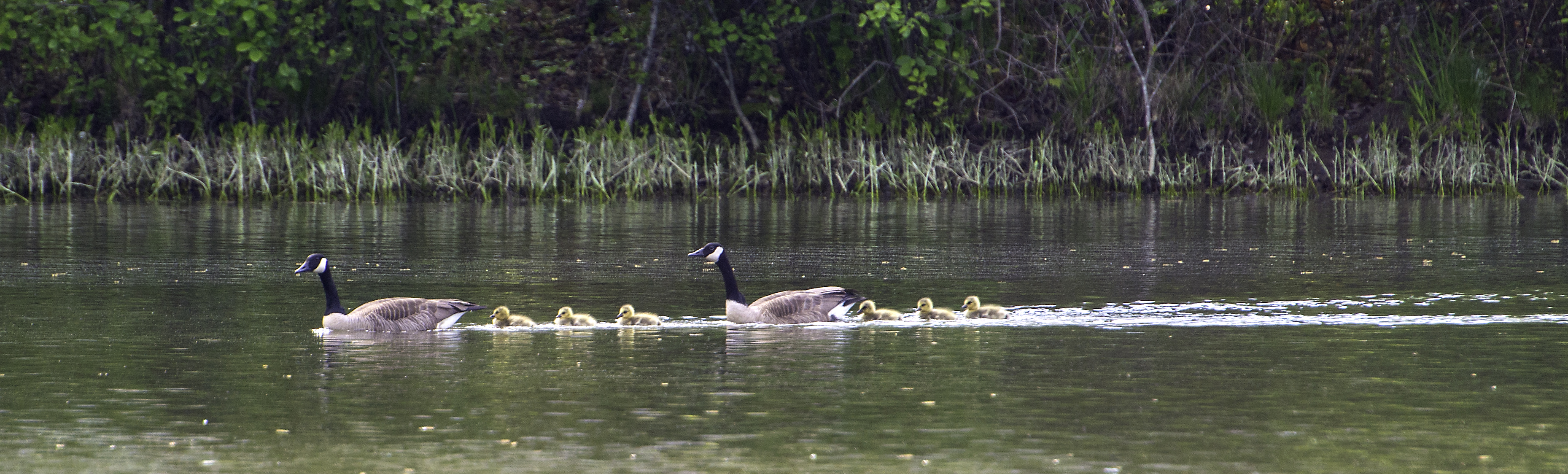
This evening when I arrived home, my wife told me that she saw two Canada Geese and their six goslings on the lake behind our home, Lake Montclair, Virginia. Canada Geese are very common on the lake. Many of the geese stay all year and do not migrate. I photographed a Canada Goose on a nest a couple of weeks ago, and these goslings are the first we have seen this year.

Canada Geese mate for life. They will take turns incubating the eggs on the nest, which takes about 28 days, but it is the female that spends most time on the nest while the male protects her and the nest. Shortly after hatching, the goslings are led to the water. As in the above image, the female usually leads the family with the male in the rear providing protection.

After hearing about the sighting, we decided to go down to the dock, me with my camera, to see if they were in the area, and within minutes, they appeared across the lake–what luck! I fired off a few shots (above), but they were on the move, as can be seen from the wake they were leaving behind them.

My kayak was on the dock, so I ran up to the house to get my paddle, put the kayak in the water and went in search of them. They had disappeared by the time I got into the water, but I caught up with them around the other side of the island. When I approached (above), they headed to the shoreline.

I followed them around the lake for about an hour trying to maintain some distance so as not to disturb them too much. Unfortunately, every time I got within a good shooting distance, they headed to the shore, out of the water and into the weeds and undergrowth along the shoreline. Therefore, I backed away, and they eventually returned to the water. This took place several times. Nevertheless, I managed to get a few decent images of the geese and their young.

In the above image, the gosling on the end was keeping a close eye on me. Since Canada Geese are so common, they are not one of my favorite photography subjects, but their young are irresistibly cute.

The above image was taken at one of the times when they fled the water to hide on shore. They are safer in the water so they did not stay on land long–only long enough for me to move far away.

These images were taken with a Nikon D800 in the DX mode, 70-200mm lens with a 1.4 teleconverter. Most were shot at f/8 and ISO 400-1000.

Posted in Bird Photographs, Lake Montclair, Nature, Wildlife | Tagged , , | 12 Comments