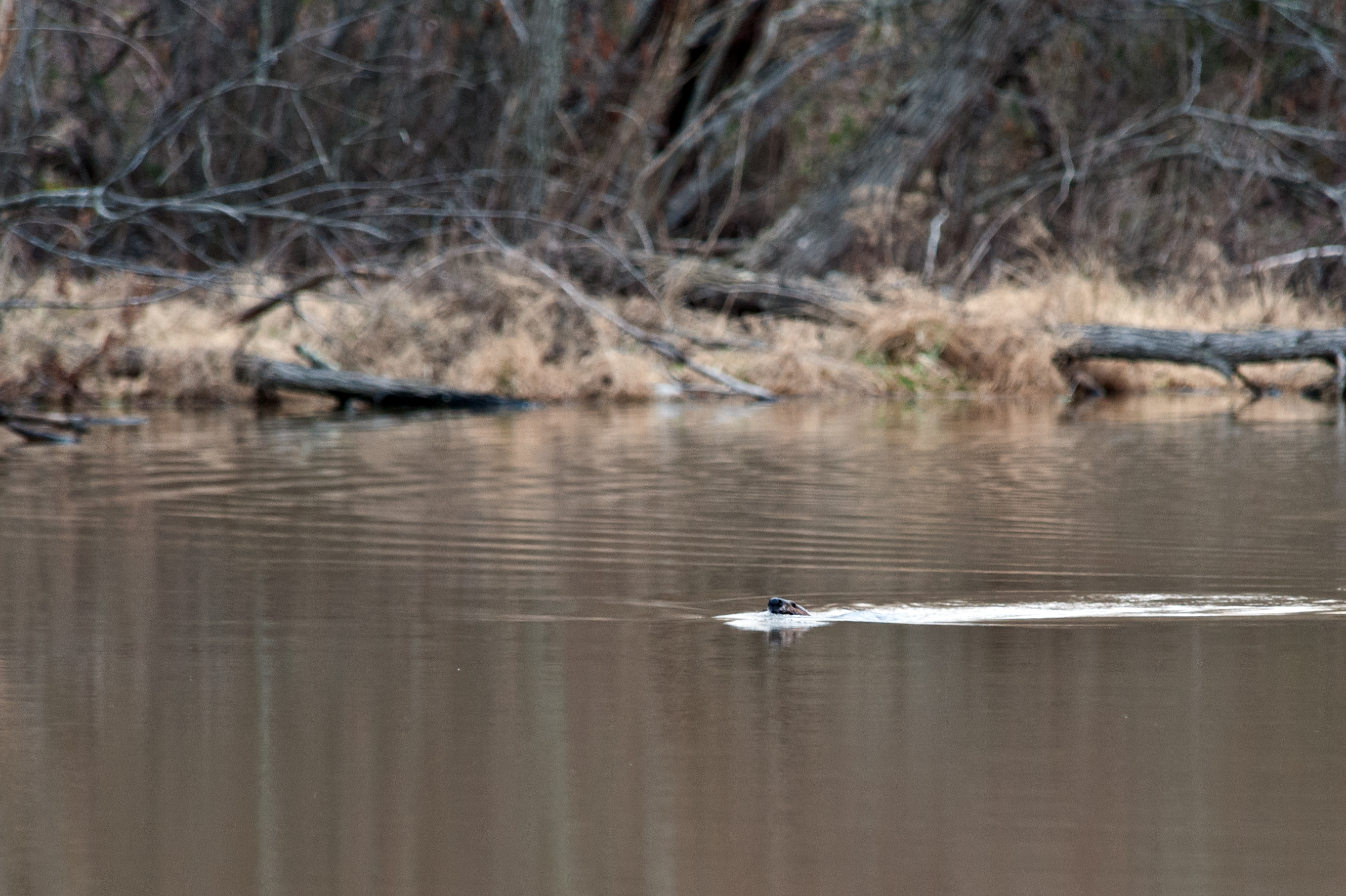
Red-breasted Merganser

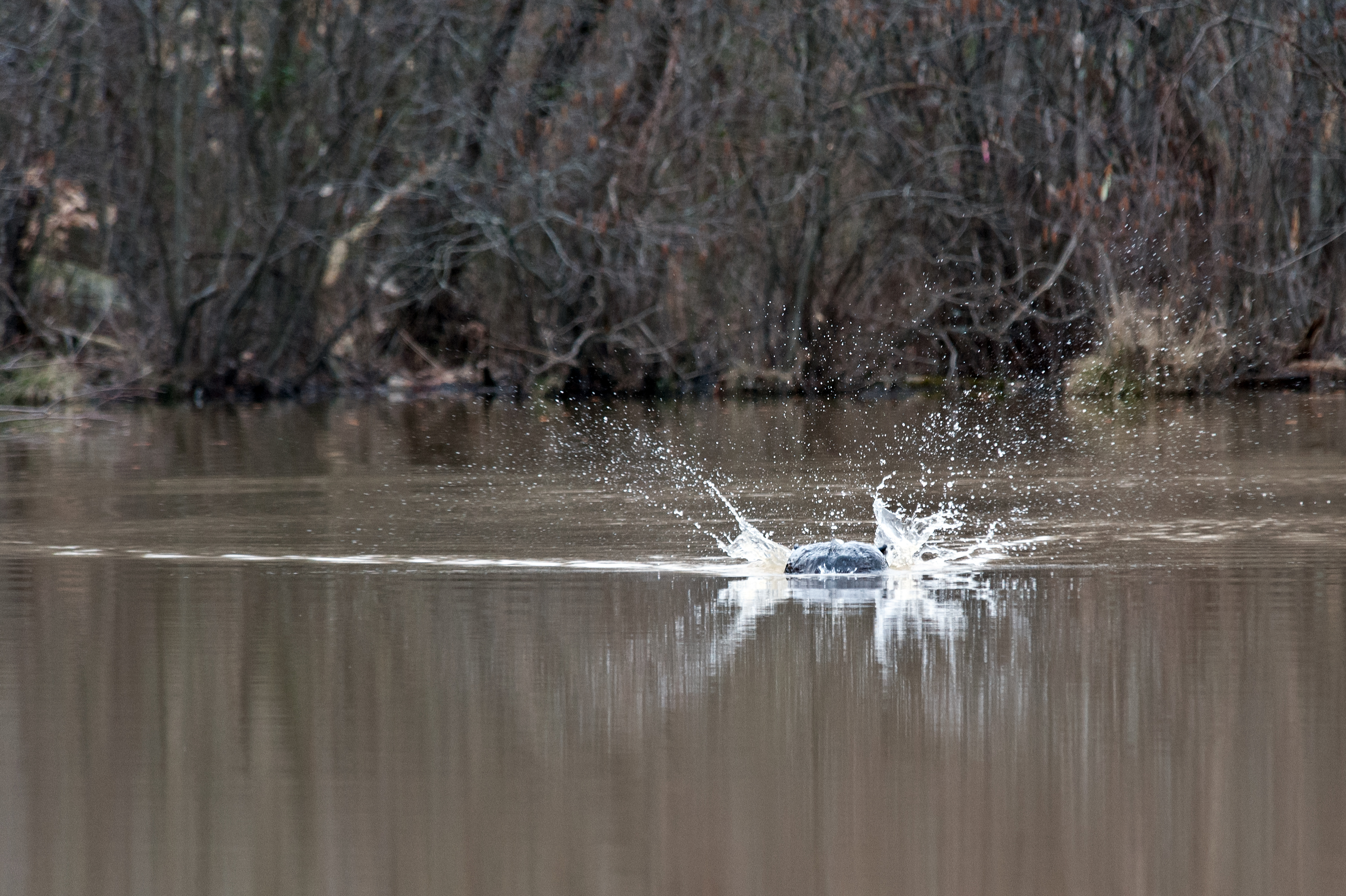
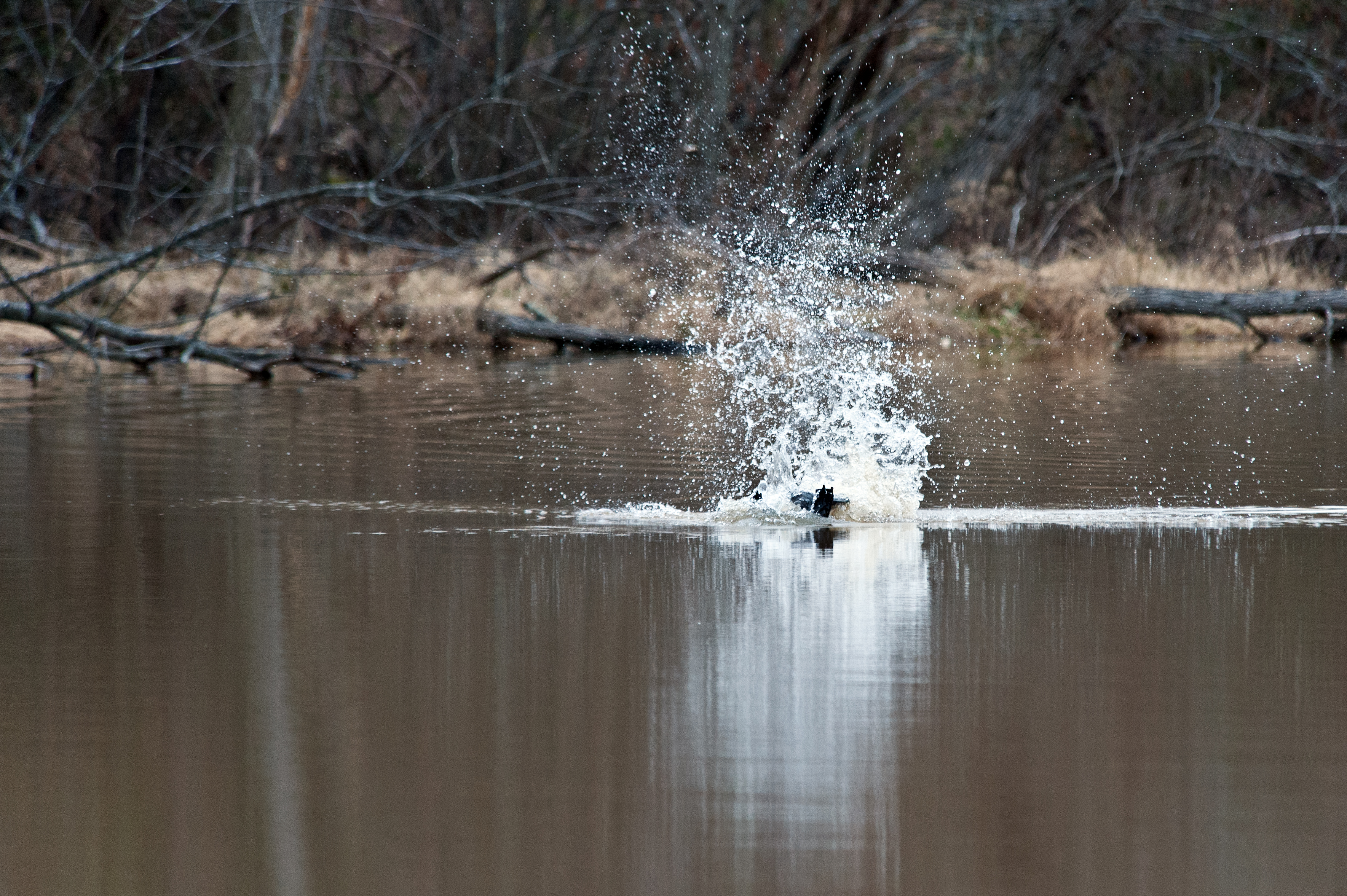
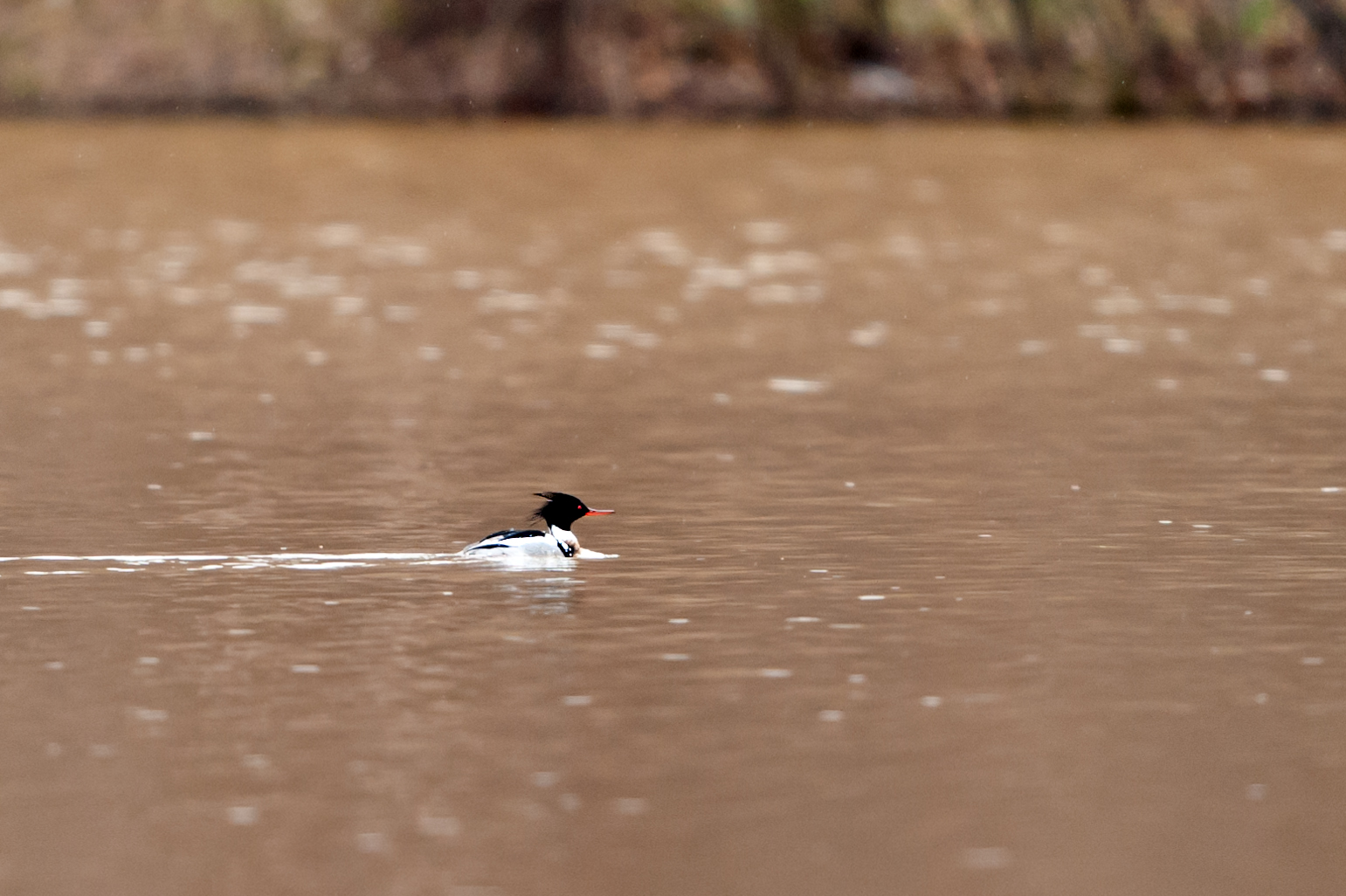
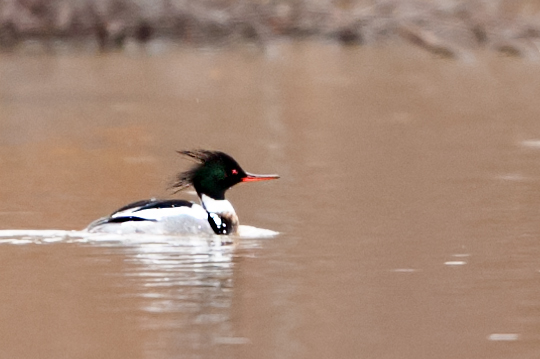
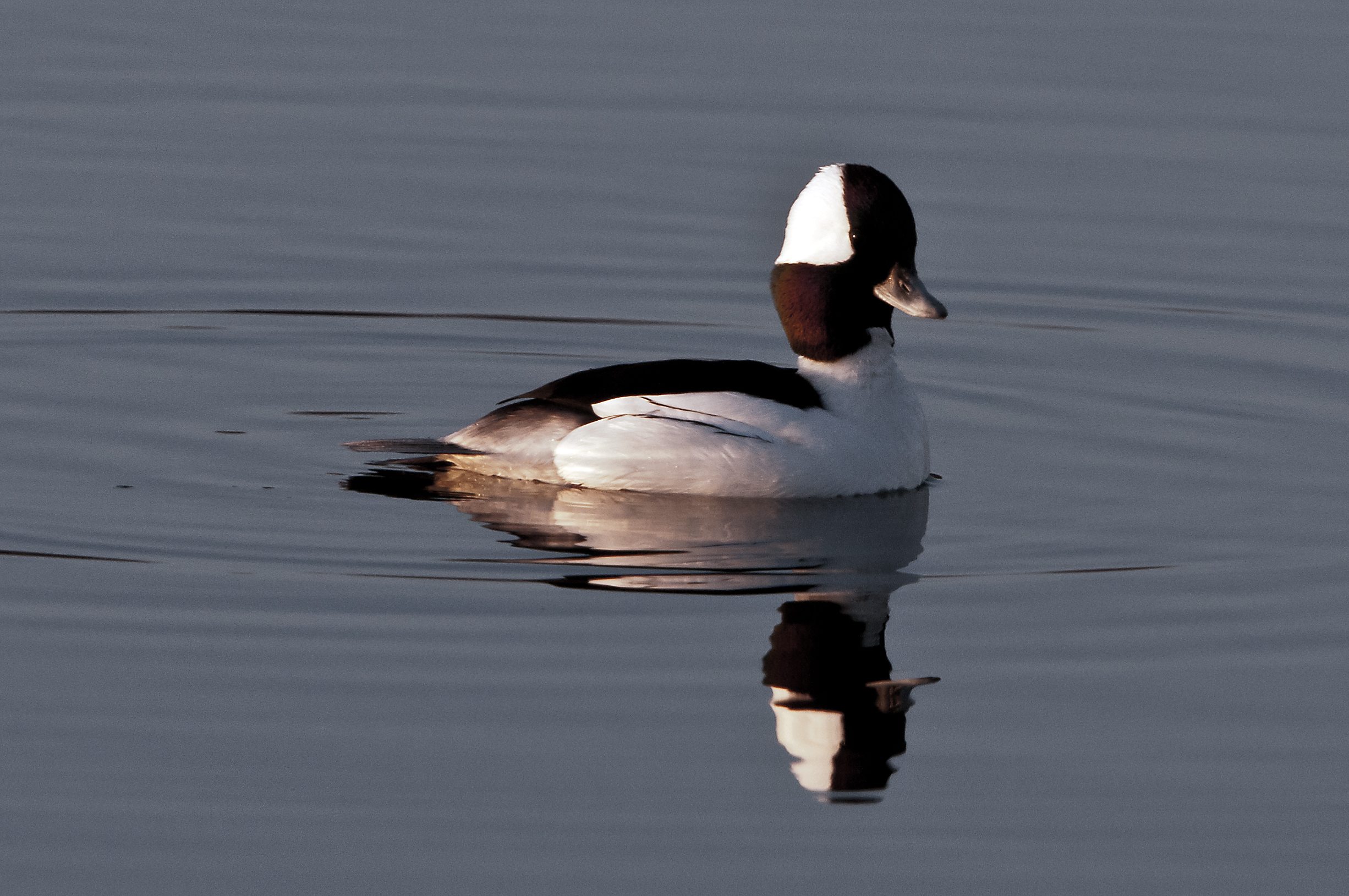
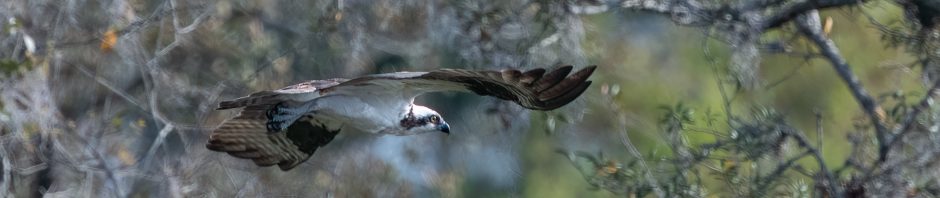
I was looking out one of our windows on to the lake late this afternoon, when I spotted a male Red-breasted Merganser.  There were no others in sight.  I have never seen one on the lake before, and actually, had never seen one before anywhere.  So, I grabbed my camera and ran down to the dock.  By the time I got there, it had moved even further away (more than 100 yards), but I managed to get a couple photographs of him before he rounded the bend towards Powell’s Creek.

The images are far from perfect, but I am excited to have seen a Red-breasted Merganser and wanted to share it, since many of you may not have seen one before either.

They are a very unusual looking diving duck with a long thin red bill.  They are supposed to be one of the fastest level flying birds and supposedly can fly at 100 mph.  Hope I see more, and am better prepared.

Posted in Bird Photographs, Nature, Wildlife | Tagged | 4 Comments

Snow Geese at Prime Hook National Wildlife Refuge

Before I begin this post, I want to share my excitement and thoughts about this blog. Tomorrow is March 1, and it was in March last year that I started it to share my passion for photography, as well as my love for being outdoors on a refuge, preserve or other natural area observing nature’s beautiful landscapes, seascapes and wildlife. After 102 posted articles, over 14,200 views, 391 comments, and today averaging over 1,800 monthly views, I am very pleased and excited by the number of you that follow and read my blog and take the time to leave comments and/or email me about my articles and photographs. It has evolved into my primary way of sharing my “adventures” and photography, and the significant level of readers, which has been steadily increasing, is inspirational and very rewarding. Thank you to all of you!  Now to this article about the Snow Geese that I saw and photographed this past Sunday. It was a breathtaking experience and one that I will never forget, and this blog provides a way to share that incredible day.

The trip to Prime Hook National Wildlife Refuge in Delaware started at 2:00 AM on Sunday morning, when my friend, Ceaser, and I drove over three hours to get there. When we arrived, it was still dark, which is the way we planned it. We had never been to Prime Hook, but I had heard from a friend that there were hundreds of thousands of Snow Geese there. Prime Hook NWR is on the Delaware Bay and consists of over 10,000 acres of freshwater and saltwater marshes and wetlands, grasslands, ponds, wooded areas, and a 7 mile long creek. It is well known as one of the best habitats along the Atlantic Coast for spring and fall migratory birds. It also is known for large flocks of wintering Snow Geese.

Prime Hook has several roads that lead into the refuge and that end at the Delaware Bay. We chose the road where I had heard the geese may be found. As we were driving along the narrow road with wetlands and ponds on both sides, the headlights from Ceasar’s SUV illuminated what appeared to be some Snow Geese. We stopped and I opened my window, and we heard the load squawking of the geese. From the sounds they were making we could tell there were a lot of geese, but we could not see them because it was a very dark morning–there was no moon in sight. We quickly began to set up our photography equipment, tripods, cameras, lenses, and shutter releases. It was cold and windy, but with our focus on photographing the geese, we could barely feel the frigid  weather.

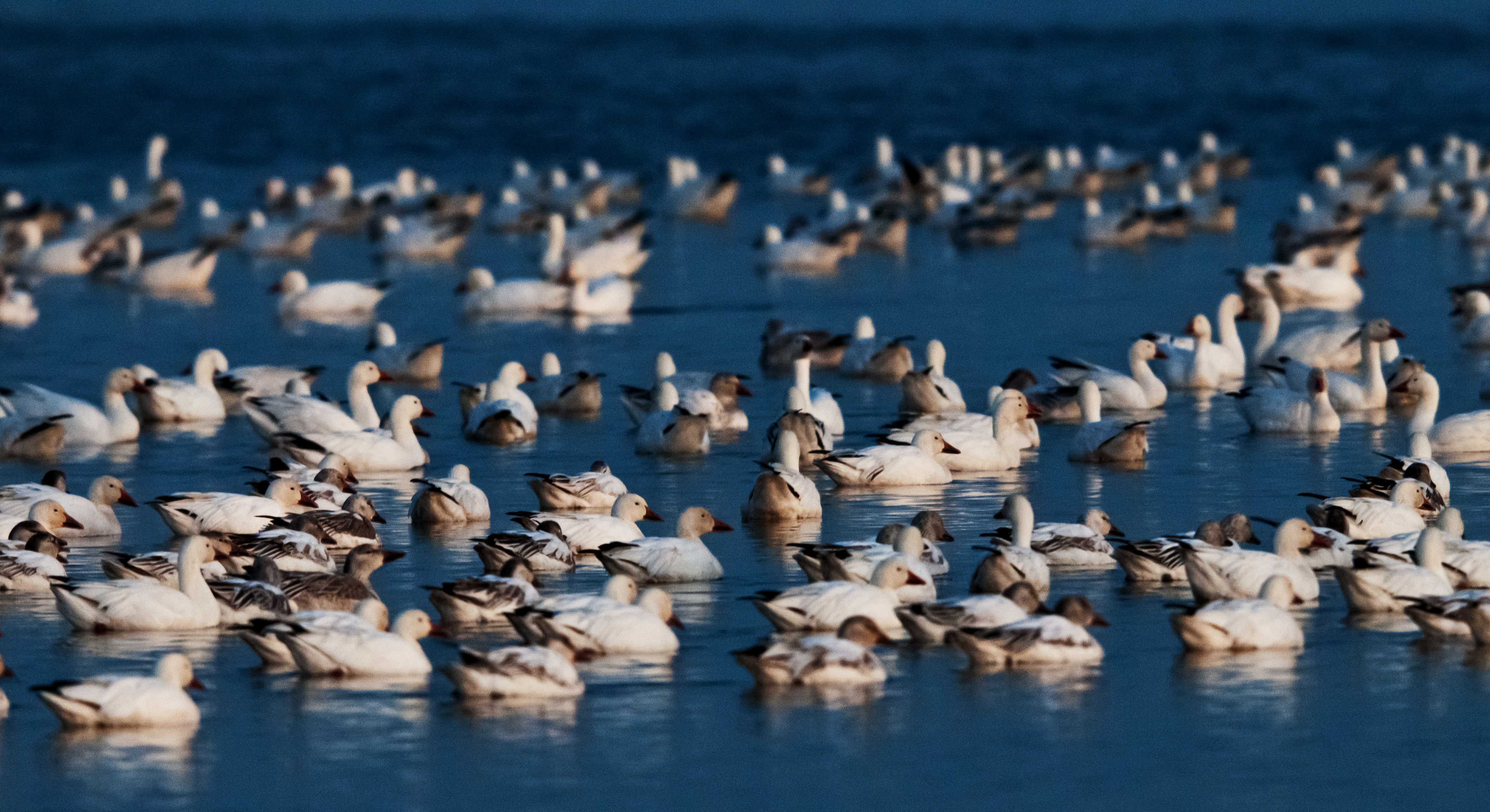
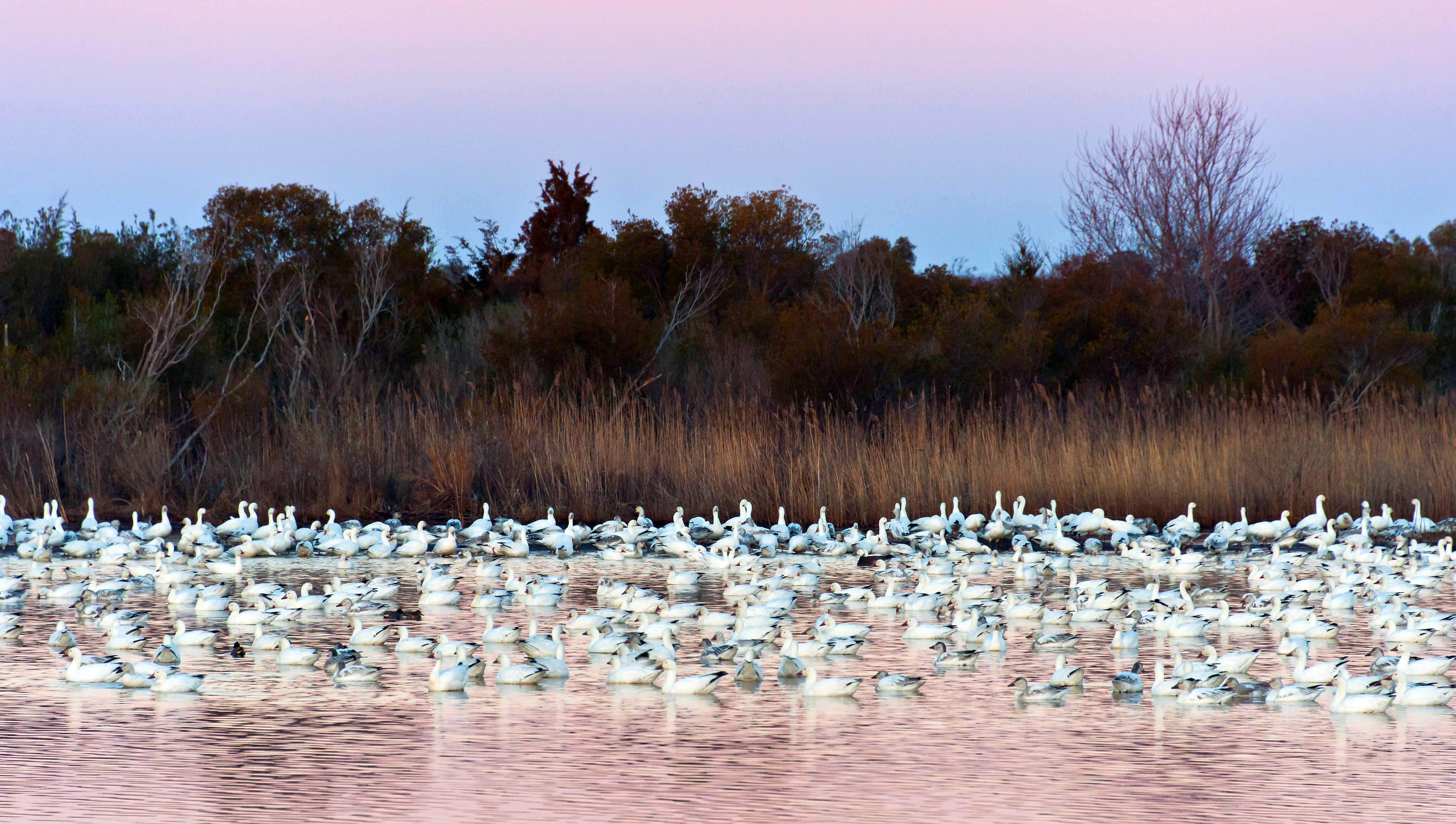
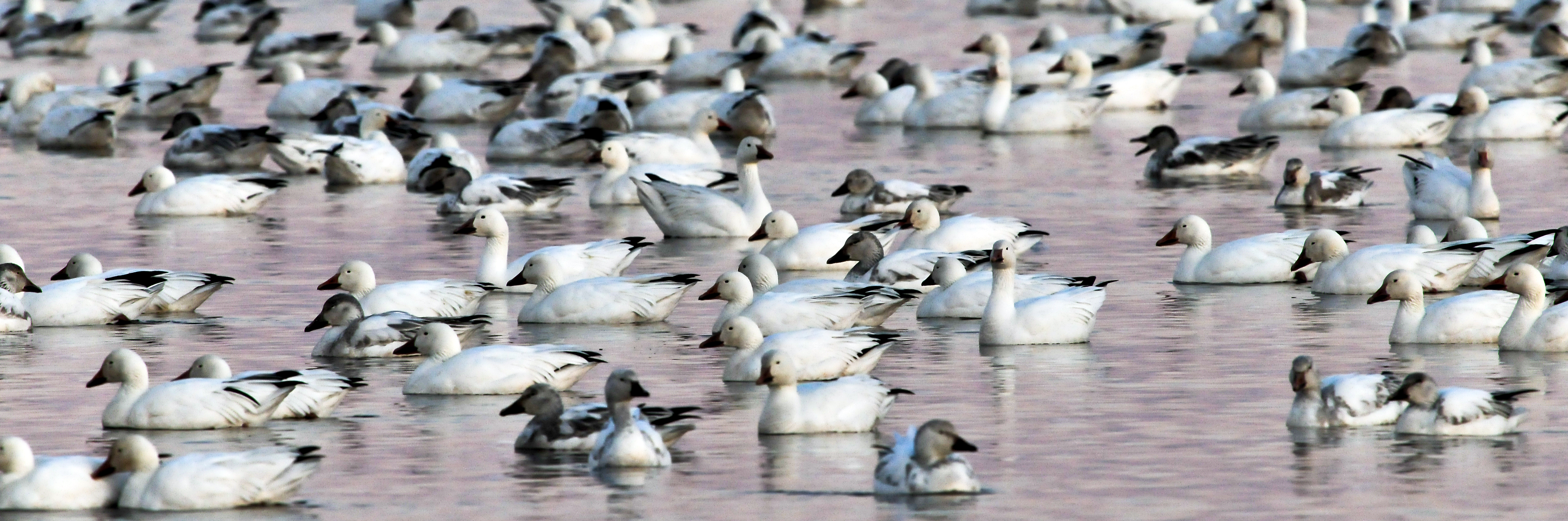
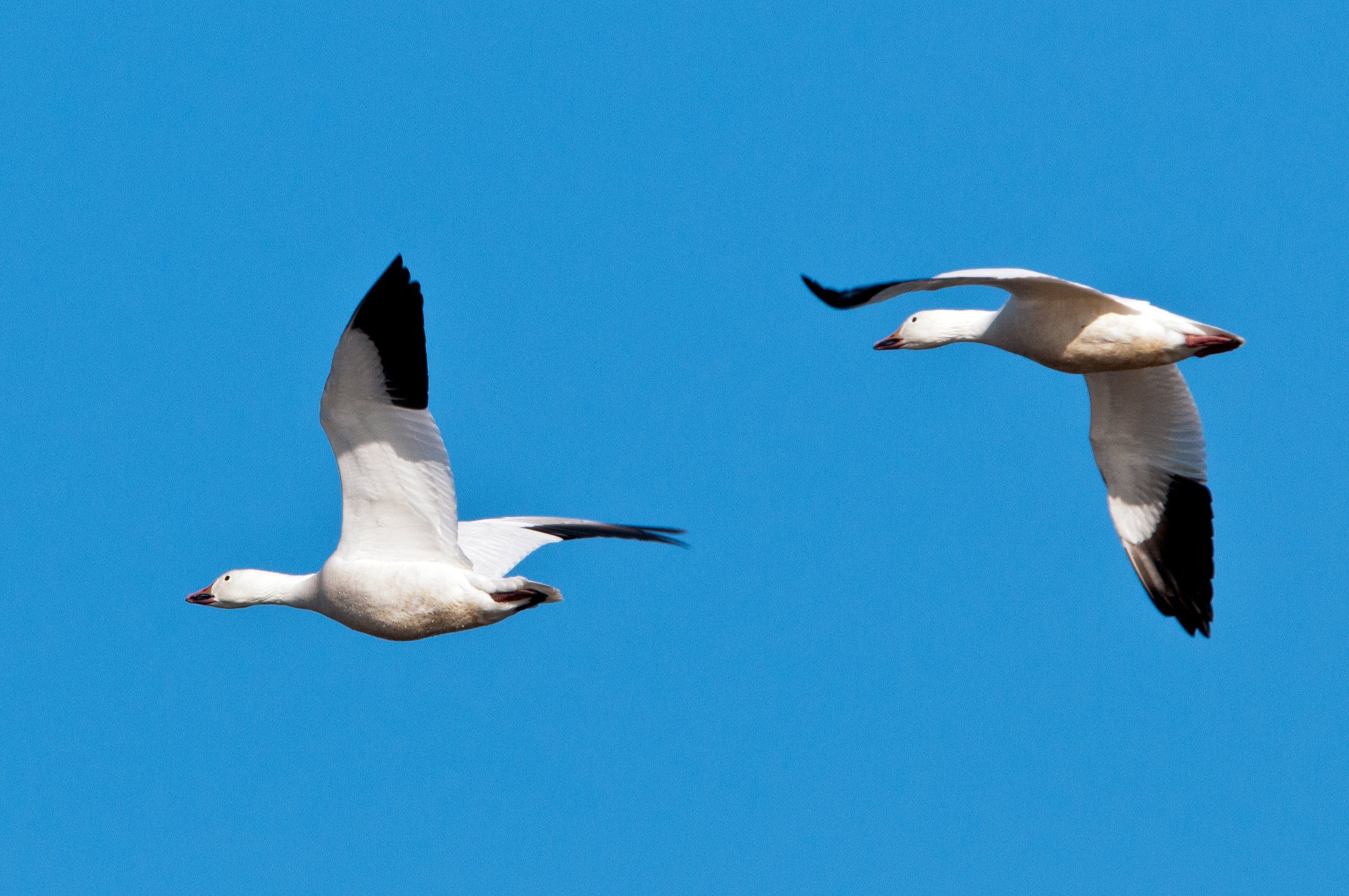
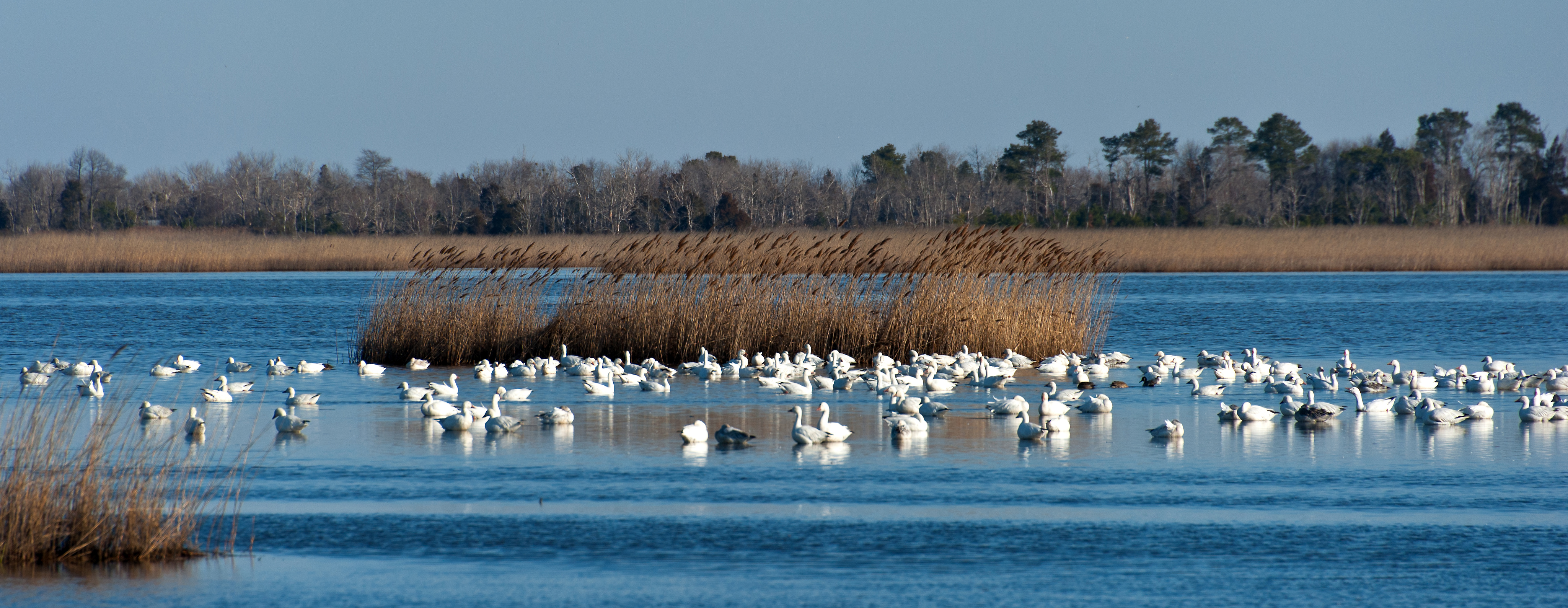
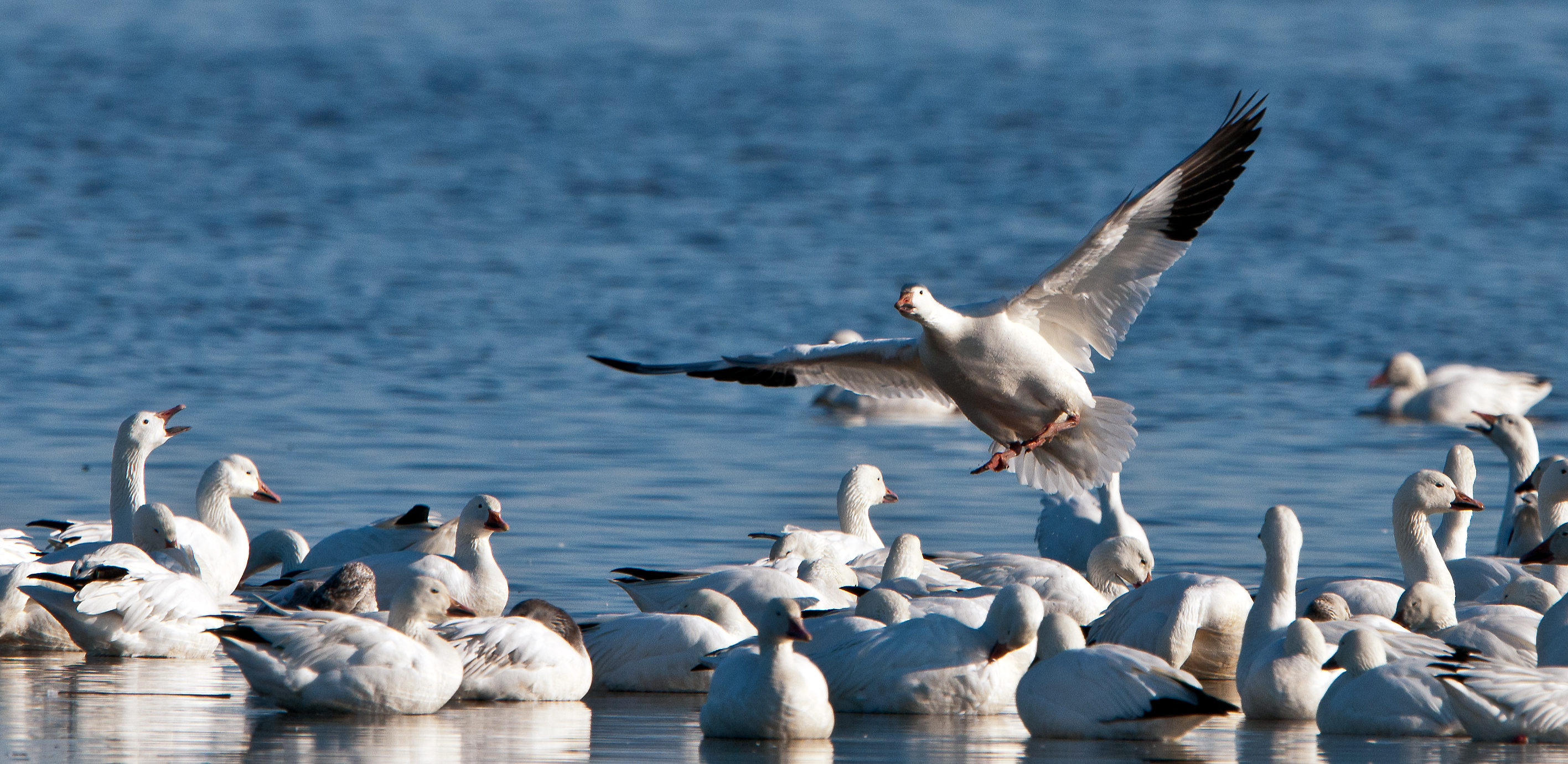
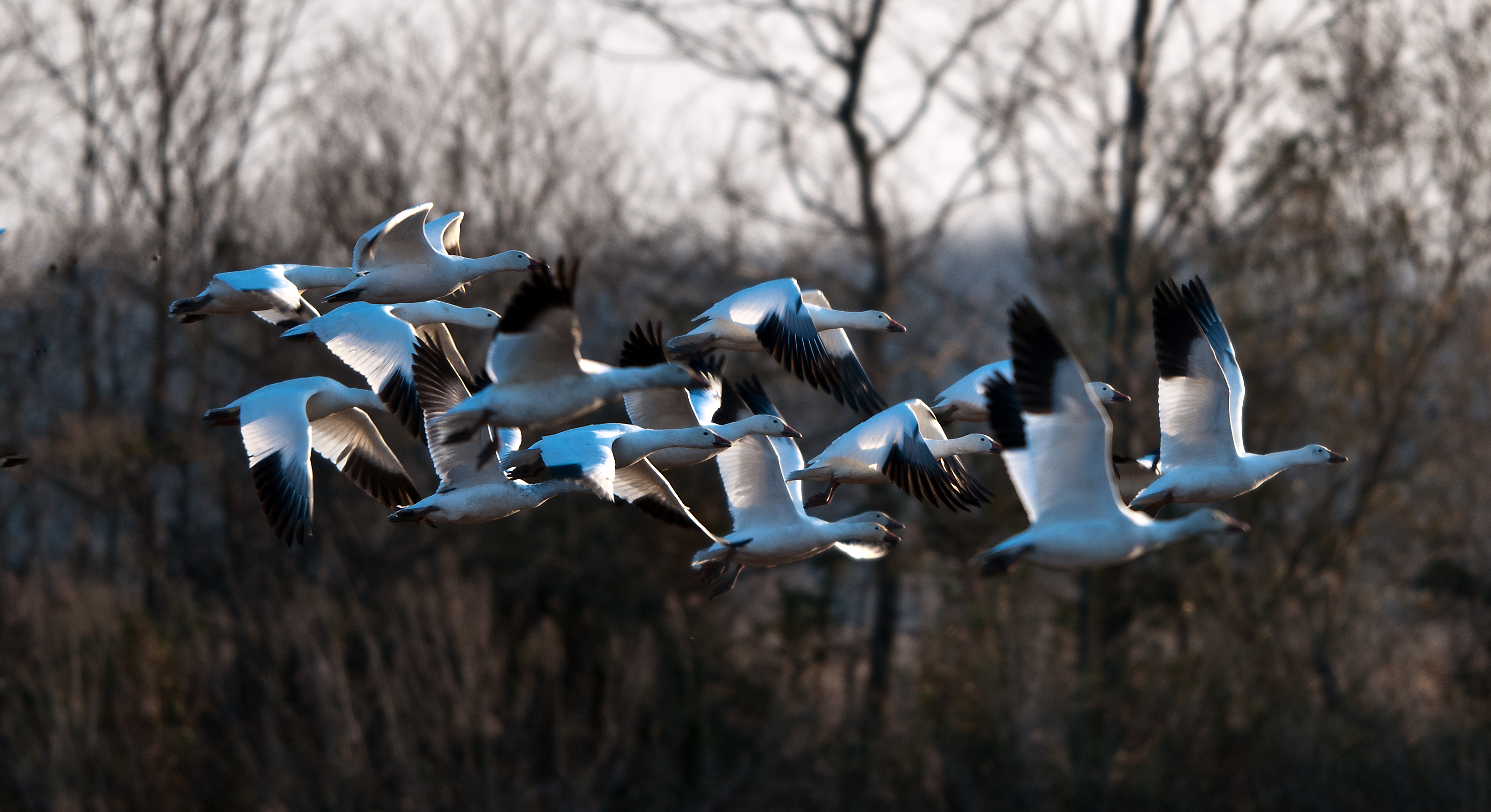
As the first light appeared on the horizon, the Snow Geese became more and more visible, and our excitement grew. There were definitely thousands of them on both sides of the road with the ones on the north side of the road within 50 to 100 feet (above 3 images). The huge flock on the other side of the road was much further away. We increased the ISO settings on our cameras, and as soon as there was enough light, we began photographing the Snow Geese.

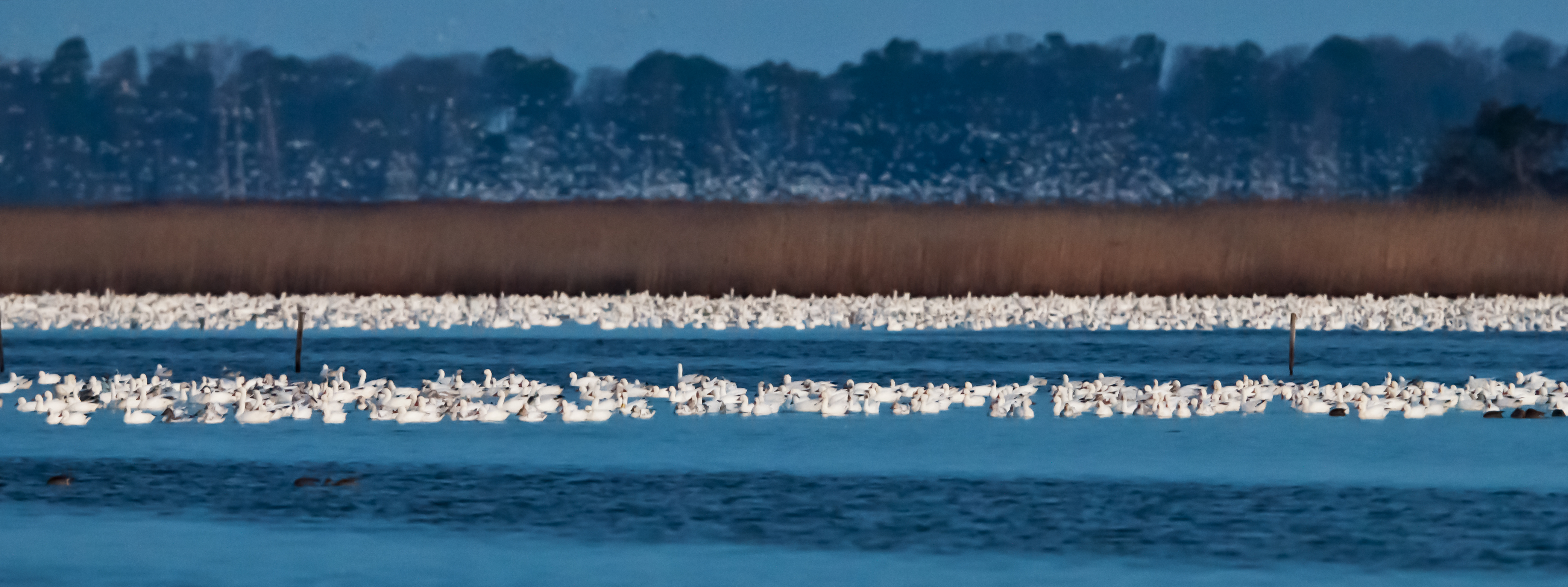
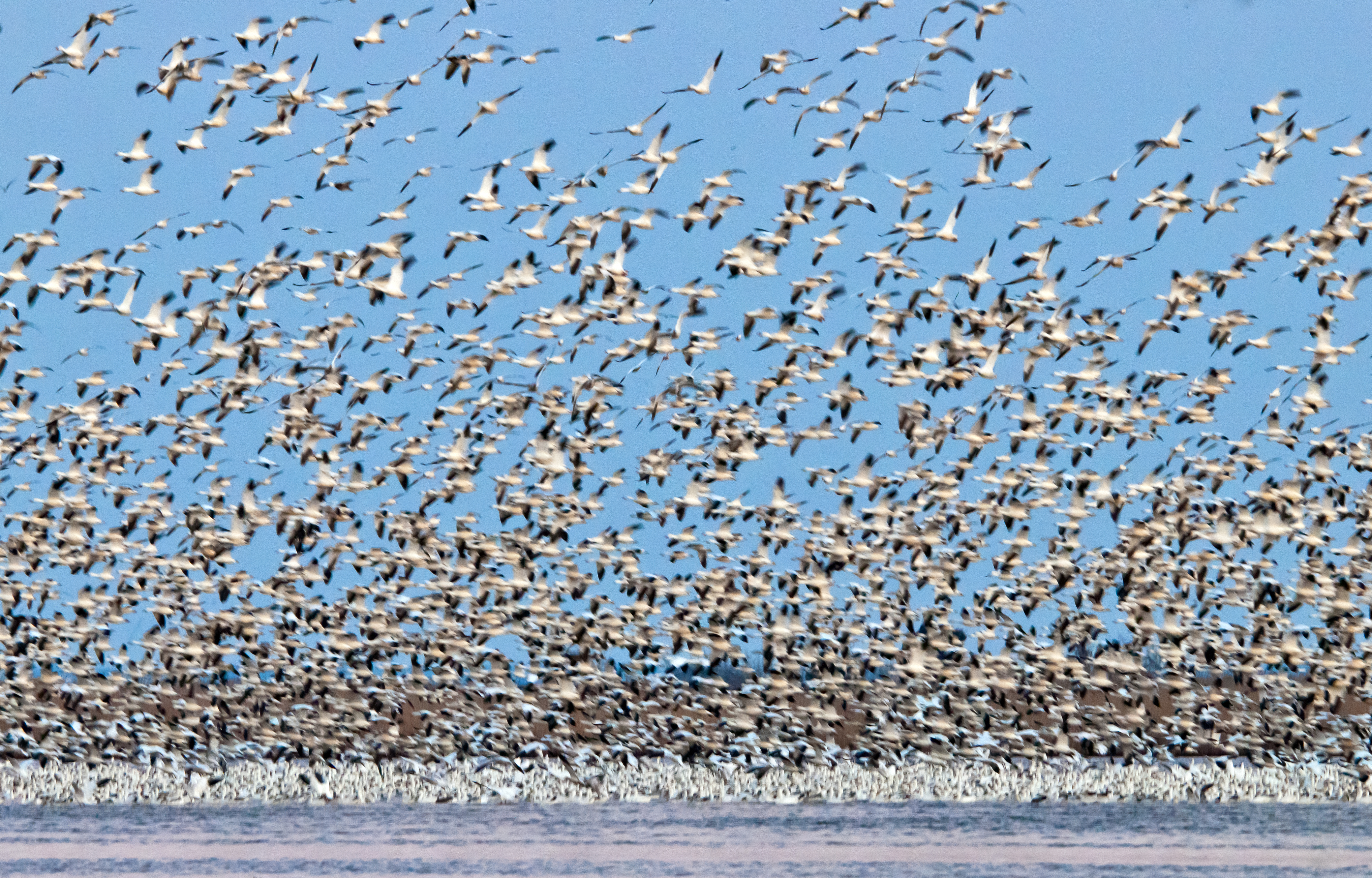
As the sun rose, we could see there were many thousands more geese further away, across the pond where we were located (above image). It was impossible to tell how many, but we knew there were more than we had seen at other refuges.

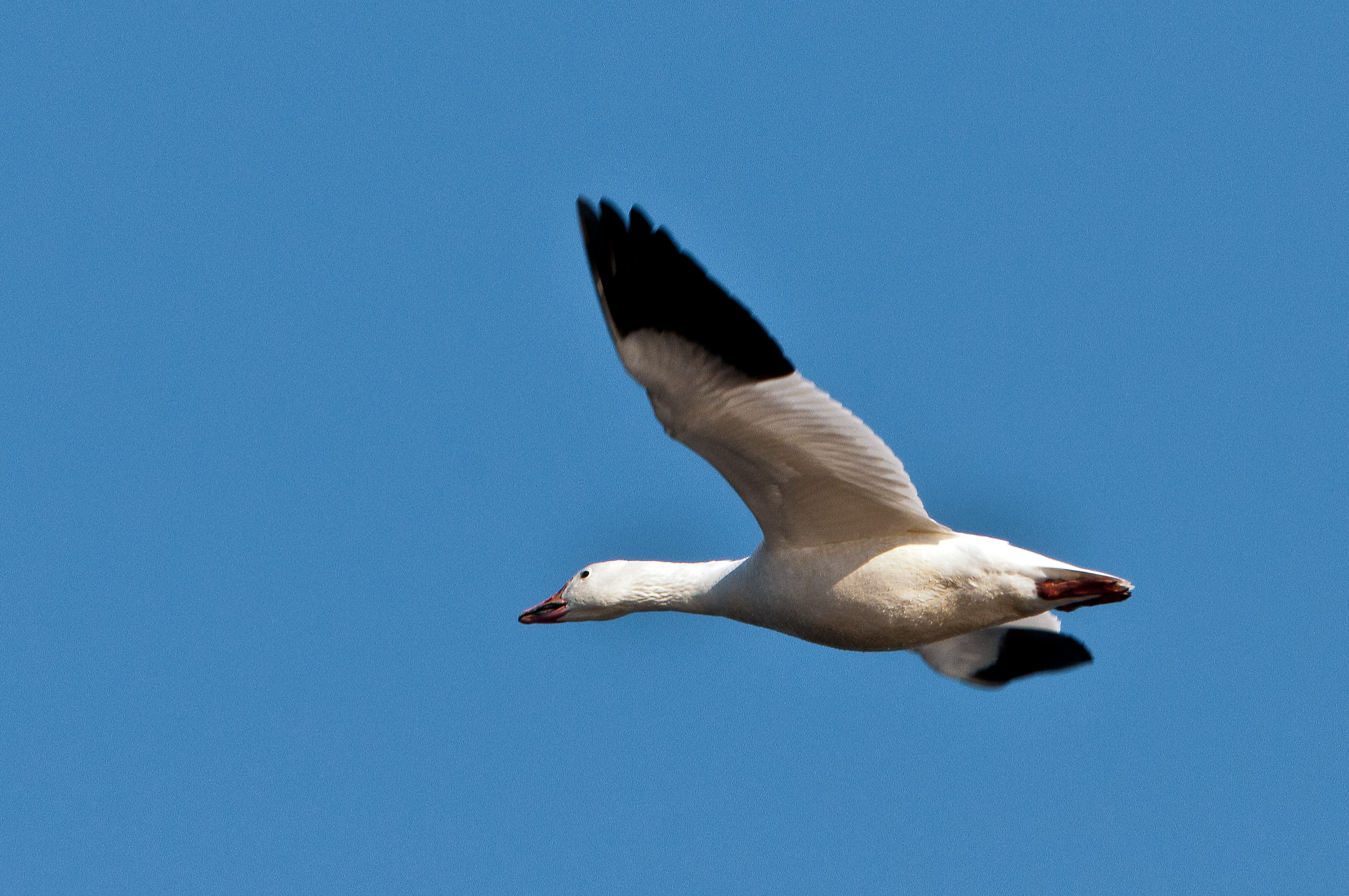
Snow Geese are medium-sized geese that breed on the arctic tundra. They are high-flying and travel in large, noisy flocks. They got their name because when they descend from great heights in swirling circles, they look like falling snow. Most are completely white except for the black feathers on the tips of their wings. Darker species used to be called Blue Geese, but they are now recognized as a dark form of Snow Geese.

As the sun continued to rise, we continued to photograph the geese.

Above is the pond with a small number of the Snow Geese in view, but they were spread out in both directions. Below is a photo of a goose about to land in the pond.

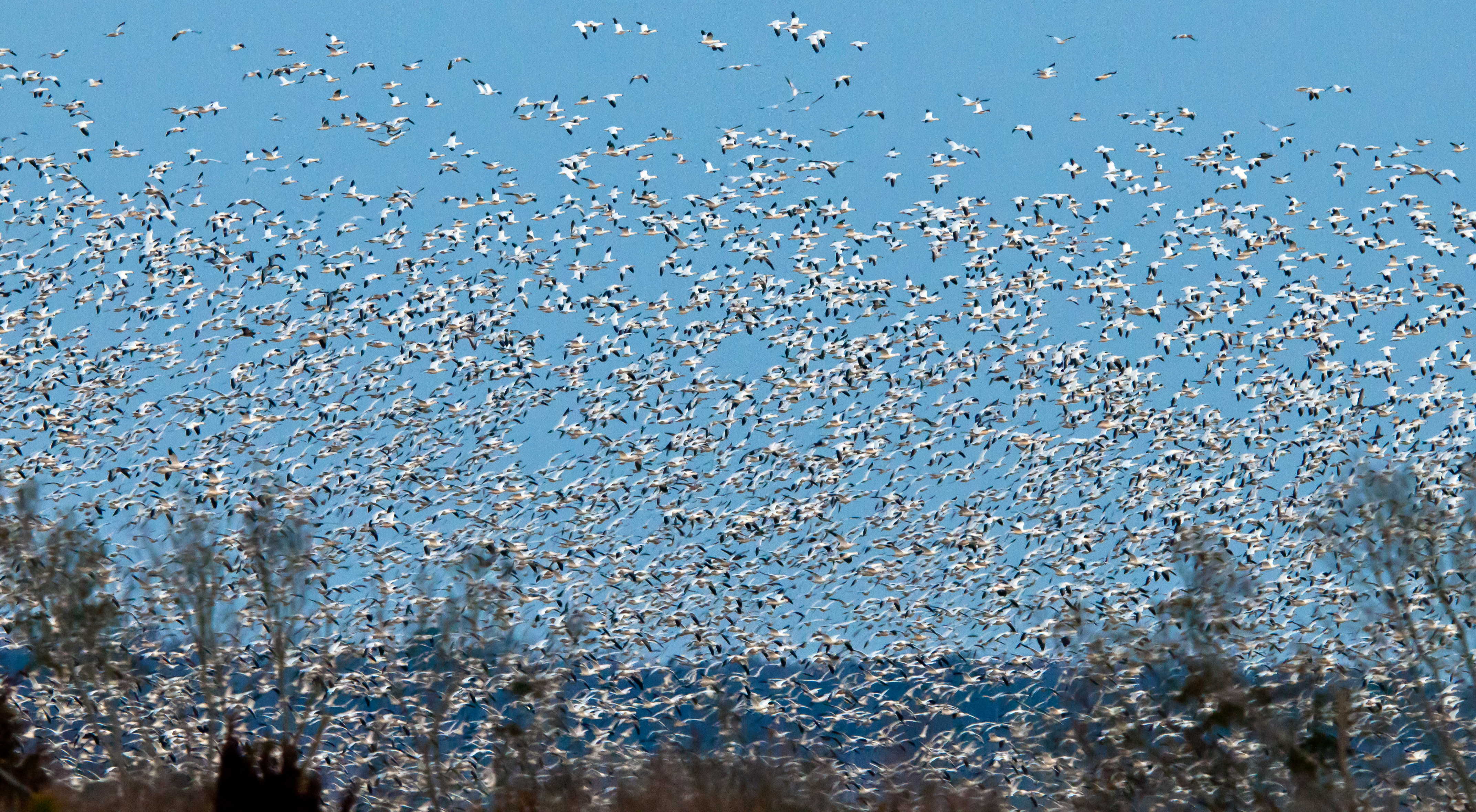
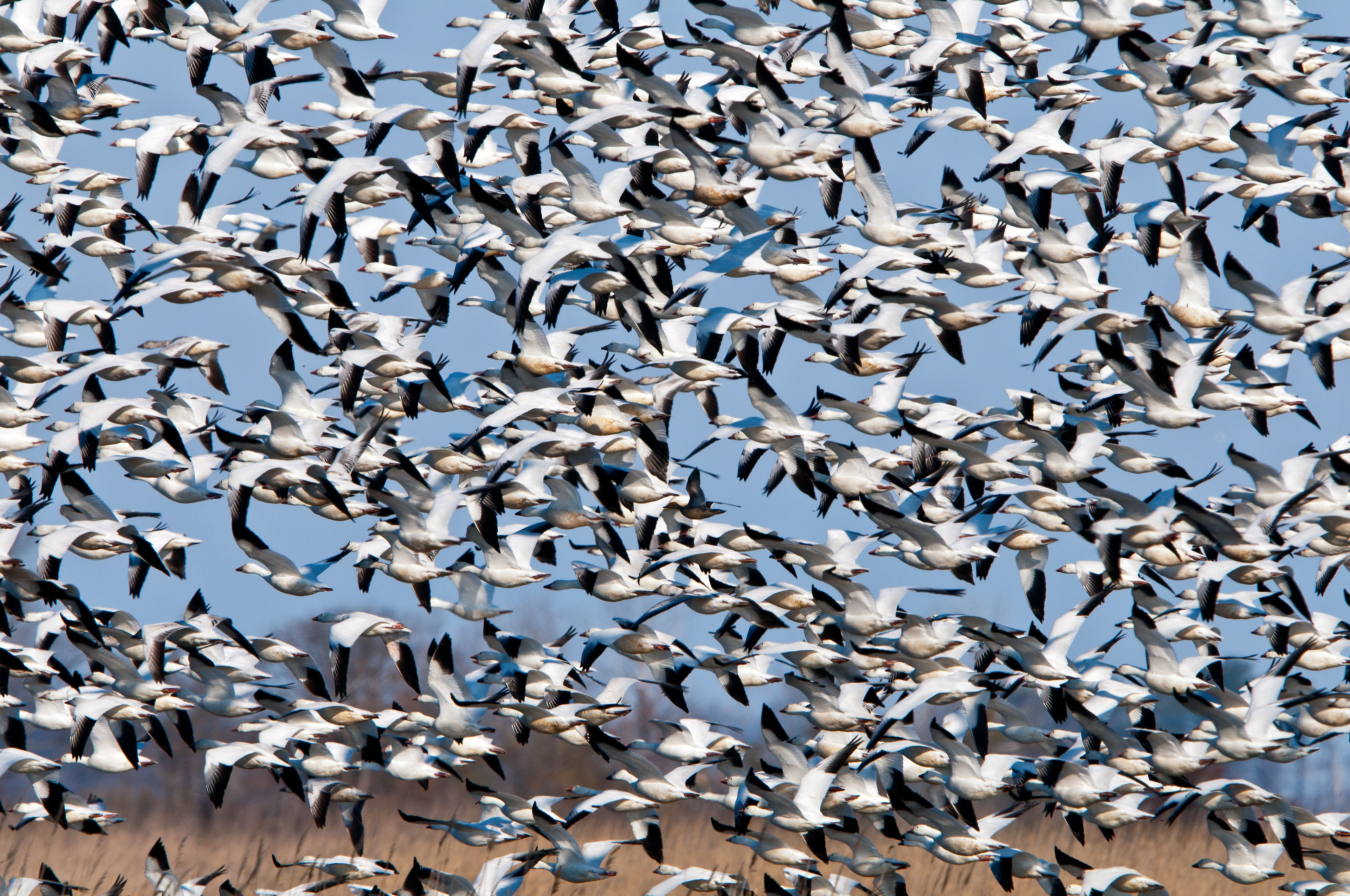
As we were photographing the Snow Geese, the ones farthest away from us and across the pond began to “blast off,” which is the term used to describe when all of the flock takes off at one time. It was an incredible sight and sound–the sound of their wings flapping and sound of all of their squawking. It was an experience, as I said above, that I will never forget. Below are some images of the huge cloud of geese that kept getting larger and larger as they continued to lift off and fly away. It seemed to last for a very long time.

The above photo is my favorite, because the geese fully fill the frame, the light was perfect, the geese are sharp and clear, and the image is properly exposed with the right depth of field. I will be printing this image (large and on aluminum).

Below is a video that Ceasar took of the hundreds of thousands of Snow Geese as they blasted off and flew away. Click on the below image to start the video and be sure your sound is turned on. The quality of the video may not be perfect, but it allows you to see and hear more of what we experienced on that very special morning.

Again thank you for following my blog and keeping me inspired by your frequent visits, comments and emails. I will be posting another article later this week from the trip to Prime Hook to share the many other wildlife species we saw and photographed that day.
Posted in Bird Photographs, National and State Parks, Nature, sunrise, Wildlife | Tagged , , , , , | 15 Comments

Bombay Hook National Wildlife Refuge

Last weekend, I drove to Bombay Hook National Wildlife Refuge.  When I arrived late in the afternoon, I saw a large gaggle of Snow Geese in a field, and as I was pulling to a stop, I saw a fox running along the edge of the gaggle of geese. I quickly stopped the car and went for my camera gear in the back, but the fox had the geese on the move, and they began to fly away. Unfortunately, the fox ran into to a wooded area and out of sight. I did manage to take a few photographs of some of the Snow Geese (above) that did not immediately take flight and some photographs (below) as they flew away.

After the Snow Geese were gone, I worked my way around the refuge looking for other wildlife, but by that time the sun was beginning to set, and the light was not good for photographing the ducks and other birds that I saw. So instead, I focused my attention on photographing the sunset.

Unfortunately, the sky was clear, and although the setting sun turned it into beautiful shades of yellow and orange, it was not going to be a spectacular sunset. Nevertheless, I was determined to try to capture a good image and waited for the sun to drop into the tree line across a pond resulting in the below image. Clearly, some sunsets are much more beautiful than others, but regardless, it’s always great just to be outdoors in a natural environment and see any sunset. If you click on the below image and fill your screen, the setting sun behind the trees is more visible.

I returned to Bombay Hook the next morning before sunrise hoping to find the Snow Geese, but did not. So instead of photographing the geese, I concentrated on photographing the sunrise. Like the evening before, there were no clouds, and as the sun rose, the sky was again filled with gorgeous yellows and oranges. So, it was time to be creative. I remembered a small wooded area back up the road and quickly went there to capture the rising sun framed by the leafless winter trees. Below is one of those images.
The above image alone justified the 3 hour drive to Bombay Hook and getting up before the crack of dawn.

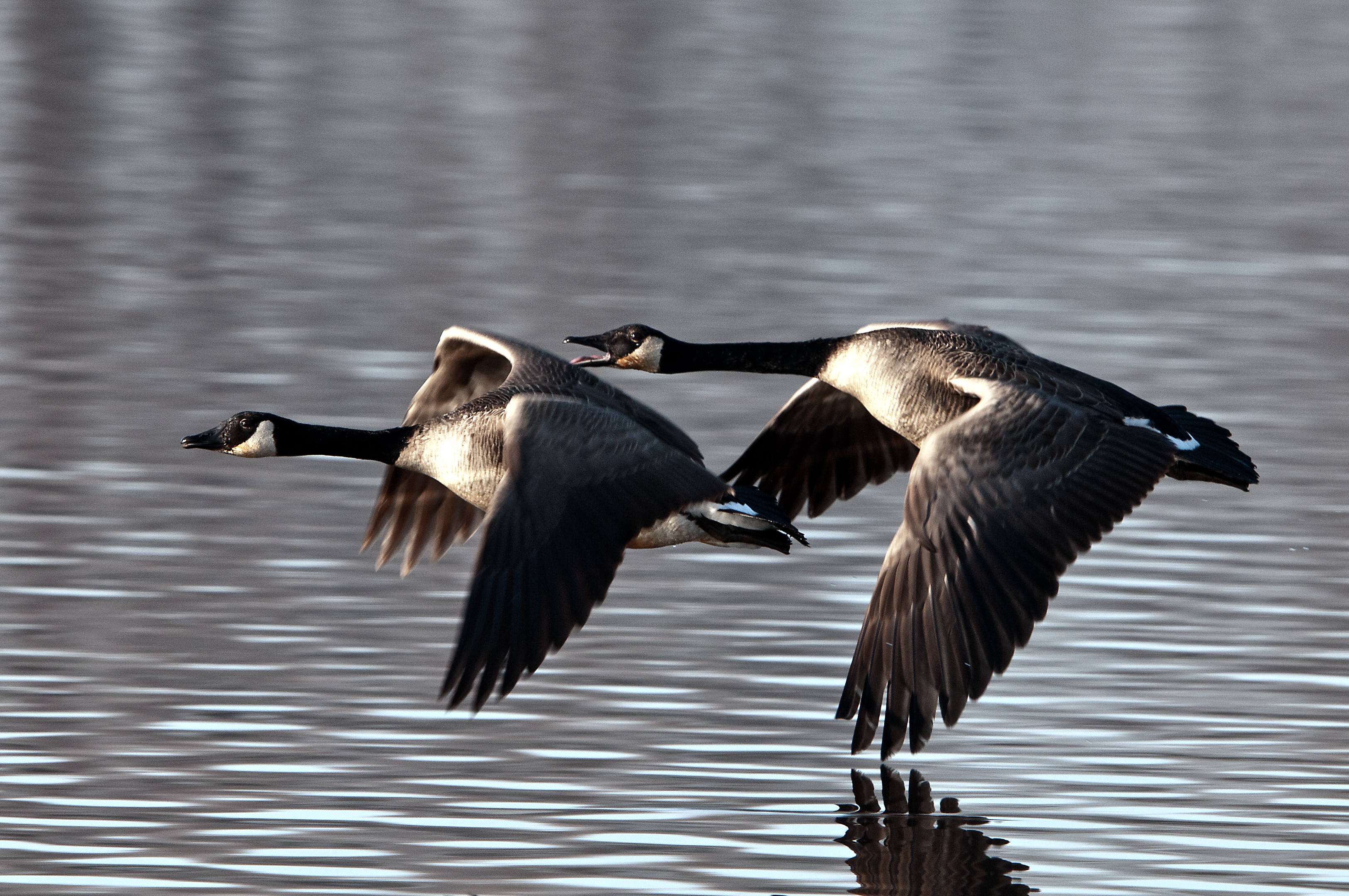
Later that morning and before leaving the refuge, I was able to photograph some of the other wildlife at Bombay Hook. Below are two Canada Geese as they took to the air.

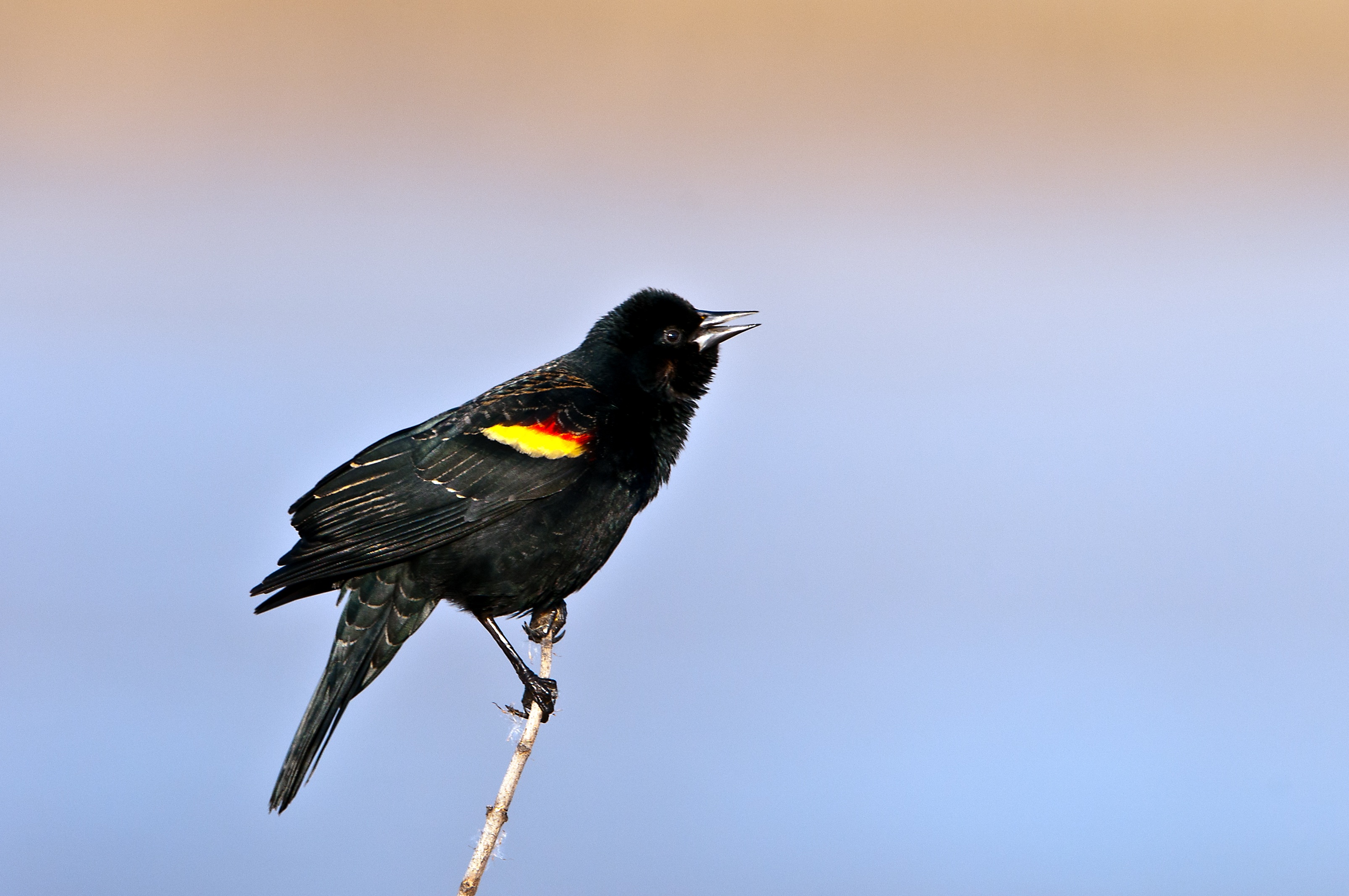
Below is a Red-winged Blackbird, which are migratory birds that winter in places like Bombay Hook. They inhabit open grassy areas, but generally prefer both freshwater and saltwater marshes, like those at Bombay Hook. This male Red-winged Blackbird was calling loudly when I photographed him. The call of the Red-winged Blackbird is a throaty check and a high slurred whistle, terrr-eeee. The male’s song is a scratchy oak-a-lee, accompanied by a display of his red and yellow shoulder patches.

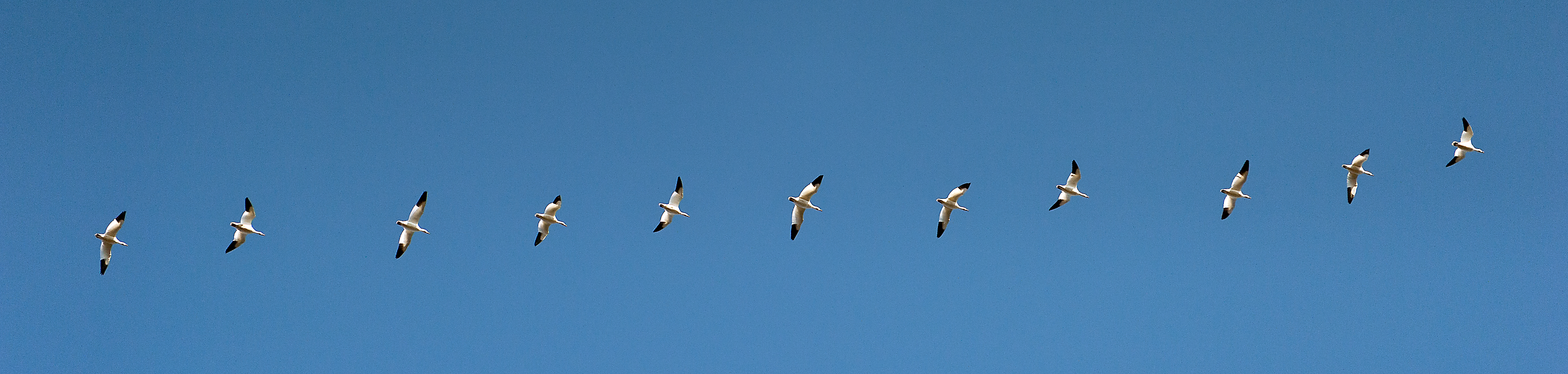
Although I did not see any Snow Geese on the ponds or in fields at Bombay Hook that morning, occasionally a group of would fly overhead, like in the below image.

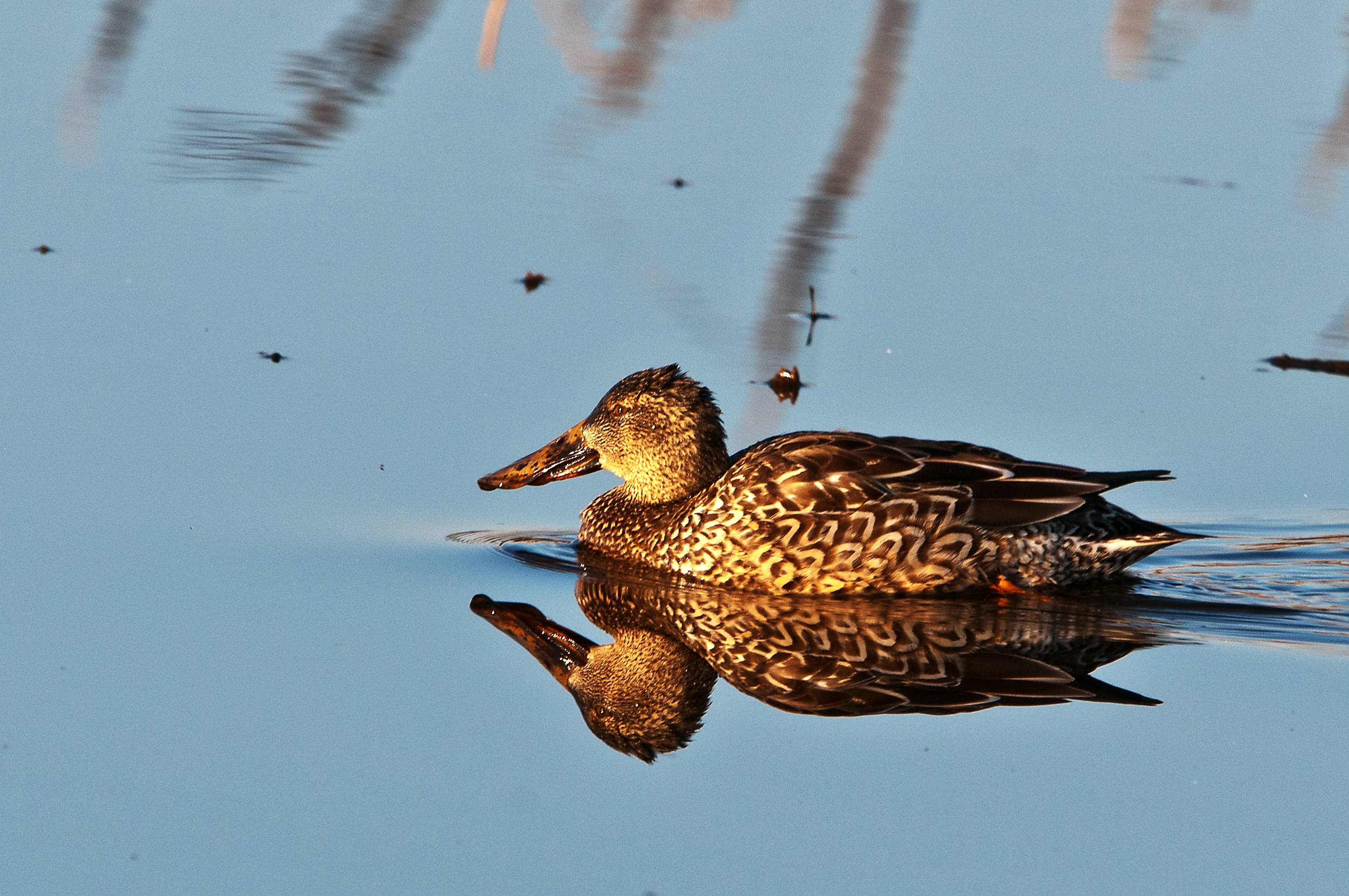
That morning, I also was able to photograph three different duck species: Northern Shovelers, Pintails and Buffleheads. Photographs of each follow. The first is a male (drake) Northern Shoveler and the second two images are of female (hen) shovelers.

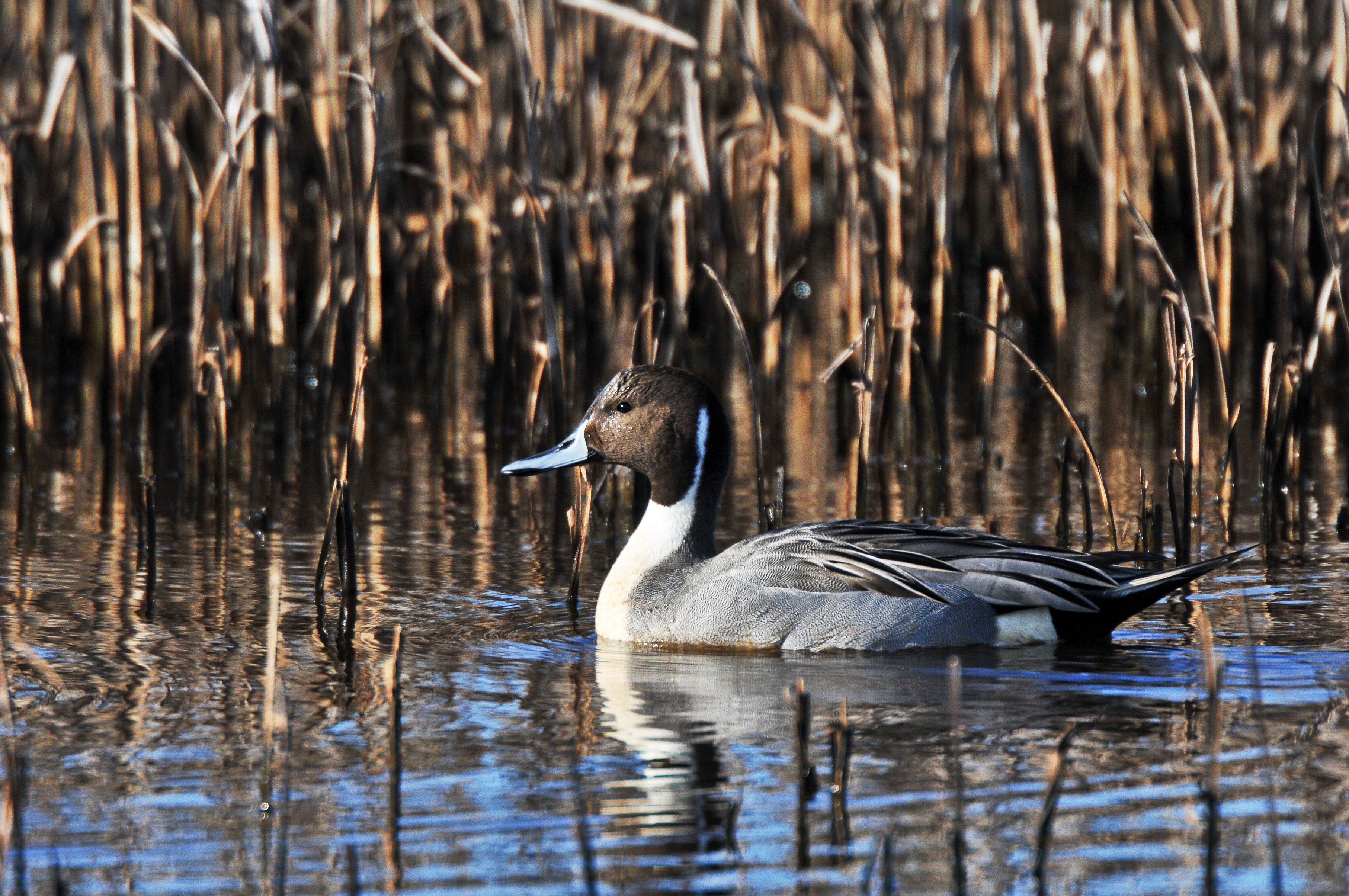
The below image is of a drake Northern Pintail duck. They get their name from their elongated, thin tail feathers. Northern Pintails are among the first ducks to migrate south in the fall and north in the spring. Most pintails breed in Alaska.

The following photographs are of a Bufflehead duck. Of all of the ducks I photographed at Bombay Hook, the Bufflehead was the most challenging to photograph because it seemed to be very wary of me, and there was only one Bufflehead. Fortunately, after flying away several times, it would return to look for more food in that same area of the pond.

Buffleheads are the smallest diving duck in North America. They breed in ponds and small lakes in Canada, and winter in much of the United States. Buffleheads nest in tree cavities, which they can do because of their small size.

This is my first year of seriously photographing waterfowl, and I have thoroughly enjoyed seeing and photographing them. I am looking forward to spring when many more ducks will be migrating through the Atlantic Flyway, which includes the many refuges I have been recently visiting in Delaware, Maryland and Virginia.

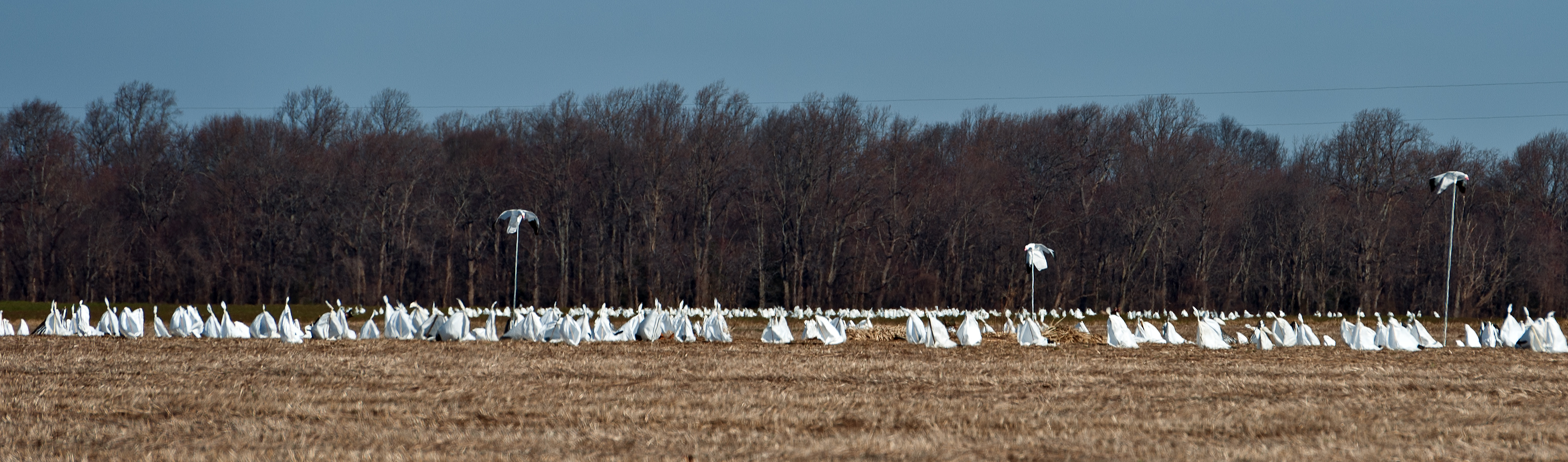
As you can tell by the above images, which are just a sample of the many I took last weekend, I had a very productive and enjoyable visit to Bombay Hook National Wildlife Refuge, but I was VERY disappointed and saddened by what I saw as I was leaving the refuge. In several locations, along the narrow road leading through open farm fields to the refuge, were large groups of Snow Geese decoys. At first, I thought they were Snow Geese feeding in the fields, which is what the geese do (i.e., they spend the night in the marshlands and ponds where they are safe from predators, and when the sun comes up in the morning, they fly to nearby fields to feed).

With this blog article in mind, I stopped to photograph some of the decoy spreads. From the air, the decoys apparently look like gaggles of geese feeding in the field and thereby attract passing geese into the gunsights of hunters waiting in their blinds.

I am not hunter. I prefer to “hunt” with my camera. After spending the day admiring these magnificent birds, it was heartbreaking to see how elaborately some people work to kill them and how close they hunt to the refuges where the geese are temporarily safe.

Posted in Bird Photographs, National and State Parks, Nature, sunrise, Sunset, Wildlife | Tagged , , , , , , | 10 Comments

Sunrise and Sunset at Bombay Hook and Blackwater National Wildlife Refuges

I am way behind in processing images made over the last several months, which includes images from a trip in November to Bombay Hook National Wildlife Refuge in Delaware and Blackwater National Wildlife Refuge in Maryland. To make matters worse, depending on how I look at it, this Friday and Saturday, I contributed significantly to my post processing “workload” by another trip to Bombay Hook and Blackwater NWRs.

I went to Bombay Hook and Blackwater this weekend, because they are very large refuges consisting of wetlands, tidal pools, rivers and creeks, wooded areas, and a wide variety of wildlife, and this time of year, many migratory geese and ducks. It was a great trip because I was able to see thousands and thousands of geese, ducks and other wildlife to include an otter and a fox hunting Snow Geese.

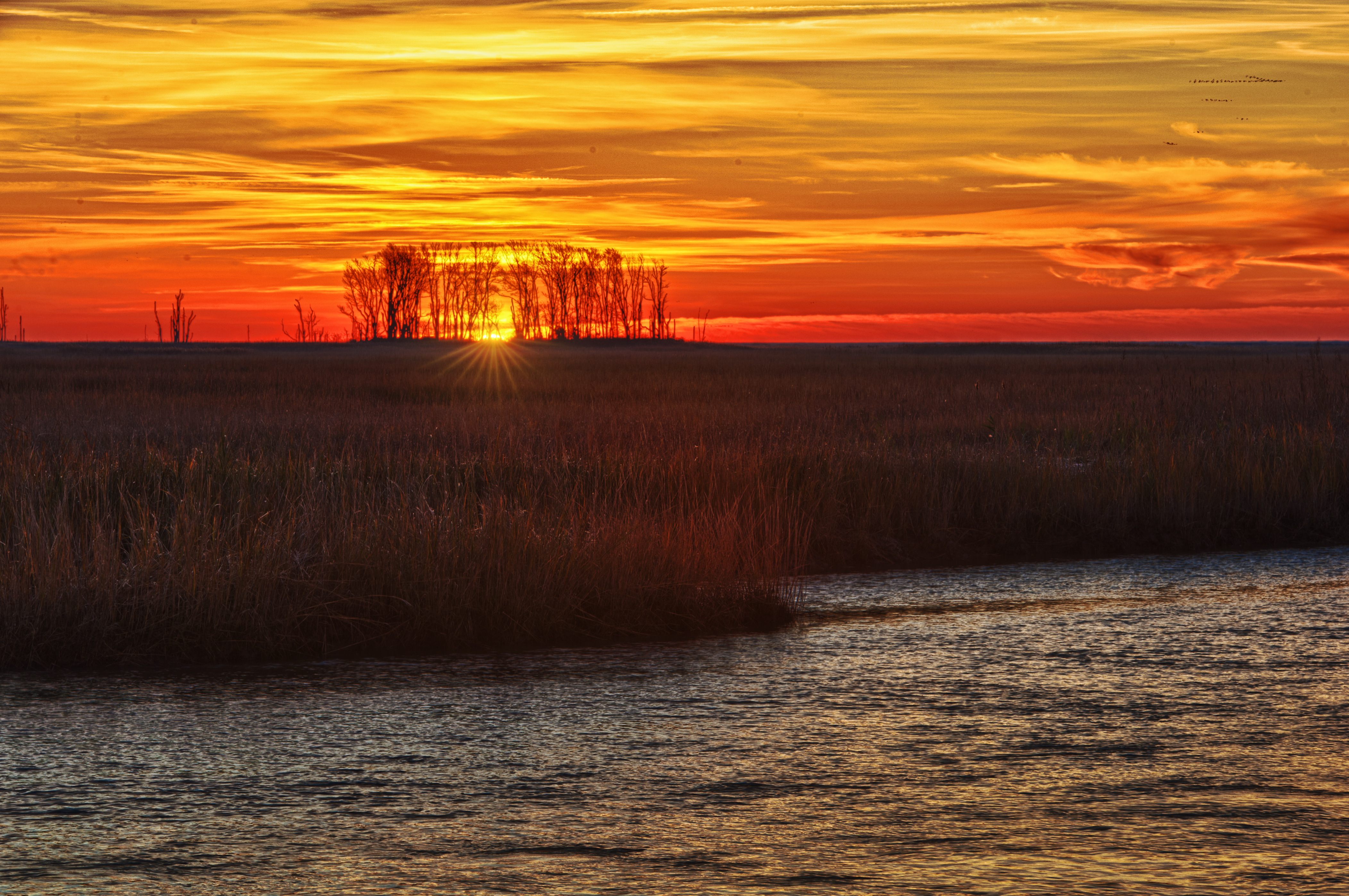
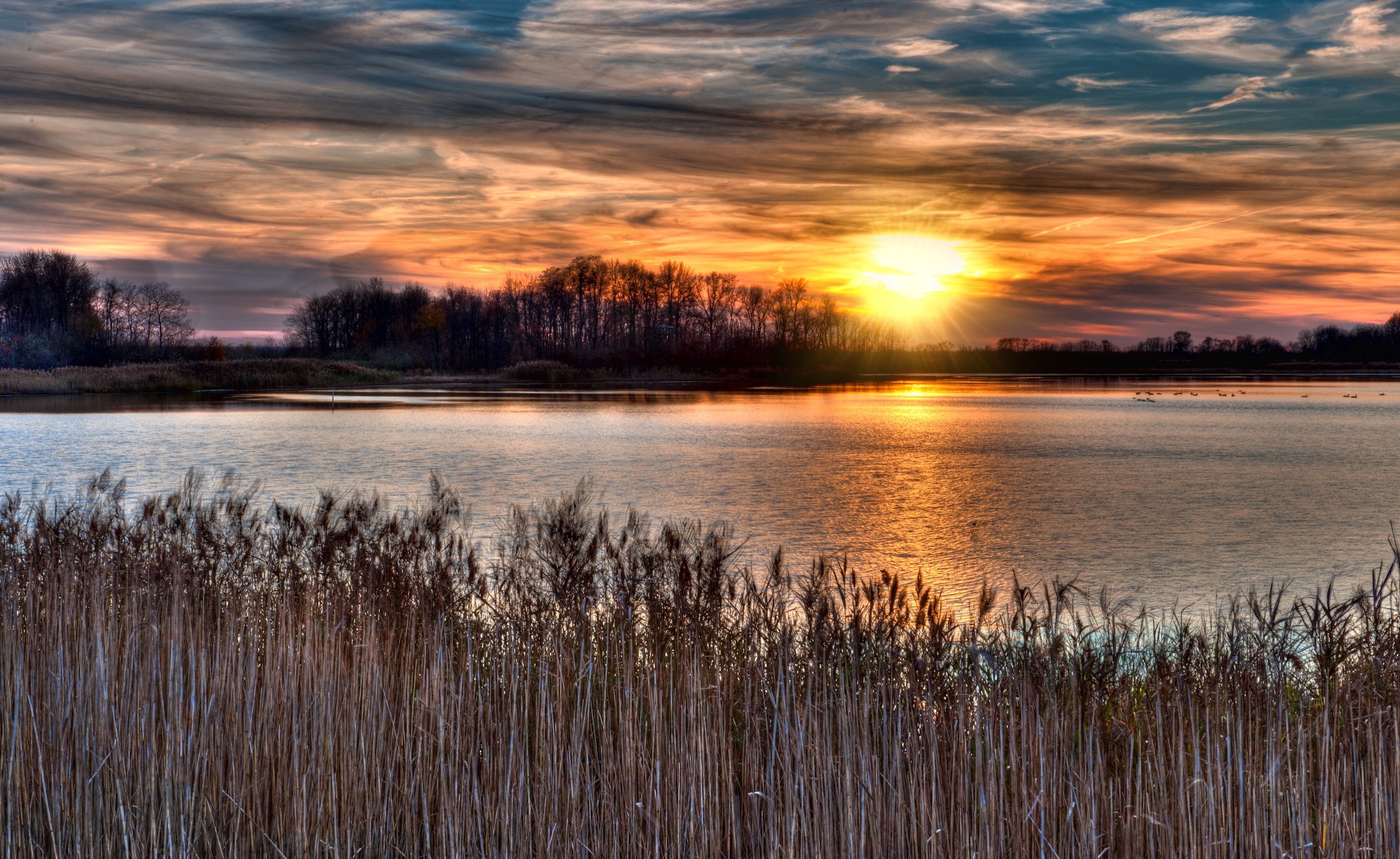
I have not yet transferred the images from my memory cards to my computer from this weekend, but wanted to finish this blog post that I started before leaving Friday morning for Bombay Hook. It contains some of the sunrise and sunset images that I made from my November visit to Bombay Hook and Blackwater. (Opening and below images:  Sunset at Bombay Hook)

Based on my recent blog posts, some of you who follow my blog may think that I am predominantly interested in birds, but that is not true. I love being outdoors in the peaceful serenity of a natural, unspoiled setting, like a refuge or preserve, and if I am fortunate enough to also see some wildlife, it just makes the experience even better. I greatly enjoy sunrises and sunsets–they are all beautiful, but some are incredibly spectacular. The nice thing about sunsets is that I do not have to get up before the crack of dawn to see and photograph them. However, when I see a gorgeous, memorable and photographic sunrise, it makes getting up very early worthwhile, like the two sunrises below. (First image: Bombay Hook, and second image:  Blackwater).

The following are a couple more images from last November’s trip.

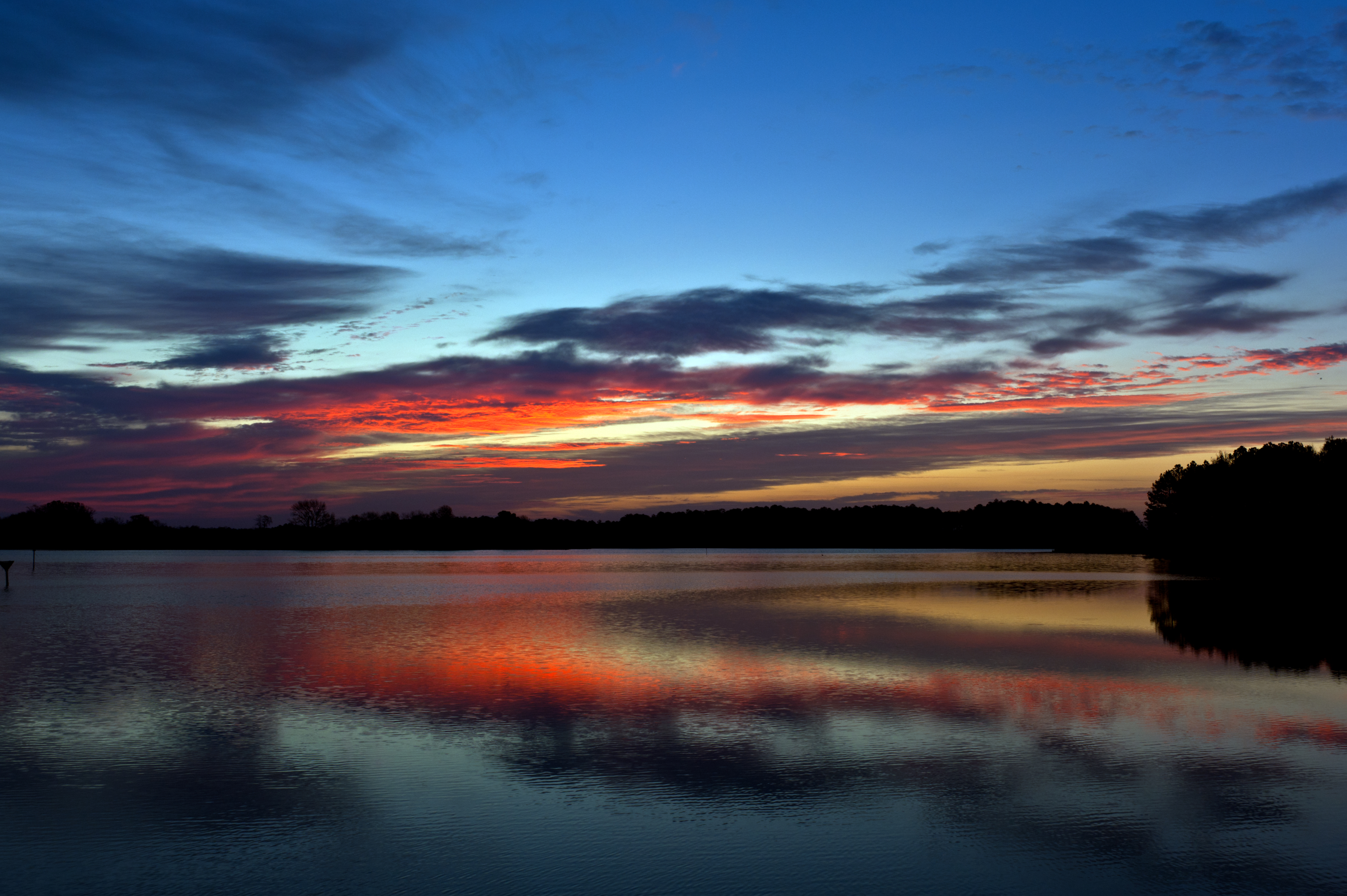
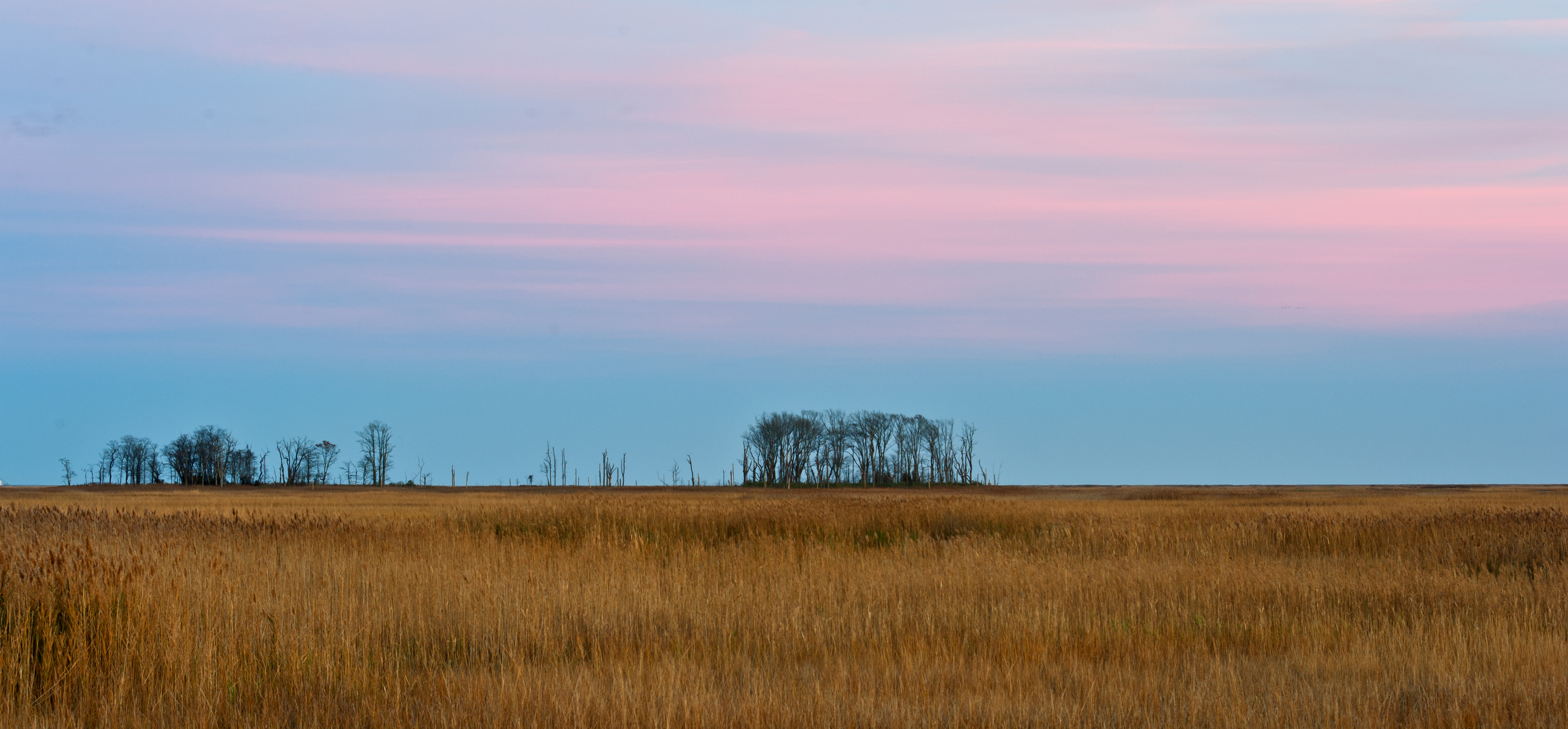
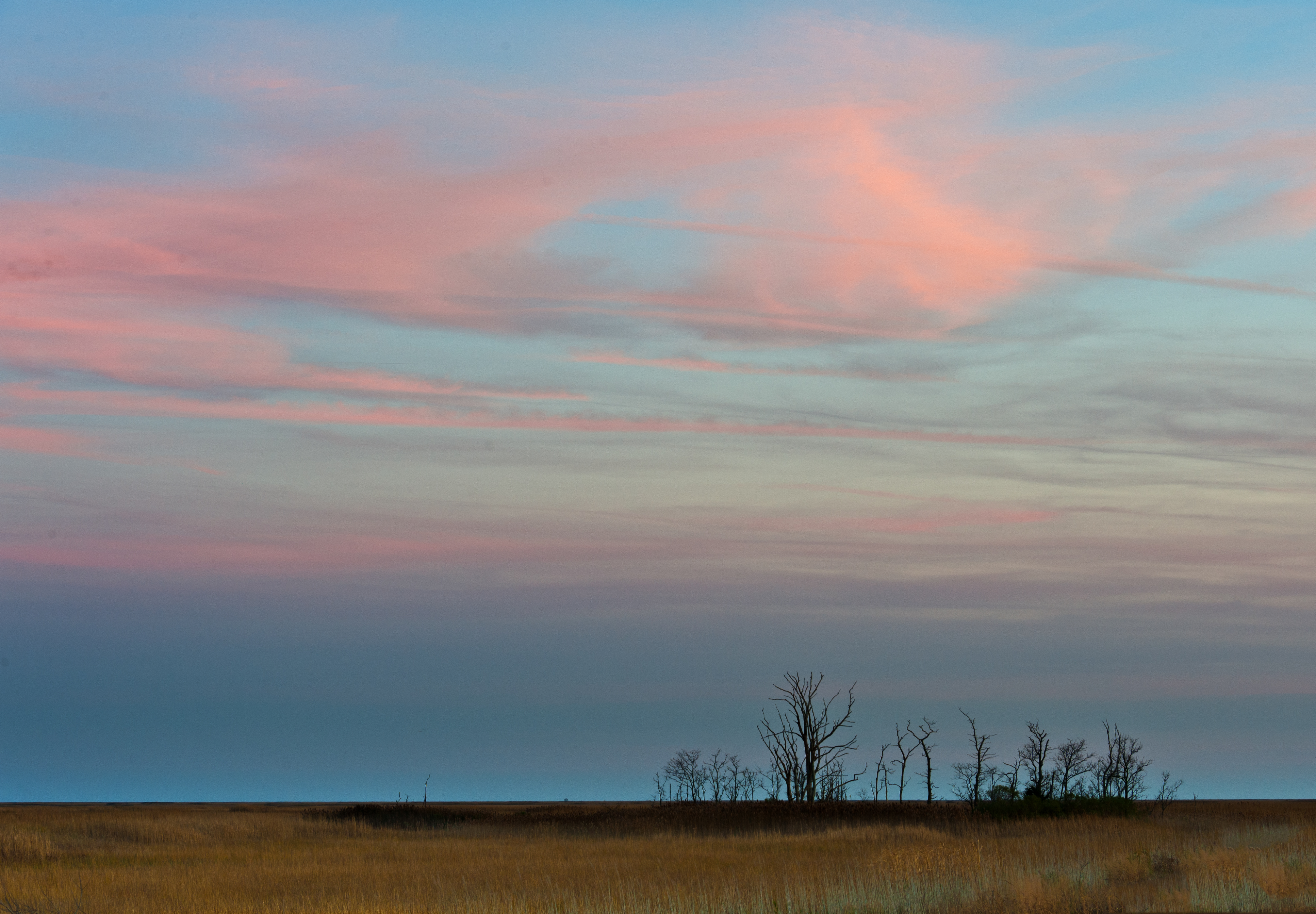
It often pays when photographing a sunrise or sunset to look in the opposite direction, as in the images below. The setting sun made the clouds in the opposite direction glow in warm shades of pink.

I just want to mention that one of the things I love about nature photography is that it is a solo activity–not a “team sport.” Therefore, I am not dependent on others participating and all of the difficulties that may cause, but I must admit that when I am witnessing sunrises and sunsets like those in the above images, it is great to have someone along so that I do not have to contain my excitement. My friend and frequent photography companion, Ceaser was with me on this trip, and I can remember saying to him more than once that I was glad he was there to witness what I was seeing and so that I did not feel crazy when I was verbalizing the thrill of the moment, which I do sometimes even when alone.

Now, I am going to conclude this article and begin transferring and reviewing the images from this weekend. I cannot wait to see them on my large monitor, because it was another fantastic two days at Bombay Hook and Blackwater NWRs with a side trip to the Choptank River to do some duck photography. There were at least 500 ducks there.

Posted in Nature, sunrise, Sunset | Tagged , , , , , | 7 Comments

It’s Like Living in an Aviary

Most days, I feel as though I live in an aviary because, everyday and all year round, the trees behind my home are filled with a wide variety of birds. Clearly, it is not an aviary since it is not enclosed, but it feels like one since the trees are always filled with birds that provide endless photography opportunities, and of course, immeasurable enjoyment from just watching them.

This weekend, winter weather finally arrived in northern Virginia, and it was not good for outdoor nature photography. Therefore, I stayed indoors working on previously photographed images, while watching the birds and photographing them from my office. I was able to capture some excellent images and some of them are included in this blog post. Hope you enjoy seeing them as much as I did.

The first few images are of Cardinals. There are at least three pairs that are regularly here.

In the above image, the sun was low in the sky and its warm glow beautifully lit this male Cardinal as it sat on a branch. Below are two female Cardinals.

The following two images are of a Downy Woodpecker. The first is a female and the second a male. They are distinguishable by the red feathers on the back of the male’s head.

The next image is of a Bluejay. The colors of these birds brightened up what was otherwise a colorless winter view.

The next image is of a male House Finch.

The following two images are of a male and female Bluebird.

Finally, below is an image of a Red Bellied Woodpecker that I managed to capture in between some branches that added to the interest of the image.

There were other birds in the trees this weekend, including Chickadees, Titmice, American Goldfinches, and Mourning Doves. I also saw a Red-Shouldered Hawk fly over the trees and an American Bald Eagle across the lake. There also were several Canada Geese on the lake, and I heard ducks, but did not see them. It was a pretty active weekend in my personal aviary.

I highly recommend you watch the video at the following link. It is of an owl flying straight at a camera recording at 1,000 frames per second. It provides an awesome view of the owl as it is approaching the camera and landing. I enjoyed it so much that I watched it several times.  http://www.dogwork.com/owfo8/

Posted in Bird Photographs, Nature | Tagged , , , , , , , | 14 Comments